
Jun 24, 2026
What is the lifespan of a GI elbow?
One question that always comes up when looking for pipe fittings for fire safety systems, city water networks, or industrial process lines is, "How long will a iron elbow last?" Many things affect the answer, but knowing these things can help your business save a lot of money and keep systems from breaking down when they're least expected.
Under normal conditions, a galvanized reducing elbow will usually last between 20 and 50 years of steady work. This wide range is due to variations in the zinc coating's thickness, its exposure to the climate, the chemistry of the water, and the quality of the fitting. In controlled indoor situations with neutral pH water, these fittings usually last longer than 40 years. However, if they are installed outside or in an industrial setting with acidic air, they may only last 15 to 25 years. The protective zinc layer, which is generally put on by hot-dip galvanization and is more than 70 microns thick, works as a barrier that slowly wears away to protect the iron base below from oxidation and pitting.
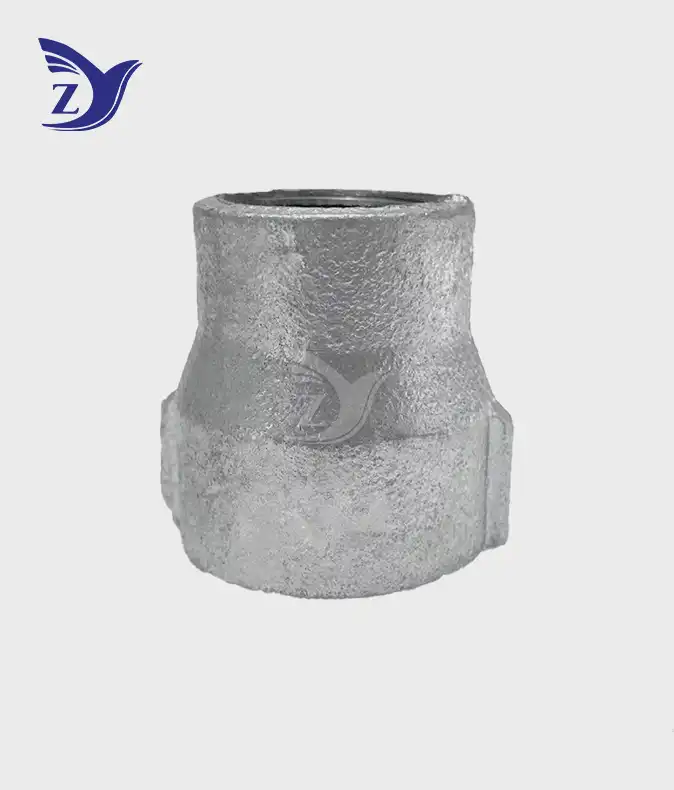
Understanding Galvanized Iron Elbows and Their Lifespan
Galvanized iron elbows are important directional parts of pipe systems because they allow flow to change directions smoothly at 90-degree or 45-degree angles while keeping the pressure stable. The annealing processes that these moldable iron castings go through turn weak iron into a ductile material that can withstand installation force and temperature cycles without breaking.
Types of GI Elbows in Industrial Applications
The marketplace has a number of options that are made to meet different operating needs. Standard elbows have female-threaded connections on both ends that match. Street elbows, on the other hand, have one male end and one female end, so they don't need any middle nipples in tight assembly places. Flow direction and pipe width can be changed at the same time with reducing elbows like the NPT/BSPT reducing male-female 90° galvanized reducing elbow. This makes what would normally need three different parts into a single small fitting. This 90° reducing pipe coupler with two threads is very useful for repair projects where old infrastructure needs to be changed to fit new equipment with different connection sizes.
Key Factors Affecting Service Life
The environment has a huge effect on how long people live. Zinc coatings that are kept inside and out of the weather usually don't break down much, with rust rates below 5 microns per year. Moisture cycles, UV exposure, and air pollutants can speed up the loss of zinc in outdoor fittings. This is especially true in coastal or industrial areas where salt spray or sulfur dioxide levels are high. The chemistry of the water is also very important. Soft water (pH below 6.5) breaks down zinc more quickly, while hard water often forms protective calcium carbonate scale layers that make things last longer.
Operational factors are very important. Galvanic responses happen faster in systems that are constantly running at high temperatures (above 60°C) than in systems that are running at room temperature. Pressure cycle puts mechanical stress on the thread surfaces, which could weaken the seal over many years of use. There are differences in the quality of galvanization used by different companies. In accelerated rust tests, hot-dipped coatings that meet ASTM A153 standards always do 200–300% better than thinner electroplated options.
Application Sectors and Lifespan Expectations
Companies that do fire protection work and install sprinkler systems in temperature-controlled buildings usually ask for GI fittings with 30-year design lives, which fits with how buildings are planned to last for a long time. When building projects for cities that provide water, construction companies plan for outdoor meter systems and hydrant lines to be replaced every 25 years. Wholesale plumbing companies that sell to homes stress that hidden installations inside usually work for more than 40 years, but uncovered installations in basements that are damp may lose zinc within 20 years.
Corrosion Resistance and Durability of Galvanized Reducing Elbows
Through a number of zinc-iron mixture layers topped with pure zinc, the hot-dip galvanization process forms a metal bond between zinc and iron. This structure protects both as a barrier protection and a cathodic protection. If the covering gets small scratches, the zinc will dissolve more quickly to keep the iron from oxidizing.
How Galvanization Extends Durability?
The amount of the zinc covering is directly related to how long it will protect. Standard industrial galvanization leaves behind 70–85 microns of metal, which is enough to last 20–30 years in normal conditions. Premium hot-dipped galvanized, precision-threaded malleable iron fittings can have coats that are thicker than 100 microns, which makes them last longer. The zinc layer naturally wears away, leaving behind a steady zinc carbonate patina that stops further rusting to about 1-2 microns per year in rural areas and 4–8 microns per year in industrial areas.
Galvanization is better at resisting wear and tear than painted or polymer-coated options when it comes to handling and installation. When pipe wrench force is applied, paint systems chip and flake, leaving bare metal open to rust right away. Zinc's sacrificial action helps galvanized surfaces heal small scratches, so they stay protected even after normal installation handling.
Material Comparison for B2B Procurement
When looking at different materials, stainless steel elbows last 50 to 100 years and don't rust, but they cost 4 to 6 times more than galvanized malleable iron. Black steel needs to be painted right away and still breaks down within 10 to 15 years in wet places. Copper fittings work great in systems that carry drinkable water, but they are too expensive for large-diameter commercial uses and don't work with some types of water that cause problems similar to dezincification. PVC is resistant to chemicals, but it's not strong enough or able to handle high temperatures or steam for use in steam, hot water, or high-pressure systems.
The high-strength, anti-rust galvanized reducing elbow is the best choice for industrial water and gas pipeline size adaptation projects because it balances cost and performance perfectly. For non-corrosive to moderately corrosive jobs, procurement managers at petrochemical plants, power plants, and municipal utilities always choose galvanized malleable iron. They only use stainless steel in very aggressive chemical environments, where the extra cost is worth it.
Maintenance Guidelines to Maximize Lifecycle
Maintenance teams can find early zinc loss before substrate corrosion starts by doing eye checks every two to three years. Active galvanic protection is shown by white zinc corrosion products; reddish-brown rust means the layer has failed and needs quick attention. Touching up worn areas with a zinc-rich cold galvanizing solution can add 5 to 10 years to the service life. Water cleaning is helpful for systems that work in harsh settings; adjusting the pH to 7.5–8.5 and adding corrosion inhibitors can actually lower the rate at which zinc is used up.
Technical Specifications Impacting GI Elbow Longevity
Precision in manufacturing and standards for materials are what separate good fits from bad ones. When procurement workers understand these technical factors, they can choose parts that will work without any problems for decades.
Dimensional Accuracy and Pressure Ratings
Sizes of galvanized reducing elbows range from 1/4" to 6", and reducing shapes like 1" x 3/4", 2" x 1-1/2", and 3" x 2" can be used in a variety of industrial settings. Thread accuracy is very important—NPT/BSPT compatible, 90° flow turn valves must meet ASME B1.20.1 (NPT) or ISO 7-1 (BSPT) physical limits to seal well. When put together correctly with thread sealant, the 60-degree NPT thread angle and 1:16 taper form a wedging action that makes joins that are pressure-tight without seals.
Pressure values are directly related to the width of the wall and the strength of the material. Standard Class 150 fittings can handle 300 psi of water, oil, and gas (WOG) service at room temperature, making them good for most business and city uses. For high-pressure industrial processes, Class 300 fittings with a rating of 600 psi are used. Manufacturers who follow ASTM A197 standards for malleable iron make sure that the tensile strength is higher than 50,000 psi and the yield strength is higher than 32,500 psi. This gives a lot of room for error in case the iron bursts.
Manufacturing Standards and Quality Assurance
Manufacturers who are ISO 9001-certified use regular quality controls to stop flaws that shorten the life of the product. Important inspection rules include:
Using go/no-go gauges to check the thread's axiality shows that the centerlines of the male and female threads meet at exact 90-degree angles. When things aren't lined up right, installation stress builds up and cracks parts when the temperature changes. Magnetic gauges are used to check the thickness of the zinc coating and make sure that layers are at least 70 microns thick. Hammer impact or knife scoring tests are used to make sure that the coating stays in place during installation and doesn't flake.
When you test for hydraulic leaks at a minimum of 85 psi, you can find casting porosity, which are sand holes or gas pockets that let leaks get around thread seals. Spectrographic analysis confirms the correct amounts of iron, carbon, and silicon, proving that the iron is true and pliable and not brittle gray iron that breaks when installed with force or hit with an object.
Thread Types and Connection Methods
When you choose between NPT and BSPT threads, it has big effects. NPT threads have flat crests and roots that are at 60-degree angles. This makes interference fits that slightly crush during assembly. BSPT threads have rounded bases and 55-degree Whitworth angles. They rely more on thread deformation to lock. These standards still can't be used together—trying to connect NPT and BSPT parts will damage the threads and cause leaks.
For the North American market, the corrosion-resistant, industrial-grade, flexible elbow usually comes with NPT threading. For European and Asian markets, it comes with BSPT threading. Size-reducing street elbow configurations allow easy male-female connections that get rid of different nipples. This cuts assembly time by 40–50% and eliminates possible leak points in half.
Conclusion
A GI elbow can last anywhere from 20 to 50 years, depending on the coating quality, the environment, and how it was installed. When manufactured to recognized standards and installed correctly, galvanized reducing elbows provide decades of reliable service in fire protection, municipal infrastructure, and industrial process applications. To get the best return on your investment, you should buy from certified suppliers with proven quality systems and make sure the elbows are installed correctly and inspected on a regular basis. By understanding the technical factors that affect longevity and choosing the right specifications for your operating environment, you can make sure your piping system is reliable while lowering its lifecycle costs.
FAQ
What determines the actual lifespan of galvanized reducing elbows in my specific application?
There are three main things that affect how long galvanized reducing elbows will actually last: the zinc coating thickness (at least 70 microns for 20 years of service), the environmental corrosiveness (neutral-pH systems last the longest), and the water chemistry (pH 7.5–8.5 is best). Environments with sulfur dioxide or salt spray are three to four times more likely to wear down zinc than rural areas. Temperature also plays a role—systems that are constantly running above 60°C experience faster galvanic reactions. To get an accurate estimate of how long something will last, ask suppliers for coating thickness specifications and compare them to your environmental exposure level.
Can I use galvanized fittings in highly corrosive chemical process lines?
Galvanized iron that can be shaped easily works well with water, steam, natural gas, compressed air, and petroleum products. However, strong acids, alkalis, or chlorinated solvents quickly eat away at zinc coatings, leaving behind stainless steel or special alloys. When working with aggressive chemicals, check chemical compatibility charts and think about stainless steel alternatives. Galvanized fittings do well in moderately corrosive industrial settings where their cost-performance ratio is better than that of premium materials.
What advantages do galvanized reducing elbows offer over separate fittings?
Rather than using two threaded joints for a standard elbow, nipple, and reducer bushing, reducing elbows combine directional change and diameter adaptation into one small component. This integration cuts potential leak points by 50% and installation time by 40–50%. Applications with limited space benefit the most—mechanical rooms, skid-mounted equipment, and retrofit projects gain valuable clearance. The unified construction also improves flow characteristics by getting rid of turbulence-inducing joint transitions.
Partner with Zhiyuan Malleable Steel for Durable Galvanized Reducing Elbow Solutions
With 26 years of experience in casting and manufacturing, Zhiyuan Malleable Steel can help you with your piping projects. As a leading manufacturer of galvanized reducing elbows, we keep our ISO 9001, CE, UL, and FM certifications to make sure that every fitting meets international quality standards. Our 30,000-ton annual production capacity can handle projects of any size, from large-scale distribution orders to custom OEM specifications for unique uses.
Because we are in Shanxi Province, which has easy access to logistics, we can deliver standard products within two hours for urgent needs and offer ODM/OEM customization for unique engineering problems. Our hot-dipped galvanizing process applies premium zinc coatings that are thicker than 85 microns, which increases service life in harsh environments. We have over 1,000 product specifications and dedicated technical support to help procurement professionals choose the best fittings that meet performance needs and budget constraints.
You can email our engineering team at q1236800000@gmail.com or visit zymalleablepipefitting.com to talk about your project requirements, get technical documentation, or get bulk pricing for your next installation. We stand behind our products with guarantees for defective products and full pre-sale consultations, so your piping infrastructure will work reliably for decades.
References
1. American Society of Mechanical Engineers. ASME B1.20.1: Pipe Threads, General Purpose (Inch). ASME International, 2019.
2. ASTM International. ASTM A153/A153M-16a: Standard Specification for Zinc Coating (Hot-Dip) on Iron and Steel Hardware. West Conshohocken, PA, 2016.
3. ASTM International. ASTM A197-00: Standard Specification for Cupola Malleable Iron. West Conshohocken, PA, 2015.
4. International Organization for Standardization. ISO 7-1:1994 Pipe Threads Where Pressure-Tight Joints Are Made on the Threads. Geneva, Switzerland, 1994.
5. Porter, Frank C. Corrosion Resistance of Zinc and Zinc Alloys. CRC Press, 1994.
6. Revie, R. Winston, and Herbert H. Uhlig. Corrosion and Corrosion Control: An Introduction to Corrosion Science and Engineering. 4th ed., John Wiley & Sons, 2008.
Online Message
YOU MAY LIKE
High quality furniture manufacturer
Carbon Steel Welded Cap Pipe Fitting
NPT Galvanized Flanged Pipe Plug Pipe Fittings
NPT Galvanized Female-Female 90° Long Radius Elbow Pipe Fittings
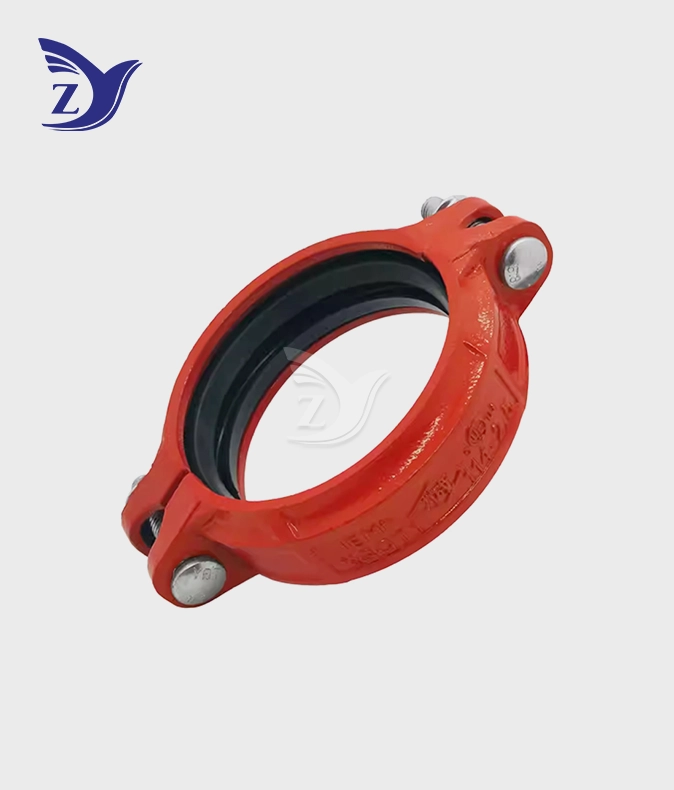
Fire Grooved Clamp
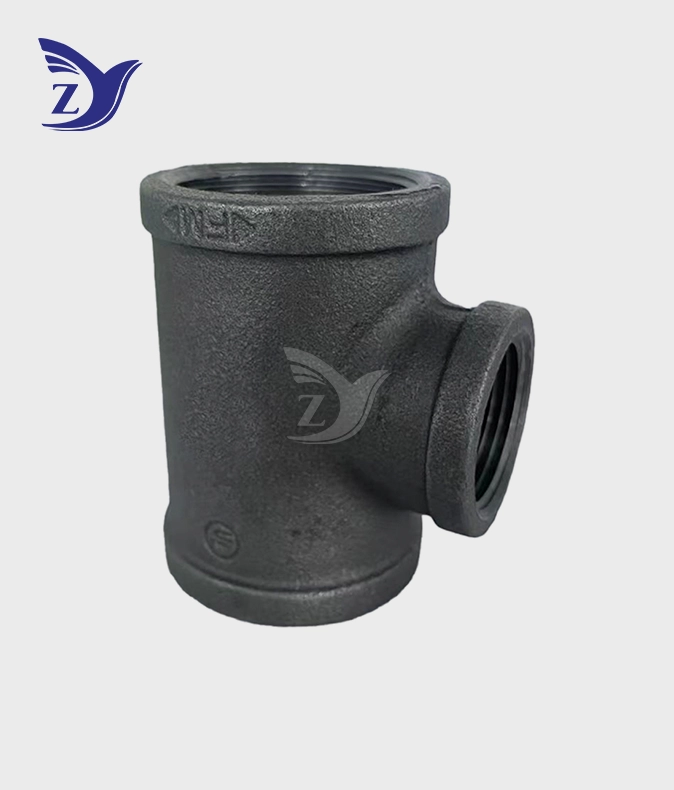
NPT Black Square Face Reducing Tee Pipe Fittings
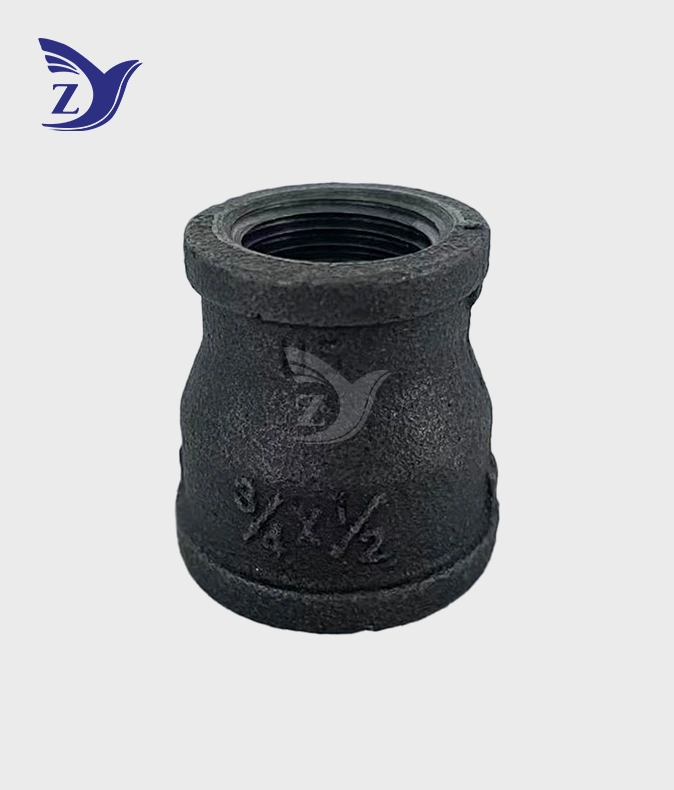
NPT Black Square Face Reducing Coupling Pipe Fittings
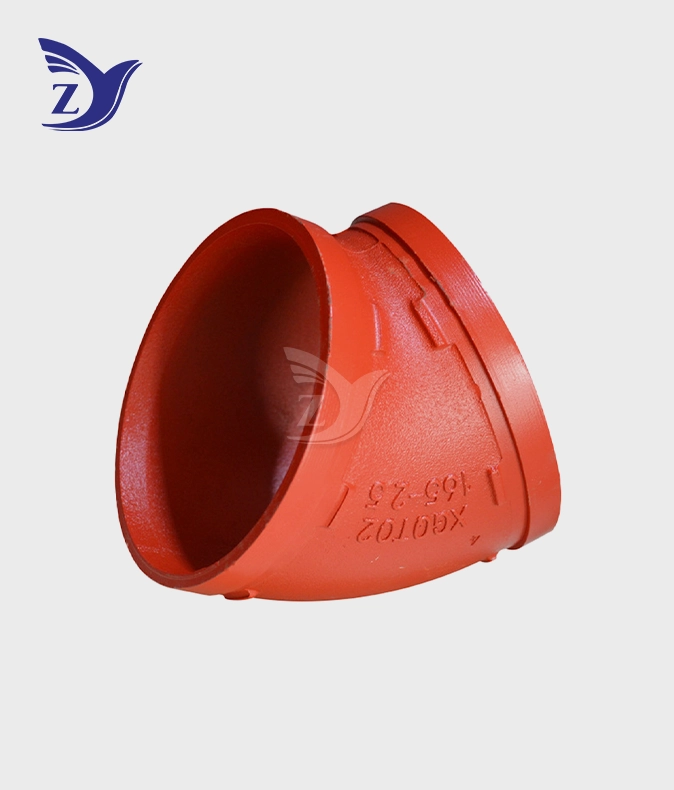
Fire Grooved 45° Elbow
BSPT Square Face Galvanized Square Edge Coupling Pipe Fittings