
Oct 13, 2026
When to Use a Round Edge Galvanized Reducing Coupling?
If you work in pipe system procurement or installation, you have probably faced the challenge of connecting two pipes of different diameters in a reliable, long-lasting way. The answer often comes down to one fitting: the beaded galvanized round edge male-female reducing coupling. Use it when you need to transition between two pipe sizes in water, gas, steam, or industrial fluid systems — especially in outdoor or corrosion-prone environments where zinc-coated malleable iron outperforms uncoated alternatives. With pressure ratings up to PN25 (25 Bar) and a zinc coating exceeding 70 microns per ASTM A153, this fitting handles demanding conditions that plain steel fittings simply cannot.
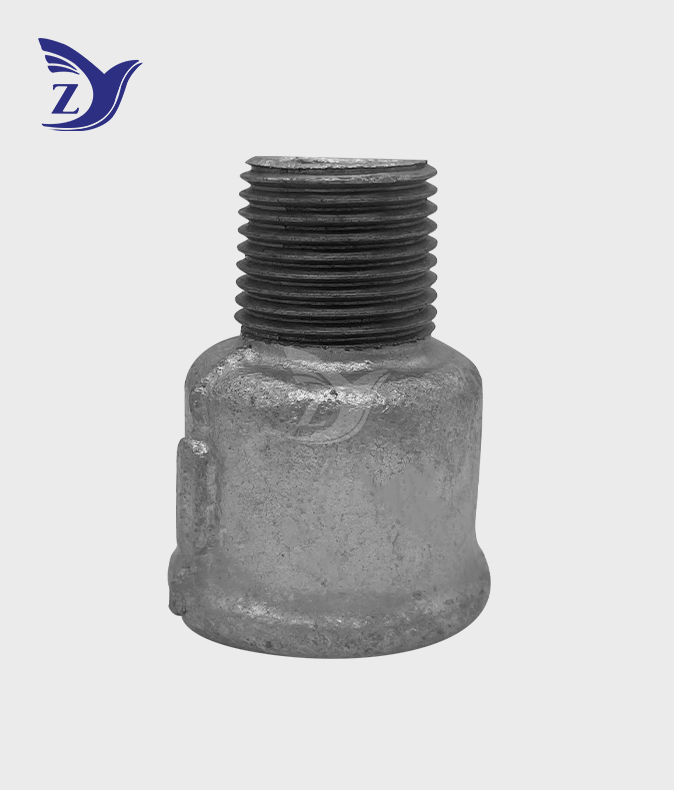
Understanding Round Edge Galvanized Reducing Couplings
It's helpful to know exactly what you're getting before you make a source choice. It can be hard to understand the terms used for these parts, so let me explain them in simple terms.
What Does "Beaded" Mean?
One thing that is called a "beaded" collar is a high, round piece at the opening of the fitting. This support ring makes the structure less likely to split when you tighten it up during installation. It also makes it easier to hold on to your pipe wrench, so you don't slip and get tired. In real life, the bead makes the fitting's opening more evenly spread mechanical stress, which is important in high-torque, high-cycle industrial settings.
What Is a "Round Edge" Profile?
If a fitting has a round edge profile, its outer edge is smooth and curved instead of sharp or angular. Hand accidents during handling are less likely to happen with this design choice, which is important when workers are processing hundreds of fittings per shift. It also helps the fitting wall be evenly stressed. The round edge design is less likely to have stress build up at the edge than the square edge design, which can cause microcracks when heated and cooled over and over again.
Male-Female Configuration Explained
One end of a male-female reducing coupling has an external (male) thread, and the other end has an internal (female) thread. The two ends are of different sizes to accommodate changes in pipe diameter. A hex bushing, on the other hand, is fully recessed into a female fitting. The male-female form makes the joint longer, which is why it's best when parts need to be spaced apart or when the connection point is too shallow for a bushing.
How to Determine When to Use a Round Edge Galvanized Reducing Coupling?
It's not enough to just make sure the threads work with the fitting. Just as much is important is the operating and environmental backdrop.
Environmental and Fluid Type Factors
When used in water, gas, air, and steam lines that are between -20°C and 120°C, hot-dipped galvanized malleable iron works best. The zinc layer is mechanically attached to the iron base and acts as a sacrifice to protect against rusting. For example, these fittings are often used to connect the ends of high-pressure submersible pumps to distribution lines with a smaller diameter. They can withstand years of dirt contact and humidity without showing any signs of rusting.
Pressure and Temperature Conditions
This beaded galvanized round edge male-female reducing coupling can handle PN25 (25 Bar) operating pressure, which is enough for most industrial HVAC, steam condensate return, and municipal gas distribution needs. The dual-threaded reducer links the main steam headers to smaller condensate return lines in commercial boiler rooms, where heat always expands and contracts. Unlike brittle cast iron, the structure of malleable iron allows for a small amount of deformation under thermal stress. This keeps the iron from cracking when the temperature changes.
Installation Guidance and Common Mistakes
Ring and plug gages that are suitable with BSPT or NPT must be used to check the thread taper before assembly for proper fitting. Only use PTFE tape or pipe thread glue on the male threads. The most common mistake during installation is overtightening. The interference fit made by the 55° side angle (BSPT) or NPT taper already creates a pressure-tight seal without needing too much force. You should never weld this fitting because the zinc coating turns into dangerous zinc oxide fumes when it heats up, and the carbon nodules in malleable iron make welded joints break easily.
Comparative Analysis: Choosing the Best Galvanized Reducing Coupling for Your Needs
Couples that reduce are not all the same. Here is a useful list of the main differences that buying professionals need to look at.
Beaded vs. Plain (Unbeaded) Galvanized Couplings
Because plain steel couplings don't have the support collar, they are more likely to have the orifice deform when they are installed with a lot of pressure. The beaded design is the most popular in the US market because it is less likely to break and is better for your body. For large orders in industrial distribution or construction, the beaded variant lowers the rate of field rejection, which protects your downstream profit margin.
Round Edge vs. Straight Edge Designs
In pipe systems that shake a lot, micro-fractures are more likely to happen because straight edge fittings have stronger edges that can focus stress at the edge. The load is spread out more evenly by the round edge shape. The round edge form lasts longer and needs less upkeep for outdoor installations or pipe runs that are likely to be shaken, like agricultural pump stations or industrial compressor lines.
Galvanized Iron vs. Stainless Steel Options
Galvanized malleable iron is a lot cheaper than stainless steel, and it's strong enough to prevent rust in gas, air, and water systems that don't handle drinking water. In food-grade or high-chloride environments, stainless steel makes sense. But for general industry and building uses, a hot-dipped galvanized NPT/BSPT dual-thread reducer is the best value for money. As per ISO 1461, the zinc coating that is thicker than 70 microns (500 g/m²) lasts for years without needing to be retreated.
Procurement Guide for Galvanized Reducing Couplings
Finding the right provider is just as important as finding the right size. Check these things out before you place a bulk order.
Certifications and Quality Standards
Find companies whose goods meet the ASTM A153 hot-dip galvanizing standard, the ISO 9001 standard for quality, and the ISO 49/EN 10242 standard for dimensions. If the fitting has CE, UL, or FM standards, it means that it has been checked by a third party to make sure it works well. Zhiyuan Malleable Steel has been in business for 26 years and was formed in 2006. It uses an ISO 9001 quality system to run its production, and its range of malleable iron pipe fittings is also approved by CE, UL, and FM.
Bulk Ordering and OEM Options
Large distributors that need to buy 20GP or 40HQ container loads of beaded galvanized round edge male-female reducing coupling need to find a supplier that can confirm that they can make the goods. Zhiyuan Malleable Steel can make 30,000 tons of steel every year, and they have more than 1,000 product specifications. They also offer ODM/OEM customization to meet the thread standards and packaging needs of each country. Procurement managers can stay competitive in local markets by setting prices that vary based on the number of orders.
Logistics and After-Sales Support
Standard items are shipped within two hours of being in stock. Fittings are kept dry and rust-free during ocean freight with export-grade weave bags and wooden boxes. Bad products are replaced right away; there are no long dispute processes. Zhiyuan Malleable Steel can be reached at q1236800000@gmail.com or zymalleablepipefitting.com for technical questions or to check specifications.
Case Studies and Practical Applications
Real data on success backs up real procurement choices. Here are two examples of situations where this type of fitting gives measured effects.
Municipal Gas Meter Retrofitting
A city's gas company had to change hundreds of meter boxes from older, larger-diameter service lines to newer, smaller measuring units. The NPT taper ensures a gas-tight seal in tight areas, and the round edge bead lets techs safely apply wrench torque without damaging the fitting or their PPE. This is why they chose an NPT/BSPT round-edge male-female reducing coupling. The project was finished on time, and there were no leaks noted at the modified joints.
Agricultural Irrigation Network Upgrade
When an irrigation contractor had to replace a plastic adapter system at pump manifolds, they switched to hot-dipped galvanized, precision-threaded iron couplings because the plastic kept breaking down in wet, soil-contact situations. The design of the corrosion-resistant male-female diameter converter got rid of the need for middle adapters. This cut the number of joints per manifold from three to one. In the first season after the switch, the number of maintenance calls dropped by more than 60%.
HVAC Steam System Maintenance
When working in a boiler room, a commercial HVAC contractor used 2" × 1½" beaded galvanized round edge male-female reducing couplings to connect the condensate return lines again after rerouting the pipes. The fittings kept their rated pressure for two full heating seasons without having to be tightened again. This shows how useful precise BSPT thread cutting is for steam condensate service.
Conclusion
A beaded galvanized round edge male-female reducing coupling is the best choice for pipe systems that need to change diameters reliably under pressure, in settings that are corrosive, or outside, and where long service life and safe installation are important. The hot-dip zinc coating protects against rust, the beaded design makes the orifice stronger, and the malleable iron body can handle thermal stress without breaking. When you're looking for HVAC, irrigation, gas distribution, or general industrial pipe, asking for this type of fitting saves your customers and your own bottom line.
FAQ
What is the difference between a beaded and a plain reducing coupling?
There is a raised reinforcement collar at the opening of a beaded galvanized round edge male-female reducing coupling that keeps it from splitting when torque is applied. If you don't have this collar on a plain coupling, the opening is more likely to bend during high-torque installation. In the US market, the standard style is the one with the beads.
Is this fitting suitable for outdoor and high-pressure applications?
Yes. The hot-dip galvanized zinc coating (greater than 70 microns according to ASTM A153) protects against corrosion reliably outside. The fitting can handle up to PN25 (25 Bar) of pressure, which is enough for most industrial and commercial pipeline uses.
How long does a galvanized malleable iron coupling last?
A hot-dipped galvanized coupling that is installed correctly can last 20 to 30 years in non-potable water, gas, or air systems in an industrial setting. This depends on the type of fluid and how long it is exposed to the environment.
Can I use this fitting for potable water?
A lot of water, air, and gas lines are made of galvanized iron because they are not drinkable. For uses with potable water, make sure the fittings meet NSF/ANSI 61 standards and any local plumbing rules, which might call for lead-free metal or stainless steel options.
Partner with Zhiyuan Malleable Steel for Your Next Bulk Order
Since 2006, Zhiyuan Malleable Steel has sold pipe fittings that are certified by CE, UL, and FM. They make 30,000 tons of them every year and keep over 1,000 specifications in stock. Our maker can make 20GP/40HQ container orders with proven lead times and OEM packing using our beaded galvanized round edge male-female reducing coupling. Products that are broken are always replaced. To get a tiered price quote right away, email your list of requirements to q1236800000@gmail.com or go to zymalleablepipefitting.com.
References
- American Society for Testing and Materials (ASTM). ASTM A153/A153M: Standard Specification for Zinc Coating (Hot-Dip) on Iron and Steel Hardware. ASTM International, 2016.
- British Standards Institution (BSI). BS EN 10242: Threaded Pipe Fittings in Malleable Cast Iron. BSI, 1995.
- International Organization for Standardization. ISO 1461: Hot Dip Galvanized Coatings on Fabricated Iron and Steel Articles — Specifications and Test Methods. ISO, 2009.
- International Organization for Standardization. ISO 49: Malleable Cast Iron Fittings Threaded to ISO 7-1. ISO, 1994.
- Nayyar, Mohinder L. Piping Handbook, 7th ed. McGraw-Hill, 2000.
- Thielsch, Helmut. Defects and Failures in Pressure Vessels and Piping. Krieger Publishing, 1996.
Online Message