
Apr 30, 2026
What is a square edge reducing street coupling used for in plumbing?
A square edge reducing street coupling is a specialized threaded pipe fitting engineered to connect pipes of different diameters while providing a secure, leak-resistant seal in industrial and commercial plumbing systems. These thread square edge reducing street coupling pipe fittings feature a distinctive square-edged body design that facilitates easier wrench engagement and torque application during installation. Unlike standard couplings with female threads on both ends, street couplings combine male threads on one end and female threads on the other, allowing direct connection between pipes without requiring additional nipples. Manufactured primarily from malleable iron with hot-dipped galvanization or stainless steel, these fittings serve critical roles in water supply networks, gas distribution systems, fire protection installations, and HVAC applications where diameter transitions are necessary while maintaining system integrity under varying pressure conditions.
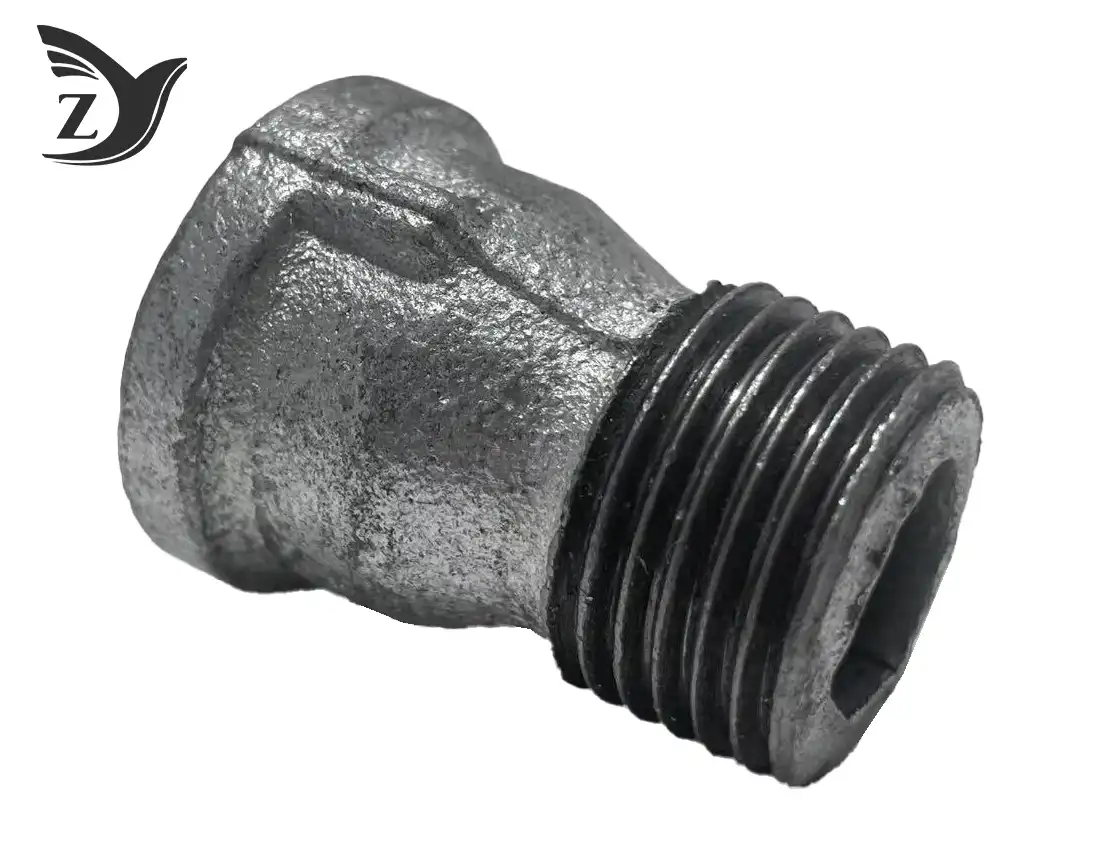
Square Edge Reducing Street Coupling in Plumbing
Core Functionality and Design Principles
The thread square edge reducing street coupling pipe fittings solve one of the most important problems in pipeline engineering, which is making diameter changes that are reliable in small spaces. The body's square edges and flat surfaces keep the wrench from slipping during installation, so technicians can get the right torque even in tight spaces. This part of the design makes these fittings different from ones with round bodies that tend to rotate when trying to install them.
The male-to-female configuration gets rid of the need for separate reducing bushings and close nipples. This makes installations easier and lowers the number of places where leaks could happen. This single fitting does what would normally take several parts to do when a 1-inch main line needs to branch into a 3/4-inch distribution line. The reducing function keeps hydraulic efficiency high by changing the diameter slowly, which reduces turbulence and pressure drops.
Thread Standards and Compatibility
The threading standards for these couplings are either NPT (National Pipe Taper) or BSPT (British Standard Pipe Taper). ANSI/ASME B1.20.1 says that NPT threads should have a 60-degree thread angle and a taper rate of 3/4 inch per foot. This makes an interference fit that gets tighter as the assembly goes on. ISO 7-1 standards say that BSPT threads have a 1:16 taper ratio. Both threading systems use thread deformation and thread sealant to make connections that don't leak. When torque is applied, the mechanical seals get tighter.
The square edge design improves the accuracy of thread engagement by giving visual and tactile reference points during assembly. Installers can more easily make sure the bolts are in the right place before applying torque. This lowers the risk of cross-threading, which can damage the seal. This feature comes in handy when working with galvanized fittings because you have to be very careful when threading them so that the zinc coating doesn't get damaged.
Real-World Application Scenarios
In fire protection systems, these couplings connect the main sprinkler headers to the branch lines that feed each zone. A 2-inch to 1-1/2-inch reducing street coupling might be used in a normal installation to connect the main riser to the floor distribution networks. The strong construction can handle sudden increases in pressure when the system is turned on and keeps the seal's integrity during cycles of thermal expansion.
When large-diameter mains connect to smaller residential supply lines, these fittings are used at service connection points in municipal water distribution projects. The galvanized malleable iron doesn't rust in the ground and can handle working pressures of up to 300 PSI, though this depends on the size and temperature of the object. Maintenance crews like the square edge design because it makes it easier to tighten the wrench properly, even when they are working in trenches that are full of water.
In HVAC installations, reducing street couplings are often used in condensate drain lines and chilled water systems. The fittings make it possible for cooling unit outlets to connect directly to building distribution pipes, so you don't need any extra adapters. Hot-dipped galvanization protects against acidic condensate, which would quickly break down standard steel parts, because it doesn't rust.
Before putting these fittings into complicated pipe assemblies, project engineers need to look at a number of important factors. Which specification is right depends on whether the threads will work with the current infrastructure. Ratings for pressure and temperature must match the operating conditions of the system, taking into account pressure spikes and temperature changes. Which material to use depends on the chemistry of the fluid, its exposure to the environment, and how long it is expected to last. These things to think about make sure that the coupling chosen works reliably throughout the project's lifecycle.
Key Specifications and Materials of Thread Square Edge Reducing Street Couplings
Standard Dimensions and Pressure Ratings
thread square edge reducing street coupling pipe fittings come in sizes ranging from 1/4-inch to 4-inch nominal diameters, which is large enough to cover most commercial and industrial pipe needs. Common reducing configurations are 1-inch x 3/4-inch, 1-1/4-inch x 1-inch, and 2-inch x 1-1/2-inch, but custom sizes can be made to fit the needs of a specific project. The measurements are in line with ASME B16.3 standards for threaded fittings made of malleable iron. This makes sure that they can be used in all supply chains around the world.
Pressure ratings depend on the type of material, its size, and its temperature. At room temperature, standard malleable iron couplings can usually handle working pressures of 150 PSI to 300 PSI. As the operating temperature gets closer to 350°F, the ratings start to drop. Class 150 fittings are good for most business and city uses, while Class 300 fittings are better for high-pressure industrial settings like steam distribution and process piping. During production, hydrostatic testing makes sure that every fitting can withstand pressures that are much higher than its rated capacity.
Another important parameter that affects performance is wall thickness. Heavy-duty couplings have walls that are stronger and don't bend when they're hit from the outside or under a lot of torque. Depending on the nominal size, the square edge body's thickness is usually between 0.25 inches and 0.5 inches. This gives the structure rigidity that keeps the threads aligned under mechanical stress.
Material Composition and Corrosion Resistance
Cast iron that can be shaped easily is the most popular material for these fittings because it is strong, flexible, and cheap. Through controlled heat treatment, the malleabilization process turns brittle white cast iron into a tough material that can handle shocks. This change makes a microstructure that can withstand the stresses of installation and the vibrations of operation without breaking. Tensile strength is usually between 50,000 PSI and 60,000 PSI, and elongation values can reach 10–18%, which makes the material strong against impact loads.
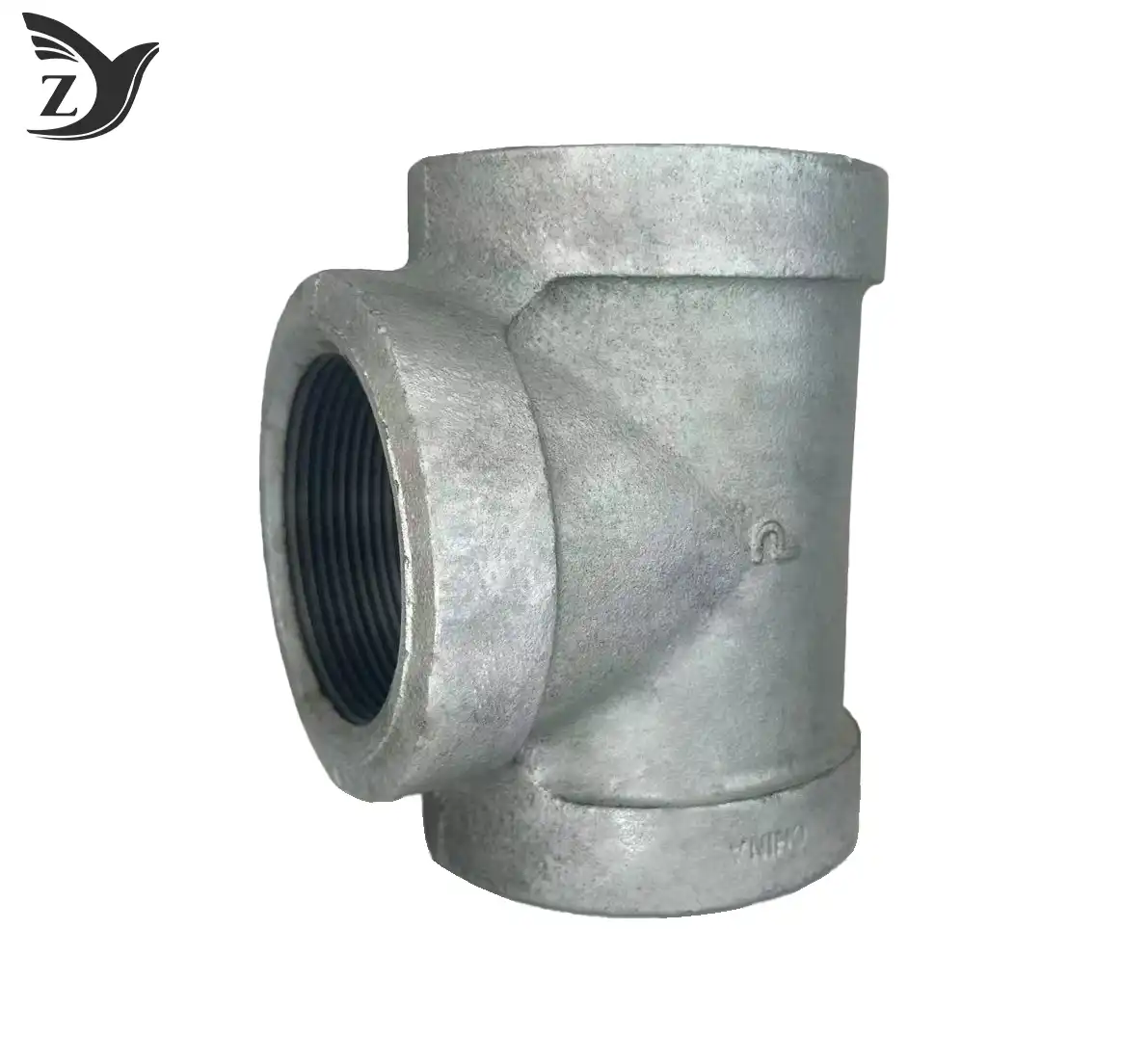
Hot-dipped galvanization is the main way that moldable iron couplings that will be used in water and air are protected from corrosion. During the zinc coating process, finished fittings are dipped in molten zinc that is about 840°F. This forms a metallurgical bond that covers all surfaces, even the threads inside. According to ASTM A153 standards, the average coating thickness is 3.4 mils. This gives decades of protection against rust and oxidation. The galvanized finish has a unique splotchy gray look that turns into a protective patina over time.
Alternatives to steel that is made of stainless steel are better at resisting corrosion in harsh chemical environments and high-purity settings. Grade 316 stainless steel couplings don't react with chloride in salt water or wastewater systems, and they keep their mechanical properties over a wider range of temperatures than iron that can be shaped. Corrosion resistance built into the material means that protective coatings are not needed. However, the higher cost of the material limits its use to situations where galvanized iron is not suitable.
Brass couplings are used in specific low-pressure situations where they need to be spark-proof or look good. The material is both resistant to corrosion and easy to work with, so it can be used to make threads and surfaces that are smooth. But brass isn't very strong, so pressure ratings are only around 125 PSI, which means it can only be used for plumbing and instrumentation connections in homes.
Distinguishing Square Edge from Chamfered Designs
The square edge profile makes shoulders that are perpendicular to the coupling body and threaded sections. These shoulders give the wrench flats that make it easier to engage the tool. Compared to this shape, chamfered or beaded designs have rounded transitions that make it hard for wrenches and pipe tools to grip. During installation, the flat surfaces keep the tools from rotating, so technicians can use full torque without having to move the tools around a lot.
The square shape also lets you see that the installation is correct. Sharp edges make it easy for installers to see where things are aligned before they are tightened all the way. This cuts down on mistakes that cause leaks. When working outside or in poorly lit mechanical rooms, these visual cues make installation more accurate than rounded profiles, which blend together in low light.
People who work in procurement should know that square edge fittings usually cost a little more than standard beaded options because they need to be machined more. The investment pays off because it cuts down on installation time and improves long-term reliability. This is especially true in high-stakes situations where preventing leaks is worth the extra cost.
Procurement and Supplier Considerations for Thread Square Edge Reducing Street Couplings
Supplier Qualification and Certification Requirements
Checking manufacturing certifications that show quality management system compliance is the first step in choosing qualified suppliers. If a company has ISO 9001 certification, it means that they follow written quality procedures for the design, production, and inspection processes. This basic level of assurance is especially important when looking for fittings for important jobs where a broken part could have serious safety or financial effects.
Product-specific certifications give you even more confidence in how well a product works. When fittings are listed by UL, it means they meet fire safety standards that apply to sprinkler systems and other fire protection systems. FM approval shows that the product has been tested and found to meet Factory Mutual's strict standards for industrial fire suppression applications. CE marking shows that a product meets the safety and performance standards set by the European Union. This makes it easier for products to be sold in other countries.
Material certifications and mill test reports show what the base materials used to make fittings are made of chemically and mechanically. These papers show where the materials came from and where they are going in the supply chain. This makes sure that the specifications are always met across all production runs. For projects that need to track materials, especially in regulated fields like power generation and petrochemical processing, procurement professionals should ask for certified material test reports (CMTRs).
Evaluating Price Competitiveness and Total Cost of Ownership
Initial unit pricing represents only one component of total procurement costs. When comparing domestic suppliers to international sources, shipping costs, order minimums, and payment terms have a big impact on landed costs. If a supplier has lower unit prices but big minimum orders, they might be more expensive than a local distributor who has higher piece prices but lets you choose how much to order.
Delivery reliability affects both the time and money needed to complete a project. When suppliers keep their stock levels high, they can quickly fill orders, which means that companies don't have to keep large safety stocks and the working capital that comes with them. Shanxi Taigu Zhiyuan Malleable Steel shows this ability by having standard products ready for delivery within two hours from inventory. This supports just-in-time purchasing strategies that reduce the need for on-site storage.
Quality consistency affects lifecycle costs through reduced failure rates and warranty claims. High-end suppliers spend money on process controls that make sure that all production batches have the same dimensions and material properties. This consistency means that installation performance can be predicted and there are fewer calls back to the field. This means that any initial price premiums are cancelled out by lower total installed costs.
Technical Support and After-Sales Service
Manufacturers with a good reputation offer technical support when choosing products, which helps procurement teams match fitting specifications to application needs. This consultative method stops specification mistakes that cause performance issues or failures before they should happen. When designing custom assemblies or dealing with installation conditions that aren't typical, having access to engineering support is immensely helpful.
After-sales support includes warranty administration, replacement policies for defective components, and field problem resolution. Clear warranty terms that cover manufacturing flaws lower the risk of costly schedule delays that could happen on big projects where parts fail. Zhiyuan Malleable Steel's promise to replace broken items shows that the company trusts the quality of its products and looks out for the interests of its customers.
OEM and ODM capabilities allow customization for uses that need non-standard sizes, special materials, or specific finishing needs. Companies that offer these services help buyers differentiate their products and make designs that meet the needs of specific markets. By being able to create custom solutions, you can build relationships with your suppliers that go beyond simple purchases and turn into working partnerships.
Conclusion
Thread square edge reducing street coupling pipe fittings represent engineered solutions that address fundamental pipeline connection challenges through thoughtful design and precision manufacturing. The combination of diameter reduction capability, space-efficient street configuration, and wrench-friendly square edge geometry delivers practical advantages across diverse plumbing and industrial applications. Choose from a variety of materials, such as galvanized malleable iron and stainless steel, to get the best performance in different fluid chemistries and operating environments.
To make implementation go smoothly, you need to know the technical details, follow the right installation steps, and work with qualified manufacturers who stick to strict quality standards. When lifecycle value drives procurement decisions, the operational benefits—such as not leaking, easy installation, and easy access for maintenance—justify specifying over other connection methods. As pipeline systems get more complicated and performance standards keep going up, these specialized fittings offer reliable, low-cost solutions that meet engineering needs and support long-term operational success.
Partner with Zhiyuan Malleable Steel for Reliable Thread Square Edge Reducing Street Coupling Pipe Fittings
Shanxi Taigu Zhiyuan Malleable Steel has been casting and fitting pipes for 26 years, so they can provide industrial-grade solutions that meet high quality standards around the world. As a top company that makes thread square edge reducing street coupling pipe fittings, we keep our ISO 9001, CE, UL, and FM certifications and run a 50,000-square-meter factory that can make 30,000 tons of products every year. Our wide range of products includes more than 1,000 different specifications for galvanized, moldable iron, and custom-engineered fittings for industrial, gas, and water use.
We know that procurement professionals need more than just competitive prices. They also need reliable supply chain partners who can provide consistent quality, technical support, and quick service. Our ODM/OEM capabilities allow us to meet specific needs, and our large inventory allows us to fulfill orders quickly. Standard products ship within two hours. We guarantee that any defective products will be replaced and strictly control the quality of our work. We are here to help your project succeed from the planning stages to the final installation. Talk to our team at q1236800000@gmail.com about your needs and find out how our thread square edge reducing street coupling pipe fittings supplier knowledge can help you get the best deals on reliable, certified solutions that are made to fit your needs.
FAQ
What pressure ratings apply to square edge reducing street couplings?
Pressure ratings depend on material composition, size, and temperature. According to ASME B16.3 standards, standard malleable iron fittings can handle 150 to 300 PSI of working pressure at room temperature. Class 150 versions are good for most commercial and municipal uses, while Class 300 versions are better for high-pressure industrial settings. As the operating temperature goes up, the ratings go down. For malleable iron, the highest temperature for service is around 350°F. Stainless steel alternatives can handle higher pressures over a wider range of temperatures. When purchasing things, teams should make sure that the thread square edge reducing street coupling pipe fittings they choose can handle pressures higher than the system's design limits, with enough room for error to account for surge pressures and temperature changes.
Can these couplings connect different pipe materials?
Square edge reducing street couplings can connect different types of pipes as long as the thread standards are the same. These fittings let NPT threaded steel, brass, and some plastic pipes with NPT threads connect to each other. But the material's compatibility with system fluids needs to be carefully looked at. When you connect different metals without dielectric separation, you run the risk of galvanic corrosion. Since polymer materials usually have lower ratings than metal fittings, pressure and temperature checks need to be done on plastic pipe connections. Different materials have different thread engagement depths, which affects how well the seal works. When designing mixed-material systems, check the manufacturer's instructions to make sure the right materials are paired together and joints are set up correctly.
References
- American Society of Mechanical Engineers. (2022). ASME B16.3: Malleable Iron Threaded Fittings - Classes 150 and 300. ASME Press.
- International Organization for Standardization. (2021). ISO 5922: Malleable Cast Iron - Specification for Fittings and Pipe Systems. ISO Standards Catalogue.
- American Society for Testing and Materials. (2020). ASTM A197: Standard Specification for Cupola Malleable Iron. ASTM International.
- National Fire Protection Association. (2019). NFPA 13: Standard for the Installation of Sprinkler Systems - Pipe and Fittings Requirements. NFPA Publications.
- Smith, Robert J. and Thompson, Michael D. (2023). Industrial Piping Handbook: Design, Installation, and Maintenance of Process Pipeline Systems. Technical Publishing Group.
- Johnson, Patricia L. (2021). Corrosion Prevention in Water Distribution Systems: Material Selection and Protective Coatings. Water Infrastructure Press.
Online Message
YOU MAY LIKE
High quality furniture manufacturer
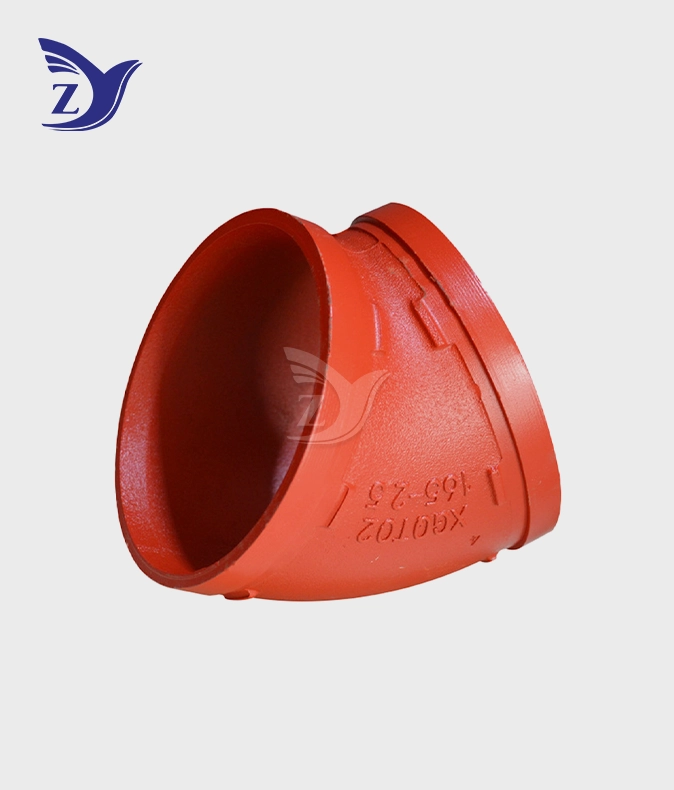
Fire Grooved 45° Elbow
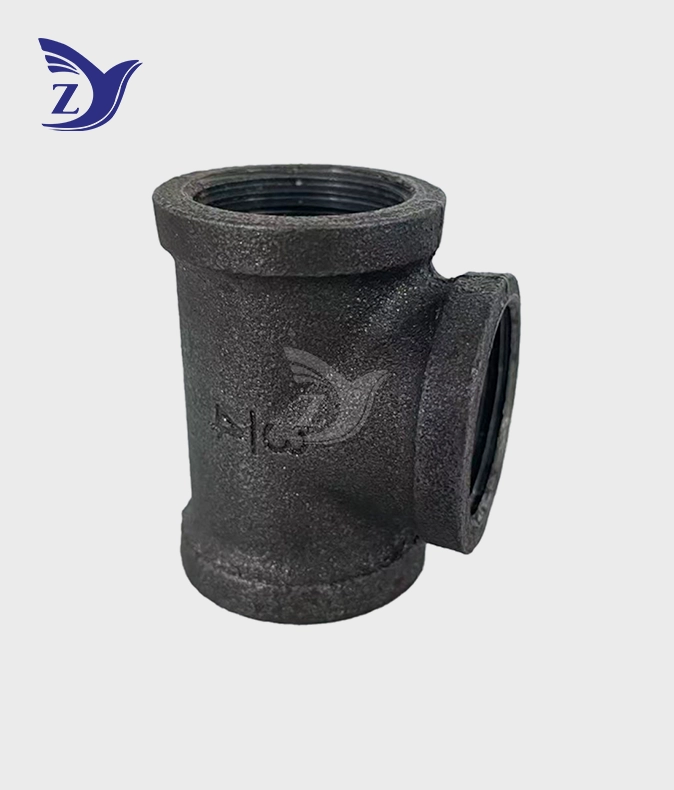
NPT Black Square Face Straight Tee Pipe Fittings
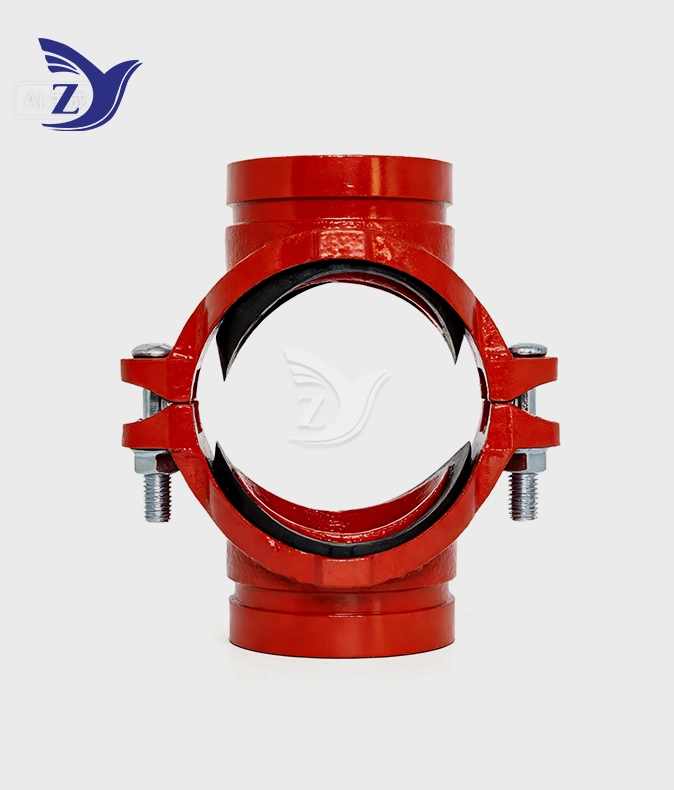
Threaded Mechanical Cross
No Hub Electro Galvanized Straight Tee Pipe Fitting
300# Black Threaded 90° Elbow, Male & Female
NPT Black Male-Female Union 331 Pipe Fittings
Carbon Steel Full Threaded Coupling Fittings Sand Blasted
Class 300 Hot Dipped Galvanized Malleable Iron Equal Tee