
Apr 23, 2026
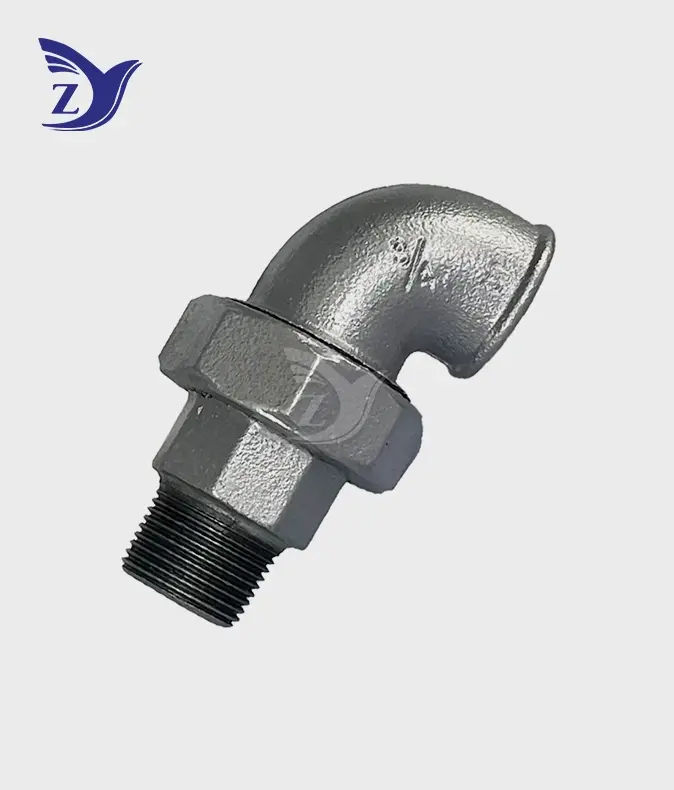
What are the parts of the galvanized union elbow threaded pipe fittings with male and female ends?
The superior performance of galvanized union elbow threaded pipe fittings with male and female ends in industrial pipeline applications may be understood by examining their complete elements. Elbow bodies with integrated male threads, female threaded collars that generate a 90-degree turn, and a union nut mechanism that allows field disconnection without pipe rotation are the three main components of these fittings. In water, gas, and steam systems, the precision-machined sealing surfaces provide leak-proof connections at high pressures, while the hot-dipped galvanized coating offers outstanding corrosion protection.
This in-depth review delves into the materials science, engineering concepts, and complex parts that make up these necessary fixtures. Readers will acquire in-depth knowledge of the factors that influence project performance in various industrial settings, including selection criteria, installation best practices, and quality demands.
Understanding Galvanized Union Elbow Threaded Pipe Fittings
Sophisticated technical solutions that combine directional flow control with maintenance accessibility in a single component are galvanized union elbow threaded pipe fittings with male and female ends. All it takes to disassemble these fittings is a simple rotation of the nuts, unlike traditional elbows that need cutting the pipe.
Core Components and Design Architecture
A number of components that have been meticulously designed and developed to function together form the basic framework. The structural basis and housing of the male threaded connection are provided by the elbow body, which is usually cast from blackheart malleable iron according to ASTM A197 requirements. The ductility required for installation torque absorption is maintained by this material option, which also exhibits excellent tensile strength surpassing 40,000 psi.
In order to accommodate the union sealing mechanism, the female threaded collar generates a perpendicular flow route. The galvanic corrosion and galling that might occur from several assembly cycles can be avoided with the premium versions' brass seats. To ensure that the sealing contact is clamped down uniformly, the union nut is designed with precise hexagonal surfaces.
Galvanization Process and Protection Mechanisms
These iron castings are made corrosion-resistant and appropriate for harsh situations by hot-dip galvanization. The fittings are immersed in molten zinc until they reach 850°F, which forms a metallurgical link between the base metal and the coating. Protecting against oxidation and serving as a cathodic sacrifice, the zinc layer has an average thickness of 86 microns.
When scratched, the galvanized surface heals itself because the electrochemical activity of the zinc keeps the exposed iron protected. Outdoor installations, subterranean applications, and situations with moisture or corrosive gasses are where this protective mechanism really shines.
Types and Materials of Union Elbow Fittings
Galvanized union elbow threaded pipe fittings with male and female ends are available in a wide variety of designs, each of which is designed to meet the demands of a particular application and the installation limitations. Procurement experts may maximize efficiency and productivity across projects by gaining a thorough understanding of these variances.
Threading Standards and Compatibility
In North American markets, the most common threading specification is NPT, which stands for "National Pipe Tapered," but in overseas markets, BSPT is the de facto standard. The thread interference that results from NPT threads' 60-degree angle and 3/4-inch taper per foot mechanically seals the joint. To ensure compatibility with European equipment, BSPT uses a 55-degree Whitworth profile with a 1:16 taper ratio.
The total connection length is reduced and intermediary components are eliminated by using the male-female design. When space is at a premium, this design excels over the more conventional methods of female-female unions, which include more near nipples and therefore more expense and more points of failure.
Material Selection and Performance Characteristics
For galvanized union elbow threaded pipe fittings with male and female ends, malleable iron is still the best substrate since it's strong, easy to work with, and cheap. Annealing turns white iron, which is brittle, into blackheart iron, which is ductile; this makes the material more resistant to fracture during installation.
When certain qualities are of the utmost importance, alternative materials are the way to go. Although they are more expensive, forged steel union elbows can withstand pressures more than Class 300. Varieties of stainless steel remove worries about galvanic corrosion in coastal settings, but they need extra caution to avoid galling during installation.
Although they don't have the same pressure ratings as ferrous union elbows, brass ones are great for machining and corrosion resistance. If the lead content satisfies NSF/ANSI 61 standards, they may be used in potable water applications due to their inherent antibacterial characteristics.
Comparison and Benefits of Union Elbow Fittings in Industrial Procurement
When comparing galvanized union elbow threaded pipe fittings with male and female ends to other connection techniques, procurement experts need to think about both the immediate cost and the lifespan cost in different operating circumstances.
Performance Advantages Over Standard Connections
When opposed to welded or soldered connections, which need cutting equipment for service access, union elbows provide significant maintenance benefits. During system changes or equipment replacements, the ability to separate pipe portions without affecting neighboring connections minimizes labor costs and downtime.
Flanged connectors are just as functional, but they take up a lot more room and cost more to make. Union elbows are superior than flanged elbows in many installation settings due to the former's gasket needs and bolt patterns. Flanged joints also provide more entry points for leaks than superior union designs, which only have one sealing surface.
In comparison to threaded union elbows, compression fittings have narrower temperature and pressure ratings, but they are easier to assemble. Union connections, with their inflexible metal-to-metal sealing, reduce the need to periodically retighten the plastic or soft metal components of compression systems that may creep under prolonged stresses.
Economic Considerations in Bulk Procurement
The ability to standardize across various system types is a major advantage of using galvanized union elbow threaded pipe fittings with male and female ends in large-scale procurement projects. Because they work with both water and gas, it's easier to simplify maintenance training and less complicated to minimize inventory. Premium initial expenses are often justified by the prolonged service life of correctly galvanized components via decreased replacement frequency.
Because production tolerances affect sealing performance and assembly ease, it is crucial to have good connections with suppliers when getting high-quality union elbows. Project quality assurance needs may be met with the help of documentation and traceability provided by well-established manufacturers that have obtained ISO 9001 certification.
Standards, Specifications, and Quality Assurance
The material qualities, dimensional tolerances, and performance standards for galvanized union elbow threaded pipe fittings with male and female ends are included in the engineering specifications to ensure safe operation across all intended applications.
Industry Standards and Compliance Requirements
To provide interchangeability between producers, ANSI B16.3 establishes standard size for malleable iron threaded fittings and specifies their dimensional parameters. Wall thickness, thread engagement lengths, and pressure-temperature relationships are all defined by these standards, which are used to assist system design calculations.
Metalworking specifications for pressure-applicable malleable iron castings are laid forth in ASTM A197. To provide sufficient ductility for field installation, the specification requires a minimum tensile strength of 50,000 psi and an elongation of 10%. Castings must undergo heat treatment to provide uniform mechanical characteristics.
Quality Verification and Testing Protocols
In order to validate the material qualities and the performance of the final product, reputable manufacturers conduct extensive testing procedures. To ensure structural integrity and a leak-proof assembly, hydrostatic pressure testing is performed at 1.5 times the operating pressure. Accurate pitch and lead are supported by thread gauging, which aids in the success of field assemblies.
Coating uniformity that satisfies ASTM A153 standards is confirmed by measuring the galvanization thickness using magnetic gauges. The corrosion resistance performance may be quantified using salt spray testing according to ASTM B117, which allows for the prediction of service life in different situations.
Documentation packages should include certificates of materials, reports of dimensional inspections, and results of pressure tests to back up quality assurance standards for the project. Products that have similar production characteristics may be quickly identified by batch labeling, which allows for traceability.
Conclusion
As a high-tech engineering solution, galvanized union elbow threaded pipe fittings with male and female ends meet the essential requirements of contemporary industrial piping systems. Applications in fire protection, HVAC, municipal infrastructure, and process piping need its unique mix of corrosion resistance, maintenance accessibility, and directional flow control. Reliability in rough operating conditions is assured by the precision-engineered parts, which include hot-dipped galvanized coatings, union sealing mechanisms, and malleable iron bodies. To fulfill system safety and reliability requirements and achieve optimum service life, it is important to choose materials properly, install them correctly, and follow maintenance procedures.
Partner with Zhiyuan Malleable Steel for Superior Union Elbow Solutions
Zhiyuan Malleable Steel stands ready to fulfill your galvanized union elbow requirements with precision-manufactured fittings meeting international quality standards. Our 30,000-ton annual production capacity, comprehensive ISO 9001 quality system, and 26 years of casting expertise ensure reliable supply for projects of any scale. As a trusted galvanized union elbow threaded pipe fittings with male and female ends manufacturer, we offer NPT/BSPT compatibility, custom OEM/ODM services, and expedited delivery from extensive inventory. Our technical team provides expert consultation supporting optimal fitting selection while our quality certifications including CE, UL, and FM guarantee performance reliability. Contact q1236800000@gmail.com to discuss your specific requirements and experience the advantage of working with an industry-leading pipe fitting specialist.
FAQ
What thread types are compatible with these union elbow fittings?
NPT (National Pipe Tapered) and BSPT (British Standard Pipe Tapered) represent the primary threading standards, with NPT featuring 60-degree threads and BSPT using 55-degree Whitworth profiles. These thread types cannot be intermixed due to different angles and pitch specifications that would result in leakage and thread damage.
How do I determine the correct size for my piping system?
Sizing depends on your existing pipe nominal diameter and thread standard. Measure the outer diameter of your pipe and consult sizing charts to determine the corresponding NPT or BSPT fitting size. The male and female ends should match your system's threading requirements exactly.
What pressure ratings can galvanized union elbows handle?
Standard malleable iron union elbows typically handle Class 150 (150 PSI) for steam applications and up to 300 PSI for water or gas service. Higher pressure ratings require Class 300 fittings with thicker walls and enhanced materials.
Why choose galvanized over other coating options?
Hot-dip galvanization provides superior corrosion protection compared to paint or electro-plating through its thick zinc coating and self-healing properties. The metallurgical bond between zinc and iron creates barrier protection plus cathodic sacrifice extending service life in corrosive environments.
Can these fittings be disassembled multiple times?
Quality union elbows accommodate numerous assembly cycles when proper techniques prevent thread damage or seat galling. Using appropriate thread sealants and avoiding over-tightening preserves the sealing surfaces for repeated maintenance operations.
References
1. American Society of Mechanical Engineers. "ASME B16.3: Malleable Iron Threaded Fittings - Classes 150 and 300." New York: ASME Press, 2018.
2. ASTM International. "ASTM A197/A197M-18: Standard Specification for Cupola Malleable Iron Castings for Threaded Pipe Fittings." West Conshohocken: ASTM International, 2018.
3. British Standards Institution. "BS 143-2:1993: Specification for Malleable Cast Iron and Cast Copper Alloy Threaded Pipe Fittings." London: BSI Standards Limited, 1993.
4. International Organization for Standardization. "ISO 5922:2005: Malleable Cast Iron Fittings Threaded to ISO 7-1." Geneva: ISO Publishing, 2005.
5. National Fire Protection Association. "NFPA 13: Standard for the Installation of Sprinkler Systems." Quincy: NFPA Press, 2019.
6. Zinc Council International. "Hot-Dip Galvanizing for Corrosion Protection: A Specifier's Guide." Durham: ZCI Technical Publications, 2017.
Online Message
YOU MAY LIKE
High quality furniture manufacturer
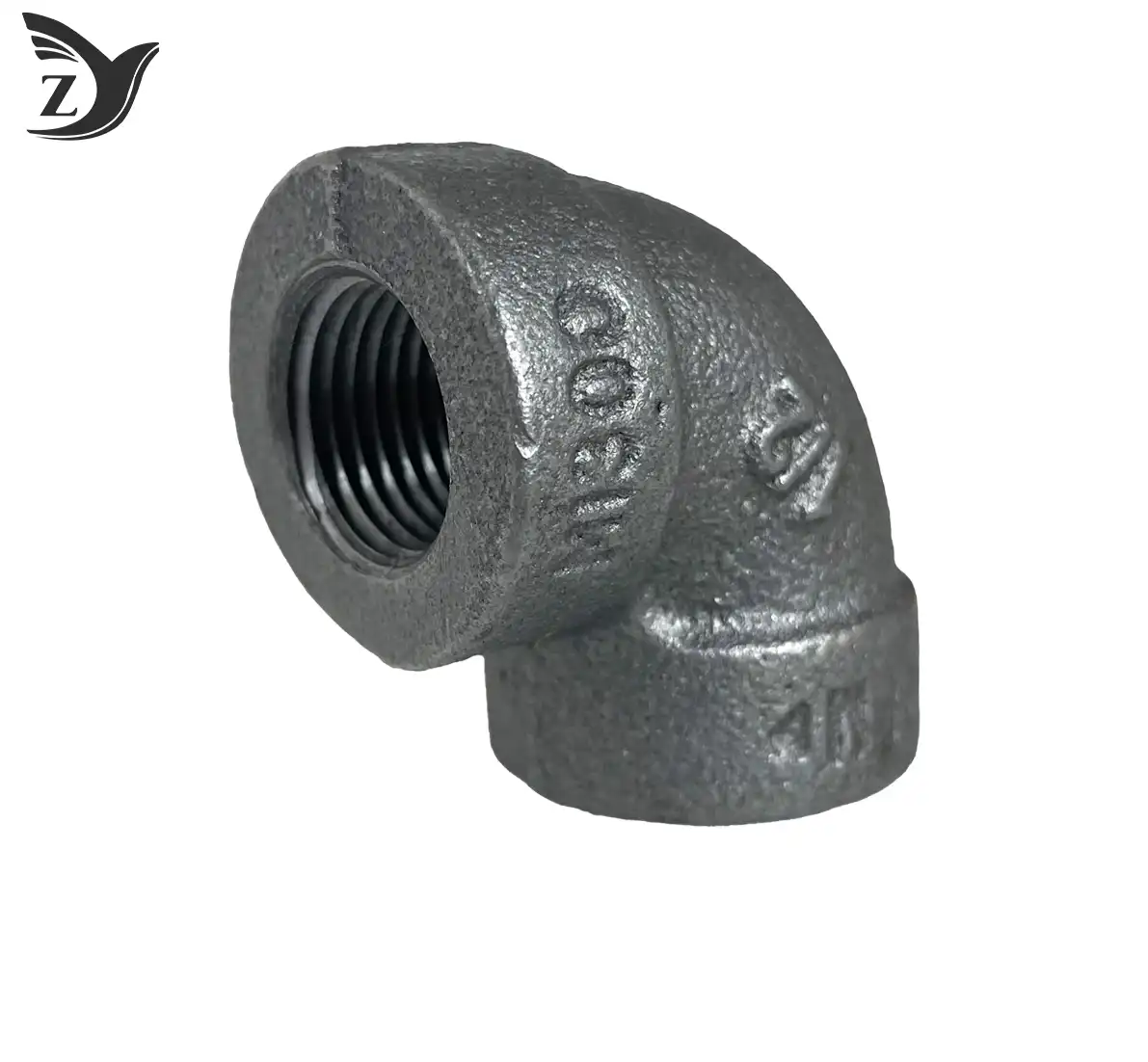
300LB Black Malleable Iron 90 Degree Elbow Pipe Fitting
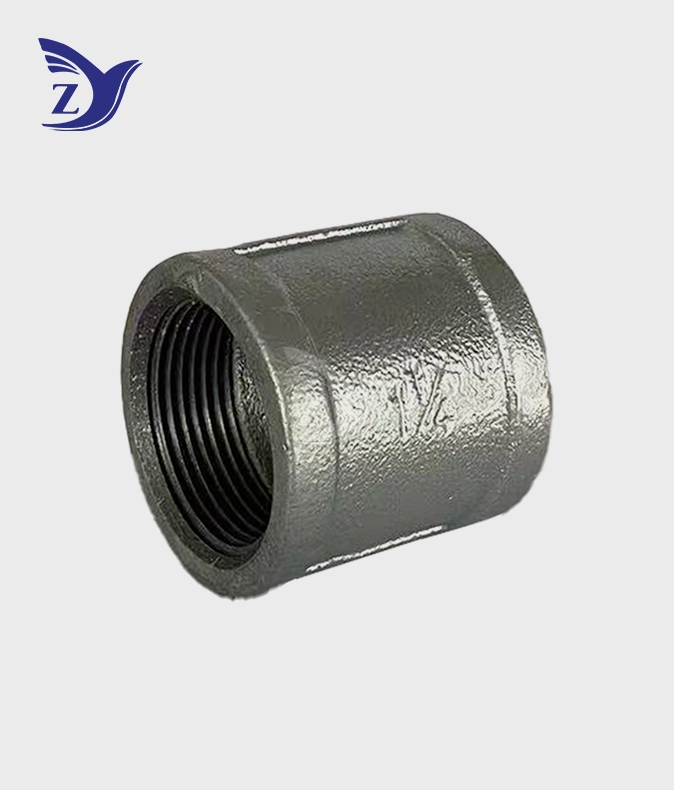
BSPT Square Face Galvanized Square Edge Coupling Pipe Fittings
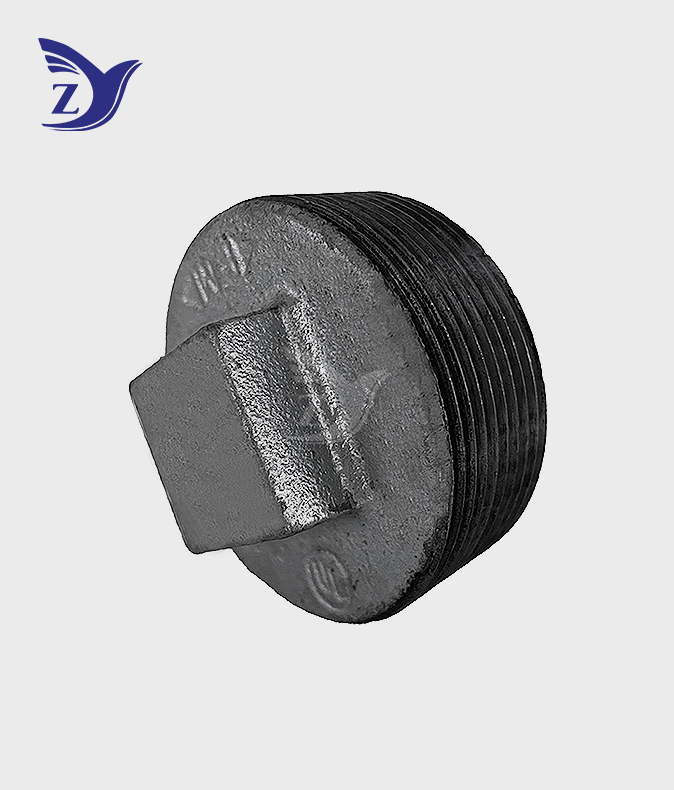
NPT Galvanized Non-Flanged Pipe Plug Pipe Fittings
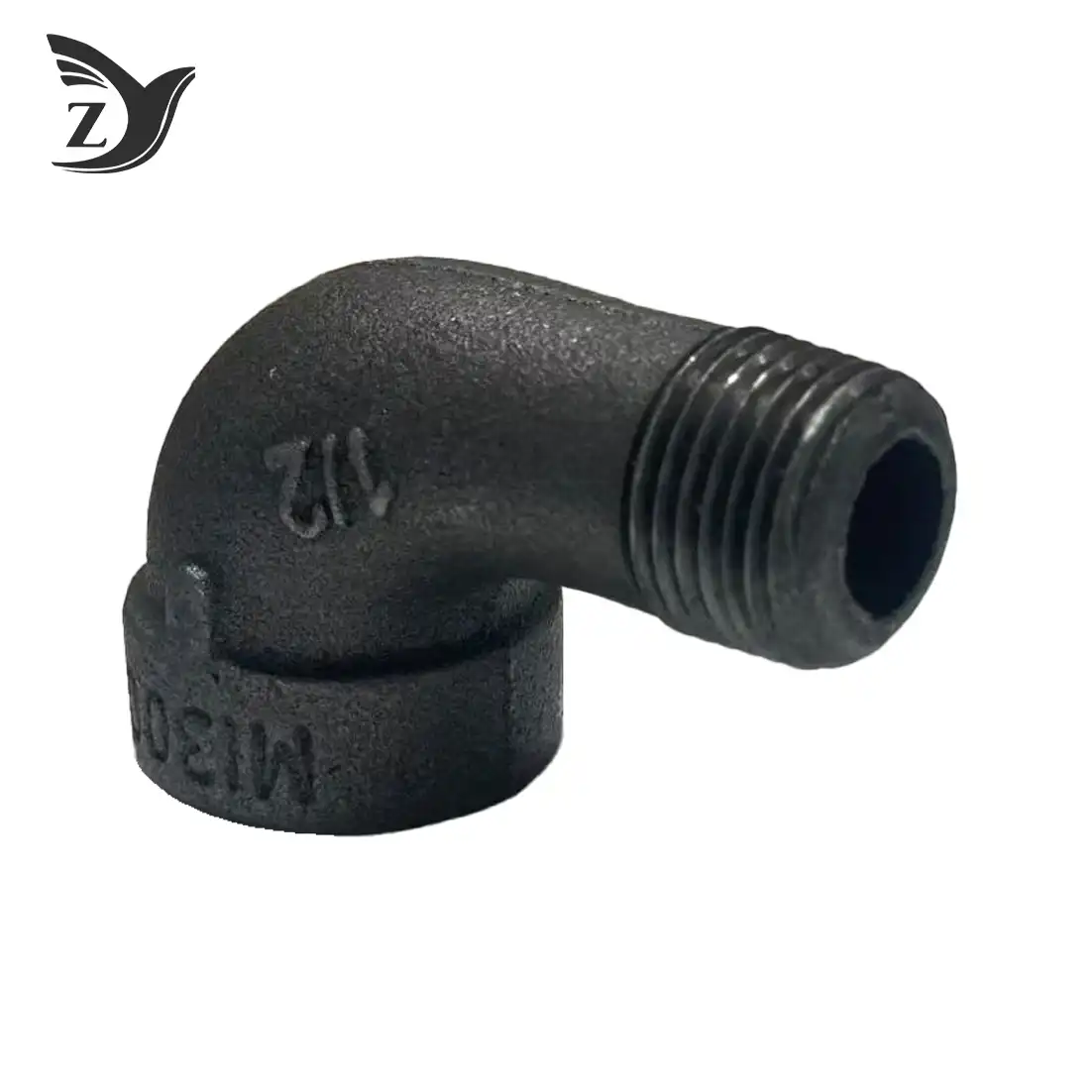
300# Black Threaded 90° Elbow, Male & Female
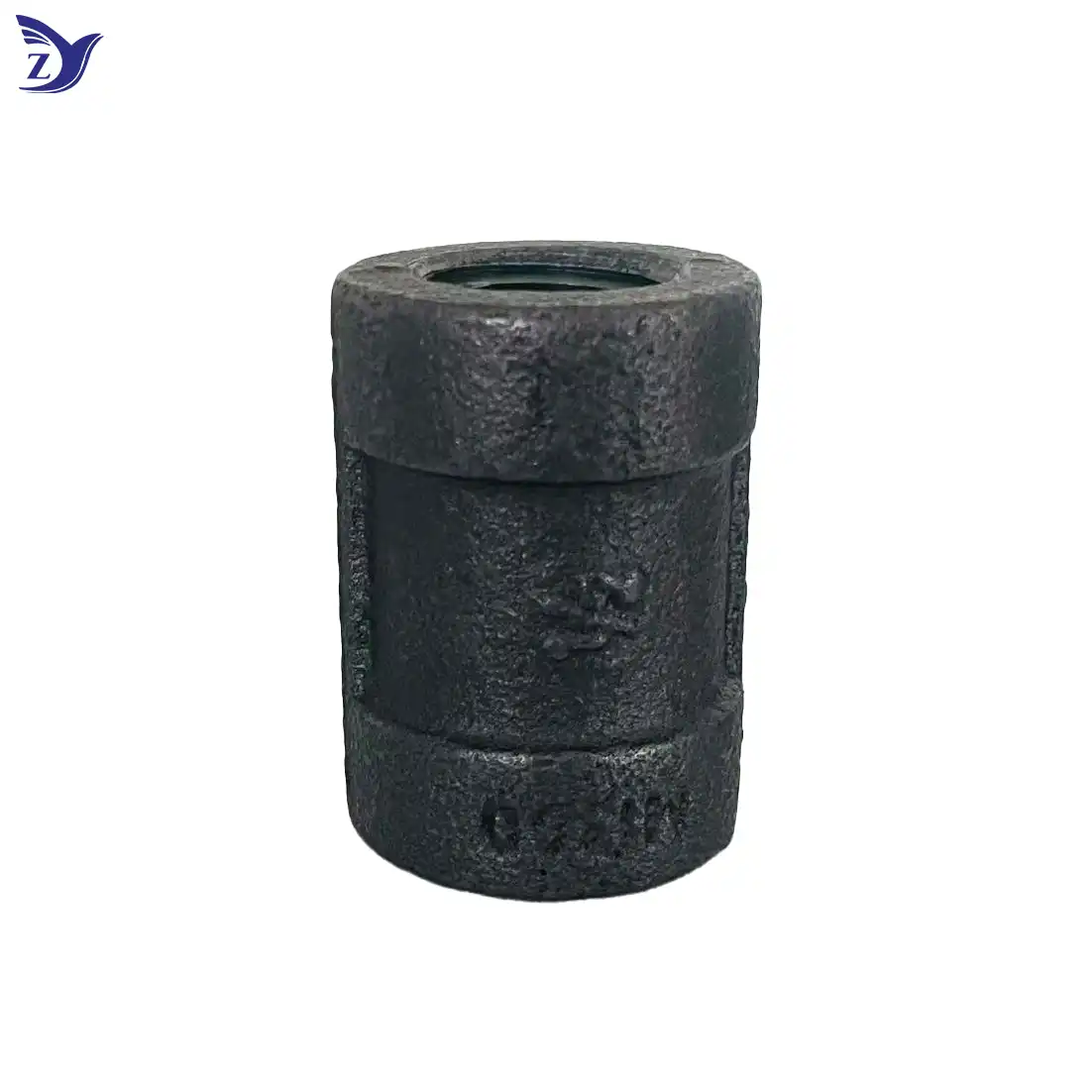
Black Malleable Iron Coupling Class 300
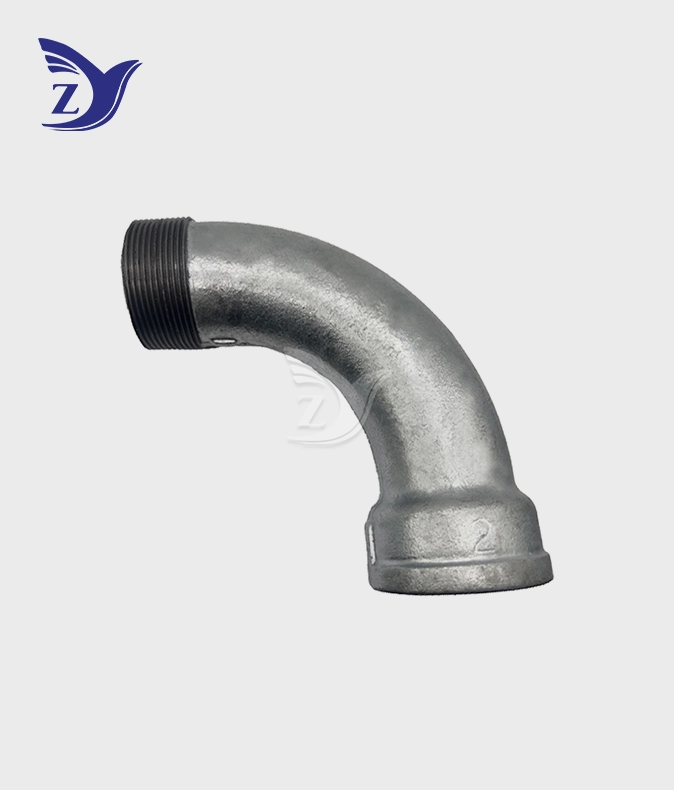
BSPT Galvanized Male Female 90° Long Radius Elbow Pipe Fittings
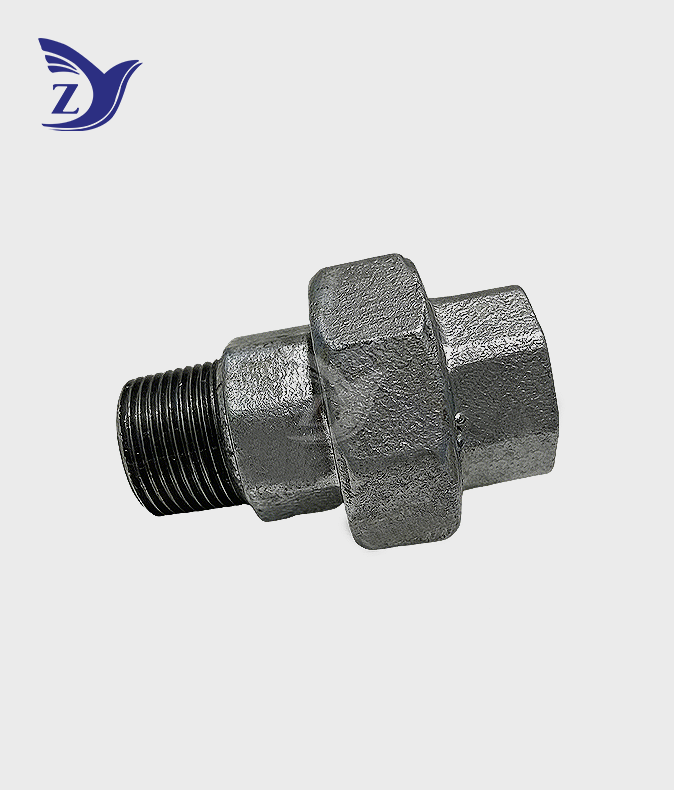
NPT Galvanized Male Female Threaded Union 343 Pipe Fittings
Carbon Steel Full Threaded Coupling Fittings Sand Blasted