
Jul 29, 2026
What are the different types of pipe fitting elbows?
When choosing parts for fire safety systems, city water lines or industrial gas pipelines, knowing the different types of pipe fitting elbows can help you avoid mistakes that cost a lot of money and cause delays in the installation process. Pipe elbows come with different connection types and angles, mostly 90°, 45°, and 180°. They can also be threaded, welded, or grooved. When it comes to threaded choices, the BSPT round face galvanized round edge 90° elbow pipe fittings stand out because of how strong they are. They have British Standard Pipe Tapered threads with a 55° flank angle and a hot-dip zinc covering that keeps them from rusting in harsh conditions. The round edge reinforcement, which is also known as a "beaded design," makes the fittings stronger around the edges and keeps them from breaking during high-torque installation. This makes them very useful in water supply, HVAC, and petrochemical uses.
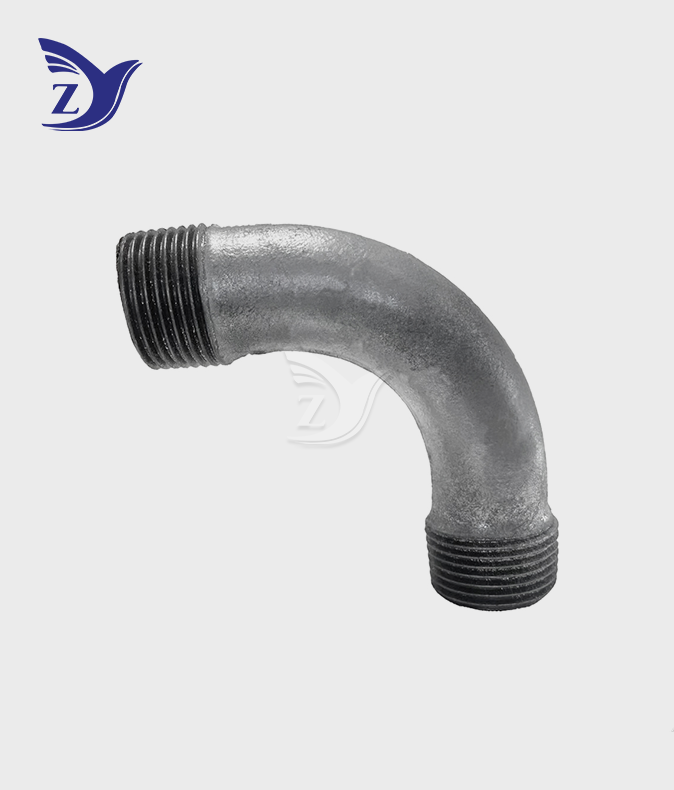
Pipe Fitting Elbows: Types and Applications
Before you can choose the right elbow type, you need to know how the angle, connection method, and material properties fit with the needs of your project. The choices you make here have a direct effect on the stability of the system, the cost of upkeep, and the length of time it works.
Common Elbow Angles and Their Functions
Most of the time, a 90° curve angle is given. This gives a sharp change in direction and works well for structured routing in fire sprinkler networks, pump houses and building machinery rooms. These fittings make it possible for pipes to go around structural obstacles without taking up too much space or being hard to make. The 45° elbow makes the flow change smoother, which lowers turbulence and pressure drop in places where fluid dynamics are important, like in large-diameter water mains or process pipes that handle thick fluids. 180° return bends are used less often, mostly in heat exchangers and serpentine cooling systems where the fluid needs to change direction while still fitting inside the equipment's small size.
Threaded vs. Welded Connection Methods
Threaded elbows, which come in both NPT and BSPT versions, offer fitting freedom and field repairability that can't be found with welded connections. With its tapered thread shape, the BSPT design makes a metal-to-metal seal as the fitting tightens. This means that covers are not needed and the leak protection is better when the fitting is vibrated. Because of this, threaded fittings are perfect for systems that can be taken apart for maintenance purposes every so often. Welded elbows have smooth internal flow profiles and can handle high pressures, but they need skilled workers and hot work permits, which makes installation take longer and cost more. When you tighten a wrench on a threaded BSPT fitting with a round edge, a strengthened collar is added that can handle the radial forces. This keeps the thread from deforming like it can happen with plain-faced fittings.
Material Selection and Surface Treatment
When it comes to industrial threaded elbows, malleable iron is still the best material because it is more flexible and resistant to shock than cast iron. If you ask for hot-dip galvanization, which usually results in a zinc coating mass of 500g/m², or about 70 microns thick, these parts get active cathodic protection against rust. The galvanized layer gives up its own protection to protect the base metal. This makes the product last longer in damp places, outside installations, and systems that carry harmful fluids. This treatment works especially well in fire safety systems where parts may not be used for years at a time, and in public water systems that are exposed to soil moisture and stray electrical currents.
Industry-Specific Application Considerations
Fire protection engineering firms focus on parts that meet UL and FM approval standards. This makes sure that sprinkler systems and hydrant hookups are in line with the rules. For bendable iron elbows, the pressure ratings—usually Class 150 (PN 20/25)—adjust to the 175 psi working pressures common in sprinkler and standpipe systems while still leaving enough room for error. For municipal engineering projects that need parts that are both cost-effective and will last for decades, galvanized flexible elbows are a better option than stainless steel for non-potable uses. BSPT round face galvanized round edge 90° elbow pipe fittings that can handle high temperatures are needed in petrochemical plants. For many process uses that aren't in very high-temperature areas, malleable iron elbows are a good choice. They can handle full pressure up to 120°C and lower pressure up to 300°C.
Technical Specifications and Measurement Guide for BSPT 90° Elbows
Specifications and measurements that are exact guarantee that the system works well and fits correctly. When you know about the technical details, you can avoid making the common buying mistakes that cause delays in the field and cost a lot to fix.
Thread Specifications and Dimensional Standards
BSPT round face galvanized round edge 90° elbow pipe fittings are made according to ISO 7-1 standards, which spell out exact pitch diameters, thread depths, and taper angles that allow parts from different manufacturers to be used interchangeably. From 28 threads per inch for 1/8" fittings to 11 threads per inch for 2" sizes, the thread pitch changes based on the standard size. How many full threads make up the pressure seal depends on the engagement depth, which is the distance from the thread start to the sealing plane. Usually, 4 to 6 threads connect before the taper makes metal-to-metal contact. Thread gauges, including both plug and ring types, check for conformance during quality control in production. For important measurements, tolerances are usually kept to 0.1mm. When comparing round-face designs to square-face designs, the round face reinforcement makes the socket deeper by about 2 to 3 mm. This is an important factor to consider when figuring out assembly lengths in tight spaces.
Galvanizing Standards and Coating Performance
For pipe fittings, hot-dip galvanizing must follow standards like EN 10242 in Europe and ASTM A153 in North America. These standards set the minimum average coating thickness and bonding requirements. The casts are cleaned to get rid of sand, scale, and other impurities, and then they are put into liquid zinc that is about 450°C. When the iron substrate and zinc react mechanically, a series of iron-zinc alloy layers are formed, with a pure zinc layer on top. Barrier protection (keeping the base metal away from acidic surroundings) and galvanic protection (the zinc corrodes more quickly than the iron, protecting it at scratches or cut ends) are both provided by this coating. Multiple immersions in a copper sulphate solution are used in the Preece test to check the uniformity and adhesion quality of the coating. When galvanized correctly, fittings don't rust in the air for decades and can be used underground or submerged for 20 to 30 years, based on the soil chemistry and water quality.
Material Properties and Pressure Ratings
When made to ASTM A197 or EN 1562 standards, malleable iron fittings have a tensile strength of more than 350 N/mm² and a stretch rate of more than 10%. This gives them the flexibility they need to handle shock loads and vibrations without breaking. The process of malleabilizing heat treatment changes the flimsy cast structure into a lattice of ferrite and temper carbon, which makes the material much tougher. Pressure grades take into account both the strength of the material and safety concerns. For example, Class 150 valves can handle 25 bar (about 360 psi) at normal temperatures and can be derated appropriately for higher temperatures. It is assumed that these values are correct and that the threads are properly engaged and that the right sealing solutions are used. When you combine a high-strength, malleable iron base with a strengthened round face design and protective galvanizing, you get fittings that can last for decades in tough industrial and city settings.
Procurement Guide: Choosing and Buying BSPT Round Face Galvanized 90° Elbows
When making strategic buying choices, you have to weigh the short-term cost of something against its long-term value and the reliability of the supply chain. The way you handle this will have long-lasting effects on project budgets, plan success, and the reliability of operations.
Supplier Evaluation and Quality Verification
Quality certifications are the basis for choosing a supplier. Look for companies that use ISO 9001 quality management systems to keep track of their processes and make sure they can be tracked back to the source. Product-specific certifications, like UL and FM approvals for fire safety uses or CE marks for compliance with European market rules, show that the product has been tested and meets well-known performance standards. Ask for material test reports from independent labs that confirm the composition and mechanical properties of the malleable iron, as well as measurements of the thickness of the galvanizing. Manufacturers who can do their own testing, like air pressure testing, thread gauge checking, and metallurgical analysis, can be more sure of the quality of their products than those who only use eye inspection. Being able to quickly identify any problem in the field by its production batch, heat treatment cycle, and galvanizing run makes it possible to fix them.
Pricing Factors and Cost Optimization
Prices are affected by more than just the size and amount of a fit. The prices of raw materials like scrap iron, alloy additions, and zinc coating change with the trade markets. This causes price fluctuation, which can be controlled by negotiating contracts with price adjustment terms. More complicated manufacturing is needed for bigger sizes and unique designs, which is mirrored in higher prices. Unit costs are greatly affected by the number of orders. The time it takes to set up casting moulds, heat treatment ovens, and galvanizing runs is spread out over the total number of orders. Depending on the size, the minimum order quantity is usually between 1,000 and 5,000 pieces. However, distributors keep common configurations in stock so that smaller orders can be made at higher unit prices. To find the best balance between inventory carrying costs and volume prices, you need to carefully look at how you use your products and how much space you have for storage.
OEM vs. Branded Products and Customization Options
Original equipment manufacturer (OEM) relationships make it possible to get goods that are tailored to the needs of a particular project. You can change the thread patterns, reinforcement designs, coating requirements, and markings to fit your needs, but there are tooling fees and minimum orders that must be met. This method works well for big projects with specific needs or ongoing programs where standardization makes things run more smoothly. Branded products from well-known companies offer tried and approved fittings that can be bought through distribution networks. These products trade the ability to be customized for quick supply and quality that is known. A lot of buying plans use both of these methods together, using named goods for general needs and OEM partnerships for more specific ones. Custom casting can include sizes that aren't standard, special metal mixes, and built-in features that do more than one thing in a single fitting.
Conclusion
Knowing the different kinds of pipe fitting elbows that are out there and what makes each one unique lets you make choices that improve system performance while keeping costs low. When you choose between different angle configurations, threading standards, materials, and surface treatments, you should think about what you need to use them for, the environment they will be in, and how you plan to maintain them over time. With their high mechanical strength, resistance to corrosion, and dependability in installation, BSPT round face galvanized round edge 90° elbow pipe fittings are perfect for industrial water systems, gas distribution networks, and fire protection. If you're a project engineer planning new facilities, a procurement manager looking for parts for ongoing programs, or a distributor building inventory to serve regional markets, this guide will help you make smart decisions. It includes technical specifications, installation best practices, and procurement strategies.
FAQs
Can BSPT fittings connect directly to NPT threaded pipes?
BSPT and NPT threads can't be used together because their side angles are different (55° vs. 60°) and their pitch and thickness are also slightly different. When these connections are forced, the threads don't join properly, the threads get broken, and there are leaks when pressure is applied. When connecting BSPT fittings to NPT pipes or equipment, you must use thread adapters that are made to go from one standard to the other.
What advantages do galvanized BSPT elbows offer over bare malleable iron?
There are two types of corrosion protection that hot-dip galvanizing offers: barrier protection and cathodic (sacrificial) protection. The zinc finish makes the fittings last 20 to 30 years longer in normal conditions, stops rust from staining, and keeps the threads stronger than coated or bare fittings. The coating is especially useful for installations that are outside, in humid places, or buried where they will be exposed to water all the time.
Are round face BSPT elbows suitable for high-pressure steam systems?
Standard BSPT elbows made of malleable iron with a Class 150 rating can handle steam service up to 180 psi full steam pressure at temperatures up to 300°C. However, as the temperature rises, the pressure ratings drop. The round face strengthening makes it stronger for high-torque installations that are needed in steam systems. But make sure you check the pressure-temperature ratings with the maker of your fitting because steam service causes both pressure and temperature stresses that affect performance.
Partner with Zhiyuan Malleable Steel for Your Pipe Fitting Needs
Zhiyuan Malleable Steel has been making specialised steel products for 26 years and can meet your pipe fitting needs. Our factory in Shanxi Province has quality systems that are ISO 9001 approved and can make more than 1,000 different types of products every year. As a reliable provider of BSPT round face galvanized round edge 90° elbow pipe fittings, we keep a large inventory that lets us send standard products within two hours of proof of order. This is a huge benefit when project deadlines need quick responses.
We can do the whole production process, from casting to galvanizing, so we can make sure the standard is high at all times. We have catalogue items that are certified by UL, FM, and CE, as well as OEM solutions that are made to fit the needs of your specific project. Our technical team is ready to help you with your needs, whether you need large amounts for distribution networks or custom setups for specific uses. Email our team at q1236800000@gmail.com to talk about your needs and find out how our manufacturing skills can help you make your supply chain more reliable.
References
- British Standards Institution. "BS EN 10242:2019 - Threaded pipe fittings in malleable cast iron." London: BSI Standards Publication, 2019.
- American Society of Mechanical Engineers. "ASME B16.3-2021: Malleable Iron Threaded Fittings, Classes 150 and 300." New York: ASME Press, 2021.
- Nayyar, Mohinder L. "Piping Handbook, 8th Edition." New York: McGraw-Hill Education, 2019.
- International Organization for Standardization. "ISO 7-1:2020 - Pipe threads where pressure-tight joints are made on the threads - Part 1: Dimensions, tolerances and designation." Geneva: ISO Central Secretariat, 2020.
- American Galvanizers Association. "Hot-Dip Galvanizing for Corrosion Protection of Steel Products: Design, Specification and Fabrication Best Practices." Centennial, Colorado: AGA Publications, 2018.
- Smith, Peter R. "Pipefitters Handbook: Including Steam, Hydronic, Fire Protection Systems and Process Piping." Atlanta: Industrial Press, 2017.
Online Message