
Apr 24, 2026
What are the different types of elbows?
The effective navigation of directional changes in industrial pipe systems is made possible by a variety of elbows. Bends of 45 degrees, 90 degrees, and 180 degrees are among the most used elbow configurations, and they all have their place in engineering. Featuring detachable connections that enable pipe separation without cutting, the galvanized union elbow threaded pipe fittings with male and female ends stand out as especially advantageous for applications that need frequent maintenance. In commercial, residential, and industrial settings, there are a variety of elbows designed to meet specific space and flow needs. These include street elbows, decreasing elbows, and long radius elbows.
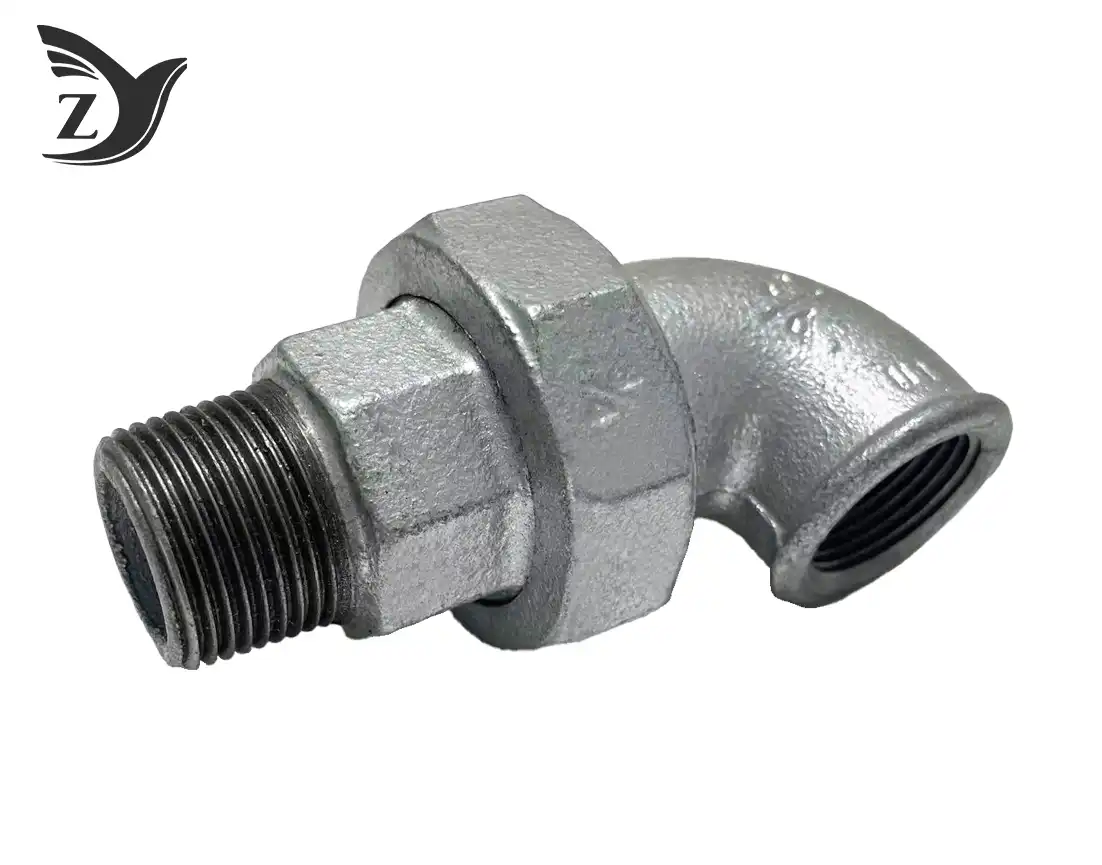
Understanding Union Elbows and Their Unique Advantages
As a subset of pipe fittings, union elbows are unique in that they allow for directional changes and have characteristics that make them easy to maintain. These parts combine a common elbow design with a union mechanism, making them simple to disassemble for servicing or replacing parts in the system.
Design Features and Construction
Union elbows are a product of coordinated engineering that makes use of three separate but complementary parts. The direction change is usually provided by the elbow body at a 90-degree angle, and the union mechanism separates the joint without impacting nearby pipes thanks to a threaded nut. To maintain a seal without leaks, the sealing system usually makes use of precision-machined seats that combine iron surfaces with brass or bronze components.
Zhiyuan Malleable Steel and other reputable producers of modern galvanized union elbow threaded pipe fittings with male and female ends use zinc coatings thicker than 70 micrometers and hot-dip galvanized surfaces. Because of its high corrosion resistance, this treatment is ideal for use in outdoor and industrial settings that are often exposed to chemicals and moisture.
Material Specifications and Performance Standards
Pipe fittings with male and female ends that are galvanized and have union threads are made to professional standards using blackheart malleable iron that meets ASTM A197 criteria. The ductility required to endure installation torque and heat cycling is preserved by this material choice, which also achieves tensile strength exceeding 40,000 PSI. In uses subjected to mechanical stress or temperature changes, the malleable iron structure is very useful.
Threaded connections usually adhere to either the National Pipe Thread (NPT) or the British Standard Pipe Thread (BSPT) requirements; when they are male-female, intermediary nipples are not necessary. This design streamlines the installation process and minimizes the likelihood of leaks, especially in tight places where rotating pipes might be difficult.
Applications in Industrial Systems
If you need to access the system for maintenance or make changes often, union elbows are the way to go. If you have a steam trap or strainer connection that needs repairing on a regular basis, installing a union elbow into your steam and condensate return system is a great idea. Maintenance staff may easily repair components without dismantling large sections of pipeline thanks to the modular design.
Sprinkler drops and hydrant connections, which are required to be accessible for inspection and testing by building regulations, increasingly use galvanized union elbow threaded pipe fittings with male and female ends. These vital safety applications rely on the galvanized coating for long-term dependability due to its corrosion resistance.
Exploring Different Types of Elbows in Industrial Piping
Industrial pipe has a wide variety of elbow arrangements, each designed to meet unique operating needs and accommodate limited space. By being aware of these differences, procurement experts may choose the best components for their needs.
Standard Elbow Configurations
The two most common kinds of elbows, 45-degree and 90-degree, each have their own specific use for routing pipelines. These elbows are perfect for high-flow situations where keeping the fluid velocity crucial is of the utmost importance, since they produce smoother directional shifts with less pressure loss and turbulence. Wherever possible, these elbows should be used in process piping and HVAC systems to maximize energy efficiency.
For installations with limited space, 90-degree elbows provide the abrupt directional shifts that are required. While decreasing elbows integrate size variations along the directional transition, standard 90-degree elbows provide identical inlet and outlet dimensions. The centerline-to-face dimensions of long radius 90-degree elbows are 1.5 times the nominal pipe diameter, which is a compromise between space constraints and flow characteristics.
Specialized Elbow Types
One threaded end and one socket end make street elbows, often called male-female elbows, ideal for situations where extra nipples aren't needed. When every square inch counts, as in confined areas, its design really shines. There are fewer threaded connections overall thanks to the male-female arrangement, which might lead to increased system dependability.
Coupling elbows include union functionality into the elbow body, while socket elbows are designed to handle solvent-welded connections, which are ubiquitous in PVC and CPVC systems. The installation and maintenance needs of various industrial settings are met by each configuration in its own unique way.
Material and Coating Variations
Standard malleable iron and specialty alloys developed for severe service conditions are among the materials that may be used for elbows. If you're looking for a material that won't rust or corrode in most industrial settings, go for galvanized union elbow threaded pipe fittings with male and female ends. If you're working with chemicals or food, go for stainless steel choices.
Among the many effects of galvanization on durability, hot-dipped galvanizing offers the best protection above electroplated options. Featuring zinc coatings averaging 500 kilos per square meter, professional-grade galvanized elbows guarantee decades of dependable performance in outdoor installations.
Criteria for Choosing the Right Elbow Type for Your Project
A number of technical and financial considerations must be carefully considered while choosing the right elbow fits. An application's ideal solution could change depending on factors including system pressure, operational temperature, fluid compatibility, and maintenance needs.
Pressure and Temperature Considerations
The main limitation in choosing an elbow is the operating pressure, which might vary depending on the arrangement. Class 300 connections can withstand the greater pressures seen in hydraulic and steam systems, whereas standard Class 150 fittings can handle air and water applications up to 150 PSI.
Particularly in threaded connections, where seal integrity may be compromised by differential thermal expansion, temperature cycling reduces fitting lifespan. Particularly useful in these contexts are male and female galvanized union elbow threaded pipe fittings, as the detachable connection enables tightening or gasket replacement without halting the system.
Fittings that can withstand high temperatures and pressures at the same time are often used in industrial settings. For instance, steam service presents unique challenges to material qualities and joint sealing systems due to the combination of high pressure and extreme temperatures.
Thread Compatibility and Standards
In the early phases of planning, thread specification is often disregarded despite its crucial importance as a compatibility aspect. For consistent performance, use thread sealant or tape on NPT threads to prevent thread interference and establish a seal. Despite their superficial similarities, BSPT threads cannot be used with NPT connections because they use a different thread angle and pitch.
Leakage and other safety risks are inevitable outcomes of mixing thread specifications. All the way down the supply chain, from main components to auxiliary fittings and instrumentation connections, procurement personnel need to double-check thread standards.
Environmental and Chemical Compatibility
Not only must the material used to fit the pipes be chemically compatible, but so must any coatings or sealing components. Although galvanized coatings are very resistant to air corrosion, they may not be compatible with certain chemicals used in industry. Zinc coatings may deteriorate faster in acidic settings, thus it may be necessary to find other materials or take precautionary measures.
Additional difficulties that outdoor installations encounter include exposure to ultraviolet light, temperature fluctuations, and moisture intrusion. When it comes to these circumstances, hot-dipped galvanized fittings are far better than painted or electroplated ones.
Procurement and Supplier Insights: Where and How to Buy Union Elbows
Understanding supplier capabilities, quality processes, and market conditions that impact availability and price is crucial for successful procurement of galvanized union elbow threaded pipe fittings with male and female ends. Consistent access to high-quality components at an affordable price is possible via the establishment of connections with dependable suppliers.
Supplier Evaluation Criteria
When evaluating a supplier, it's important to look at their production capacity, quality control measures, and availability of technical assistance. The use of statistical process control and maintenance of ISO 9001 certification are common practices among well-established enterprises that aim to guarantee consistently high-quality products. In order to complete massive projects in a short amount of time, production capacity becomes an absolute need.
Shipping prices and delivery timelines are impacted by geographic proximity, especially when it comes to hefty malleable iron fittings. While foreign vendors may have benefits in terms of price for big quantities or unique configurations, domestic providers often offer quicker response times and lower delivery costs.
A professional supplier differs from a commodity vendor in terms of their technical assistance skills. Having access to application engineering support allows for better fitting selection and helps to prevent expensive specification mistakes that might cause project delays.
Custom Manufacturing and OEM Services
Extending beyond the scope of typical catalog offers, many industrial applications need non-standard combinations. Zhiyuan Malleable Steel is one of several OEM producers that provide bespoke machining and coatings to suit specific needs. The unique technical issues that arise in complicated installations may be overcome with the use of custom thread configurations, non-standard angles, and exotic materials.
Custom items usually have longer lead times than regular products, therefore it's important to identify any particular needs early on in the project planning stages. It is important to communicate technical specifications and quality criteria clearly to avoid delivery delays or receiving items that are not acceptable.
Bulk Purchasing and Inventory Management
Bulk purchase agreements decrease per-unit costs and guarantee sufficient inventory availability, making them ideal for large-scale projects. If suppliers are prepared to keep galvanized union elbow threaded pipe fittings with male and female ends in consignment or provide regular deliveries, it helps with working capital management and prevents stockouts during important installation periods.
Because changes in installation or performance might result from variations across manufacturing batches, quality consistency becomes very critical when purchasing in bulk. Consistency across extended delivery timelines is ensured by established suppliers via lot control methods.
Conclusion
It is possible to make cost- and performance-effective procurement selections when one is knowledgeable about the several kinds of elbows available for use in industrial piping systems, such as galvanized union elbow threaded pipe fittings with male and female ends. Union elbows provide dependable sealing and easy disassembly, making them ideal for applications that need frequent maintenance. The pressure ratings, climatic factors, and maintenance accessibility demands of a given application dictate the elbow arrangement that is most suitable. Collaborating with competent suppliers that grasp technical specifications and provide consistent quality standards is essential for successful procurement. For the fitting's best performance over its service life, professional installation and maintenance methods are essential.
Partner with Zhiyuan Malleable Steel for Premium Union Elbow Solutions
Zhiyuan Malleable Steel stands as your trusted galvanized union elbow threaded pipe fittings with male and female ends supplier, delivering over 26 years of expertise in malleable iron casting and pipe fitting manufacturing. Our NPT/BSPT male-female union elbows feature hot-dipped galvanized surfaces and precision threading that meets international standards including ISO 9001, CE, UL, and FM certifications. With annual production capacity reaching 30,000 tons and inventory levels supporting rapid delivery within two hours for standard products, we serve fire protection, municipal engineering, and industrial clients throughout the United States. Our comprehensive quality control system ensures every galvanized union elbow meets rigorous performance standards while our OEM/ODM capabilities address custom specifications for specialized applications. Contact our technical team at q1236800000@gmail.com to discuss your project requirements and discover how our malleable steel expertise can optimize your piping system performance.
FAQ
What is the main advantage of using union elbows over standard elbows?
Union elbows provide detachable connections that allow pipe separation for maintenance without cutting or disassembling adjacent piping. This feature proves invaluable in applications requiring frequent component replacement or system modifications, significantly reducing maintenance time and costs.
Can NPT and BSPT union elbows be used interchangeably?
NPT and BSPT threads are not interchangeable due to different thread angles and pitch specifications. NPT features a 60-degree thread angle while BSPT uses 55 degrees. Attempting to mix these standards results in improper sealing and potential system failure.
What maintenance schedule should I follow for union elbows?
Union elbows benefit from visual inspection every six months, checking for signs of leakage, corrosion, or mechanical damage. Retightening may be necessary annually in applications subject to thermal cycling or vibration. Steam service applications require more frequent inspection due to elevated operating conditions.
What certifications should I look for when purchasing union elbows?
Look for fittings manufactured to ASTM A197 material standards with hot-dipped galvanizing conforming to ASTM A153. For fire protection applications, UL and FM certifications ensure compliance with safety standards. ISO 9001 certification indicates the manufacturer maintains quality management systems throughout production.
How does galvanization thickness affect fitting longevity?
Galvanization thickness directly impacts corrosion resistance and fitting lifespan. Professional-grade fittings feature zinc coatings exceeding 70 micrometers (average 500g/m²), providing decades of protection in outdoor environments. Thinner coatings may prove adequate for indoor applications but offer reduced longevity in corrosive conditions.
References
1. American Society for Testing and Materials. "Standard Specification for Cupola Malleable Iron Castings." ASTM A197-87, 2019.
2. International Organization for Standardization. "Pipe Threads Where Pressure-Tight Joints are Made on the Threads - Part 1: Dimensions, Tolerances and Designation." ISO 7-1:1994.
3. American National Standards Institute. "Cast Iron Threaded Fittings, Classes 125 and 250." ANSI B16.4-2016.
4. National Fire Protection Association. "Standard for the Installation of Sprinkler Systems." NFPA 13, 2022 Edition.
5. American Society of Mechanical Engineers. "Process Piping Code." ASME B31.3-2020.
6. Underwriters Laboratories. "Standard for Safety Pipe Fittings for Fire Protection Service." UL 213, 2018.
Online Message
YOU MAY LIKE
High quality furniture manufacturer
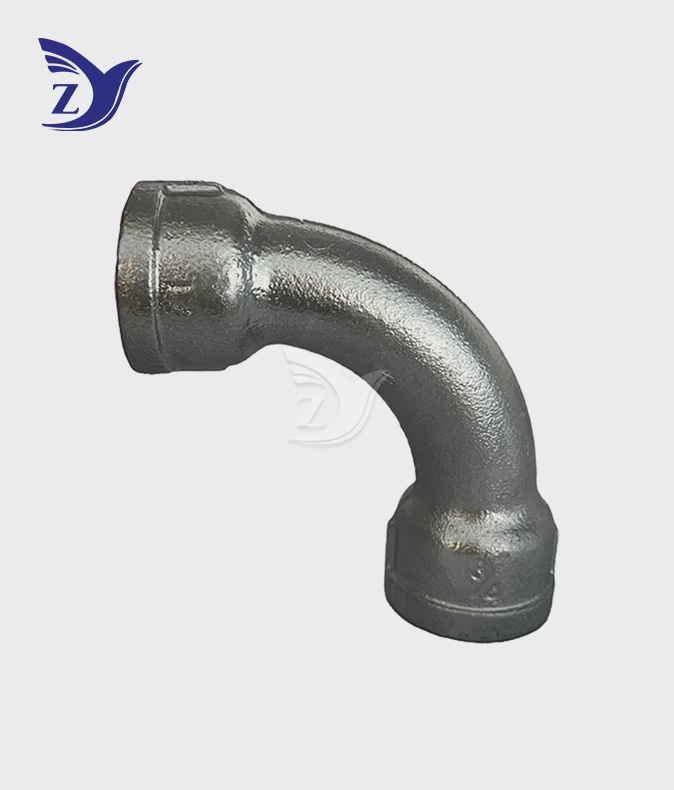
NPT Galvanized Female-Female 90° Long Radius Elbow Pipe Fittings
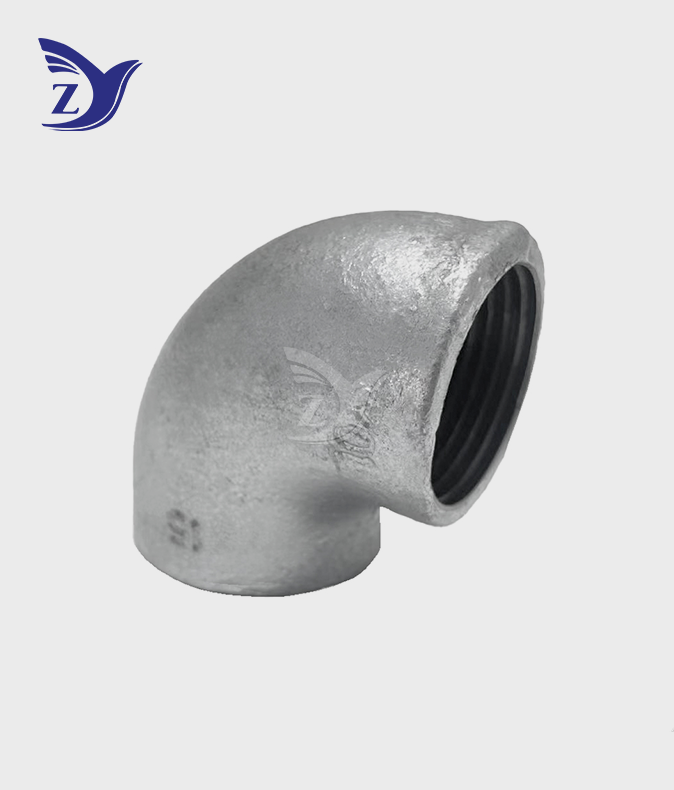
No Hub Electro Galvanized 90° Elbow Pipe Fitting
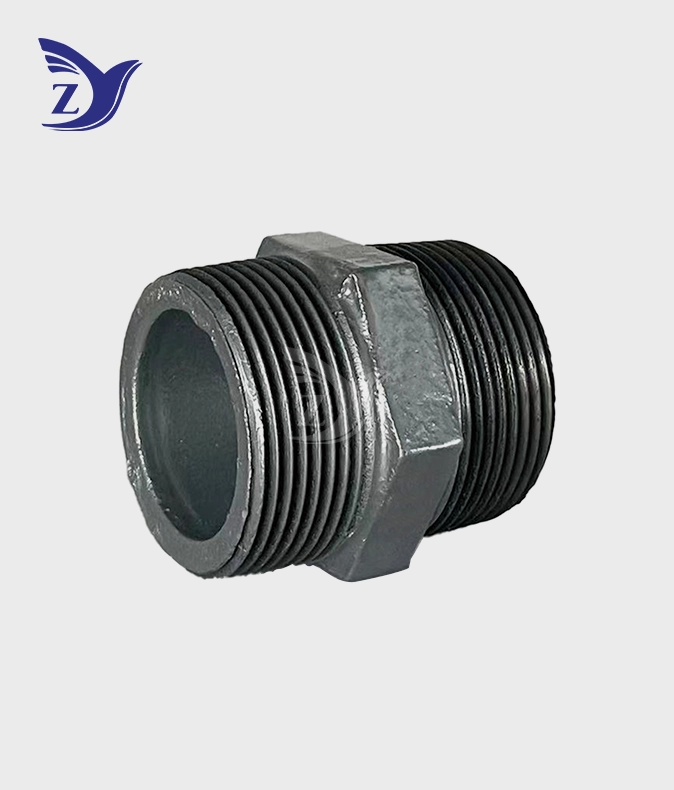
NPT Galvanized Male Nipple Pipe Fittings
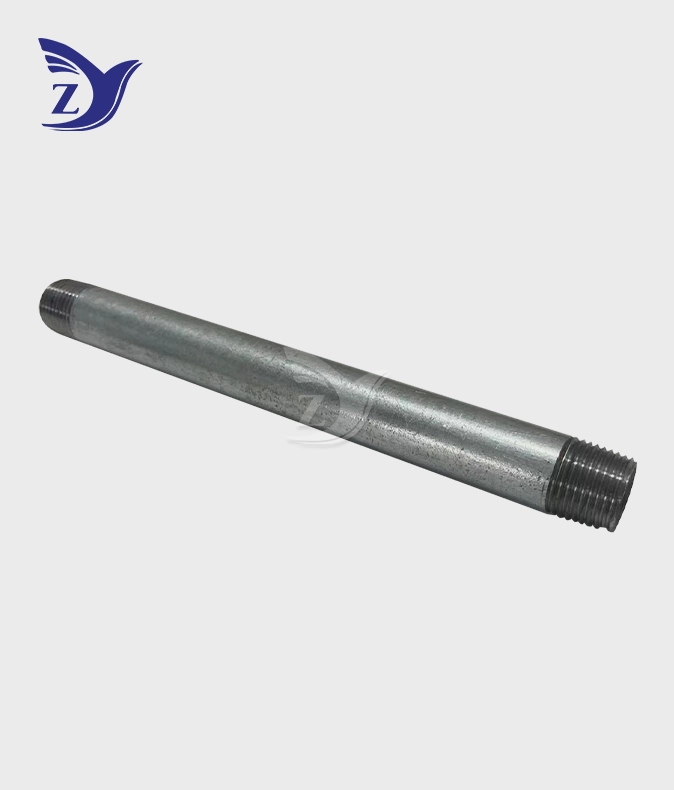
Carbon Steel Pipe Male Threaded Fittings Hot Dip Galvanized
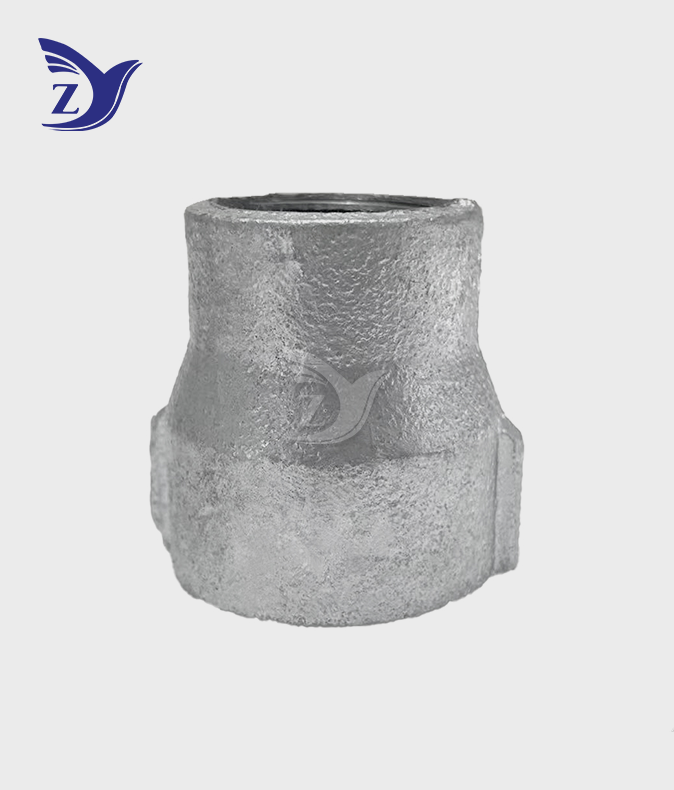
No Hub Electro Galvanized Reducing Coupling Pipe Fitting
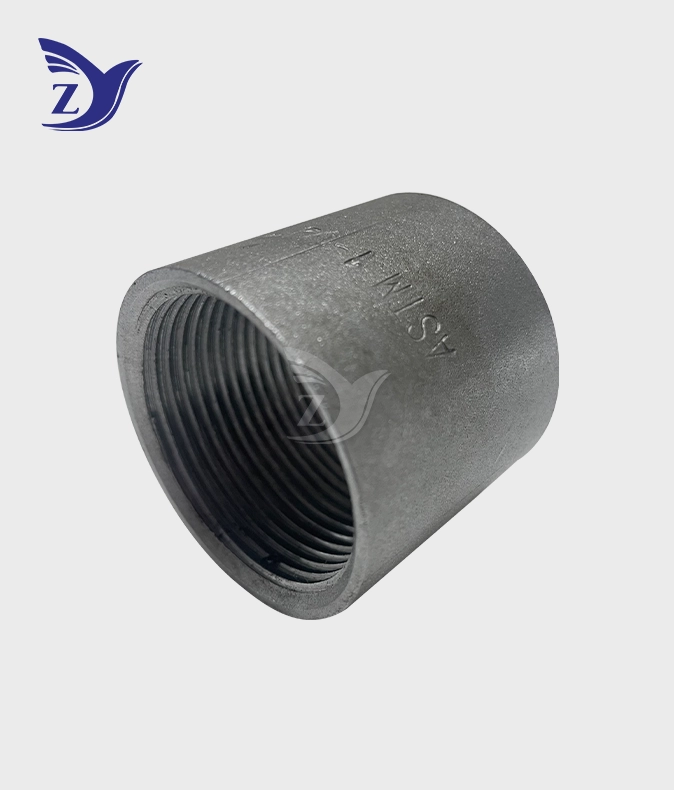
Carbon Steel Full Threaded Coupling Fittings Sand Blasted
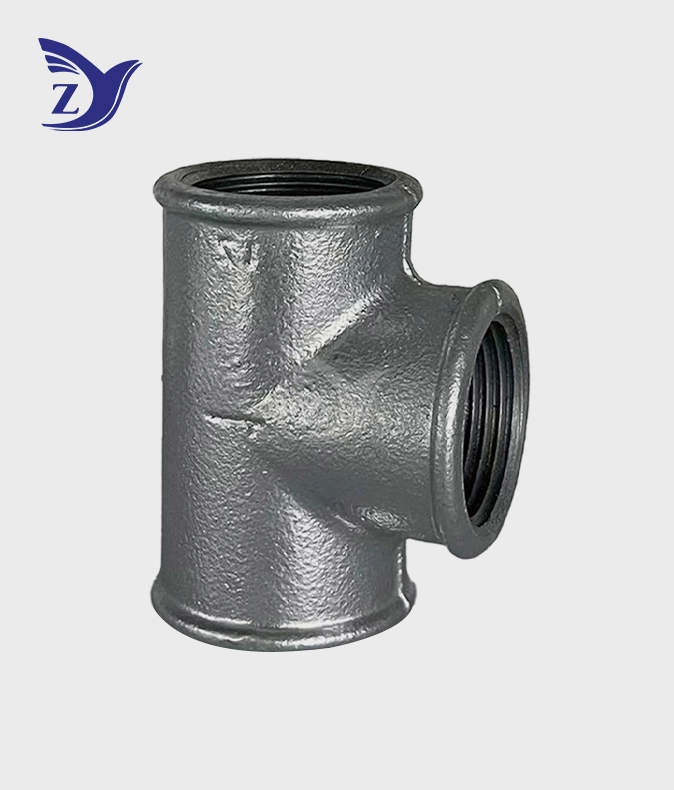
NPT Round Face Galvanized Round Edge Straight Tee Pipe Fittings
Water Grooved Blind Flange