
Apr 29, 2026
What are NPT Square Face Galvanized Square Edge Straight Tee Pipe Fittings Used For?
When choosing parts for important pipe systems, it's important to know what NPT square face galvanized square edge straight tee pipe fittings are used for. These precision-engineered joints can be used as three-way branching points in industrial pipes. They can change the flow of fluids or gases at right angles to 90 degrees while keeping the system's integrity in tough situations. These fittings are made from malleable iron and are protected by hot-dip galvanization. They are strong and won't rust, so they are essential for water distribution networks, gas transfer systems, fire protection installations, and HVAC infrastructure. Their NPT threading makes sure that the metal-to-metal joints don't leak, and the square edge design makes them stronger and easier to install with a key.
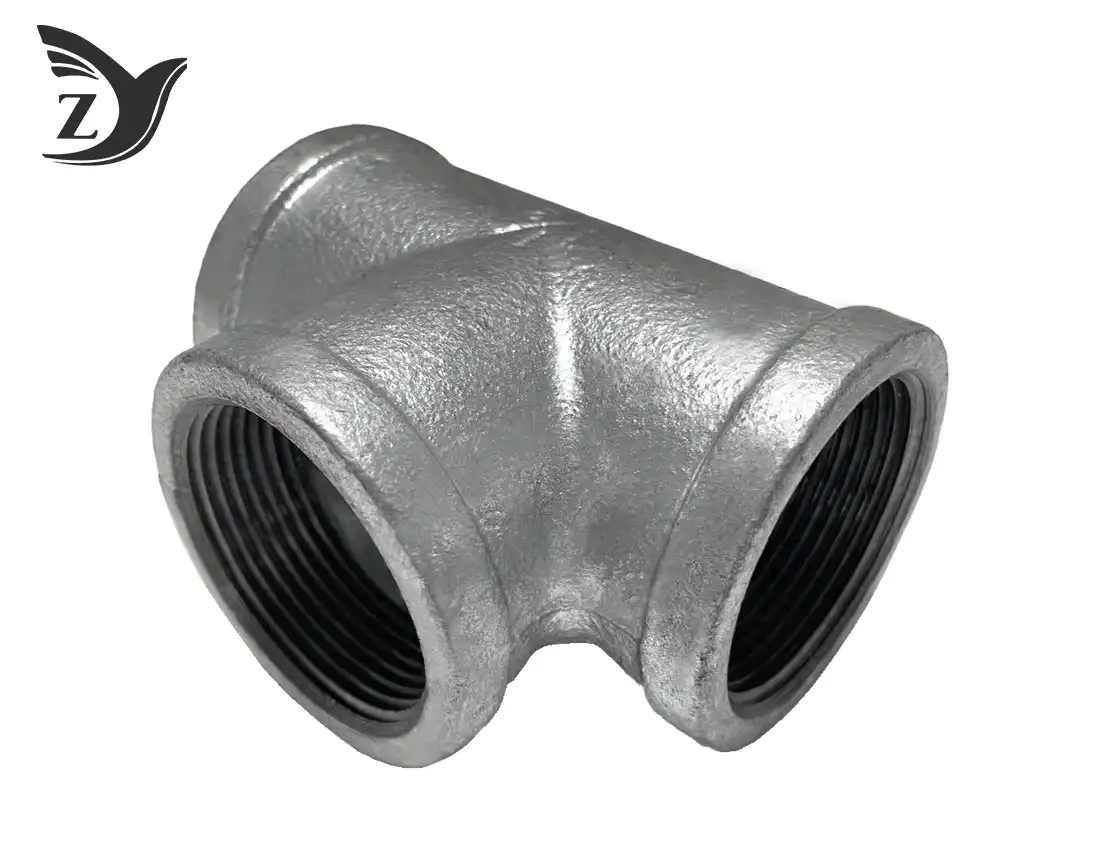
NPT Square Face Galvanized Square Edge Straight Tee Pipe Fittings
The engineering that went into making these special fits is the result of decades of progress in metalworking and sewing. NPT square face galvanized square edge straight tee pipe fittings are a combination of material science and practical design that is made for moving fluids in factories.
Material Composition and Manufacturing Standards
These parts are made from malleable iron, especially blackheart malleable iron that meets ASTM A197 standards. An melting process changes this weak white cast iron into a structure that is flexible, shock-resistant, and has a tensile strength of more than 330 MPa. The metallurgical change makes a material that can be made like iron but has mechanical traits more like mild steel. This keeps the material from breaking easily when it is heated or hit by something.
Following ASTM A153 guidelines, the hot-dip galvanization process adds a protected zinc covering that is about 70 to 85 microns thick. This layer acts as a sacrifice for protection through electrochemical action. When the surface is scratched or abraded, the zinc corrodes faster than the iron, stopping rust from forming on the uncovered area. In places like our Taigu factory, the galvanization process includes dipping the coating in molten zinc that is about 450°C. This forms a strong metal bond between the covering and the base that doesn't flake or peel.
Thread Standards and Sealing Mechanisms
The National Pipe Thread (NPT) design is based on ANSI/ASME B1.20.1 standards and has a 60-degree thread angle and a 1:16 taper ratio. The male and female threads can press together during assembly because of the tapered shape. This interference deforms the thread crests and roots into a metal-to-metal seal. NPT threads make leak-proof links through mechanical deformation, while parallel threads need gaskets. This makes them perfect for gas systems where gasket failure could be dangerous.
Square Edge Structural Reinforcement
The square edge or banded design is what makes it unique. It shows up as a thicker, flat-faced support ring at each outlet. This geometric feature makes the hoop stronger by spreading radial forces over a larger cross-section. This keeps the hoop from breaking when the fittings experience sudden changes in internal pressure or mechanical loads from the outside. The square face also makes it easier for pipe tools to grip, so installation pressure can be applied without damaging the threads or deforming the fitting.
When buying teams understand these technical bases, they can better understand why these pieces are so popular in tough situations.
Core Applications of Square Face Galvanized Square Edge Straight Tee Pipe Fittings
These threaded connections are useful in many different types of industries, and each one uses them for different reasons.
Fire Protection Systems and Sprinkler Networks
Fire sprinkler systems are very important and can have very bad results if they go wrong. Our steel tee fittings are approved by both UL and FM, so fire protection experts know they will work. The ability to fight rust is very important in wet pipe systems, where water stays in the distribution pipes all year. In dry pipe systems, the zinc layer stops oxidation from happening inside the pipe from water vapor. The square edge design can handle the water hammer effects that happen when the system is turned on quickly, keeping the joints solid when pressures rise from 0 to 150 psi in seconds.
Our 1-1/4" to 4" NPT tees were used in a 30-story commercial high-rise project in Atlanta for the sprinkler system. Engineers chose the galvanized malleable fittings over cast iron alternatives because they are more durable and won't break when they're being installed.
Municipal Water Distribution and Treatment Facilities
Water companies have special problems because they have to deal with chemicals, constant pressure loads, and customers who expect service for decades. The hot-dip galvanization acts as a shield against chlorinated water, and the pliable iron core can handle the stress that comes from pressure changes when pumps are turned on and off. Our fittings are used in pump houses, distribution manifolds at treatment plants, and underground service lines where it would be too expensive to change the parts.
For field fixes, water companies really like the square face galvanized square edge straight tee pipe fittings. When a main line needs to branch off quickly, workers can thread a tee fitting onto an existing pipe without having to use welding tools. This cuts the time it takes to fix the problem from hours to minutes. The galvanized coating protects the fitting even after threads are cut into an existing pipe. This is because the zinc layer fixes itself of small scratches through cathodic protection.
Industrial Gas Pipeline Systems
Networks for natural gas, compressed air, and industrial gas all need to be completely leak-proof. The NPT tapered thread makes a mechanical seal that gets tighter when pressure builds up inside the system. In fact, when pressure builds up, the sealing force goes up. Our Class 150 fittings can handle working pressures of up to 300 psi for gas, water, and oil at room temperature. For steam service, they have lower ratings.
Our 2" and 3" galvanized tees were ordered by a petroleum plant in Louisiana to feed instrument air to pneumatic valve actuators spread out over a 40-acre complex. The zinc finish meant they didn't have to paint them in the corrosive seaside environment, and the square edge design kept them from coming loose when nearby compressors worked.
HVAC and Building Mechanical Systems
In heating, ventilation, and air conditioning systems, these fittings are used in steam distribution, cold water loops, and condenser water pipes. Iron that can be shaped can handle temperatures from very cold to 650°F, so it can be used in systems that use glycol to cool them down or systems that use low-pressure steam. The galvanized layer works well in places where moisture builds up quickly and would quickly damage ferrous metals that aren't protected.
Commercial HVAC workers like that our fittings have uniform thread quality. They thread smoothly onto pipe without galling or cross-threading problems that happen with lower-quality castings. The consistent dimensions make it possible to get correct material takeoffs during the estimate phase, which cuts down on waste and call-backs in the field.
These different uses show how the right material qualities, thread accuracy, and protective coatings can work together to solve pipe problems in the real world.
Procurement Guide and Trusted Supplier Insights
Finding good fits means figuring out certifications, price, and what suppliers can do.
Certification and Standards Verification
Manufacturers with a good reputation keep their ISO 9001 quality management certification up to date, which shows that they have a systematic way of controlling their processes. Our facility has both ISO 9001 certification and product-specific approvals, such as UL listings for fire protection components and FM approval for industrial applications. When you're buying something, ask for proof of the certification to make sure that the quality standards set during testing are maintained during batch production.
Minimum material requirements are set by ASTM A197 for malleable iron and ASTM A153 for galvanization. Suppliers should provide mill test records that list the chemical makeup, mechanical qualities, and coating thickness so that materials can be tracked.
Production Capacity and Delivery Reliability
Large projects need suppliers with enough inventory and production capacity. At Zhiyuan Malleable Steel, our 30,000-ton annual capacity and 50,000-square-meter facility allow for both immediate delivery from stock and scaled production to meet specific needs. We keep inventory on hand for over 1,000 SKUs in our product range, which means that standard orders can be shipped within hours instead of weeks.
Check how responsive the seller is to your initial questions—quick technical support and accurate quotes show business efficiency, which leads to reliable project delivery. Our engineering team answers technical questions the same day, which helps your specification process.
Pricing Dynamics and Volume Considerations
Pricing is affected by the cost of materials, the complexity of the dimensions, and the number of items ordered. Because of the extra coating process, galvanized fittings usually cost 20–30% more than black (ungalvanized) equivalents. Larger sizes require more material and machining time, which makes pricing scale exponentially rather than linearly.
When you commit to buying a lot, you can get better prices. For example, when you buy more than 10 tons, you can often get 8–12% off the small-lot price. Our wholesale programs help contractors and distributors plan ahead for their annual needs by giving them blanket purchase orders with scheduled releases that keep prices and supplies stable.
Customization and OEM Capabilities
Sometimes, projects need non-standard sizes, different thread forms, or special coatings. Our research and development (R&D) helps with custom casting development, and the costs of the tools are usually covered by orders of 5 to 8 tons. We've made custom configurations for international markets that need metric threading, BSPT (British Standard Pipe Thread) variants, and changes to the sizes to fit regional piping standards.
As part of an OEM relationship, a company can offer private labeling, custom packaging, and quality paperwork that is tailored to the needs of the client. Trading companies that sell goods in other countries appreciate these capabilities because they help them meet the different legal requirements in each export destination.
When you work with a well-known company like Zhiyuan Malleable Steel, you can be sure that you will get approved goods that are backed by large-scale production, technical know-how, and quick service that keeps your projects on track.
Conclusion
NPT square face galvanized square edge straight tee pipe fittings are very important for fire protection, municipal water systems, industrial gas distribution, and HVAC infrastructure. They are made of malleable iron, which makes them strong, and hot-dip galvanization protects them from corrosion for decades. The square edge design makes the structure more stable under pressure, and the NPT threading makes leak-proof seals without gaskets. Installing them correctly and keeping up with regular maintenance will extend their service life, and knowing the pros and cons of different fitting types will help you make the best specification decisions. Buying from certified manufacturers with proven capacity, like Zhiyuan Malleable Steel, will ensure project success by ensuring quality consistency, delivery reliability, and technical support throughout the procurement cycle.
Partner with Zhiyuan Malleable Steel for Your Industrial Piping Needs
Zhiyuan Malleable Steel combines 26 years of casting expertise with modern production capacity to deliver square face galvanized square edge straight tee pipe fittings that meet the most demanding project specifications. Our ISO 9001 certified manufacturing processes ensure consistent quality across every batch, while our 30,000-ton annual capacity supports both immediate stock delivery and scaled custom production. We maintain comprehensive inventory spanning over 1,000 product specifications, enabling standard orders to ship within two hours of confirmation. Whether you're a fire protection contractor requiring UL-listed components, a municipal utility seeking ASTM-certified fittings, or a distributor building regional inventory, our team provides the technical support, competitive pricing, and reliable delivery that successful projects demand. Contact our engineering specialists at q1236800000@gmail.com to discuss your specific requirements, request samples, or receive volume pricing for your next procurement. As a leading square face galvanized square edge straight tee pipe fittings manufacturer serving industrial markets across North America, we're ready to support your project from specification through delivery.
FAQs
What specific advantages does galvanization provide for square edge tee fittings?
The zinc coating that is applied during hot-dip galvanization protects in two ways: it keeps moisture from getting to the iron base, and if it gets scratched, it corrodes more quickly and more completely, leaving only the protected areas. This double action makes the fitting last 3–5 times longer than uncoated iron in normal service conditions, lowering the number of replacements needed and the overall cost of ownership.
Can NPT square face galvanized fittings handle high-temperature applications?
These fittings work reliably in steam and hot water service up to 650°F, but the pressure ratings drop with temperature. Working pressure stays at full rating at 150°F, but drops to about 60% of ambient rating at 366°F. Always check pressure-temperature charts for specific service conditions and make sure you have the right safety factors in place.
How do threaded fittings compare to welded connections for permanent installations?
Threaded connections have many benefits, such as being easier to inspect and change, and being able to be put together in the field without hot work permits. Welded joints, on the other hand, don't require threading and have smoother internal flow paths, but they do need certified welders and radiographic inspection for critical services. For most industrial applications under 300 psi, properly installed threaded connections are just as reliable as welded joints while offering more installation options and lower labor costs.
References
- American Society of Mechanical Engineers. (2020). ASME B16.3: Malleable Iron Threaded Fittings - Classes 150 and 300. New York: ASME Press.
- ASTM International. (2019). ASTM A197: Standard Specification for Cupola Malleable Iron. West Conshohocken: ASTM International Standards.
- Galvanizers Association. (2021). Hot Dip Galvanizing for Corrosion Protection of Steel Products. Birmingham: Galvanizers Association Technical Publications.
- National Fire Protection Association. (2022). NFPA 13: Standard for the Installation of Sprinkler Systems. Quincy: NFPA Publications.
- Smith, Robert L. (2018). Piping Systems: Design, Installation, and Maintenance for Industrial Applications. Boston: Engineering Technical Press.
- Waters, David K. (2020). Threaded Pipe Connections: Engineering Standards and Best Practices. Chicago: Industrial Publishing Group.
Online Message
YOU MAY LIKE
High quality furniture manufacturer
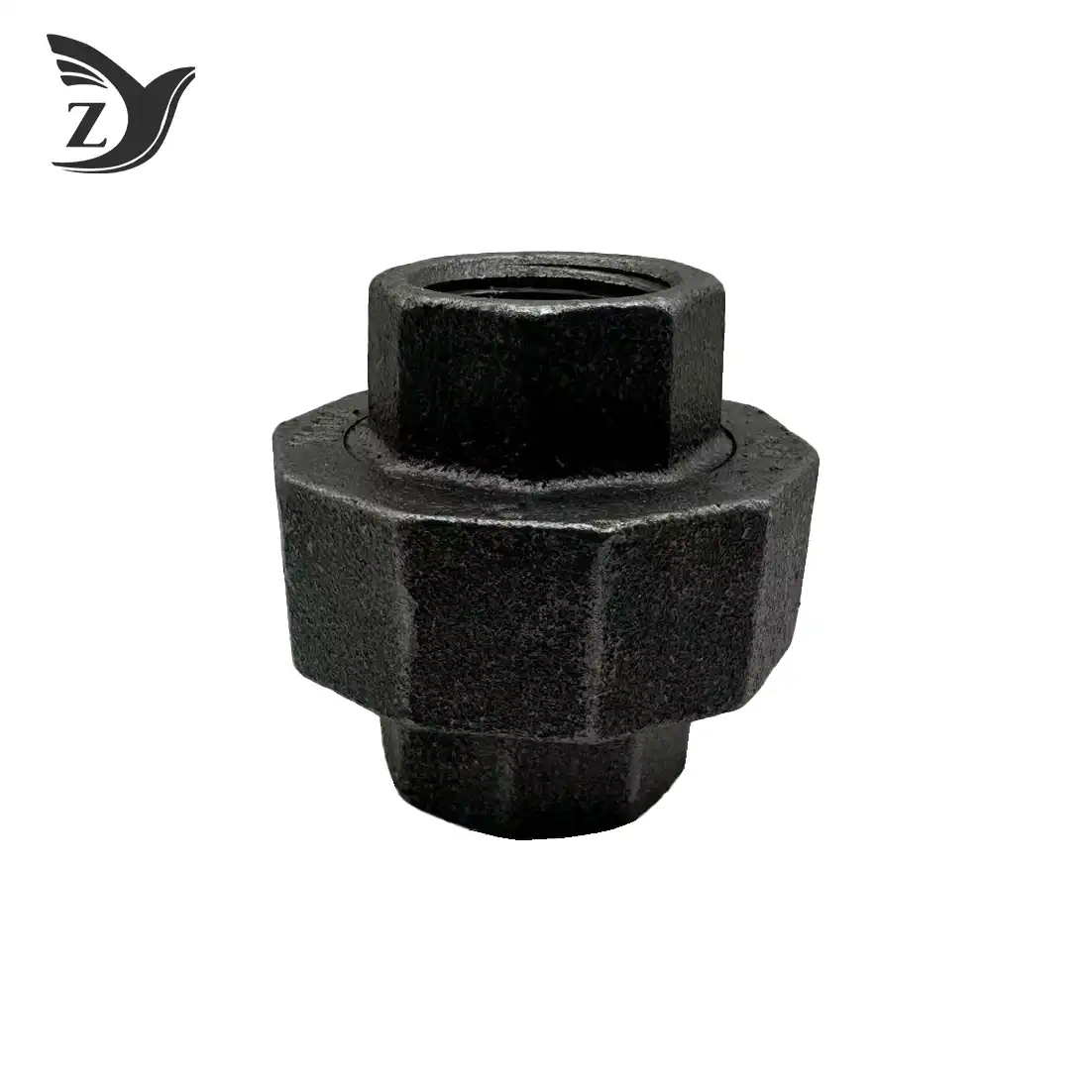
NPT Black Union Class 300 Pipe Fittings
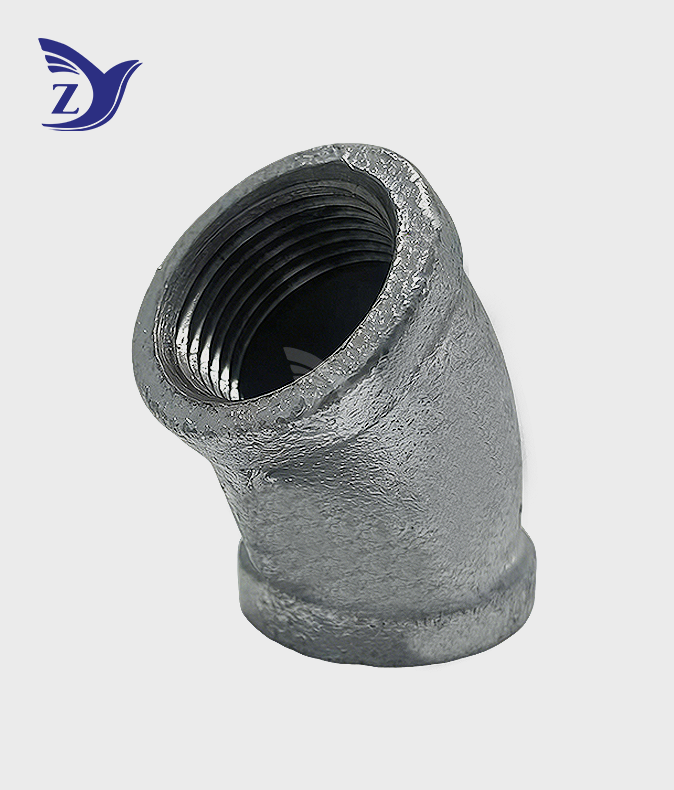
NPT Square Face Galvanized 45° Square Edge Elbow Pipe Fittings
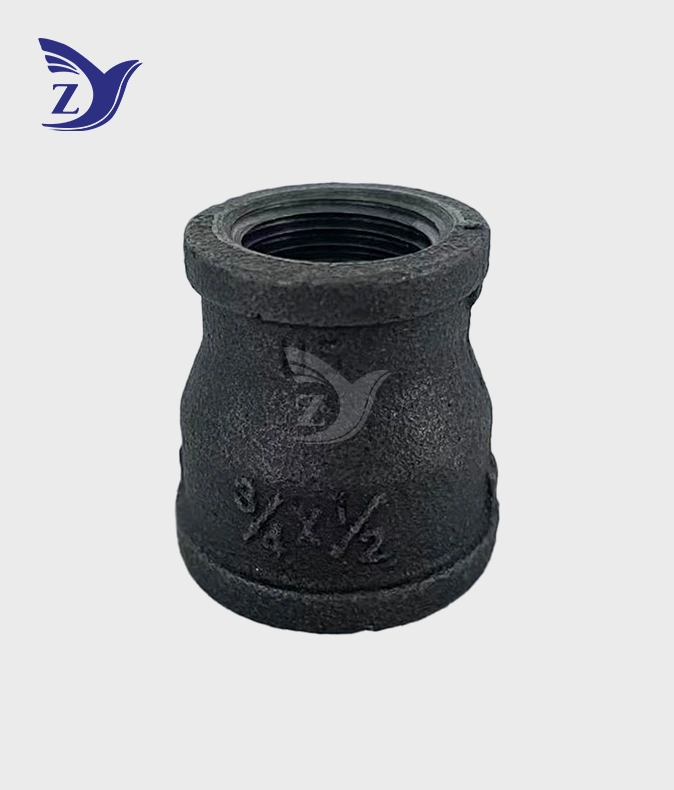
NPT Black Square Face Reducing Coupling Pipe Fittings
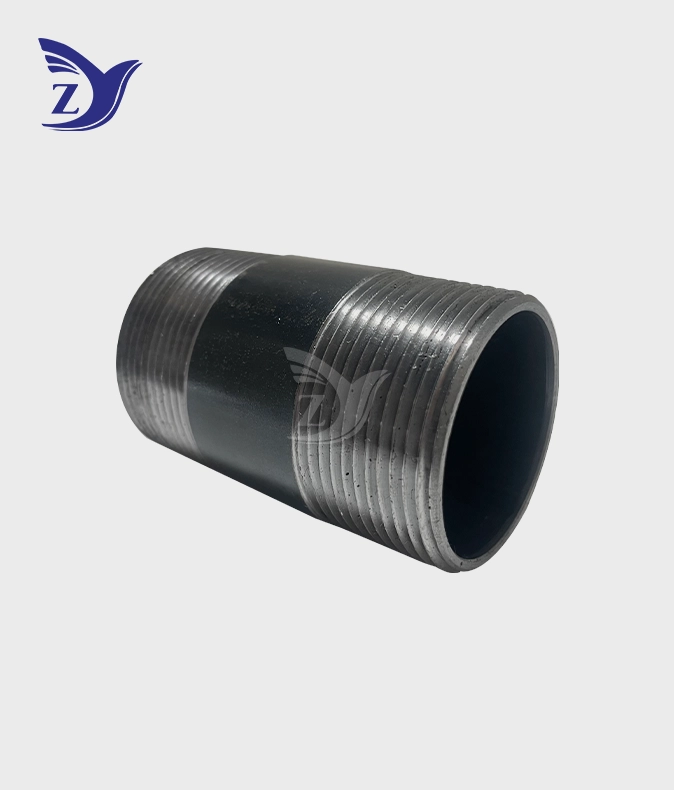
Double Male Thread Oil Tubing
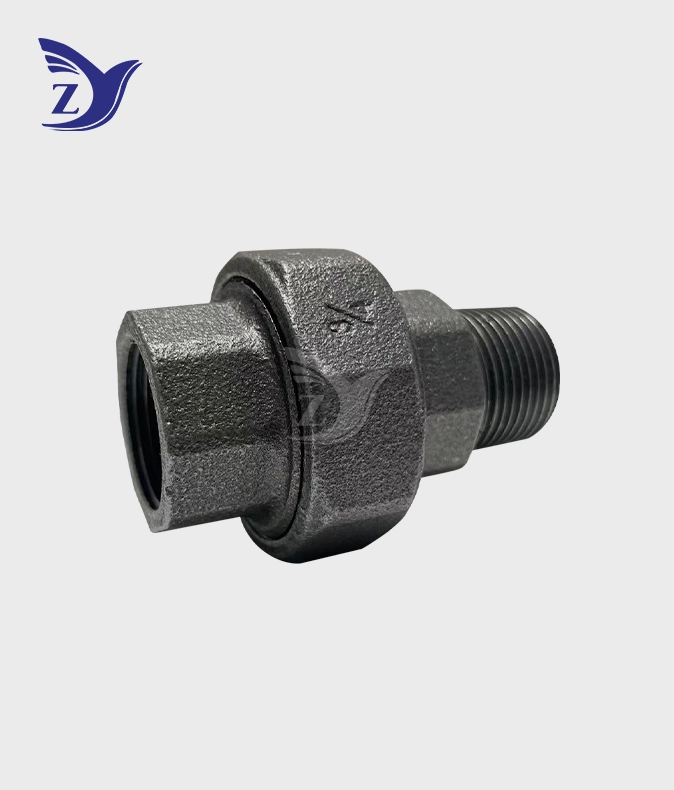
NPT Black Male-Female Union 343 Pipe Fittings
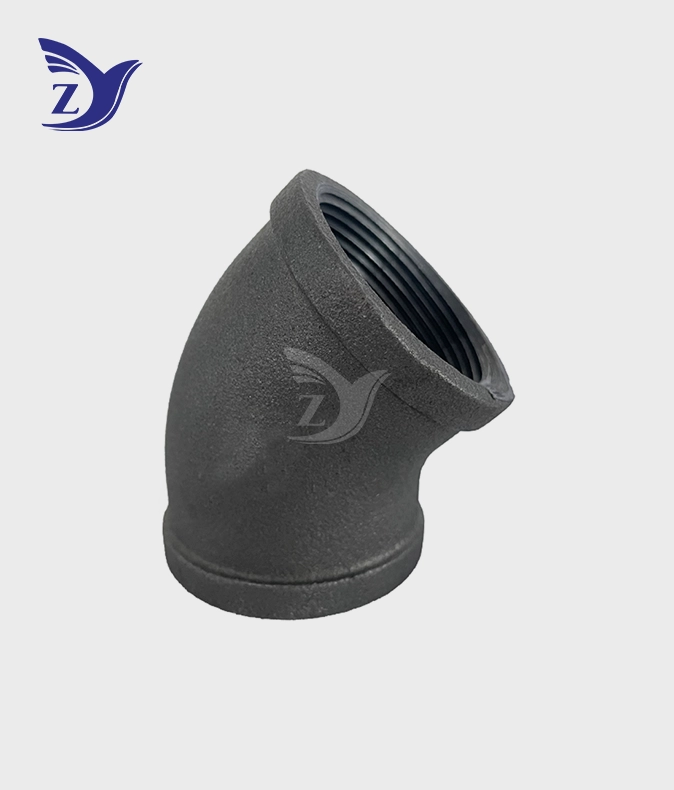
NPT Black Square Face 45° Elbow Pipe Fittings
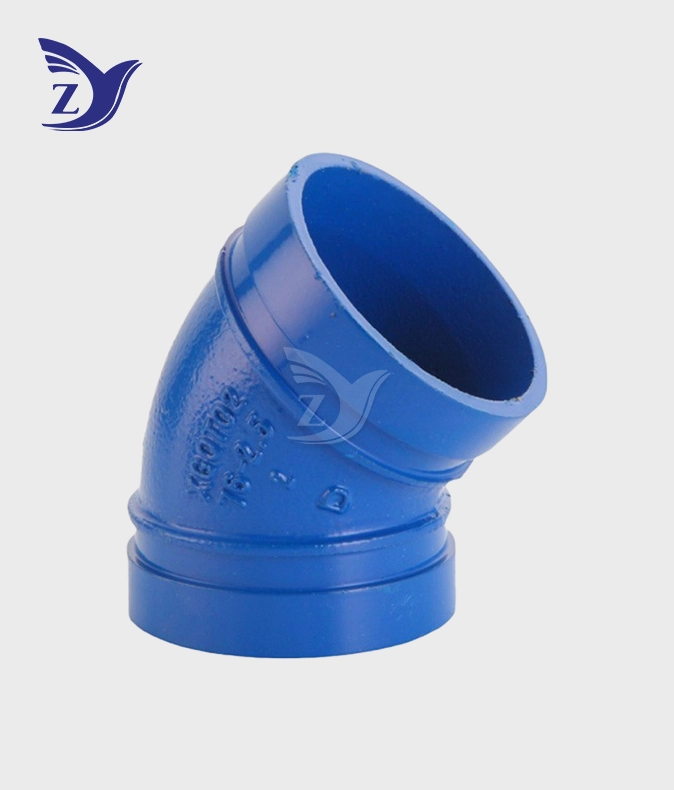
Water Grooved 45° Elbow
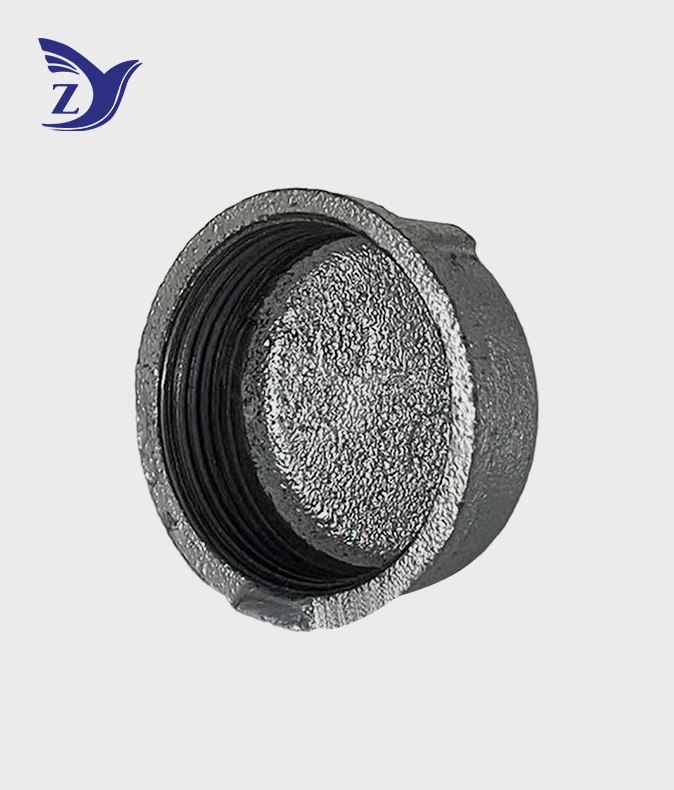
NPT Galvanized Pipe Cap Pipe Fittings