
Jul 6, 2026
How Does 3-Piece Galvanized Union Elbow Simplify Pipeline Maintenance?
Building managers and experts have always had a hard time with pipeline upkeep. This issue can be solved by NPT galvanized union elbow threaded pipe fittings with male and female ends. These fittings have a dual-threaded 90° link that can be detached, so pipes don't have to be cut during repairs. This industrial-grade fitting has both hot-dipped galvanization and precise threading, which makes it easy to disconnect and reconnect while still being leak-tight. The male-female configuration gets rid of the need for intermediate nipples. This lowers the number of possible failure points and lets techs work on equipment in tight areas where pipes can't turn.
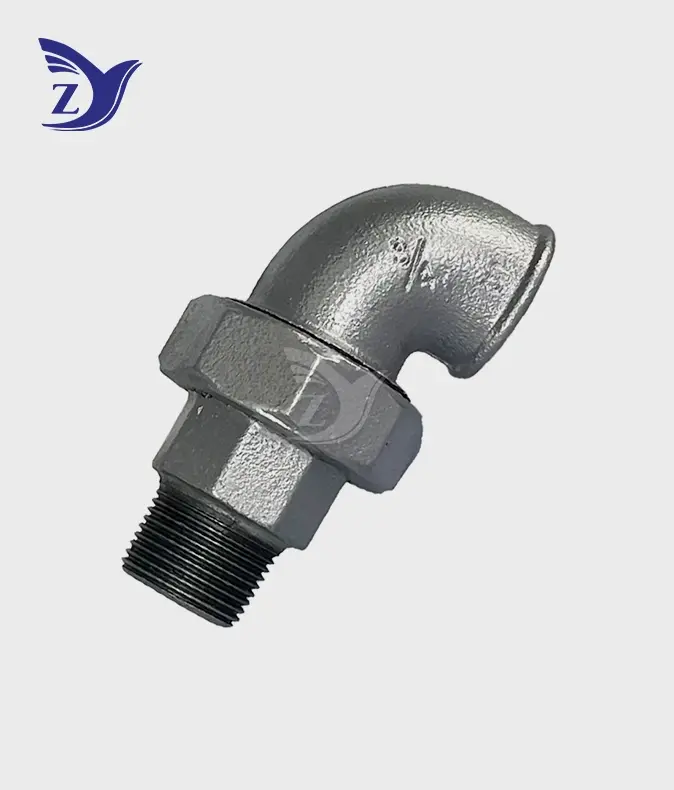
How 3-Piece Galvanized Union Elbows Simplify Pipeline Maintenance
When you need to fix something quickly or do regular maintenance, NPT galvanized union elbow threaded pipe fittings with male and female endss show their true value. To change parts in traditional pipeline assemblies, you have to cut, thread, or weld them in place. These steps take special tools, skilled workers, and a lot of downtime.
Quick Disassembly Without Cutting
The NPT galvanized union elbow threaded pipe fittings with male and female ends change how repair work is done. Technicians can open the union nut and split the elbow joint in minutes instead of hours when they need to service a pump in a fire protection system. This feature is very useful in steam trap systems where the traps need to be cleaned often to keep condensate from backing up. The male-female configuration lets you connect directly to female-threaded valves, which puts a repair point right where it's needed without putting the stability of the system at risk.
I've seen repair teams in public water facilities like how the detachable feature cuts down on the need for special tools. Most disassembly jobs can be done with a normal pipe wrench and a union wrench. Welded joints, on the other hand, need cutting torches, ventilation systems, and hot work permits. The saved time immediately leads to lower labor costs and shorter breaks in service.
Corrosion Resistance Extends Service Life
Hot-dipped galvanized finishes work better than electroplated ones in outdoor and high-humidity settings, according to tests that were exposed to the environment. The zinc layer acts as both a barrier and a galvanic (sacrificial) shield at the same time. When water gets into the iron base, the zinc corrodes faster than the iron, leaving behind zinc hydroxides that cover the damage. Because they can fix themselves, galvanized fittings keep their structural integrity in seaside settings where salty air speeds up rust.
The layer sticks by metallurgical bonding instead of mechanical adhesion, so it doesn't flake during installation pressure and heat expansion cycles. During quality control, magnetic thickness tests check the depth of the coating, and hammer tests check the strength of the binding to meet ASTM A153 standards. These steps make sure that all production batches have the same level of safety.
Flexible Connection Options Streamline Inventory
Male-female threading makes connections more flexible, which makes buying things and keeping track of goods easier. Facility managers don't have to keep different stocks of male elbows, female elbows, and unions. Instead, they can keep a single SKU that can be used in a number of situations. This consolidation cuts down on handling costs and the chance of having the wrong-sized parts on hand when fixes need to be done quickly.
When connecting complicated industrial process pipes straight to equipment ports without adapters, the height and weight of the unit are lowered. This small size is important in mechanical rooms that aren't very big and under higher floors where there isn't much room for movement. The two threads also allow for small differences in alignment between the mounting points of the equipment and the centerlines of the pipelines. This eliminates installation errors that would normally need custom construction.
Installation Best Practices for Galvanized Union Elbows with Male and Female Ends
Using the right placement methods is what determines whether these parts work as expected or cause leaks and other problems. Most service problems can be avoided by paying close attention to details during building.
Thread Preparation and Sealant Application
Leak-free joints start with threads that are clean. Wire brushing gets rid of production waste, rust particles, and old sealant dust that would stop the threads from fully engaging. By blowing compressed air through the NPT galvanized union elbow threaded pipe fittings with male and female ends, any leftover dirt is removed from the inside.
To use PTFE tape, you have to wrap it around the thread in the way that it turns (clockwise when looking at the male end) and make sure there is enough overlap to cover any thread dips without too much buildup. Most of the time, three to four wraps are enough, but thicker threads may need more. Pipe dope can be used instead of or in addition to tape. It can fill in small flaws and lubricate threads to keep them from galling when they are tightened.
Tightening Procedures and Torque Management
By hand-tightening until the resistance rises, the first thread contact is made without the risk of cross-threading. The joint is then tightened with a wrench, which turns it an extra one to two turns beyond hand-tight. If you tighten something too much, the iron could crack or the threads could get twisted, and if you tighten something too little, there are holes that let pressure through.
Different sizes need different amounts of torque. For example, 1-inch bolts need 30 to 40 foot-pounds of torque, while bigger sizes need proportionally more. Torque wrenches make sure that multiple joints are the same, which is especially important in business settings with a lot of similar connections. Pay close attention to the union nut—it should fit snugly against the ground joint without using too much force, which could damage the seat surface.
Troubleshooting Common Installation Issues
Cross-threading is when two threads connect at an angle instead of straight on. The quick fix is to pull the fitting all the way out, check the state of the threads, and then carefully match the threads before re-engaging. If cross-threading keeps happening, it means that threads are broken and need to be replaced instead of being pushed to fit together.
Leaks that show up after the initial pressurization are usually caused by not enough sealant or not tightening enough. Slow leaks are usually fixed by turning the wrench a few more times. For stubborn leaks, the system may need to be taken apart, checked for dirt on the sealing surfaces, and then put back together with new sealant. If the quality of the drilling is good enough, the union ground joint should close without thread sealer.
Post-Installation Inspection and Maintenance
Visual review right after installation and during normal building rounds finds problems as they start to happen before they get worse. When corrosion shows up as white or brown spots, it means that zinc levels are low, which means that the item is almost at the end of its useful life. Thread wear can be seen on exposed threads as shiny, smooth spots, especially where unions have been put together and taken apart many times.
Checking for movement in a joint with a wrench is part of making sure the joint is tight. Fittings that are properly placed resist hand pressure without turning. Weeping, which is the look of moisture without active dripping, often comes before full leaks and should be looked into. Using thermal imaging during operation can show changes in temperature around joints that could mean that the inside is wearing away or that debris is building up and blocking the flow.
Procuring High-Quality 3-Piece Galvanized Union Elbows: What B2B Buyers Should Know
Choosing providers and checking the standard of products is what determines whether procurement adds value or causes ongoing issues. Smart buyers look at more than just the unit price when they figure out the total cost of ownership.
Supplier Evaluation Criteria
A supplier's manufacturing skills show how well they can handle big orders and keep quality standards high. Production capacity is important. A supplier that can make 30,000 tons per year shows that they have the right equipment, stable workers, and established supply lines. The 50,000-square-meter building and 156 sets of working equipment at Zhiyuan Malleable Steel are big enough to finish big infrastructure projects on time.
Certifications prove that quality processes and products work as they should. Structured quality management is proven by ISO 9001 certification, and product-specific certifications like UL and FM listing show that safety standards are met, which is very important for fire defense uses. CE marking lets you enter the European market, which gives international projects more options for where to get materials.
Cost Considerations Beyond Unit Price
Discounts for buying in bulk cut the cost per unit by a large amount when you place a big order. When buyers negotiate the prices of hundreds or thousands of fittings, they can often get 15 to 30 percent off of the small-lot prices. Shipping processes have a big effect on landed costs. For example, when domestic sellers offer regional delivery, you don't have to pay for international freight or wait for customs delays that come with buying from other countries.
How sellers handle broken goods and warranty claims is based on the terms of their after-sales service. Replacement promises protect buyers from having to deal with losses caused by defective materials by giving them a way out when manufacturing flaws show up. Quick expert support clears up installation questions and application doubts, adding value beyond the product itself.
Standards Compliance and Customization Options
The qualities of materials are governed by ASTM standards. For example, ASTM A197 describes the makeup and mechanical properties of malleable iron. ASME B1.20.1 lists the sizes and ranges of NPT threads. ASTM A153 sets the standards for galvanization. Following these rules makes sure that parts from different companies can work together and meets engineering requirements in controlled businesses.
Customization options include non-standard sizes, special threading (BSPT for foreign markets), and changes that are needed for a particular application. OEM/ODM services help wholesalers who serve niche markets with private labeling and custom specs. This versatility comes in handy when standard store items can't meet the specific needs of a job.
Conclusion
The NPT galvanized union elbow threaded pipe fittings with male and female ends solves basic problems with pipeline upkeep by using smart design. Its detachable design cuts down on downtime during fixes, and hot-dipped galvanization protects against rust in a wide range of settings. The male-female threading arrangement makes installation easier and gets rid of parts that aren't needed and could fail. When compared to bonded and standard threaded options, these valves are easier to use and last longer without compromising pressure integrity. Leak-free operation is guaranteed by proper fitting that follows recommended practices, and quality is always guaranteed by buying from certified makers. Buying good parts is worth the money because they last longer, require less upkeep, and make the system more reliable.
FAQs
What advantage do union elbows have over welded elbows?
Union elbows make it possible to take apart an entire system without cutting any lines. This cuts down on repair time and costs significantly. In order to fix welded joints, the pipe has to be cut and re-welded, which requires special tools and trained welders. The union device can be taken apart in minutes using standard wrenches. This makes it possible to service equipment in places where welding isn't possible because of safety concerns or lack of room.
How do male and female threaded ends differ functionally?
Male threads on the outside fit into female-threaded equipment ports or connections, and female threads on the inside can connect to male-threaded pipe or nipples. Because there is a male and female layout on a single elbow, there is no need for middle nipples. This cuts down on the length of the assembly and the number of leak points. Because there are two threads on each side, the connection options are open, and techs don't have to keep a lot of different fitting types on hand.
Can galvanized union elbows withstand outdoor installation?
Because it is coated with hot-dipped zinc, these fittings are very resistant to rust from the air. This makes them perfect for outdoor water supply, irrigation, and process pipe that is left out in the open. The zinc layer is about 86 microns thick on average, and it will last for years in normal weather. Coastal areas with salty air may eventually wear down the zinc, but their performance usually far outperforms that of painted or untreated options by large amounts, which is why they are recommended for outdoor uses.
Partner with a Trusted Galvanized Union Elbow Manufacturer
Industrial pipeline solutions are made by Zhiyuan Malleable Steel, which has been casting for 26 years and makes NPT galvanized union elbow threaded pipe fittings with male and female ends that meet strict international standards. Our quality systems are ISO 9001-certified and allow us to produce 30,000 tons of steel every year. This means that we can reliably serve projects of any size. We keep a large inventory, which lets us send basic goods within two hours and keep project delays to a minimum. Our customization services can handle OEM needs, threading that isn't standard, and sizes that aren't standard. Our CE, UL, and FM certifications show that we are committed to quality. You can email our team at q1236800000@gmail.com to talk about your buying needs, get technical specifications, or get bulk prices on galvanized union elbow fittings and other goods made of malleable iron that go with them. You can look through our whole product line at zymalleablepipefitting.com.
References
- American Society of Mechanical Engineers. (2020). ASME B1.20.1: Pipe Threads, General Purpose (Inch). ASME Standards Collection, New York.
- ASTM International. (2019). ASTM A197: Standard Specification for Cupola Malleable Iron. West Conshohocken, PA: ASTM International.
- ASTM International. (2021). ASTM A153: Standard Specification for Zinc Coating (Hot-Dip) on Iron and Steel Hardware. West Conshohocken, PA: ASTM International.
- Fischer, R. B. (2018). Piping Systems Manual. McGraw-Hill Professional, New York, pp. 245-267.
- Nayyar, M. L. (2019). Piping Handbook, 8th Edition. McGraw-Hill Education, New York, pp. 412-438.
- Smith, P. R. & Zappe, R. W. (2017). Valve Selection Handbook: Engineering Fundamentals for Selecting the Right Valve Design for Every Industrial Flow Application, 6th Edition. Gulf Professional Publishing, Houston, pp. 156-178.
Online Message