
Aug 20, 2026
Galvanized Union Elbow Threaded Pipe Fittings with Male Female Ends
When industrial piping systems demand both flexibility and reliability, galvanized union elbow threaded pipe fittings with male and female ends deliver exceptional performance. These specialized malleable iron components enable a 90-degree change in flow direction while allowing easy disassembly without cutting pipes. Featuring one external male thread and one internal female thread, these fittings incorporate a union mechanism with a radial joint that permits separation of upstream and downstream sections. The hot-dip galvanized coating provides superior corrosion protection, making them indispensable for water, gas, and steam applications across fire protection systems, municipal infrastructure, and industrial facilities.
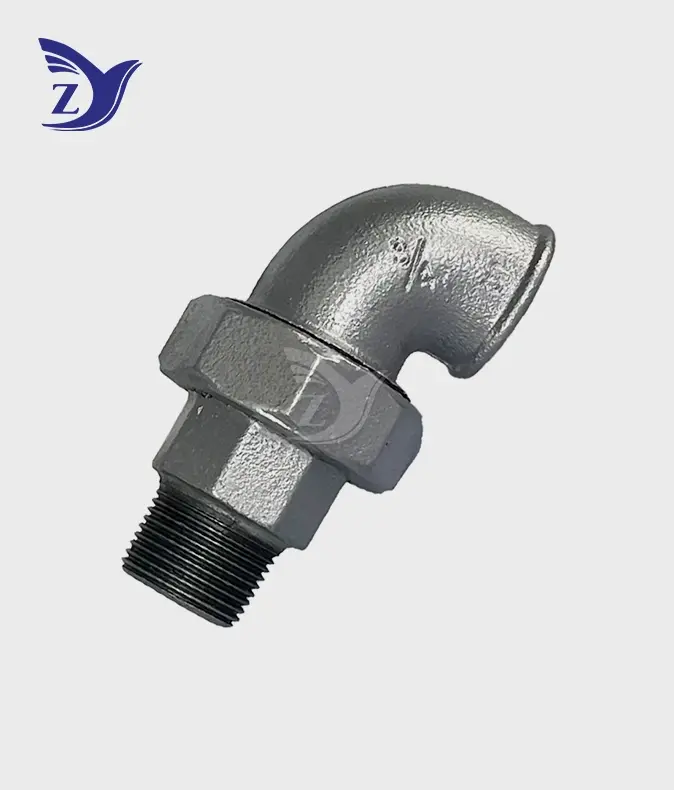
Understanding Galvanized Union Elbow Threaded Pipe Fittings
What Makes These Fittings Essential
An ongoing problem for industrial piping systems is how to change or maintain connections in small spaces where rotating whole pipe assemblies is not possible? This is exactly where dual-threaded, removable 90° pipe bends come in handy and solve important operating issues. The union design includes a ground joint that makes the connection safe while also letting it be quickly disconnected for maintenance.
These industrial water and gas pipeline redirection fittings do more than one thing at the same time. The male-female configuration gets rid of the need for intermediate close nipples. This cuts down on the length of the installation and the number of possible leak paths. This design factor is especially useful in mechanical rooms that are already full or during retrofits, where every inch of space is important.
Manufacturing Standards and Thread Compatibility
Our precision-threaded, hot-dipped galvanized iron parts meet strict international standards. NPT threads are made according to ASME B1.20.1 standards, and BSPT threads are made according to British Standard standards. This flexibility makes sure that it can be easily added to current pipe networks in many areas and industries.
The first step in making something is casting pliable iron that meets ASTM A197 standards and has a tensile strength of more than 40,000 psi. A zinc layer about 86 microns thick is applied during the galvanization process. This provides temporary protection against rust caused by air and water. This metallurgical link between zinc and base metal makes a barrier that lasts a lot longer than options that are painted or not treated.
Applications Across Industries
Fire protection engineering firms use galvanized union elbow threaded pipe fittings with male and female ends to install sprinkler systems where the equipment needs to be placed at exact angles and still be easy to get to for testing and inspection. With the union feature, workers can take off fountain heads or valves without damaging the pipes next to them.
These parts are used in municipal building projects for water supply networks, sewer systems, and HVAC installs. It is very important for outdoor uses that are exposed to weather, especially near salty coasts, that the galvanization protection against corrosion is strong.
These high-strength, anti-rust, corrosion-resistant fittings are used in process pipes at petrochemical and power generation sites where harsh chemicals and high temperatures can damage parts. The design of the detachable union makes routine maintenance easier because the system doesn't have to be shut down.
Benefits and Advantages of Using Galvanized Union Elbow Threaded Fittings
Superior Corrosion Protection and Durability
The process of galvanization makes a strong barrier against corrosion. When the zinc coating comes in contact with water or things that are corrosive, it turns into zinc oxide and zinc carbonate. These forms seal the surface and protect the iron below. If the covering gets scratched or broken, the zinc will continue to give up its life cathodically, keeping the iron that is visible from rusting.
Comparative tests show that steel parts work much better than painted ones. When exposed to harsh conditions, painted surfaces may rust within 18 months, but properly galvanized parts will last for decades. This means that it will last longer, which means less upkeep costs and fewer emergency fixes.
After switching from standard steel to galvanized parts in their distribution network, a local water authority in the southeastern United States saw a 67% drop in the number of times they had to repair fittings. The higher-quality parts paid for themselves in three years because they cut down on system downtime and staff costs.
Installation Efficiency and Maintenance Advantages
The easy disassembly design that works with both NPT and BTC is a real plus during installation and maintenance. Maintenance workers can disconnect and reconnect these fittings in minutes instead of hours, which means that the building's operations will be interrupted less. This feature is especially useful in manufacturing settings that are open 24 hours a day, seven days a week, where downtime costs a lot of money.
When looking at how much it costs to install, these industrial-grade galvanized union elbow threaded pipe fittings with male and female ends safe connection fittings take about 40% less time than welded options. With threaded connections, you don't need special welding tools or trained welders to do the job. This means that more skilled technicians can do the installations.
Another benefit of the male-female arrangement is that it saves room. To join to male-threaded tools, traditional female-female unions need a barrel nipple. This adds length and creates another possible leak point. The built-in male end links straight to valves, pumps, and gauges' female ports, making the system geometry simpler.
Cost-Effectiveness Compared to Alternative Materials
Procurement managers who are watching the budget often compare galvanized fittings to alternatives made of brass and stainless steel. Even though stainless steel is better at resisting rust, it costs 300–400% more than coated malleable iron. Even though brass looks great and is easy to work with, it is not strong enough for high-pressure applications.
The best mix of function and cost is found in galvanized malleable iron. The material can withstand up to Class 150 (150 psi working pressure for steam) or Class 300 (300 psi working pressure for water, oil, and gas), which is enough for most industry uses. Having the right amount of strength, great resistance to corrosion, and a fair price makes these fittings the best choice for big jobs where money is tight.
How to Choose the Right Galvanized Union Elbow Threaded Pipe Fitting?
Evaluating Pressure Ratings and Fluid Compatibility
To choose the right fittings, you need to carefully look at how they will be used. With enough safety gaps, pressure numbers must be higher than the highest system pressures. Most industrial water systems, HVAC systems, and low-pressure steam lines can use Class 150 fittings. For industrial processes and steam systems with higher pressures, Class 300 parts are needed.
Fluid compatibility is more than just thinking about rust. Galvanized valves work great with water, air, and gas, but some chemicals may speed up the zinc's breakdown. The protective layer can be damaged by acids with a pH below 6 or alkaline fluids with a pH above 12. Checking chemical compatibility charts before making a specification keeps things from failing too soon.
Temperature ranges also play a role in choice-making. Standard galvanized fittings work reliably from -20°F to 400°F, which is enough for most industrial uses. For steam systems that work above 400°F, you might need special high-temperature finishes or other materials.
Thread Types and Connection Standards
Understanding thread specs can help you avoid expensive compatibility problems. When tapered male and female NPT threads rub against each other, seals are made. As the threads engage, the taper causes more and more compression, which creates a mechanical seal. For proper fitting, PTFE tape or pipe dope must be used on the male threads to keep them smooth and fill in tiny gaps.
BSPT threads work the same way, but their angles and pitches are a little different. It might look like mixing NPT and BSPT threads will work at first, but it will make seals that aren't reliable and can leak when pressure or temperature changes happen. Checking that all system parts are thread-compatible stops installation problems that are very annoying.
When setting up the male-female live joint galvanized union elbow threaded pipe fittings with male and female ends for pipeline repair, it's important to pay attention to the thread direction and angle. By planning the pipe route before installation, you can be sure that the male end will connect to the right equipment and the female end will be straight with the supply pipes.
Supplier Evaluation and Certification Requirements
Working with experienced makers is the best way to make sure a project succeeds. The paperwork for certification should include proof of ISO 9001 quality management, which shows that production controls are being carried out in a planned way. European safety standards are confirmed by the CE mark, and fire protection system interoperability is proven by UL and FM approvals.
Stock levels and minimum order amounts have a big effect on project delays. Suppliers who keep large stockpiles can meet urgent needs that come up during building or emergency fixes. With a yearly production capacity of 30,000 tons and an inventory of more than 1,000 product specifications, Zhiyuan Malleable Steel is a great example of the kind of industrial scale that is needed to successfully meet big procurement needs.
Buyers can avoid problems in the supply chain by figuring out how much production they can handle. Manufacturers who have more than one production line and backup equipment can keep up with delivery plans even when equipment breaks down or demand spikes without warning. With eight 3-ton medium frequency electric furnaces and 156 sets of processing equipment, our facility makes sure that we meet all of our supply times.
Conclusion
For tough industrial pipe jobs, galvanized union elbow threaded pipe fittings with male and female ends have been shown to work well. The corrosion-resistant galvanization, removable union design, and NPT/BSPT thread compatibility make this product reliable for use in fire protection, public works infrastructure, and process pipe systems. When choosing the right fittings, you need to look at things like pressure ratings, fluid compatibility, and thread specs. You should also work with approved makers who keep enough inventory and production capacity. When you install things correctly and do regular maintenance, the parts will last longer and last longer, protecting your project investments for decades.
FAQs
What differentiates union elbows from standard elbow fittings?
Standard elbows make connections that can't be removed without cutting the pipe. Union elbows have a separable joint that lets you separate without cutting. This makes it easier to remove equipment and make changes to a system in tight areas where rotating the pipe wouldn't work.
Are galvanized fittings suitable for potable water systems?
When made correctly, hot-dip galvanized fittings meet NSF/ANSI 61 standards for contact with potable water. The zinc layer doesn't react with neutral pH water, so there are no risks of contamination. For distribution networks and building links, many city water systems require galvanized parts.
How do I determine the correct fitting size and thread type?
The fitting size fits the nominal pipe size of the pipes that are joined. The thread type has to match the standards of the system. NPT is most common in North American applications, while BSPT is used in systems that follow British standards. Mixing thread types makes seals that don't work well. Compatibility issues can be avoided by looking at the pipe's specs or checking the threads that are already there.
Can these fittings handle high-pressure steam applications?
Class 150 steel union elbows can handle temperatures below 400°F and steam pressures up to 150 psi, making them good for most industrial heating systems. Installations with higher pressure need Class 300 parts that are rated for high working pressures.
Partner with Zhiyuan Malleable Steel for Your Pipe Fitting Requirements
Zhiyuan Malleable Steel sells galvanized union elbow threaded pipe fittings with male and female ends that are made for industrial use and come with ISO 9001, CE, UL, and FM certifications. Our yearly production capacity of 30,000 tons serves projects of all sizes, from small repairs to large infrastructure improvements. We can meet tight deadlines because we keep over 1,000 product specs in stock and ship standard items within two hours. For big buying contracts, we also offer competitive bulk prices. For unique uses that need non-standard sizes or features, our ODM and OEM services can help. We are a reliable supplier of galvanized union elbow threaded pipe fittings with male and female ends, and we stand behind the quality of our products by offering replacement guarantees for any that are broken. You can email our team at q1236800000@gmail.com or visit zymalleablepipefitting.com to talk about your specific needs and get quotes that are tailored to your project.
References
- American Society of Mechanical Engineers. (2020). ASME B1.20.1: Pipe Threads, General Purpose (Inch). New York: ASME Press.
- ASTM International. (2019). ASTM A197: Standard Specification for Cupola Malleable Iron. West Conshohocken: ASTM International.
- ASTM International. (2021). ASTM A153: Standard Specification for Zinc Coating (Hot-Dip) on Iron and Steel Hardware. West Conshohocken: ASTM International.
- National Fire Protection Association. (2022). NFPA 13: Standard for the Installation of Sprinkler Systems. Quincy: NFPA Publications.
- British Standards Institution. (2018). BS 21: Specification for Pipe Threads for Tubes and Fittings Where Pressure-Tight Joints Are Made on the Threads. London: BSI Standards.
- NSF International. (2021). NSF/ANSI 61: Drinking Water System Components - Health Effects. Ann Arbor: NSF International.
Online Message