
Jul 30, 2026
Can a vent pipe have a 90 degree elbow?
A 90-degree curve can be built into a vent pipe, but it needs to be done carefully to make sure it works with wind and follows building codes. If you choose and install them correctly, high-quality fittings like BSPT round face galvanized round edge 90° elbow pipe fittings can make strong changes in direction while keeping ventilation working well. The key is to pick parts that are designed to reduce noise and pressure drops as much as possible. Modern industrial-grade threaded elbows, especially those made from malleable iron that has been hot-dipped galvanized, have the strength and rust resistance needed to last for a long time in tough plumbing and HVAC uses. Knowing when and how to add these fittings will make sure that your ventilation system works properly and safely.
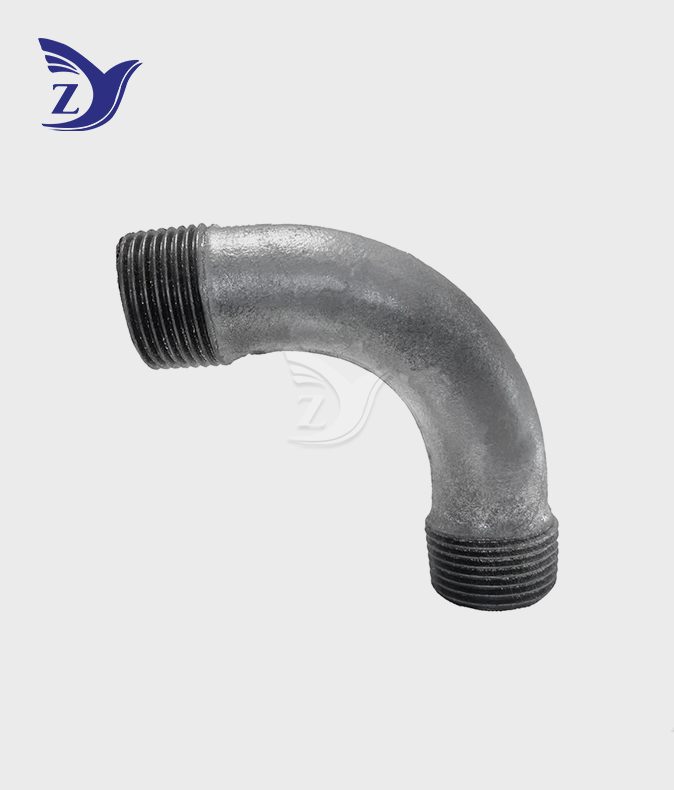
Vent Pipes and the Use of 90 Degree Elbows
The Essential Role of Vent Pipes in Building Systems
Vent pipes are like the lungs of modern plumbing. They let sewer gases escape safely and stop vacuums that could drain water from fixture traps. For these sloped or vertical paths to work right, they need to keep the wind steady. Vent pipes are used in HVAC systems to even out pressure and get rid of toxic combustion byproducts from stoves and water heaters. How well these systems work depends a lot on how well the routes and fittings are chosen.
Industry Guidelines for Incorporating 90-Degree Elbows
Most building rules allow 90-degree elbows in vent pipe designs, but where they are placed is very important. The International Plumbing Code (IPC) and the Uniform Plumbing Code (UPC) both allow vent stacks to change directions, but workers must stick to the minimum diameter rules and avoid making horizontal parts that trap water. When engineers reroute industrial gas or water pipelines, they add up the resistance of all the fittings to make sure there is enough draft and flow. A well-thought-out system might include a 90° pipe bend that doesn't rust at the point where the vent goes from being vertical to horizontal and ends above the ceiling.
Impact on Airflow and Design Considerations
Every change in direction causes friction loss, which is measured in pipe engineering by equivalent length. Depending on how the fitting is built inside, a standard 90-degree elbow has about the same resistance as three to five feet of straight pipe. Premium BSPT fittings have round edges that keep this penalty to a minimum by reducing the number of sharp transitions that cause turbulence. When mechanical engineers build a system, they have to figure out the total equivalent length to make sure that either natural draft or artificial air can get past the resistance. Maintaining the right airflow speeds—usually between 500 and 1500 feet per minute for proper operation—can be done by making vent lines bigger or reducing the number of direction changes.
Advantages of BSPT Round Face Galvanized Fittings in Vent Applications
Choosing the right materials is very important for the life of a vent system. In these tough conditions, BSPT round face galvanized round edge 90° elbow pipe fittings perform better in a number of ways. The hot-dip galvanization method adds a zinc covering of at least 500g/m². This protects against the corrosive effects of water, condensation, and air pollutants that are typical in vent uses. This anti-rust malleable iron design can handle changes in temperature better than hard cast iron, so it can expand and contract without cracking. The strengthened round-edge collar spreads the installation pressure out evenly, which stops stress buildups that could weaken the joint over many years of use.
Comprehensive Overview of BSPT Round Face Galvanized 90° Elbow Pipe Fittings
Technical Specifications and Thread Standards
These precision-threaded fittings use British Standard Pipe Taper threading, which has a standard flank angle of 55 degrees and a taper ratio of 1:16. This meets ISO 7-1 standards. Instead of using gaskets, which wear out over time, this tapered geometry seals metal to metal through thread interference. These industrial-grade 90° threaded elbows come in sizes from 1/8 inch to 6 inches so they can fit a wide range of pipe sizes used in business and industrial jobs. Pressure levels usually go up to Class 150, which means that the system can work at 25 bar at room temperature and 20 bar in conditions up to 300°C hotter than room temperature. When paired with the right adapters, threads from both BSPT and NPT systems can be used together. However, straight BSPT links seal better.
Material Properties and Corrosion Resistance
BSPT round face galvanized round edge 90° elbow pipe fittings are made from black malleable iron that meets the requirements of ASTM A197 or EN 1562. Compared to regular grey cast iron, this metal makeup is much more flexible and resistant to shock. A controlled annealing process is used in manufacturing to turn flimsy white cast iron into a matrix that can be shaped and can handle mechanical stress without breaking. The next step, hot-dip galvanization, adds a layer of zinc-iron metal that is about 70 micrometres thick. This layer protects against cathodic damage and greatly increases the lifespan of the component. Testing shows that these corrosion-proof round-edge pipe bends don't rust even when exposed to salt spray for long periods of time. This makes them perfect for use in coastal installations or chemical processing plants where air pollutants speed up the breakdown of metals.
BSPT Versus NPT Thread Differentiation
Knowing the differences between thread standards helps buying teams choose parts that will work together and avoid expensive changes that need to be made in the field. BSPT threads keep their pitch diameter the same for the first few threads before they start to taper. NPT threads, on the other hand, start to taper right away. This difference affects how fits seal—BSPT relies more on thread tension across the joint, while NPT seals mainly at the root of the last engaged threads. When installing vent pipes, this means that BSPT connections usually need less thread sealant and can handle small alignment changes better during assembly. But mixing thread standards without the right adapters can cause leaks and even system failure, especially in situations where pressure is high.
Common Applications Across Industrial Sectors
Round-edge valves that are suitable with NPT and BSPT are very important in a wide range of industrial settings. Fire protection experts recommend these parts for both wet and dry sprinkler systems. The strengthened collar can handle hydraulic shock when the system is turned on. For outdoor pipes that are exposed to UV rays and harsh weather, municipal water treatment plants depend on how long they last. These fittings are used for low-pressure steam distribution and auxiliary gas lines in petrochemical installations, where chemical resistance and temperature stability are very important. Commercial HVAC workers like how reliable they are when it comes to setting up combustion air intakes and condensation drains. The adaptability comes from design features that deal with problems that happen in real life, like resistance to shaking, tolerance for thermal expansion, and long-lasting performance under repeated loading conditions.
Comparison and Choosing the Right Elbow Fittings for Your Ventilation System
BSPT Round Face Versus Standard Fittings
The round-face support makes high-end fits different from cheaper ones in important ways. When you install standard elbows, the installation stress is concentrated at the thread interface, which makes radial cracking more likely when there is a lot of torque. According to mechanical stress research, the beaded collar on round-face shapes spreads these forces over a larger area. This makes the hoop stronger by 15 to 25 percent. Longer service intervals and lower maintenance costs over the fitting's useful life are the result of its higher durability. The shape also makes it easier for the gasket to seat when unions or flanges join to the threaded end. This gives you more options when setting up complicated pipe systems.
Galvanized Steel Versus Stainless Steel Alternatives
When choosing BSPT round face galvanized round edge 90° elbow pipe fittings materials, you have to balance the need for efficiency with the available cash. Hot-dipped galvanized malleable iron is very resistant to corrosion and doesn't cost nearly as much as stainless steel. This makes it a good choice for most industrial water and gas pipeline redirection jobs. The zinc coating takes a sacrifice, protecting the iron base below even when small scratches or abrasions go through the layer on top. Fittings made of stainless steel are better at withstanding certain chemicals, especially in acidic or high-chloride environments, but they cost a lot more. There are also differences in the installation torques that can be used. For example, galvanized malleable iron can handle higher tightening forces without galling, while austenitic stainless grades cannot. When projects are trying to stay within a budget, they usually choose galvanized parts for general use and only use stainless steel for specific tasks where its special features make it worth the extra cost.
90-Degree Versus 45-Degree Elbow Selection
The choice of bend angle affects both the hydraulic efficiency and the flexibility of the fitting. Sharp 90-degree turns are good for cases where you need to quickly change directions in a small area, but they also cause the most flow resistance. A 90-degree elbow has about twice the length penalty of two 45-degree fits put next to each other to make the same total direction change. Using two 45-degree elbows next to each other, if there is enough room, lowers pressure drop and improves flow features. This is especially helpful in gravity-dependent drainage uses. However, this method raises the cost of the materials and adds more link points that could be leak routes. To find the best configuration for each project section, experienced system planners look at the available routing space, the flow needs, and the cost factors.
Procurement Considerations for Quality and Value
When making sourcing decisions, you should look at more than just prices. You should also think about the total cost of ownership. Companies that have been around for a while and have ISO 9001 approval show that they are committed to keeping quality control throughout the whole production process. Following well-known rules such as ASTM A197 for base material and ASTM A153 for galvanizing makes sure that performance characteristics are consistent across different production lots. The length of the warranty shows how confident the maker is in the product's reliability; longer coverage periods suggest better engineering and materials. Delivery reliability is also very important; suppliers that keep enough merchandise on hand and fast transport networks keep project delays that drive up costs to a minimum. The availability of technical support helps engineering teams answer questions about specifications during the planning process and fix problems in the field during installation, which adds value to the part itself.
Conclusion
It is common for vent pipe systems to have 90-degree bends installed when the work follows engineering principles and uses high-quality parts. The choice of high-strength, anti-rust, malleable iron fittings with the right thread standards and protective coats guarantees years of reliable service. Understanding the differences between thread types, material choices, and design variations helps procurement professionals choose parts that meet performance needs while staying within budget. Following regulatory standards and using the right installation methods will protect the integrity of the system and reduce the amount of maintenance that needs to be done over its lifetime. Even though ventilation systems are getting more complicated in businesses, homes, and factories, the basic dependability of precision-engineered fittings is still important for safe, effective use.
FAQ
Can BSPT 90-Degree Elbows Handle High-Pressure Vent Systems?
BSPT round face galvanized round edge 90° elbow pipe fittings with a Class 150 rating can handle pressures of up to 25 bar at room temperature and are good for most business and industrial venting needs. The tapered thread design makes a metal-to-metal seal that gets stronger under pressure, unlike mechanical seals, which get weaker. For systems that work outside of these limits, they need special high-pressure connections with thicker walls that have been checked by hydrostatic testing.
What Distinguishes BSPT from NPT Threads in Practical Applications?
NPT threads have an angle of 60 degrees and taper right away, while BSPT threads have an angle of 55 degrees and lock through parallel contact before tapering. BSPT joints usually need fewer turns to close properly, and they can handle a little misalignment better during installation. You can't just switch between the thread types; trying to mate threads that don't work together can cause cross-threading and leaks. Field fit problems can be avoided by properly identifying items before they are bought.
How Should I Maintain Galvanized BSPT Elbow Fittings for Maximum Longevity?
Regular eye checks find that the coating is wearing away before the base starts to corrode. Zinc-rich repair paints can bring back cathodic protection to areas of damaged galvanization. Do not use rough cleaning methods that can damage protective coatings. Thermal cycling effects can be fixed by retightening threaded connections every so often, but too much tinkering can damage sealed joints. Systems that work in acidic environments need to be checked on more often than systems that work in safe environments.
Partner With Zhiyuan Malleable Steel for Your Industrial Piping Needs
Zhiyuan Malleable Steel is ready to help you with your next project by providing high-quality BSPT round face galvanized round edge 90° elbow pipe fittings that are made to strict international standards. Our facility in Shanxi Province has modern quality control systems certified to ISO 9001 and 26 years of experience casting. This makes sure that every part meets the strict requirements of fire protection, municipal infrastructure, and industrial process applications. With the ability to make more than 30,000 tonnes of products every year in more than 1,000 different styles, we have the inventory and manufacturing flexibility to meet all kinds of orders, from quick stock shipments to custom OEM solutions. Our CE, UL, and FM certifications let us sell our products all over the world, and our helpful customer service team (you can reach them at q1236800000@gmail.com) helps with technical questions during the design, purchase, and installation stages. Zhiyuan Malleable Steel provides the quality, dependability, and service that picky BSPT round face galvanized round edge 90° elbow pipe fittings providers look for. They can deliver standard fittings within hours or custom solutions for unique uses. You can look at our full line of products at zymalleablepipefitting.com and get a detailed quote that is specific to your project needs.
References
International Code Council. International Plumbing Code. Country Club Hills: International Code Council, 2021.
American Society of Mechanical Engineers. ASME B1.20.1: Pipe Threads, General Purpose. New York: ASME, 2019.
British Standards Institution. BS EN 10242: Threaded Pipe Fittings in Malleable Cast Iron. London: BSI Standards, 2018.
ASTM International. ASTM A197: Standard Specification for Cupola Malleable Iron. West Conshohocken: ASTM International, 2020.
National Fire Protection Association. NFPA 13: Standard for the Installation of Sprinkler Systems. Quincy: NFPA, 2022.
Underwriters Laboratories. UL 1978: Standard for Grease Ducts and UL 262: Standard for Gate Valves for Fire Protection Service. Northbrook: Underwriters Laboratories, 2020.
Online Message