
May 14, 2026
What type of thread do galvanized 90° square edge elbow pipe fittings adopt?
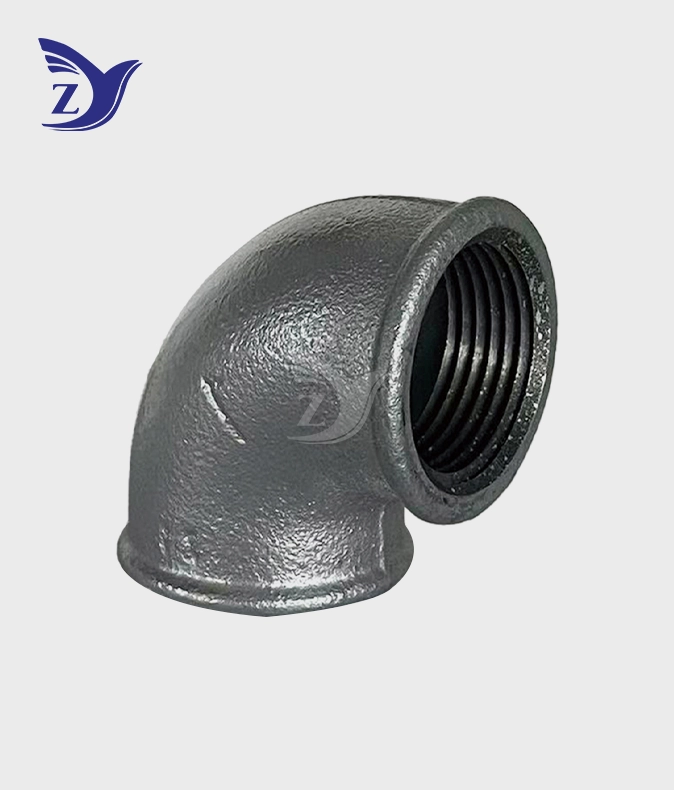
Galvanized 90° square edge elbow pipe fittings serve as critical components in piping systems where durability and corrosion resistance matter most. Understanding the thread types used on these fittings is vital for purchasing managers, engineers, and distributors to ensure proper installation, maintenance, and seamless integration into existing pipelines. Thread compatibility directly impacts system integrity, preventing costly mismatches and operational inefficiencies in industrial, HVAC, and plumbing applications. When selecting these fittings, knowing whether your system requires NPT or BSPT threads can mean the difference between a leak-free installation and expensive downtime.
Square face galvanized 90° square edge elbow pipe fittings primarily adopt two internationally recognized thread standards: NPT (National Pipe Thread) and BSPT (British Standard Pipe Taper). NPT threads, governed by ANSI/ASME B1.20.1, feature a 60-degree thread angle with a taper of 1:16, creating a mechanical seal through thread interference. BSPT threads, compliant with ISO 7-1, utilize a 55-degree thread angle with the same 1:16 taper ratio, ensuring metal-to-metal sealing. Both thread types deliver reliable, pressure-tight connections when properly installed with appropriate sealants, making them ideal for water, gas, and industrial fluid applications.
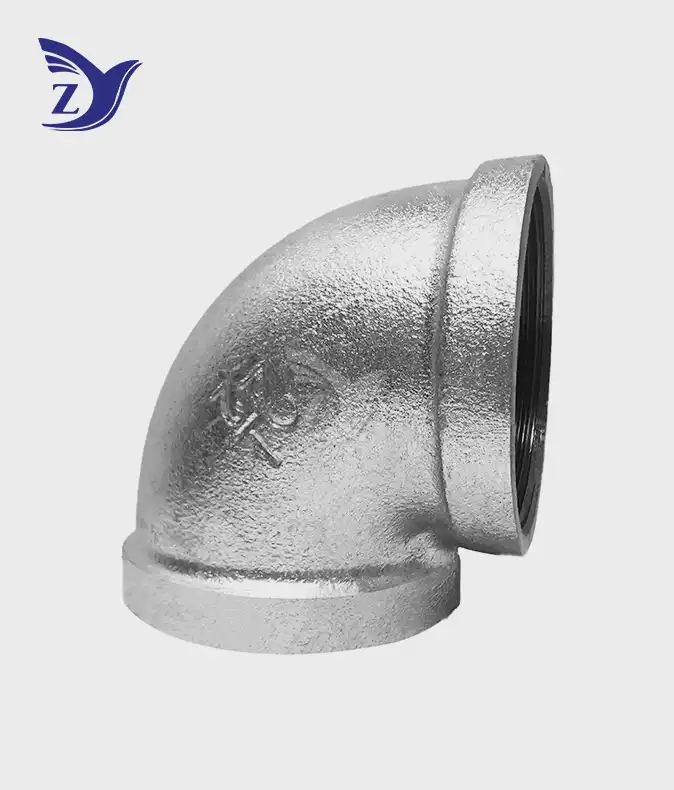
What Type of Thread Is Used on Galvanized 90° Square Edge Elbow Pipe Fittings?
NPT Thread Specifications and Performance Characteristics
In North America, national pipe thread standards are the norm, and they are used in many manufacturing settings around the world. NPT threads have a flank angle of 60 degrees and drop at ¾ inch per foot (1:16 ratio). This makes an interference fit that gets tighter as the square face galvanized 90° square edge elbow pipe fitting is put into place. For this taper design to completely stop leaks, thread sealant or PTFE tape must be used correctly to make the threads bend and form a seal. If you look at ½-inch fittings, they have 14 threads per inch, while 2-inch fittings have 11.5 threads per inch. The accuracy of these specs, which are based on ASTM standards, makes sure that all manufacturers use the same measurements. This lets procurement teams buy from more than one seller without worrying about compatibility issues.
BSPT Thread Standards and Global Compatibility
In Europe, Asia, and Commonwealth countries, British Standard Pipe Taper threads are still the most common type. According to ISO 7-1, BSPT threads are labeled as R (external) and Rc (internal). They have a 55-degree thread angle that makes the closing shape a little different from NPT. The 1:16 taper ratio is the same size as an NPT, but the two methods can't be used together directly because of the different thread angle. To serve markets around the world, many companies make square face galvanized 90° square edge elbow pipe fittings with both types of threads. BSPT threads meet the standards set by BS EN 10242 for threaded fittings made of malleable cast iron. This makes sure that the quality of the material is maintained and that the measurements are correct. If you know what thread standard your current pipe system uses before you buy something new, you can avoid costly installation delays and possible safety risks.
Material Compatibility and Sealing Performance
The thread contact depth has a big effect on the quality of the seal for all types of pipes. Because they are both about the same hardness, galvanized steel pipes and galvanized malleable iron parts fit together perfectly. To keep stainless steel pipes from galling, which happens when different types of material cause thread surfaces to cold-weld during installation, you need to carefully control the pressure. Black iron lines fit together physically well, but they don't protect against corrosion as well as galvanized systems do. Thread sealants made for certain types of materials improve the performance of sealing. For example, pipe dope compounds work well for water and gas uses, while PTFE tape is better for chemical service. Specifications for purchases should make it clear what kind of thread is needed and what kind of media it will be used for so that suppliers can make suggestions that meet the needs of the application.
How to Measure and Verify Threads on Galvanized Square Edge 90° Elbow Fittings?
Essential Measurement Tools and Techniques
The right measuring tools are the first step in making sure that the thread is correct. By matching blade shapes to thread grooves, thread pitch gauges quickly find the number of threads per inch or metric pitch. Thread ring gauges let you know right away if threads meet tolerance requirements, so you don't have to do any math to make sure. To make sure that stated sizes are correct, digital calipers measure both the major diameter (the biggest diameter across the thread crests) and the minor diameter (the smallest diameter at the thread roots). Optical comparators make thread profiles bigger so that you can see the angle, root radius, and state of the crest more clearly.
Critical Parameters for Quality Control Inspection
Before taking packages, procurement teams should check a number of factors. Accurate thread taper is needed for good sealing, and measuring the thread width several times along its length shows that the 1:16 ratio is correct. Engagement strength is affected by thread depth; threads that are too short easily strip when installation force is applied. The surface finish inside the threads affects how well sealants stick to them. Rough cutting makes leak paths that sealants can't fully cover. Accurate thread form includes the right thread angle, the right root radius to keep stress from building up, and a uniform crest shape. By checking the dimensions against the ASTM A197 material specs and threading standard requirements, you can keep goods from getting into your supply chain that don't meet the standards.
Common Measurement Errors and Prevention Strategies
Mistakes in measurements usually happen when the wrong tools are used or when the measurements are taken incorrectly. When pitch gauges are used that are worn out, they give wrong results because the blade shapes don't match standard thread forms perfectly. When you measure over thread sealant dust, you get wrong measurements that don't match the real square face galvanized 90° square edge elbow pipe fitting requirements. Too much caliper force slightly pinches the threads, which makes the readings look smaller than they really are. Temperature changes can change the sizes of metals. For example, measures taken on cold fittings might not match the standards set at a normal reference temperature. Setting up quality control processes that take these factors into account will make sure that the proof results are the same from one inspection batch to the next.
Procurement and Installation Insights for Galvanized Square Edge 90° Elbows
Supplier Verification and Certification Requirements
Suppliers you can trust show that they meet world quality standards with official paperwork. Getting ISO 9001 certification means that you have set up quality management systems that cover the manufacturing process, inspection methods, and programs for ongoing growth. Material certificates that prove the ASTM A197 malleable iron makeup make sure that castings meet the required tensile strength and ductility levels. Reports on thread dimensions checked by recognized labs show that the product meets the requirements of ANSI/ASME B1.20.1 or ISO 7-1. Galvanization papers that show the thickness of the zinc covering and adhesion tests keep things from failing too soon due to rust. UL/FM approvals for fire safety uses and CE marks for European markets make it possible to buy things through controlled channels.
Shanxi Taigu Zhiyuan Malleable Steel has a production history of 26 years, more than 30,000 tons of yearly capacity, and a lot of certifications that support global purchasing requirements. During the casting, heat treatment, drilling, and galvanization processes, our quality control methods are based on ISO 9001 standards.
Installation Best Practices for Thread Longevity
The right way to put something has a direct effect on how well it works and how long it lasts. Thread contact depth should reach at least three full threads past the finger-tight point. Depending on the size of the square face galvanized 90° square edge elbow pipe fitting, this can take anywhere from two to three wrench turns. When you put thread sealant on male threads, it only stops the sealant from being pushed into the pipe system, where it could get into valves or meters and cause problems. Different sizes of fittings need different amounts of torque. For example, ½-inch fittings need 25 to 30 ft-lbs, while 2-inch fittings need 90 to 100 ft-lbs to get the right seal compression without damaging the threads. When you overtighten, you damage the threads and fittings, and when you undertighten, you leave holes that let pressure cycle through them.
Managing Lead Times and Inventory Strategy
Standard sizes can usually be shipped within days from stock at a dealer, but non-standard designs need time to be made. When you order in advance for a large job, you can lock in prices and make sure there is enough production capacity. Keeping a smart stock of fittings in common sizes—½-inch to 2-inch fittings are used for about 80% of most applications—cuts down on project delays. Changes in seasonal demand affect supply, with supply being limited during the building season. Building connections with manufacturers that offer customization services is a good way to make sure you have a backup source in case you need something that normal distributors can't provide.
Zhiyuan Malleable Steel keeps a large stock of standard NPT and BSPT thread configurations, so they can send in-stock things within two hours. Because we are flexible in how we make things, we can meet the unique needs of wholesalers serving niche markets and offer private labeling for our threads.
Conclusion
Procurement workers and engineering teams need to know about the different thread types on square face galvanized 90° square edge elbow pipe fittings. NPT and BSPT threads are used in different markets for different reasons. The long-term dependability of a system depends on how well the dimensions are controlled and the quality of the materials used. The design with the square edge has structural benefits that make it a good choice for tough jobs where high mounting force can't damage the thread integrity. The right way to measure, check, and place the fitting will protect your investment and keep it working without leaks for as long as it lasts. When you work with certified manufacturers who keep up with thorough quality systems, you can be sure that standards will always be met for big orders.
FAQs
Can NPT and BSPT threads be used interchangeably on square edge elbow fittings?
Even though their taper ratios are close, NPT and BSPT threads cannot be simply swapped. Because NPT threads are at an angle of 60 degrees and BSPT threads are at an angle of 55 degrees, their shapes don't match up, which makes it impossible to seal properly. When you try to mix thread types, they won't connect completely, the thread sides will be under too much stress, and there is a high chance that they will leak under pressure. To make sure they work with each other, the procurement requirements must make it clear which thread standard your current system uses.
How can I verify thread type when replacing existing fittings?
Thread pitch gauges are the fastest way to check the number of threads per inch and the angle of the threads. Taper features can be seen by measuring the thread width at several points along its length. The thread standard used can usually be found by looking at the original system specs or calling the person who installed the system. When paperwork isn't available, removing a sample fitting so that it can be measured by a trained supplier saves you from making mistakes that cost a lot of money.
What maintenance extends the service life of galvanized elbow fittings?
Checking for decline of the zinc covering on a regular basis allows for preventative repair before corrosion gets to the base iron. Putting cold galvanizing solution on areas that have been worn down repairs the protective layer. Checking for tears at threaded joints means the seal is wearing down and needs to be resealed before leaks happen. Installations that are prone to vibration should have their torque checked on a regular basis to make sure that the parts stay properly tightened.
Contact Zhiyuan Malleable Steel for Certified Square Face Galvanized 90° Square Edge Elbow Pipe Fittings
Zhiyuan Malleable Steel makes industrial-grade threaded elbow fittings to strict NPT and BSPT standards. These fittings are used by fire protection contractors, city engineering firms, and plumbing wholesalers all over the world. Our hot-dipped galvanized square edge elbows have precise threading and are very resistant to rust. They are backed by ISO 9001, CE, UL, and FM standards that meet the strictest buying requirements. As a top supplier of square face galvanized 90° square edge elbow pipe fittings with an annual capacity of 30,000 tons, we keep a large inventory that allows for fast delivery—standard sizes ship within two hours, and we can customize products to meet OEM/ODM needs for non-standard specifications. Email our team at q1236800000@gmail.com to talk about bulk prices, special sizes, and getting technical help for your next project. Our full product list can be found at zymalleablepipefitting.com. That's where engineering teams can find out why they trust Zhiyuan for safe pipeline solutions, backed by 26 years of manufacturing excellence.
References
American Society of Mechanical Engineers. (2013). Pipe Threads, General Purpose (Inch). ASME B1.20.1-2013. New York: ASME Press.
British Standards Institution. (2000). Malleable Cast Iron Threaded Fittings for Pipes and Fittings. BS EN 10242:2000. London: BSI Standards Limited.
International Organization for Standardization. (2001). Pipe Threads Where Pressure-Tight Joints Are Made on the Threads—Part 1: Dimensions, Tolerances and Designation. ISO 7-1:2001. Geneva: ISO.
ASTM International. (2016). Standard Specification for Cupola Malleable Iron. ASTM A197/A197M-16. West Conshohocken, PA: ASTM International.
Stewart, Harry L. (2018). Pipefitters Handbook. Indianapolis: Industrial Press Inc.
Nayyar, Mohinder L. (2015). Piping Handbook, 8th Edition. New York: McGraw-Hill Education.
Online Message
YOU MAY LIKE
High quality furniture manufacturer
NPT Black Male-Female Union 343 Pipe Fittings
Carbon Steel Full Threaded Coupling Fittings Sand Blasted
NPT Black Male-Female Union 331 Pipe Fittings
Carbon Steel Welded Cap Pipe Fitting
Carbon Steel Pipe Male Threaded Fittings Hot Dip Galvanized
Water Grooved Reducing Tee
Fire Grooved 45° Elbow
Hot-Dip Galvanized Round Edge BSPT 90° Elbow