
Jul 7, 2026
What standard does CISPI 301 apply to no hub galvanized 90 elbow?
CISPI 301 is the definitive standard governing cast iron soil pipe and fittings, including the no hub hot dip galvanized 90° elbow pipe fitting widely utilized in drainage, waste, and vent (DWV) systems across the United States. This standard, published by the Cast Iron Soil Pipe Institute, establishes stringent requirements for dimensional accuracy, material composition, and performance characteristics of hubless fittings. The no hub design eliminates the traditional bell-and-spigot connection, allowing installers to use stainless steel couplings with neoprene gaskets—a configuration that significantly reduces installation time while maintaining robust leak resistance and structural integrity in both commercial and residential plumbing applications.
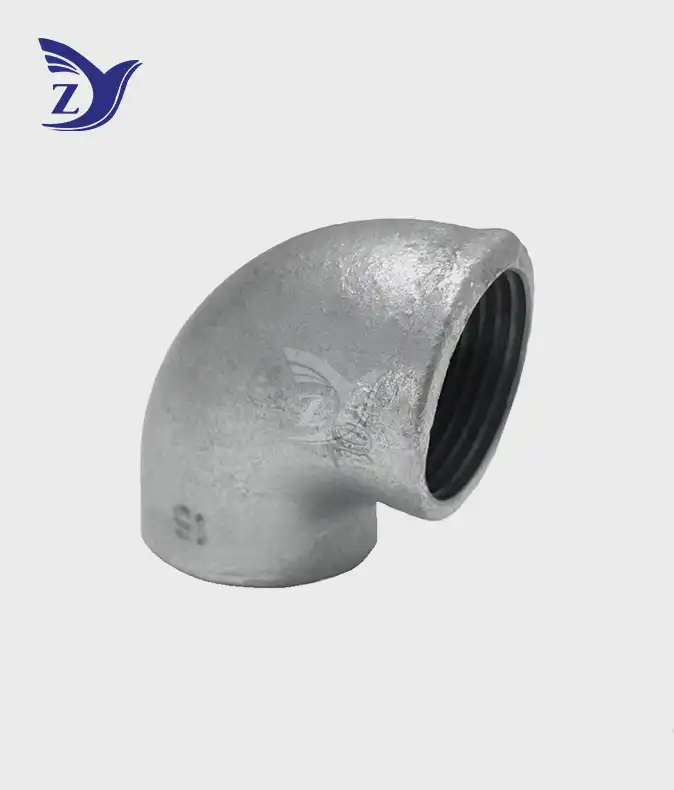
CISPI 301 and Its Application to No Hub Galvanized 90° Elbows
In North America, the CISPI 301 standard is the main way that quality is checked for hubless cast iron pipe systems. When the pipe fitting business talks about standards, CISPI 301 stands out because it talks about more than just sizes. It also talks about the metal qualities and surface treatments that make sure things will last for a long time in harsh conditions.
Why CISPI 301 Matters for Galvanized No Hub Elbows
CISPI 301 compliance makes sure that every long-lasting no hub hot dip galvanized 90° elbow pipe fitting meets exact manufacturing standards. The standard says that parts must be made from gray or ductile cast iron, which was chosen because it has great compression strength and can reduce vibrations. These fittings are hot-dipped galvanized, which means they are submerged in liquid zinc at about 450°C. The metallurgical bond that forms provides multiple layers of protection that are much stronger than other coatings. Industry tests show that parts that are properly coated and meet CISPI 301 can last for more than 50 years in corrosive environments without losing their structural integrity.
The No Hub Design Advantage
Traditional hubbed parts need to be put together by skilled workers with a lot of room around them. The no hub design changed the way plumbing was installed by adding plain-ended fittings that were held in place with shielded connections that met ASTM C1540 standards. This design choice has three important benefits that procurement managers always put first: it cuts installation time by up to 40% compared to hubbed systems; it gives options in retrofit situations where space is limited; and it ensures consistent gasket compression that lowers the risk of leaks at all joint connections. At Zhiyuan Malleable Steel, we've seen how these benefits directly save contractors money on projects like local water projects and high-rise building, where every hour of work has an effect on the bottom line.
Technical Specifications and Material Standards for No Hub Hot Dip Galvanized 90° Elbows
The technical performance of a standard no hub hot dip galvanized 90° elbow pipe fitting relies on how well the material specs and coating procedures are followed. Knowing these details helps engineers and buying specialists make decisions that are in line with the needs of the project.
Material Composition and Base Metal Properties
According to CISPI 301, parts must be made from gray iron that meets ASTM A48 Class 30 or higher or ductile iron that meets ASTM A536 Grade 65-45-12. Gray iron is great for building drainage systems where sound quality is important because it is easy to shape and doesn't vibrate. Ductile iron has better tensile strength and impact protection, which are very important in manufacturing settings where temperatures change or there is mechanical stress. Both materials can be hot-dipped galvanized without losing their mechanical qualities. This makes cast iron different from materials like aluminum or some steel alloys that might become weaker during the galvanizing process.
Hot Dip Galvanization Process and Coating Integrity
When hot dip galvanizing is used on corrosion-resistant no hub hot dip galvanized 90° elbow pipe fittings, it makes a safe system with many layers. A chemical process happens inside the fitting when it is put in liquid zinc. This creates layers of intermetallic iron-zinc alloys (gamma, delta, and zeta phases), with a layer of pure eta zinc on top. This structure offers both barrier protection, which keeps air and moisture from getting to the base metal, and cathodic (sacrificial) protection, in which the zinc rusts more quickly to protect the iron below. The process is governed by ASTM A153 and A123 standards, which usually call for a coating thickness of at least 3.4 mils (86 microns), though high-end makers usually get it to 4.0 mils or higher. At our Taigu plant, we use magnetic gauges that are set to ISO 2178 standards to check the thickness of the coating. This makes sure that every heavy duty fitting that leaves our production line meets or exceeds the minimum requirements.
Dimensional Tolerances and Size Ranges
CISPI 301 gives accurate measurements for fitting diameters, wall thicknesses, and curvature radii to make sure that all makers can use the same standards. Standard sizes run in diameter from 1-1/2 inches to 15 inches, which covers almost all household and business drainage needs. The radius of the 90-degree curve is carefully determined to keep the flow speed at its best, which is usually 1.5 to 2 times the width of the pipe. This keeps turbulence and pressure drop to a minimum and keeps solids from building up. To make sure the gasket seals properly when connections are torqued to specification, ovality margins are kept within 2%. Tight standards are what make the difference between a system that works well for decades and one that breaks down early, needs guarantee claims, and needs expensive emergency repairs.
Procurement Guidance for B2B Clients: Buying No Hub Hot Dip Galvanized 90° Elbow Fittings
Decisions about where to get things have long-term effects on the success of a project, the stability of the supply chain, and the image of the company. When doing strategic buying, you need to look at more than just the unit price.
Identifying Qualified Manufacturers and Suppliers
Reputable manufacturers show their dedication to quality by getting third-party certifications like ISO 9001 quality management systems, having their products listed with groups like UL (Underwriters Laboratories) and FM (Factory Mutual), and passing plant audits by major contractors and distributors. When looking at suppliers for big projects or long-term supply deals, production ability is very important. A company with more than one production line and a yearly capacity of more than 20,000 tons, like Zhiyuan Malleable Steel's Taigu plant, can handle high demand without affecting supply times or forcing allocation during busy building seasons. Logistics costs and wait times are affected by where the goods are made. For example, goods made in North America or the United States take less time to ship and are easier to return under guarantee than goods made far away in other countries.
Pricing Structures and Minimum Order Considerations
The price of a no hub hot dip galvanized 90° elbow pipe fitting is usually depending on how many units you order. Prices usually go down at 500, 1,000, and 5,000 units. Spot prices for small amounts may be 30–45% higher than contract prices that distributors and big builders can get when they place regular orders. Minimum order amounts vary by maker and can be as low as a single pallet (usually 200 to 300 fittings, depending on size) or as high as a full container load for export customers looking for the best freight rates. For local orders, lead times for stock sizes are usually two to four weeks. For special specs or non-standard galvanizing needs, the time can go up to six or eight weeks. When making project schedules, procurement managers should include these time frames. They might also want to set up blanket purchase orders with planned releases to balance the costs of keeping goods with the risks of running out of stock.
Certification Documentation and Export Compliance
For international shipments, you need a lot of paperwork. This includes commercial invoices with product descriptions and HS tariff codes, mill test certificates that show the material's composition and mechanical properties according to ASTM standards, certificate of origin documents that show trade agreement benefits or customs clearance, and third-party inspection reports if the project requirements or importing country regulations require them. When a company has an established export program, they keep templates and methods that make it easy to make these papers, which makes it easier for purchasing teams to do their jobs. Zhiyuan Malleable Steel includes full certification packages with every export shipment. Our quality assurance team has 26 years of experience with meeting the needs of foreign trade. Our clients benefit from our long-term partnerships with freight forwarders and customs traders who know how to classify and value pipe fittings. This keeps clearing delays to a minimum, which can keep projects on track.
Conclusion
No hub hot dip galvanized 90° elbow pipe fittings used in North American sewage systems are subject to CISPI 301, which sets the quality standard. Procurement workers can choose goods that will last for a long time if they know how this standard controls material choices, tolerances for size, and performance requirements. When compared to other coatings, hot dip galvanization provides better rust protection. The hubless design also makes fitting much easier and cheaper for labor. If you manage programs for local infrastructure, business building, or industrial facility care, you can be sure that the supply chain will be stable and the project will be a success by buying from certified manufacturers with proven production capacity and full quality systems.
FAQs
How does CISPI 301 differ from other pipe fitting standards?
CISPI 301 talks about hubless cast iron soil pipe and fittings for drainage purposes. ASTM A888 talks about the material standards for the pipe, and ASTM C1540 talks about the rules for connections that connect no hub systems. ASME B16.4 talks about threaded malleable iron fittings for pressure uses, which are a totally different type of product. Knowing these differences helps you choose the right goods for each part of the system.
Can hot dip galvanized elbows withstand chemically aggressive environments?
HDG coats are very good at protecting against neutral pH water, corrosion from the air, and most organic chemicals. Zinc rust speeds up in places with pH levels below 5.0 or above 12.0, where chemical interaction is limited. When used in industrial settings with strong acids, bases, or chlorides, stainless steel options or coatings that go beyond normal galvanization may be needed.
What verification methods confirm CISPI 301 compliance?
As required by ASTM A153, manufacturers should provide mill test certificates that show the material's makeup through spectrographic analysis, dimensional inspection reports that show the limits were met using calibrated measuring tools, and galvanization certificates that show the coating's thickness. Third-party product lists from UL or FM give you extra peace of mind that the fittings you buy meet standard requirements and are inspected by the maker on a regular basis.
Partner with Zhiyuan Malleable Steel for Premium No Hub Hot Dip Galvanized 90° Elbow Pipe Fitting Solutions
At our 50,000-square-meter Taigu plant, Zhiyuan Malleable Steel blends 26 years of experience in casting with cutting-edge manufacturing tools. With an annual production capacity of 30,000 tons and an inventory of over 1,000 specs, we can meet all of your no hub hot dip galvanized 90° elbow pipe fitting needs. Standard goods ship within two hours, and custom designs are delivered faster. We make sure that every fitting that leaves our facility has ISO 9001, CE, UL, and FM certifications. We also promise to replace any defective goods and offer expert help throughout the lifetime of your project. If you're a fire protection system integrator, a city engineering contractor, or a plumbing distributor looking for a trusted seller of pipe fittings, we invite you to try Zhiyuan. You can email our team at q1236800000@gmail.com or go to zymalleablepipefitting.com to ask for technical details, price quotes, or sample packages that show how good our work is.
References
- Cast Iron Soil Pipe Institute. (2018). CISPI 301 Standard Specification for Hubless Cast Iron Soil Pipe and Fittings for Sanitary and Storm Drain, Waste, and Vent Piping Applications. Chattanooga, TN: CISPI.
- American Society for Testing and Materials. (2019). ASTM A888/A888M-19 Standard Specification for Hubless Cast Iron Soil Pipe and Fittings for Sanitary and Storm Drain, Waste, and Vent Piping Applications. West Conshohocken, PA: ASTM International.
- American Society for Testing and Materials. (2016). ASTM A153/A153M-16a Standard Specification for Zinc Coating (Hot-Dip) on Iron and Steel Hardware. West Conshohocken, PA: ASTM International.
- American Society for Testing and Materials. (2021). ASTM C1540-21 Standard Specification for Heavy Duty Shielded Couplings Joining Hubless Cast Iron Soil Pipe and Fittings. West Conshohocken, PA: ASTM International.
- National Association of Corrosion Engineers. (2017). Hot-Dip Galvanizing for Corrosion Protection of Iron and Steel Products. Houston, TX: NACE International.
- Plumbing-Heating-Cooling Contractors Association. (2020). Installation Standards for Hubless Cast Iron Soil Pipe Systems in Commercial and Residential Construction. Falls Church, VA: PHCC Educational Foundation.
Online Message