
Jul 29, 2026
What standard applies to malleable iron equal straight tee?
It is important to know the standards that apply when defining equal straight tees made of malleable iron for industrial pipe systems. The fittings need to meet the requirements of ASTM A197 for the material they are made of and ASME B16.3 for their size limits and pressure values. NPT black square face straight tee pipe fittings strictly follow ASME B1.20.1, which controls the curved thread shape and makes sure that mechanical seals don't leak. The "black" finish means an oxide or lacquer covering that can be used for petrol and oil. The square face design adds strength to the thread entrances to keep them from breaking during installation. Compliance with these standards ensures safety, performance, and compatibility in fire protection, HVAC, municipal water systems, and petrochemical applications. These are important factors for procurement professionals looking for reliable pipeline components.
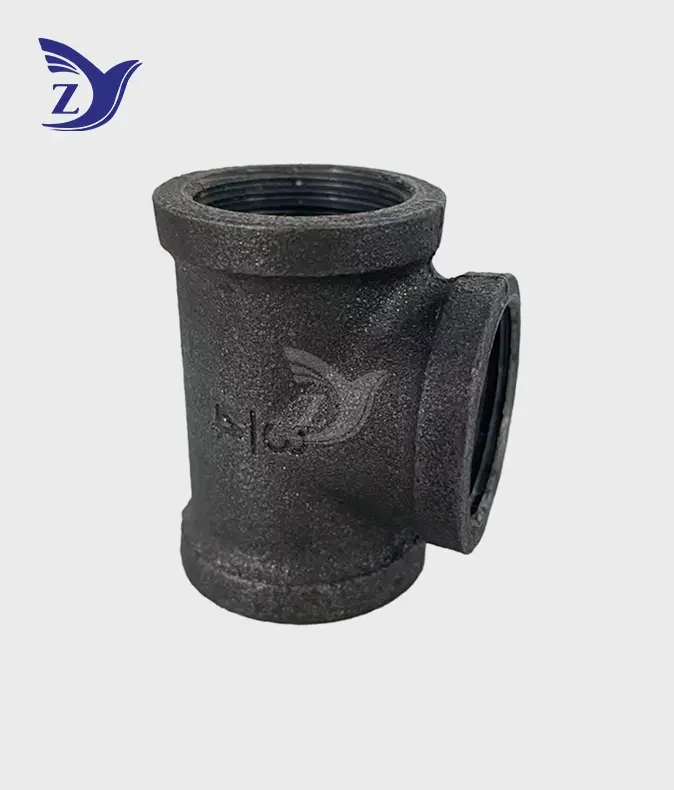
Standards for Malleable Iron Equal Straight Tee
Because they are both strong and flexible, malleable iron fittings have been used on industrial pipes for many years. Cast iron is brittle, but malleable iron can take stress without breaking because it goes through a heat treatment that changes its microstructure. Because of this, equal straight tees—which are made to split or join fluid flow at three holes of equal size—are perfect for tough situations where vibration and temperature changes happen often.
ASTM A197: Material Foundation
The chemical and mechanical qualities of cupola malleable iron used in pipe fittings are set by ASTM A197. This standard calls for a minimum tensile strength of 40,000 psi and an extension of about 5%, which means that the material should be able to stretch a little under load without breaking. When threaded links are put together and twist or expand because of changes in temperature, this flexibility is very important. We've worked on projects where fittings that didn't meet ASTM A197 standards failed early in steam lines, causing costly downtime and safety risks. Choosing materials that meet ASTM A197 protects your investment and keeps your business running.
ASME B16.3: Dimensional Precision
Threaded malleable iron fittings are rated by ASME B16.3 for their sizes, tolerances, and pressure-temperature ranges. This standard makes sure that any equal straight tee made by a certified company will fit properly with Schedule 40 or Schedule 80 pipe. There are strict rules about the wall thickness, thread contact length, and center-to-face lengths. The standard also divides parts into two groups, Class 150 and Class 300, based on how much pressure they can handle. At room temperature, Class 150 fittings can handle 300 psi of water, oil and gas, while Class 300 fittings can handle higher pressures in heavy industrial settings. The procurement teams need to check the ASME B16.3 approval to make sure there are no problems with compatibility during installation.
NPT Threading Standards Under ASME B1.20.1
National Pipe Taper (NPT) threading follows ASME B1.20.1, which says that the thread angle should be 60 degrees and the taper should be 3/4 inch per foot. This taper makes an interference fit where the threads get stuck together. This makes a mechanical seal that can be improved with thread sealant or PTFE tape. The NPT design is very different from parallel threads like BSPT or BSP, which only use sealer to keep leaks from happening. NPT black square face straight tee pipe fittings use this tapered design along with the square face reinforcement to provide better joint integrity in places with a lot of vibration, like pump rooms and compressor stations.
Understanding these standards allows engineers and procurement managers to communicate precise requirements to sellers, which lowers the chance of getting goods that don't meet the standards and compromise system performance.
NPT Black Square Face Straight Tee Pipe Fittings – Specifications and Benefits
The NPT black square face straight tee pipe fittings represent a specialized evolution in threaded pipe fitting design. Its unique features protect against common places where industrial pipes fail, especially when they are exposed to high temperatures, vibrations, and fluids that are acidic.
Structural Design and Material Composition
An NPT/BSPT square-edge equal black malleable tee has three similar threaded openings organised in a T shape. This allows pipes to be distributed in three different ways in water, gas and oil systems. When pipe wrenches apply installation torque, the square face design—a raised, rectangular reinforcement around each threaded opening—adds critical mass that stops the threads from bell-mouthing or stripping. This part of the design is very important when connecting big Schedule 80 pipe or when working in small areas where you can't use much force.
Manufactured from black malleable iron that meets ASTM A197 standards, these fittings are very strong and durable, with a tensile strength of over 40,000 psi. Black oxide or lacquer finish does a specific job: it keeps the surface from rusting while it's being stored or shipped without the flaking risks that come with galvanised coatings. In natural gas or steam systems, galvanised coats can wear off, poison valves, or cause blockages. The black finish gets rid of this worry while still providing enough corrosion protection for uses that don't involve water.
Precision Threading and Compatibility
Precision threading during production makes sure that NPT and BSPT fittings are compatible, meeting both American and British pipe standards. As the fitting is torqued, the curved thread shape makes the seal tighter, and the square face gives it more sealing surface area. Compared to parallel-threaded options, this dual-sealing system lowers the risk of leaks. The success of an installation depends on how accurately the threads are cut. Threads that are cut too thin need too much sealant, and threads that are cut too deep may break under pressure. To make sure that the L1 engagement length and thread form are correct, good manufacturers use thread gauging tests with calibrated plugs and rings.
Application Versatility
The corrosion-resistant square-edged tee is great for industrial water and gas pipeline branching across many sectors. These fittings are used by fire protection companies in sprinkler systems that need to be reliable in an emergency. They're used by municipal water providers in delivery networks where they should last for decades. They are put in process pipes that handle strong fluids at high temperatures at petrochemical plants. They are used by HVAC workers in heating and cooling systems that cycle temperatures every day. Because it can handle Class 150 pressure levels (300 psi WOG at room temperature), the fitting is very flexible. Its dimensions stay the same in temperatures ranging from -20°F to 150°F.
These technical specifications translate into real-world benefits: shorter installation times because the threads engage reliably, lower maintenance costs because there are fewer leaks, and longer service lives because the materials are better. When procurement workers choose these items, they feel better about the investments they are making in infrastructure.
How to Select the Right Standardized Malleable Iron Equal Straight Tee for Your Needs?
Choosing the appropriate fitting involves balancing technical requirements with economic considerations. A methodical approach should be used in the selection process, which compares working factors to product specifications.
Matching Standards to Application Requirements
Find the industry standards that apply to your project as a first step. Along with ASTM compliance, fire protection systems usually need to be UL or FM certified. When cities work on water projects, they often need NSF 61 approval for drinkable water contact. Chemical processing plants may need to test materials more to make sure they are compatible with certain fluids. Knowing these basic needs stops design mistakes that cost a lot of money and cause projects to be delayed or need expensive fixes.
Pressure and temperature ratings must match the real working conditions plus the necessary safety gaps. For a 200-psi system, Class 150 valves with a 300-psi limit should be used, which gives a 50% safety factor. Pay close attention to the link between pressure and temperature in steam systems. For example, Class 150 fittings that are rated at 300 psi for cold water drop to 150 psi for full steam at 366°F. If you don't pay attention to these deratings, serious mistakes can happen.
Material Selection Considerations
While black malleable iron is useful for most industrial tasks, some places need different materials. To keep rust from getting into potable water systems, fittings must be galvanised. Chemical processes that are very toxic may need stainless steel parts, even though they are more expensive. Specialised coatings or metal options work better in offshore marine settings. By looking at how toxic the fluids being moved are, the weather, and how long the material is expected to last, you can choose the best one for the lowest cost without sacrificing safety.
Threading Standard Compatibility
In North America, NPT threading is most common. In Europe and Asia, BSPT and BSP threading are more common. Cross-threading, leaks, and joint problems happen when you mix thread types. Global projects that get parts from different parts of the world must follow strict thread standard rules. When the requirements are flexible, NPT black square face straight tee pipe fittings usually work better for sealing in high-vibration situations because they have a tapered interference fit. By clearly stating thread standards in procurement specs, you can avoid getting goods from foreign suppliers that don't work together.
Supplier Certification Verification
Ask for proof paperwork that shows you meet certain standards. Material test reports (MTRs) from reputable manufacturers show the chemical make-up and mechanical properties of the material. They also include dimensional inspection reports that show the material meets ASME B16.3 standards and thread gauge test results that show it meets ASME B1.20.1 standards. Getting ISO 9001 approval means that your quality control systems are well-established. When suppliers refuse to provide documentation, it raises questions about the authenticity of the product. Building ties with honest manufacturers who always deliver certified goods lowers the risk of buying things and helps ensure long-term operating reliability.
Conclusion
If you choose malleable iron equal straight tees that meet the standards set by ASTM A197, ASME B16.3, and ASME B1.20.1, you can be sure that the pipeline system will work properly in fire protection, city infrastructure, HVAC, and industrial settings. Because they are reinforced and threaded precisely, NPT black square face straight tee pipe fittings are designed to work in difficult operating settings and high-stress installation situations. To be good at buying, you need to know how to read technical specs, check the certifications of suppliers, and follow the right installation procedures. These efforts directly lead to lower upkeep costs, longer system life, and higher safety. As piping systems get more complicated and performance standards rise, it becomes more and more important for projects to work with manufacturers who are committed to quality and compliance.
FAQ
What is the difference between NPT and BSPT threading for malleable iron tees?
The National Pipe Taper (NPT) and the British Standard Pipe Taper (BSPT) both use tapered threads, but the angle and size of the threads are different. The thread angle for NPT is 60 degrees, and the taper is 3/4 inch per foot. The thread angle for BSPT is 55 degrees, and the taper is 1 in 16. Because of the way the shapes are different, NPT pipes can't be used with BSPT fittings and vice versa. Doing so damages the threads and makes leak paths. For BSPT, you need to use a different method to apply the sealant and get a slightly different result. When buying from overseas, make sure you clearly state the thread standards so you don't end up with goods that don't work together. In North America, most projects use NPT threads, while in Europe and Asia, most markets use BSPT or parallel BSP threads.
What pressure ratings should I specify for Class 150 malleable iron straight tees?
Most Class 150 malleable iron fittings can handle 300 psi of water, oil and gas (WOG) at room temperatures of -20°F to 150°F. When used with saturated steam, pressure ratings drop by a lot. For example, Class 150 fittings are rated at 150 psi for steam at 366°F. As temperatures rise, materials lose strength, which means that pressure derating is needed. Always look at the pressure-temperature charts that the manufacturer makes that are specific to your application and the fluid being moved. Set enough safety margins above the working conditions, which is usually between 1.5 and 2 times the maximum predicted pressure. When higher pressure is needed, Class 300 fittings provide greater capacity.
Can black malleable iron fittings be used in potable water systems?
Black malleable iron is not good for drinking water because it rusts quickly and contaminates the water supply. The black oxide or lacquer covering doesn't protect against rust very well and isn't meant to be in water all the time. For uses with potable water, galvanised malleable iron parts with a zinc layer that prevents corrosion are needed. Brass or stainless steel that meets NSF 61 standards for drinking water safety are also acceptable. Black valves should only be used on gas, oil, air and steam lines where rust is normal or where the fluids naturally stop corrosion.
Source High-Quality Fittings from Zhiyuan Malleable Steel
Since 2006, Zhiyuan Malleable Steel has been making precision-threaded pipeline parts and sending industrial-grade 3-way fluid distribution solutions to petrochemical plants, fire protection companies, and local utilities all over the world. Our NPT black square face straight tee pipe fittings comply with ASTM A197 and ASME B16.3 standards, backed by ISO 9001, CE, UL, and FM certifications. With 30,000-ton annual production capacity and over 1,000 product specifications, we maintain ample inventory enabling delivery of standard items within two hours. Our facility in Shanxi Province operates eight 3-ton medium-frequency electric furnaces and 156 precision machining stations, ensuring consistent quality across large-volume orders. We offer ODM/OEM customization for non-standard specifications and replacement guarantees for defective products. Contact our procurement team at q1236800000@gmail.com or visit zymalleablepipefitting.com to discuss your pipeline fitting requirements with our technical specialists. As an established NPT black square face straight tee pipe fittings manufacturer, we provide the quality assurance and supply reliability your projects demand.
References
- American Society for Testing and Materials. (2020). ASTM A197/A197M-20: Standard Specification for Cupola Malleable Iron. ASTM International.
- American Society of Mechanical Engineers. (2021). ASME B16.3-2021: Malleable Iron Threaded Fittings, Classes 150 and 300. ASME Press.
- American Society of Mechanical Engineers. (2019). ASME B1.20.1-2019: Pipe Threads, General Purpose (Inch). ASME Standards.
- National Fire Protection Association. (2022). NFPA 13: Standard for the Installation of Sprinkler Systems. NFPA Publications.
- Underwriters Laboratories. (2018). UL 197: Standard for Commercial-Industrial Gas Heating Equipment. UL Standards.
- International Organization for Standardization. (2021). ISO 7-1:2021: Pipe threads where pressure-tight joints are made on the threads — Part 1: Dimensions, tolerances and designation. ISO Publications.
Online Message