
Sep 24, 2026
What sizes are available for Class 300 pipe caps?
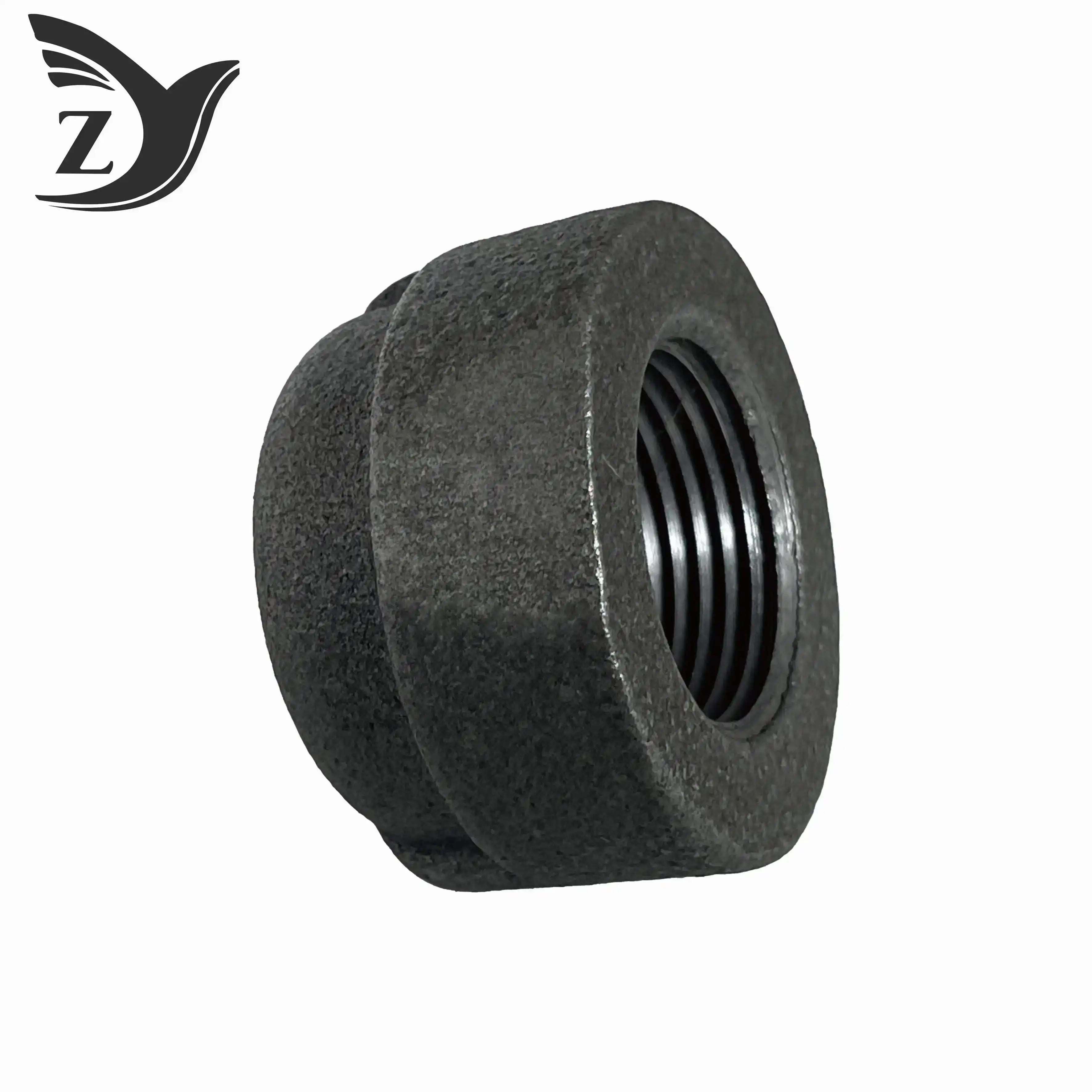
If you manage procurement for a petrochemical facility or industrial pipeline project, getting the pipe cap size wrong is not just a technical inconvenience — it can compromise system pressure integrity and trigger costly shutdowns. This guide answers that core question directly and walks you through everything you need to make a confident, compliant purchasing decision. Class 300 pipe caps are available in nominal pipe sizes (NPS) ranging from 1/2 inch to 6 inches for standard malleable iron threaded fittings, with some manufacturers offering sizes up to 12 inches for butt-weld configurations under ASME B16.9. For threaded forms of malleable iron, the class 300 black coated malleable iron cap fits the most common sizes used in industry, which are 1/2", 3/4", 1", 1-1/4", 1-1/2", 2", 2-1/2", 3", and 4". It is rated at 600 psi WOG (Water, Oil, Gas), and each size meets ASME B16.3 or a similar foreign standard. This makes the Class 300 black-coated malleable iron cap a reliable choice for high-pressure service environments.
Understanding Class 300 Pipe Cap Sizing Standards
How ASME and ANSI Standards Define Available Sizes
This is what ASME B16.3 says about threaded fittings for malleable iron, and Class 300 threaded pipe caps are part of that. For each NPS size, this standard lists the wall thickness, thread engagement length, and size tolerances. The full size range has a pressure value of 600 psi WOG at room temperature. However, saturated steam ratings are usually lower, at around 150 psi at 366°F, which is in line with Class 150 comparisons found in ASTM A197 material documentation. For petrochemical engineers who are choosing parts for high-pressure lines, knowing these standards is the first step to making sure the system is safe.
Standard NPS Size Range and Dimensions
For threaded Class 300 malleable iron pipe caps, the following common sizes are easy to find:
- 1/2" to 4" NPS — the standard range that most manufacturers keep on hand for industrial pipeline uses.
- 1/4" and 3/8" — smaller sizes that are used for monitoring or to connect to other lines.
- 2-1/2" and 3" — the most popular sizes for gas delivery and fire suppression headers.
- 4" — the biggest threaded formable iron cap that can be used before switching to butt-weld or flanged connections.
To keep the pressure performance constant, the wall thickness goes up in relation to the NPS size. Height and outer circle sizes are tightly controlled by ASME B16.3 tables, which makes sure that parts from different sources that follow the rules can be used together.
When you are getting supplies from many suppliers for a big project, these size standards are very important. Making sure that every cap fits the same ASME B16.3 table will let your repair staff switch out parts without having to measure again and again.
Key Benefits of Selecting the Correct Size
If you pick a pipe cap that is even one standard size off, it will cause problems that can be measured. If the cap is too small, it might not fully engage with the thread, leaving the connection open to pressure-induced separation. A cap that is too big puts extra stress and weight on the pipe end, especially in places where vibrations are common, like compressor stations or processing units.
The class 300 black coated malleable iron cap from Zhiyuan Malleable Steel is made as an integral one-piece casting, so it doesn't have the weak spots that come from having to put it together. The one-piece structure doesn't crack when pressure loads change over time, which is an important feature in systems where pressure changes when they start up and stop running.
Each cap has a black anti-rust finish that keeps it resistant to water and light corrosion, no matter what size it is. This coating is spread evenly over the whole surface, even on the thread roots, which are where corrosion usually starts in places that aren't sealed. Because each cap has both NPT and BSPT threads that are precisely machined into its internal shape, it can seal tightly and without leaks without using sealant solutions alone.
Dimensional accuracy, one-piece casting integrity, and uniform coating all work together to make maintenance intervals shorter and lifecycle costs lower for procurement managers in charge of large facilities.
Comparing Sizes and Materials: What Fits Best?
Black Coated Malleable Iron vs. Galvanized and Stainless Steel Caps
Choosing a material and a size work hand-in-hand. Each type of material has different pros and cons when it comes to how it handles pressure, rust, and fitting.
The most common type of class 300 black coated malleable iron caps for gas, oil, and non-potable water pipes. Zinc flaking is a problem with galvanized caps that makes them unsuitable for high-temperature steam lines or petroleum product systems. Zinc particles can damage valve seats and metering equipment further downstream. The black finish doesn't have this problem. While galvanized caps can be useful in outdoor water distribution or fire suppression systems where corrosion from the air is the main worry, they are usually only able to handle Class 150 pressure levels in iron that can be shaped.
Stainless steel caps are better at handling harsh chemical environments than either of the malleable iron options. However, they are much more expensive per unit and need different thread engagement techniques because the steel is so hard. The Class 300 black-coated malleable iron cap is the best choice for petrochemical systems where the process fluid doesn't corrode carbon steel, and the working pressure stays within the 600 psi WOG range. It has the best combination of pressure performance, material compatibility, and cost-effectiveness.
How to Select and Install the Correct Size?
To choose the right size, you must first be sure of three things: the normal pipe size at the connection point, the thread standard (NPT for North American systems, BSPT for European and many Asian setups), and the pressure and temperature range that the system will be used in. Because the Class 300 black-coated malleable iron cap from Zhiyuan works with both NPT and BSPT, there is no need to keep two separate cap stocks for mixed-thread facilities. This makes things a lot easier for supply chain managers who are working on projects in more than one area.
The best way to install Class 300 threaded caps is to use the right thread sealant (PTFE tape or anaerobic pipe compound rated for the service fluid) before engaging. Then, move the cap forward by hand until it fits snugly before applying wrench torque. Two to three full wrench turns past hand-tight is the norm in this case, which is in line with how NPT/BSPT tapered thread interference sealing works. Do not over-torque, as this can break the female port or change the shape of the cap.
Procurement Guide: Bulk Ordering and Logistics
Standard sizes from 1/2" to 4" NPS are usually in stock for procurement managers who place bulk orders. Zhiyuan Malleable Steel keeps a lot of standard products in stock and ships them out within two hours of receiving an order. This is a huge benefit when plant turnaround times are set, and delays are not acceptable.
The company's ODM/OEM service framework supports custom sizes and OEM configurations, letting you set the exact dimensions needed for a project or use proprietary marking for ASL (approved supplier list) tracking. Each production batch has full material traceability back to the original heat number. Standard supply chain documentation includes MTR documentation, chemical composition analysis, and mechanical performance test reports. These meet the document needs of petrochemical procurement workflows without a lot of back-and-forth.
Double-layer folded cardboard is used for packaging. This protects the thread shape and coating integrity during international shipping, which is especially important for container loads going to project sites in the Middle East or Southeast Asia.
Conclusion
There are standard NPS sizes for Class 300 malleable iron pipe caps ranging from 1/4" to 4", but the most usual commercial range is 1/2" to 4". If you choose the right size according to ASME B16.3, the coating will stay effective, the pressure will stay the same, and the threads will work with the fitting for its whole life. The class 300 black coated malleable iron cap can be used for industrial pipeline systems, gas transport, fire safety, and irrigation. Its one-piece casting, dual NPT/BSPT threading, and even black coating all work together to make it reliable and long-lasting in Class 300 environments.
FAQ
1. What is the most common size for Class 300 threaded pipe caps?
The most common NPS sizes bought by businesses are 1" and 1-1/2". This is because they are used so often in gas distribution branch lines and fire suppression headers. In instrumentation, the 3/4" size is often used.
2. How do I verify that the black coating is uniformly applied across different sizes?
Ask for a report on the thickness of the layer to be sent with every package. A trustworthy company will keep track of the uniformity of the coating for each batch, along with the results of adhesion tests. A useful site check is to look at the thread roots visually.
3. Are custom sizes available beyond the standard 1/2" to 4" range?
Yes. For custom projects, manufacturers that offer OEM/ODM services can make dimensions that aren't standard. Custom sizes usually have longer lead times than standard stock delivery windows, so plan your procurement timelines accordingly.
4. Can these caps handle both NPT and BSPT connections?
The Class 300 black-coated malleable iron cap from Zhiyuan Malleable Steel has both NPT and BSPT internal thread geometry, so it can be used with both North American and international pipe systems without needing separate SKUs.
5. What documentation comes with a bulk order?
Material Test Reports (MTR), chemical makeup analyzes, mechanical performance test reports, Certificate of Conformity (COC), and batch traceability records tied to the original heat number are all standard pieces of paperwork.
Request a Quote from Zhiyuan Malleable Steel
For more than 26 years, Zhiyuan Malleable Steel has been making approved malleable iron parts, including class 300 black coated malleable iron caps for pipeline projects in North America, the Middle East, and Southeast Asia that involve oil and gas, gas, and industrial materials. We are a reliable supplier of Class 300 black-coated malleable iron caps. Our production is ISO 9001-certified; we provide full MTR documentation; we can do OEM/ODM; and we have a lot of stock for projects that need to be done quickly. You can email q1236800000@gmail.com to ask about sizes, bulk prices, or setting up a trial.
References
1. American Society of Mechanical Engineers (ASME). ASME B16.3: Malleable Iron Threaded Fittings — Classes 150 and 300. ASME, 2021.
2. ASTM International. ASTM A197/A197M: Standard Specification for Cupola Malleable Iron. ASTM, 2020.
3. American National Standards Institute (ANSI). ANSI/ASME B1.20.1: Pipe Threads, General Purpose (Inch). ASME, 2013.
4. British Standards Institution (BSI). BS 21 / ISO 7-1: Pipe Threads Where Pressure-Tight Joints Are Made on the Threads. BSI, 2016.
5. Nayyar, Mohinder L. Piping Handbook, 7th ed. McGraw-Hill, 2000.
6. Becht, Charles. Process Piping: The Complete Guide to ASME B31.3, 4th ed. ASME Press, 2014.
Online Message