
Jul 14, 2026
What’s the difference between no hub elbow and standard hub cast iron elbow?
When choosing pipe fittings for fire protection, industrial wastewater systems, or business drainage, the choice between no hub and standard hub cast iron elbows has a direct effect on the time it takes to install, the cost of work, and the long-term integrity of the system. The main difference is how they are connected: normal hub elbows use a bell-and-spigot joint sealed with oakum and molten lead or new gasket compounds, while no hub elbows have plain ends that are held together by stainless steel links with neoprene gaskets. A no hub hot dip galvanized 90° elbow pipe fitting gets rid of the need for special caulking tools and speeds up assembly in small areas. This makes it the best choice for repair projects and mechanical rooms that are hard to get to.
Knowing these differences helps purchasing managers, consulting engineers, and building contractors choose fittings that fit the budget, the timetable for installation, and the conditions of the area where they will be used.
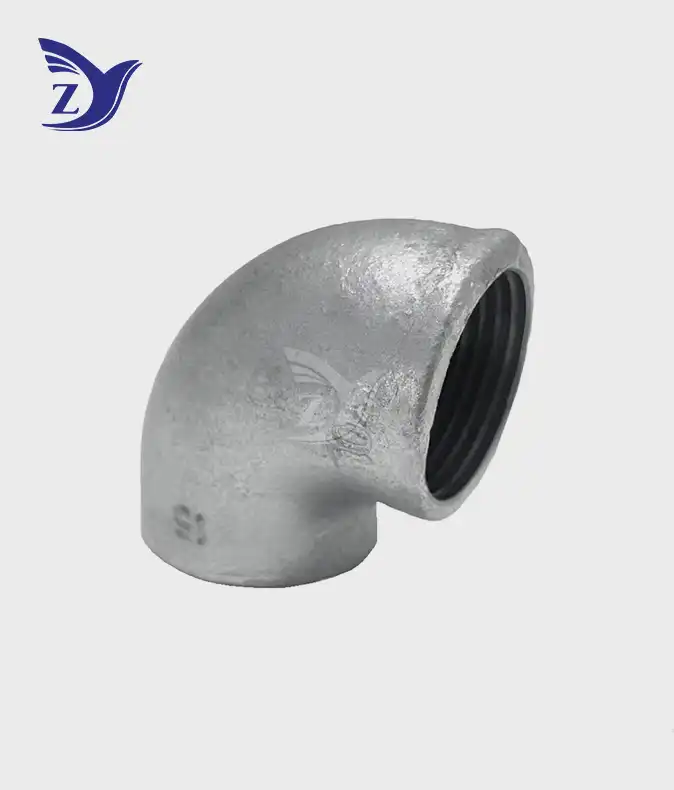
No Hub Elbow and Standard Hub Cast Iron Elbow
What Defines a No Hub Elbow?
No hub elbows are a newer option to standard hubbed fittings that were made to make installing drainage, waste, and vent (DWV) pipes easier. The ends of these fittings are plain and have the same width. They don't have the curved hub or socket that you'd find on most cast iron goods. A heavy-duty stainless steel coupler and rubber sleeve system that meets ASTM C1540 or CISPI 310 standards is used to connect the two parts.
Types that are hot dip galvanized are submerged in liquid zinc at a temperature of about 450°C. This creates a protective layer that is metallurgically bound and about 86 microns thick. This layer protects against both barrier and cathodic damage, making it last a lot longer in places that are prone to corrosion, like coastal areas, chemical processing plants, and underground sites that are exposed to acidic soil.
Standard Hub Cast Iron Elbow: Traditional Design
Since the late 1800s, standard hub cast iron elbows have been used in pipes. One end of these valves has a flared hole (hub) that fits the straight end (spigot) of a pipe next to it. In traditional methods, the joint is filled with oakum fiber and sealed with liquid lead. However, in developed markets, modern compression gasket systems have mostly replaced this time-consuming and difficult method.
Even though hub fittings are strong and have been used for decades, they need more vertical space to be put together, special sealing irons for the joints, and careful placement when they are installed. Based on past performance data, they are still commonly used in city infrastructure, high-rise building stacks, and other places where building rules require them.
Material and Surface Treatment Variations
Usually, either gray cast iron that meets ASTM A48 Class 30 or ductile iron that meets ASTM A536 is used to make both types of fittings. Surface treatments are different depending on what they are used for. For basic corrosion resistance, standard hub elbows are often painted with epoxy or a bituminous layer. These are good for placements inside where humidity levels are managed.
No hub hot dip galvanized 90° elbow pipe fittings have their surfaces prepared in a more thorough way. Fittings are acid-pickled to get rid of mill scale, fluxed, and put into liquid zinc after being cast and cooled. The intermetallic iron-zinc alloy layers that are made are better at resisting wear and tear than organic coatings. They can also heal small scratches by oxidizing zinc, which is a very important property for mechanical places that are open to the elements or get a lot of use.
Key Differences in Design and Functionality
Connection Method and Installation Process
The main thing that sets these fitting types apart is the way they are connected. A two-piece stainless steel screen with a neoprene seal sleeve is not used in hub systems. To install, slide the coupler onto one end of the pipe, place the fitting, and then tighten the clamp bolts to seal the joint. A torque wrench and tool set are all you need for this process, which takes about 60 seconds per link.
Standard hub joints need more work before they can be used. Installers usually pack jute oakum into the circular space after putting the spigot into the hub and then pour molten lead into the empty space. These days, sealing joints make this easier, but they still need to be carefully aligned and the hub depth must be checked. It takes about 5 to 8 minutes to install each joint, plus extra work to set up lights and lead pots for traditional uses.
Labor costs are affected in a big way: installing no-hub systems could cut the time it takes to connect 200 drains in a business building by 12 to 15 hours, which would save a lot of money on union plumber rates in big cities.
Corrosion Resistance and Environmental Performance
The environment affects the choice of materials. In environments with a lot of chloride, no hub hot dip galvanized 90° elbow pipe fittings show real benefits. Independent tests using ASTM B117 salt spray standards show that zinc surfaces can last more than 2,000 hours before they turn red. Bitumen-coated cast iron, on the other hand, can only last 200 to 400 hours before it starts to rust.
The zinc layer thickness—usually more than 600 g/m² on good fittings—keeps the metal safe for decades. Deep cuts can damage the zinc layer, but the zinc around it corrodes more quickly (cathodic protection), stopping the iron base from oxidizing. In industrial settings, where mechanical impact or chemical splash can damage organic surfaces, this ability to fix itself is very useful.
Standard hub elbows with organic coatings work well in controlled indoor settings but quickly break down when they come into touch with soil, go through condensation cycles, or are exposed to chemical fumes. When buying fittings for wastewater treatment plants, desalination plants, or seaside building, procurement teams should choose galvanized goods over other options so that they don't have to be maintained as often or replace them too soon, which costs money.
Dimensional Tolerances and Pressure Ratings
Precision in manufacturing affects how well a system works. No hub fittings keep tight ovality tolerances—usually less than 1% deviation from true round—so that gasket tension is always the same and seals don't leak. The design of the coupler allows for small pipe misalignment (up to 3 degrees rotational deflection) without affecting the stability of the seal, which is helpful for fitting in the field.
Standard hub fittings make links that are naturally stiff and don't bend at any angle once they're put together. This stiffness helps keep the vertical stack stable in high-rise situations, but it makes things harder for horizontal runs where stress concentrations may happen because of heat expansion, building settlement, or earthquakes.
Different types of connections have different pressure values. Heavy-duty no hub connections (ASTM C1540 Extra-Heavy classification) can handle thrust loads from pump discharge uses and hydrostatic pressures of up to 100 psi. Standard lead-caulked hub joints can handle 25 to 30 psi of working pressure, which is enough for gravity draining but not for pressured systems unless they are specially designed and tested.
Comparison and Decision Making: Choosing Between No Hub and Standard Hub Elbows
Cost-Benefit Analysis for Procurement Teams
When comparing prices for base cast iron, standard hub elbows are usually 10–20% less expensive than comparable no hub galvanized products in large amounts. This is because they use less material at the start. A full cost study, on the other hand, needs to look at things like installation staff, consumables (like oakum, lead, or gasket kits), specialized tools, and how the project plan will be affected.
A study of a 5,000-square-foot commercial renovation project showed that hub fittings cost $1,240 for materials compared to $1,580 for no hub galvanized alternatives. However, hub systems cost $4,830 to install, including labor, compared to $3,220 for no hub systems, which is a 33% savings due to less time spent installing. No hub standards are even better for projects that need to be finished quickly or don't have easy access to skilled sealing workers.
Because of how long a product lasts, economics lean even more toward steel no hub goods. Building management companies that take care of coastal properties keep records of maintenance work that shows that corrosion-related fixes cost an average of $180 per 100 fittings per year for painted hub systems, but only $25 per 100 fittings for galvanized no hub installs. Over the course of 30 years, this difference in upkeep costs is eight times greater than the difference in the cost of materials at the start.
Performance Suitability Across Project Types
Codes require stiff, vibration-resistant vertical drainage systems for high-rise residential and business buildings with more than seven stories. These buildings usually use hub-style soil stacks. The lead-caulked or compression-gasket hub joint reduces noise better than hub connections that don't exist. This solves noise problems in high-end condos and office buildings where pipe noise makes people uncomfortable.
No hub hot dip galvanized 90° elbow pipe fittings are a great choice for industrial repair and retrofit jobs. Existing buildings with limited ceiling space, crowded pipe chases, and operating restrictions that don't allow torch use or lead melting are good places for quick, clean assembly of no hub systems. Being able to take drainage plans apart and put them back together again without cutting anything is very helpful for factories that are going through stepwise modernization while still meeting production schedules.
More and more, areas with wide soils and seismic zones need flexible pipe links so that they can adapt to ground movement without breaking. Controlled flexibility—up to 5 degrees of angular deflection based on the design—of no hub coupling units keeps joints from separating catastrophically during earthquakes. Because of this performance trait, no hub systems for key infrastructure are becoming more popular in California, Japan, and other places that are prone to earthquakes
Conclusion
Choosing between no hub and standard hub cast iron elbows depends on the installation setting, the availability of workers, the project's budget, and the long-term performance needs. No hub hot dip galvanized 90° elbow pipe fittings are more cost-effective over their lifetime, easier to install, and less likely to rust. This is especially true for retrofit uses, locations that are prone to rusting, and projects that need to be finished quickly. Standard hub fittings can still be used for vertical drainage stacks in high-rise buildings and other places where standard connection methods are required by building rules. Professionals in procurement should look at the total fixed costs instead of just the prices of the materials, taking into account things like labor rates, expected upkeep costs, and the need for system flexibility. By working with certified makers that offer a wide range of products and expert support, buyers can be sure to make the best fitting choice that meets the needs of the project at hand and will last for decades.
FAQ
Can no hub elbows replace standard hub fittings in existing cast iron drainage systems?
No hub fittings are easy to add to systems that already use hubs because they have transfer connections that connect hubless plain ends to regular hub or spigot pipe sections. These adapters make sure that the code is followed and allow partial system changes without having to update the whole system. This method is often used in building retrofits to update damaged parts while keeping old infrastructure that still works. Before you define transition setups, make sure that your area's plumbing rules allow for a mix of connection types.
How long do hot dip galvanized no hub 90° elbows last when installed outdoors?
According to data from the galvanizing industry, parts that are properly fitted and have a coating thickness that meets ASTM A153 standards can last more than 50 years when exposed to the air. The actual lifespan depends on how harsh the environment is. For example, sulfur dioxide-filled industrial environments shorten the zinc's useful life, while dry areas make coatings last longer. Every five years, a check shows any damage that needs to be fixed with zinc-rich paint, which extends the service life even more.
Do no hub systems require different maintenance compared to hub fittings?
Checking the clamp strength on no hub coupling systems on a regular basis is helpful. Usually, torque should be checked once every three years for the first three years and then every five years after that. Galvanized parts don't need any upkeep other than being looked at visually for damage. Once they are set up correctly, hub joints that use lead filling don't need much maintenance. On the other hand, compression gasket hub systems may need to have their gaskets replaced every so often if leaks happen. Overall, repair needs favor no hub systems because they are easier to get to and can be inspected without damaging the machine.
Partner with Zhiyuan Malleable Steel for Superior Pipe Fitting Solutions
Zhiyuan Malleable Steel can help you with your toughest sewage, fire safety, and industrial pipe jobs thanks to its 18 years of experience in the field. Our 50,000-square-meter production plant in Shanxi Province is fully quality controlled and has ISO 9001 certification, as well as UL and FM approvals. We are a top supplier of no hub hot dip galvanized 90° elbow pipe fittings. Our engineering team gives expert advice on choosing materials, making custom products, and improving performance for specific applications. They are backed by a yearly production capacity of 30,000 tons, which guarantees on-time delivery for projects of any size.
Whether you require standard catalog products with two-hour delivery from our extensive inventory, or custom-engineered fittings tailored to unique specifications, our ODM/OEM services deliver cost-effective solutions without compromising quality. Contact our procurement specialists at q1236800000@gmail.com to request detailed product specifications, volume pricing, and technical support for your next project. Visit zymalleablepipefitting.com to explore our complete range of corrosion-resistant pipe fittings manufactured to exceed international standards.
References
- American Society for Testing and Materials. (2019). ASTM A888: Standard Specification for Hubless Cast Iron Soil Pipe and Fittings for Sanitary and Storm Drain, Waste, and Vent Piping Applications. West Conshohocken, PA: ASTM International.
- Cast Iron Soil Pipe Institute. (2021). CISPI 310: Standard Specification for Couplings for Use in Connection with Hubless Cast Iron Soil Pipe and Fittings. Chattanooga, TN: CISPI Publications.
- Revie, R.W., & Uhlig, H.H. (2008). Corrosion and Corrosion Control: An Introduction to Corrosion Science and Engineering (4th ed.). Hoboken, NJ: John Wiley & Sons.
- American Galvanizers Association. (2020). Hot-Dip Galvanizing for Corrosion Protection of Steel Products: Performance Data and Lifecycle Cost Analysis. Centennial, CO: AGA Technical Services.
- National Fire Protection Association. (2022). NFPA 13: Standard for the Installation of Sprinkler Systems. Quincy, MA: NFPA Publications.
- International Association of Plumbing and Mechanical Officials. (2021). Uniform Plumbing Code: Cast Iron Soil Pipe and Fittings Installation Standards. Ontario, CA: IAPMO Standards Development.
Online Message