
Jul 27, 2026
What material is NPT black square face straight tee?
NPT black square face straight tee pipe fittings are mostly made of black malleable iron, which is a heat-treated casting material that is designed to be very flexible and resistant to pressure. An melting process turns this stuff from flimsy white cast iron into a strong, bendable structure that can handle the mechanical stresses that come with industrial pipeline systems. The square-edged shape makes it easier to use a wrench during installation, and the black oxide coating on the outside provides basic corrosion resistance that is good for networks that distribute non-potable water, natural gas, and oil-based fluids in commercial and industrial buildings.
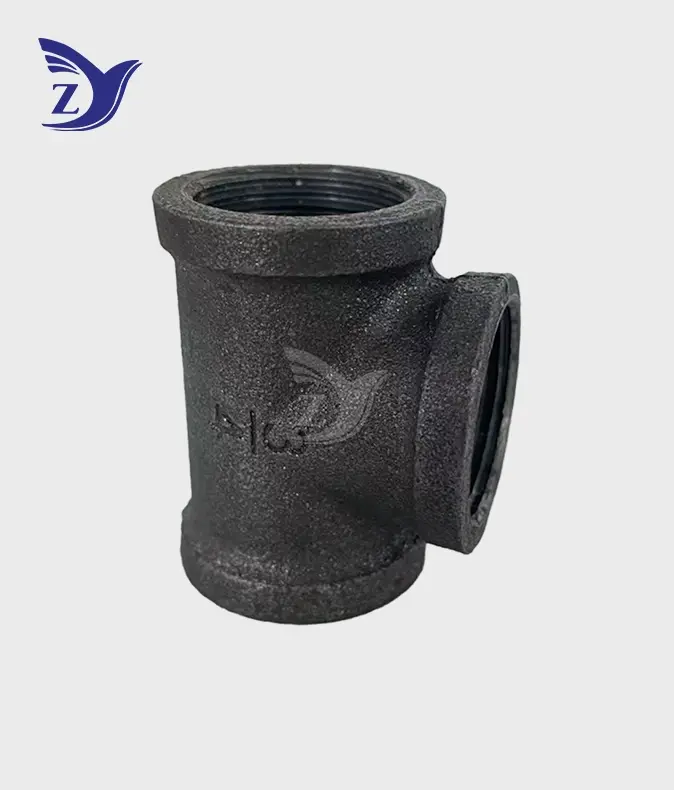
Materials Used in NPT Black Square Face Straight Tee Fittings
Black Malleable Iron Composition
Black malleable iron is the main ingredient in industrial-grade 3-way fluid distribution NPT black square face straight tee pipe fittings. It is made by carefully heating iron to temperatures between 1,650°F and 1,750°F for 48 to 72 hours. By using heat, this process changes the carbon structure from mixed cementite to free graphite crystals surrounded by a ferrite matrix. The metal structure that was made has tensile strengths between 50,000 and 60,000 PSI and elongation properties between 10 and 18%. This gives it the flexibility it needs to handle impact loads without breaking into brittle pieces. The material's high-strength, long-lasting makeup makes it suitable for uses where mechanical shocks happen sometimes during operation or upkeep.
Surface Coating and Corrosion Protection
The black colour comes from a thin oxide layer that forms at the end of the annealing process. This layer protects against atmospheric corrosion in a limited way. This square-edged t-shirt is resistant to corrosion and works well in dry gas systems and fluid settings based on petroleum, but the coating doesn't do much to protect against long-term contact to water. The black oxide layer is not the same as hot-dip galvanising or electroplated zinc coats, which protect better against wet rust but cost more. When buying parts for outdoor use or places that get humid, buyers should ask for galvanised malleable iron replacements or upgrades made of stainless steel.
Alternative Material Options
In addition to normal black malleable iron, manufacturers also offer stainless steel types 304 and 316 for chemical processing tasks that need better resistance to corrosion in acidic or chloride-containing environments. Brass fittings are used in systems that handle drinkable water, so they need to be certified as lead-free and be resistant to de-zincification. Cast iron models are cheaper, but they are not as flexible as malleable iron, so they shouldn't be used in systems that are likely to be vibrated or heat shocked. Different types of materials have different pressure ratings. For example, malleable iron is usually rated for 150 PSI working pressure at room temperature, while forged steel upgrades can handle higher-pressure Schedule 80 pipe systems.
How to Choose the Right NPT Black Square Face Straight Tee Fittings for Industrial Use?
Material Compatibility Assessment
Before choosing precision-threaded, NPT/BSPT suitable parts, you should look at the chemical makeup and temperature range of the medium being sent. Black malleable iron works great for natural gas, propane, fuel oil and compressed air, but it can't be used to distribute potable water because of concerns about lead content and faster corrosion in wet service. When system fluids have corrosive chemicals or work at temperatures above 400°F, changes to the materials are needed to keep the structure's integrity for the full design service life.
Before you finalise your design, you should think about these important factors that affect how well the fitting works in harsh industrial settings:
- Working pressure requirements: Make sure that the Class 150 rating of the fitting matches the highest pressure that can be used in your system, this includes short-term surges that happen when the pump starts up or the valve closes.
- Thread engagement depth: Figure out how many threads need to be engaged (usually 4 to 6 full turns) to get the quoted strength, especially when joining to thin-wall pipe schedules.
- Thermal expansion coefficients: When putting fittings into pipeline systems made of more than one material, you need to take into account the different rates of growth that different metals have.
- Vibration exposure levels: Check to see if steady mechanical vibration needs more thread-locking compounds or welded strengthening to keep things from coming loose over time.
These things have a direct effect on plans for long-term system stability and maintenance intervals. Engineers can increase the life of a system and lower the number of unexpected shutdowns by matching the properties of the material to its operating needs.
Comparing Face Design Options
Choosing between square face and round bead configurations changes how easy it is to place and maintain. The square-edge shape spreads the wrench's force over a larger contact band. This makes it less likely that the thin parts of the fitting will be crushed during high-torque assembly. When working in the field with parts that have a width of 1.5 inches or more, which need a lot of force to tighten, this benefit becomes even more clear. Even though round bead shapes are cheaper, they have less surface area for gripping, which makes them more likely to slip when removing stuck joints.
Sizing and Specification Standards
The sizes of NPT threads are based on ASME B1.20.1 standards, which means that manufacturers can use the same sizes. When choosing fittings, you need to tell them both the nominal pipe size (like 3/4 inch or 1 inch) and the way you want the outlets to be set up. When it comes to flow distribution, NPT black square face straight tee pipe fittings have three ports that are all the same size, while reducing tees have one smaller branch outlet. Make sure that the fitting you choose works with the pipe schedule (40 or 80) that is used throughout the system. Differences in wall thickness can affect how the internal thread engages.
Real-World Performance in Critical Applications
It's clear that black malleable iron construction is durable when you look at how it's used in tough manufacturing areas. Natural gas delivery networks that serve business buildings use NPT black square face straight tee pipe fittings that don't leak even after decades of use and daily thermal cycling, which happens when systems change how much heat they put out. The nanoscale that can be shaped keeps the metal from cracking like weak cast iron would when it is exposed to thermal shock during sudden changes in temperature.
Heavy oil and grease distribution systems depend on these connections in factories that work 24 hours a day, seven days a week. Machines that are always turning put stress on the joints, but the strong square band support keeps the threads engaged without letting go. This dependability immediately leads to fewer maintenance tasks and fewer interruptions in production. Maintenance workers like the square face design because it makes it easier to disassemble seized connections during equipment upgrades. The improved wrench engagement surface lets them do this without damaging the fitting body, which means the part can be used again and less replacement parts need to be kept on hand.
Fittings are stressed by condensation cycles and thermal expansion stresses when low-pressure industrial steam systems are used in HVAC and process heating settings. The ductility of malleable iron and the compression closing mechanism of the NPT thread allow these cycle loads to be handled without the catastrophic fails that come with hard, brittle materials.
Conclusion
Knowing what materials NPT black square face straight tee pipe fittings are made of helps procurement professionals make smart sourcing choices that meet operational needs and stay within budget. Black malleable iron is the best combination of strength, flexibility, and low cost for natural gas, compressed air, and fluid systems that use petroleum. The square-edge form makes installation more reliable and upkeep easier to reach. Partnering with qualified makers that show consistent quality, quick response to customer needs, and the production capacity to meet tight delivery deadlines is key to successful procurement. By following the material compatibility rules and specification criteria in this guide, buyers can be sure to find parts that meet safety standards, stay on schedule, and provide long-term value in a wide range of industrial settings.
FAQs
What distinguishes NPT from BSPT threading standards?
The National Pipe Taper (NPT) uses a 60-degree thread angle and a 1:16 taper rate to make interference fits by deforming the threads during assembly. BSPT (British Standard Pipe Taper) uses a 55-degree thread angle and the same taper ratio, so even though they look the same, they can't be used together. When two thread standards that are not the same try to mate, they don't connect properly, which stops the closing from working and increases the chance that the joint will fail under pressure. Before buying, you should always check the thread specs to make sure it works with the system you already have.
Can black malleable fittings serve potable water systems?
According to the Safe Drinking Water Act, black malleable iron fittings don't have the corrosion protection and lead-free approval needed for use with drinking water. The black oxide coating doesn't protect well enough against long-term contact to water, which speeds up the formation of rust that pollutes water sources. Galvanised malleable iron that meets ASTM A153 coating standards or lead-free brass that meets NSF/ANSI 61 requirements must be used in potable water installations.
What sealant combination ensures leak-free NPT connections?
For sealing to work, you need both PTFE tape and anaerobic pipe joint compound that is compatible with the fluid being sent. The thread should be wound three to four times in the direction of rotation, which is clockwise from the pipe end. Then, pipe dope should be used to fill the spiral space between the thread roots and crests. This two-layer method keeps threads smooth during assembly and includes extra sealing systems that can handle small differences in size.
Are Class 150 fittings compatible with Schedule 80 pipe?
Class 150 malleable iron valves can physically thread onto Schedule 80 pipe, but it needs to be confirmed that they are compatible with the pipe's pressure grade. Schedule 40 pipe pressures can usually be handled by Class 150 fittings. For high-pressure Schedule 80 applications, you need Class 300 malleable fittings or forged steel alternatives that can handle higher working pressures. Before deciding on the final specifications, look at tables that show how to match the fitting class to the pipe plan and service conditions.
Partner with Zhiyuan Malleable Steel for Reliable NPT Black Square Face Straight Tee Pipe Fittings Supply
Zhiyuan Malleable Steel has been making specialised steel parts for 26 years and has the production ability to meet your industrial pipeline fitting needs. Our factory in Shanxi Province is ISO 9001-certified and has 8 medium-frequency electric furnaces and 156 machining stations. It can make 30,000 tonnes of products each year and meet more than 1,000 different specifications. As a reliable NPT black square face straight tee pipe fittings supplier, we keep a large inventory so that we can ship standard products within two hours of receiving an order. For project-based buyers and international distributors, our ODM/OEM customisation services can meet their needs for non-standard dimensions and special materials.
We don't just offer low prices on NPT black square face straight tee pipe fittings; we also offer UL, FM, and CE-certified products with replacement guarantees for broken items and quick technical support. Our team gives your business the quality consistency and supply stability it needs, whether you're a fire protection system installer looking for FM-approved fittings, a plumbing dealer managing regional distribution, or an export trading company looking for goods to sell abroad. You can email our procurement experts at q1236800000@gmail.com or visit zymalleablepipefitting.com to get quotes, talk about custom specs, or set up quality checks at your plant. Discover the benefits of working with a manufacturer that combines large-scale output, professional know-how, and service that is focused on the needs of the customer.
References
- American Society of Mechanical Engineers (ASME). "ASME B1.20.1: Pipe Threads, General Purpose (Inch)." New York: ASME Standards Committee, 2019.
- Malleable Founders' Society. "Engineering Properties of Malleable Iron Castings." Cleveland: Malleable Iron Research Institute Technical Report, 2015.
- Parker, John H. "Piping and Pipeline Engineering: Design, Construction, Maintenance, Integrity, and Repair." Boca Raton: CRC Press, 2018.
- Smith, R. T. and G. W. McConkey. "Materials Selection for Process Plants." Materials Engineering Journal, Vol. 45, No. 3, 2017, pp. 112-128.
- National Fire Protection Association (NFPA). "NFPA 13: Standard for the Installation of Sprinkler Systems - Pipe and Fittings Specifications." Quincy: NFPA Technical Committee, 2021.
- Zheng, L. and M. Thompson. "Corrosion Resistance of Ferrous Pipe Fittings in Industrial Fluid Systems." International Journal of Materials Science and Applications, Vol. 8, No. 2, 2020, pp. 67-82.
Online Message