
Jul 22, 2026
What material is black NPT coupling?
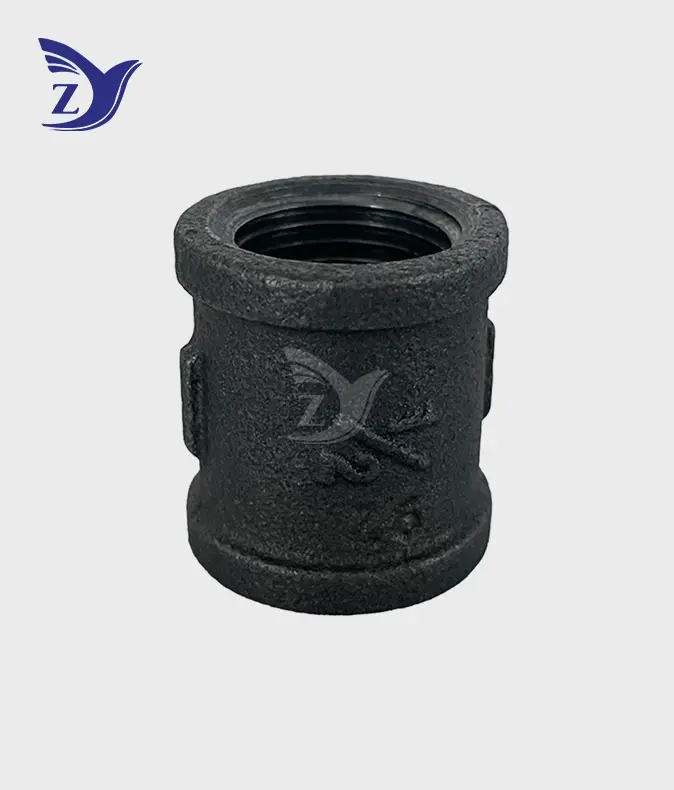
When choosing piping parts for industrial use, knowing how the materials are put together has a direct effect on how reliable the system is and how well it works over time. Black NPT couplings are mostly made of malleable cast iron that meets ASTM A197 standards. They have a tensile strength of at least 40,000 psi (276 MPa) with a 5% elongation. When under stress, this flexibility keeps the material from breaking in a terrible way. The "black" finish is the black oxide or bituminous coating that is put on the surface of the malleable iron. This coating keeps the iron from rusting in dry places. NPT black square face coupling pipe fittings have a reinforced square-banded design at threaded holes. This adds about 20–30% more mass at key stress points than normal couplings, making them much less likely to crack or bell-mouth during thermal expansion cycles.
Understanding Black NPT Couplings and Their Materials
Defining Black NPT Couplings and the Square Face Design
NPT black square face coupling pipe fittings are important parts that connect two pipe sections in a straight line. They use National Pipe Taper threads that are made to ASME B1.20.1 standards and have a 60-degree thread angle and a 1°47' taper. This curved thread shape makes a pressure-tight seal by letting the thread bend in a controlled way during assembly. There is a flattened shape on the outside of both connecting ends of the square face design, which is also known as "square banded" or heavy-duty support. This engineering solution fixes two problems that keep happening with industrial pipes: the design makes it easier to hold on to the pipe with a wrench during high-torque installation, which keeps the fitting from deforming; and the extra mass at the threaded openings stops the pipe from expanding radially when the pressure inside changes.
Primary Material Composition: Malleable Cast Iron
Black NPT threaded joiners are made of cupola malleable iron, which is different from grey cast iron in terms of its microstructure. White cast iron is heated to between 1600°F and 1750°F (870°C and 950°C) under controlled conditions for 48 to 72 hours during the production process. This changes the brittle cementite into spheroidal graphite nodules enclosed in a ferrite matrix. This chemical change gives flexible iron its unique ability to bend and absorb shocks, which makes it perfect for places where steam is distributed and temperatures change quickly. The material can handle sudden changes in temperature without breaking, which is a big plus over regular grey iron, which is still not allowed in high-stress situations because it is so fragile.
Alternative Materials: Stainless Steel and Carbon Steel Variants
For gas and steam applications, malleable iron is the most popular material. However, chemical processing and marine environments are better places for stainless steel couplings (usually grades 304 or 316). When used in high-pressure hydraulic systems, carbon steel joints offer better tensile strength. However, they need extra protective coats when used in corrosive environments. Galvanised steel couplings, which are made of malleable iron coated with zinc, can be used with potable water systems. However, they should not be used with natural gas lines because the flaking zinc can get into the regulators and injectors and make them dirty. Key material properties are shown below in a table:
| Material Type | Tensile Strength | Corrosion Resistance | Temperature Range | Primary Applications |
|---|---|---|---|---|
| Malleable Iron (Black) | 40,000 psi | Moderate (coated) | -20°F to 450°F | Gas, steam, oil lines |
| Stainless Steel 316 | 75,000 psi | Excellent | -425°F to 800°F | Chemical processing, marine |
| Galvanized Malleable | 40,000 psi | Good (water) | 32°F to 400°F | Potable water systems |
This comparison helps procurement professionals choose materials that are right for the job, taking into account both initial costs and durability over time.
Material Standards and Specifications for NPT Threaded Pipe Fittings
Key Regulatory Frameworks: ASTM, ASME, and ISO Compliance
International guidelines control the quality of the materials used and the correctness of the sizes for NPT black square face coupling pipe fittings. To get the best malleability, ASTM A197 limits the amount of carbon in malleable iron to 2.30 to 2.80% and the amount of silicon to 0.90 to 1.40%. The ASME B16.3 standard sets the size ranges for Class 150 and Class 300 fittings, so they can be used by different manufacturers. ISO 49 and ISO 7-1 set global thread standards that are the same as NPT specifications. This makes it easier to buy things from other countries. These rules make sure that products work the same way all the way through the supply chain. For example, a joint made in Shanxi Province from pliable iron that meets ASTM standards will fit perfectly on a pipe made in Texas that meets ASME standards.
Industry-Driven Material Selection Criteria
In addition to making sure that materials meet regulatory requirements, engineers also look at how well they work. Pressure grade shows the highest pressure that can be used at a certain temperature. For example, Class 150 malleable iron fittings can usually handle 300 psi at room temperature, but only 150 psi at 450°F because the material's strength drops when it gets hot. In petrochemical settings, where hydrogen sulphide or acidic condensates can damage surfaces that aren't covered, chemical protection is important. Calculations of lifecycle longevity take into account expected service years, upkeep times, and the cost of replacement. For example, galvanised fittings might last 25 years in a city water heating system, but black iron fittings might need to be replaced after 10 years because they will rust through the holes they make. In a natural gas system, the same black iron fittings might last 40 years or more.
Performance Comparison: Black Iron vs Stainless Steel NPT Couplings
Mechanical Properties and Thermal Behavior
Malleable iron black connections have a yield strength of about 35,000 psi and a Brinell hardness of 110–145 HB. This makes them strong enough for most industrial pipes while still being easy to machine for threading tasks. Stainless steel 316 couplings have a yield strength of more than 42,000 psi and are very hard (160–190 HB), so they don't wear down easily in fluid systems with high speeds. Different thermal conductivities affect which materials can be used for what. For example, the coefficient of thermal expansion for malleable iron is very close to that of carbon steel pipe (6.7 × 10⁻⁶/°F), which means that there is less uneven expansion stress at joints. Because stainless steel has a lower expansion coefficient (9.6 × 10⁻⁶/°F), it's important to be careful when connecting different metals in high-temperature situations so that the joints don't come loose during thermal cycling.
Corrosion Resistance in Challenging Environments
The black oxide covering on malleable iron connections protects against some atmospheric rust and is very resistant to petroleum products. This makes them perfect for moving oil and natural gas in places where moisture levels are low. But rust starts to form within months of being exposed to water all the time. Stainless steel 316 has 16–18% chromium and 10–14% nickel. It forms a passive chromium oxide layer that fixes itself when it gets scratched. This makes it very resistant to chloride-induced pitting corrosion in marine environments and chemical processing plants that work with acidic or basic solutions.
Cost-Effectiveness and Return on Investment
The material costs are only one part of the total cost of ownership (TCO). Fittings made of malleable iron usually cost 40–60% less than similar parts made of stainless steel. For example, a 1-inch black connection might cost $3.50, while a stainless steel one would cost $12.00. However, ROI calculations must take into account the cost of installation (which is the same for both materials), the frequency of maintenance, and the cost of replacement. A fire safety system with NPT black square face coupling pipe fittings and a dry pipe configuration might never need to be replaced, giving a better return on investment (ROI) even though the materials aren't as good. In contrast, the same parts in a wet system with oxygenated water might need to be replaced every ten years. This means that the higher original cost of stainless steel is justified by its longer service life and lack of maintenance downtime.
Installation, Maintenance, and Troubleshooting of Black NPT Couplings
Step-by-Step Installation Guide for Leak-Free Connections
Preparing the threads is the first step in a proper operation. A wire brush can be used to clean both male pipe threads and female coupling threads to get rid of cutting grease, metal shavings, and protective coats. Check the threads for damage in good lighting. Crossed or nicked threads stop them from engaging properly and lead to leaks. Use PTFE tape or pipe dope that is approved for the service medium. Because it is flammable, PTFE tape should never be used on oxygen lines. When looking at the pipe end, wind the tape clockwise, overlapping 50% of the time so that it covers three to four threads but leaves the first two threads clean to keep dirt out of the system.
Hand-thread the connection onto the pipe until the resistance rises. This will make sure that the threads are lined up straight without crossing. Tighten the connection by using two pipe tools. One will hold the NPT black square face coupling pipe fitting in place, and the other will turn the pipe. For a good seal, NPT threads need to be turned two or three full turns past hand-tight. This is equal to about 25 to 30 ft-lbs of torque for 1-inch couplings. If you tighten it too much (above 50 ft-lbs), the malleable iron could crack, and if you tighten it too little, it could leak. Twenty-four hours after assembly, the system should be put under pressure. This gives the sealant time to fully dry.
Maintenance Protocols and Preventive Measures
Every six months, joints should be checked for surface rusting and rust bloom, which is a sign that the coating has failed. In steam systems, look for weeping at the threads. When small drops form during system operation, it means that the threads are not engaged properly or are broken. Use wire brushes to clean the outside of the vehicle and rust-inhibiting spray to keep the protected coats in good shape.
Common troubleshooting addresses three failure modes:
- Thread Galling: This happens when two different metals (stainless steel pipe and a bendable iron coupling) cold-weld together during installation. To avoid this, anti-seize powder must be used on the threads and the tightening pressure must be lowered.
- Thermal Stress Cracking: This happens when pipes aren't supported properly, letting weight cause bending stress at coupling joints during thermal expansion. Put hangers on steam lines within 3 feet of the connections.
- Coating Wear: A black oxide coating will wear off in rough places. Recoating visible installations once a year with high-temperature black paint makes them last longer.
These preventative steps cut down on emergency repairs and make couplings last longer than the minimums required by the manufacturer.
Conclusion
Black NPT connections made from ASTM A197 malleable cast iron are a stable and cost-effective way to connect gas, steam and oil pipes in factories. The square face shape makes fitting easier and keeps the structure strong when it's hot. When choosing a material, you have to weigh the original prices against how well it will perform over time. For example, malleable iron works best in dry places and with oil, while stainless steel is worth the extra cost in corrosive environments. Following ASME, ASTM, and ISO standards makes sure that products can be used anywhere in the world and perform the same way every time. Correct installation methods, regular upkeep, and relationships between suppliers and authorised makers improve the economics and reliability of the system.
FAQs
What distinguishes black NPT couplings from galvanized versions?
Black couplings have black oxide or lacquer coatings that make them suitable for use with gas, oil or steam, where zinc contamination from galvanising could hurt system parts. Galvanised couplings with zinc coatings don't rust in water systems, but they shouldn't be used with natural gas because the flaking zinc can clog regulators.
Can black malleable iron couplings be used in potable water systems?
When properly treated, malleable iron meets NSF-61 drinking water standards. However, galvanised fittings are better for potable water uses because they are less likely to rust. Continuously exposing black connections to water makes them rust quickly, which could contaminate water sources with iron oxide particles.
How do I verify authentic ASTM A197 malleable iron?
Ask providers for Material Test Reports that list the chemicals they used and the results of any mechanical tests they did. Real pliable iron has fracture surfaces that are gray-black and have obvious graphite lumps. On the other hand, brittle grey iron has fracture patterns that are silvery. Each output lot from a reliable source comes with a certificate of spectroscopic analysis.
Partner with Zhiyuan Malleable Steel for Reliable NPT Black Square Face Coupling Pipe Fittings
Since 2006, Zhiyuan Malleable Steel has been making precision-threaded industrial pipe fittings by blending 26 years of experience with current quality systems. Our factory in Shanxi Province is ISO 9001, CE, UL, and FM certified, and the NPT black square face coupling pipe fittings we make meet ASTM A197 and ASME B16.3 standards. We keep stock of over 1,000 specifications, so we can deliver basic orders in two hours and help with ODM/OEM customisation for special project needs. As a reliable NPT black square face coupling pipe fittings supplier, we offer double-layer cardboard packaging, guarantees for replacing broken products, and technical support for the whole lifecycle of your project. Visit zymalleablepipefitting.com or email our engineering team at q1236800000@gmail.com to talk about your piping system needs and get full material specs that are made just for you.
References
- American Society of Mechanical Engineers (2020). ASME B16.3: Malleable Iron Threaded Fittings, Classes 150 and 300. New York: ASME Standards Publishing.
- ASTM International (2019). ASTM A197/A197M-19: Standard Specification for Cupola Malleable Iron. West Conshohocken, PA: ASTM International Publishing.
- McGuire, M. F. (2018). Stainless Steels for Design Engineers. Materials Park, OH: ASM International Press.
- Nayyar, M. L. (ed.) (2017). Piping Handbook, 8th Edition. New York: McGraw-Hill Education, Chapter B7: Pipe Fittings.
- Stewart, H. L. (2016). Pipefitter's Handbook: Materials, Equipment, and Installation Methods. Indianapolis: Industrial Press Inc.
- Zhao, J., & Chen, W. (2021). "Mechanical Properties and Microstructure Analysis of Malleable Cast Iron Pipe Fittings." Journal of Materials Engineering and Performance, Vol. 30(4), pp. 2856-2867.
Online Message