
Jul 16, 2026
What is the difference between malleable iron and ductile iron fittings?
Knowing the difference between malleable iron pipe fitting products and ductile iron fittings is very important when choosing materials for important pipe infrastructure. It can have a big effect on how well the system works and how much the whole project costs. During the tempering process, brittle white cast iron is turned into a flexible, shock-resistant material that can be used for threaded connections in fire, gas, and water systems as a malleable iron pipe fitting. Ductile iron fittings, on the other hand, are made with spheroidal graphite granules during casting. This gives them better tensile strength and flexibility, making them ideal for heavy-duty and high-pressure situations. Both materials are used for different things in industrial plumbing, but their mechanical qualities, cost structures, and installation requirements are very different. Procurement professionals can use this information to make sure that systems are reliable and that budgets are used efficiently.
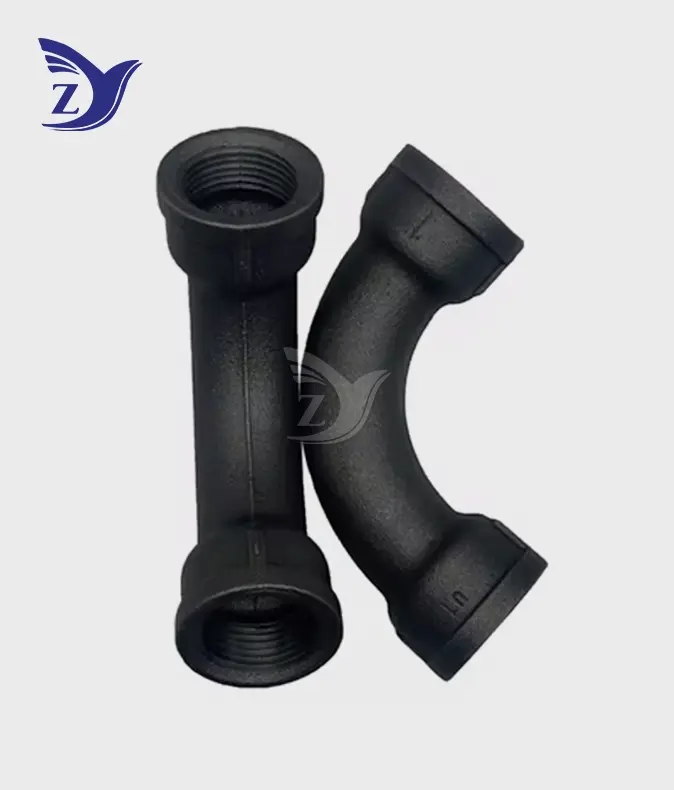
Understanding Malleable Iron and Ductile Iron Fittings
Malleable Iron Fittings: Manufacturing and Standards
To make malleable iron pipe fittings, white cast iron pieces are heated for a long time, usually 50 to 70 hours at temperatures between 850°C and 950°C. This process turns rigid carbon into temper carbon crystals, which makes the material very flexible and resistant to impact. This makes a fitting that can take mechanical stress and thermal shock without breaking, which is very important for threaded NPT and BSPT joints that need to be torqued.
The ASTM A47 guidelines say that these parts must have a minimum tensile strength of 300 MPa and an elongation rate of more than 6%. Because of its grain, the material can absorb vibrations and work with small errors in installation. This makes malleable iron the best choice for pipes used for gas distribution, steam heating, and fire protection. Elbows, tees, couplings, unions, and reducers are some of the most common designs. They come in sizes from 1/8 inch to 6 inches and have threaded or grooved ends. Whether they are used on black or galvanized surfaces, they protect against rust in a variety of environments, from indoor HVAC systems to outdoor public works.
Ductile Iron Fittings: Composition and Characteristics
When magnesium or cerium is added to melted iron, spheroidal graphite lumps are formed instead of flake graphite. This is how ductile iron fittings are made in a single step. This microstructure gives the material tensile strengths of more than 420 MPa and stretch rates of up to 18%. It has a strength-to-weight ratio similar to steel but can be made easily and costs less than iron. The ASTM A536 and ISO 2531 guidelines say what the mechanical qualities and size tolerances of ductile iron should be.
The material works really well in places like sewage systems, high-pressure water mains, and industrial process lines where it needs to be resistant to ground movement, water hammer, and outside loads. Ductile iron fittings usually come in bigger sizes, between 2 inches and 64 inches, and come with flanged, mechanical joint, or push-on joint ends. Because they are more resistant to cracks and fatigue, they can be used in underground uses and places where there is a lot of seismic activity. Usually, cement mortar or an epoxy covering is used to line the surface to make it more resistant to rust and improve hydraulic efficiency.
Key Differences Between Malleable Iron and Ductile Iron Fittings
Material Properties and Mechanical Performance
The main difference is in the metal's makeup and how it behaves mechanically. Malleable iron has a middling tensile strength (300–350 MPa), but it is very easy to machine and form threads from. This makes it possible to make precise NPT threads that make reliable gas-tight seals. The melting process also makes the metal more resistant to impact, which lowers the risk of brittle failure during handling or installation. This is a very important benefit for fittings that are often dropped or abused mechanically on building sites.
Ductile iron has a much higher tensile strength (420–550 MPa) and extension rates, which mean that it can bend under heavy loads instead of breaking. This makes ductile fittings perfect for situations where there are a lot of pressure changes, the ground moves, or a lot of vehicles drive over underground pipes. The spheroidal graphite structure of the material also makes it more resistant to cycle wear, which means it will last longer in systems that are always changing. Corrosion resistance depends on how the surface is treated. For example, zinc bendable fittings work well in mild environments, while epoxy-coated flexible fittings do their best in harsh soil conditions or chemical exposures.
Application Suitability Across Industries
When installation speed, joint stability, and cost-effectiveness are important, malleable iron pipe fittings are the most common type of low- to medium-pressure threaded pipe system. Fire protection companies use zinc bendable tees and elbows for both dry and wet sprinkler networks because they meet UL and FM standards and can handle heat shock when the system is turned on. Plumbing dealers keep a lot of NPT square face galvanized 90° elbows, reducing tees, and street elbows in stock so they can quickly help with both home and business building projects.
Ductile iron fittings are used by heavy industry facilities, wastewater treatment plants, and local water bodies that need large-diameter, high-pressure pipe solutions. Their strong construction can handle being buried deep, being loaded by vehicles, and earthquake forces that would damage smaller materials. For major transmission lines and pump station connections, water companies like ductile fittings because they last a long time—often over 100 years with the right corrosion protection. The material's flexibility also makes it easier to place in rough terrain, which cuts down on the cost of digging and the time it takes to build.
How to Choose Between Malleable Iron and Ductile Iron Fittings for Your Project?
Aligning Material Capabilities with Project Requirements
Before making a choice, the system working factors are carefully looked at. When the working pressure is less than 300 PSI and the standard pipe size is less than 6 inches, malleable iron pipe fittings work well. This is especially true when threaded connections make installation more flexible and upkeep easier. They work great in places where the temperature changes slightly (up to 150°C) and there aren't many chemicals around. This makes them perfect for distributing natural gas, running compressed air systems, and protecting buildings from fire.
Compliance, Certification, and Quality Assurance
When system pressures go over 350 PSI, pipe widths go over 6 inches, or the pipes are underground and the ground moves and loads on them, ductile iron becomes the best material to use. When properly coated, ductile iron is more resistant to rusting, which makes it better for long-lasting projects in places that are likely to rust, like seaside wastewater systems or process lines in chemical plants. The material's high impact strength also protects against damage during installation in areas with a lot of underground services where heavy machinery is needed for drilling.
In many businesses, choosing materials is based on following the rules. Fire safety systems need to meet NFPA 13 standards, which show UL or FM rating for sprinkler fittings and ASTM A47 for parts made of malleable iron. To make sure drinking water is safe, municipal water projects often need AWWA C153 ductile iron valves with NSF-61 approved coatings. For threaded malleable fittings, gas companies need to make sure they meet ANSI B16.3 standards. For BSPT threads, foreign projects may need to follow ISO 49, and for ductile iron systems, EN 545.
Conclusion
Whether to use malleable iron or ductile iron fittings depends on matching the properties of the material to the needs of the application, combining performance needs with budget limits, and working with sellers who provide consistent quality and dependable service. For threaded pipe systems used in fire protection, gas distribution, and building services, malleable iron fittings are a cost-effective option that is easy to install and has been shown to last. For high-pressure water mains, underground infrastructure, and heavy industrial uses where a longer service life supports a higher original investment, ductile iron fittings are the best choice. By knowing these basic differences and following strict buying practices, you can make sure that your projects are successful by lowering risk, cutting costs, and making sure that they work reliably and meet the needs of all stakeholders.
Partner with Zhiyuan Malleable Steel for Reliable Pipe Fitting Solutions
You can trust Zhiyuan Malleable Steel to be your reliable source for malleable iron pipe fittings. With 26 years of experience in casting and modern production tools, they serve fire protection companies, local engineering firms, and industrial businesses all over the world. Our wide range of products, which includes NPT square face zinc 90° square edge elbow pipe fittings, reducing tees, and BSPT threaded parts, meets worldwide standards and has been approved by ISO 9001, CE, UL, and FM. We work out of a 50,000-square-meter building in Shanxi Province that has 8 medium frequency furnaces and 156 precise machining units. We offer uniform quality across more than 1,000 specifications and fast turnaround: standard items ship within two hours of order confirmation. Our ODM/OEM customization services, thorough quality assurance, and warranties for replacing faulty products make sure that your projects go smoothly and without any delays. You can talk to our procurement experts at q1236800000@gmail.com or visit zymalleablepipefitting.com to talk about your specific needs and see the benefits of working with a manufacturer that is dedicated to quality, dependability, and customer happiness.
FAQ
Can malleable iron fittings be used in high-pressure steam systems?
Fittings made of malleable iron that meet ASTM A47 standards can usually handle steam pressures of up to 150 PSI at temperatures below 150°C, making them good for low-pressure heating systems. For steam uses that go beyond these limits, you need steel fittings or higher-grade malleable iron with the right pressure class ratings and technical validation.
How do corrosion resistance levels compare between galvanized malleable iron and epoxy-coated ductile iron?
In mild weather and fresh water systems, galvanized iron that can be shaped works well as security, with zinc coats giving up their own protection to shield the base metal. Epoxy-coated ductile iron is more resistant to damage in harsh conditions like acidic soils, salty conditions, or chemical exposures because the thickness and stickiness of the coating keep the base from corroding. The best covering choice depends on the application setting.
What certifications should I verify when sourcing fittings for municipal water projects?
For municipal water uses, materials must have NSF-61 approval that says they meet safety standards for drinking water. They must also meet AWWA C153 for ductile iron or ASTM A47 for malleable iron. ISO 9001 quality certification means that strict controls are used during production. When fittings are used for fire safety in water distribution networks, they need to be approved by FM or UL.
References
1. American Society for Testing and Materials. (2019). ASTM A47/A47M-19: Standard Specification for Ferritic Malleable Iron Castings. West Conshohocken, PA: ASTM International.
2. Walton, C.F., & Opar, T.J. (Eds.). (1981). Iron Castings Handbook. Des Plaines, IL: Iron Castings Society.
3. American Water Works Association. (2017). AWWA C153/A21.53-17: Ductile-Iron Compact Fittings for Water Service. Denver, CO: AWWA.
4. British Standards Institution. (2013). BS EN 10242:2013: Threaded Pipe Fittings in Malleable Cast Iron. London: BSI Standards.
5. Silman, H. (2005). Protective Coatings for Iron and Steel Pipe Fittings: Selection and Application. Houston, TX: NACE International.
6. Mohebbi, H., & Li, C.Q. (2011). "Experimental Investigation on Corrosion of Cast Iron Pipes." International Journal of Corrosion, Article ID 506501, 1-17.
Online Message