
Aug 17, 2026
What is the difference between compression fittings and threaded fittings?
When selecting pipe fittings for industrial systems, understanding the fundamental differences between compression and threaded options directly impacts system reliability and maintenance efficiency. Compression fittings create seals through mechanical pressure applied by a nut and ferrule around the pipe exterior, while threaded fittings rely on precision-cut threads to form connections. Threaded galvanised fittings stand out in industrial applications because they deliver superior leak resistance and durability when properly installed with thread sealant, whereas compression fittings suit temporary or low-pressure installations. This distinction becomes critical for procurement managers sourcing materials for long-term infrastructure projects requiring consistent performance under demanding conditions.
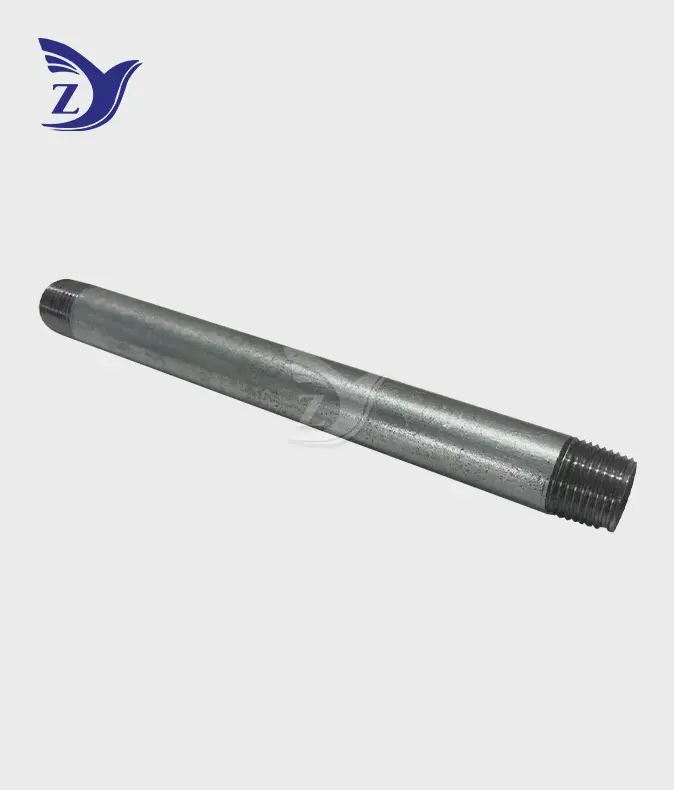
Understanding Compression Fittings and Threaded Fittings
Working Principles of Compression Fittings
A compression nut pushes a brass or copper ferrule against the outside diameter of the pipe. This is how compression fittings work mechanically. The ferrule pushes inward as the nut tightens, making a watertight connection without having to cut the threads or solder. Copper, plastic, and thin-walled tubing are common in plumbing and instrumentation lines in homes, so this design works well with them. The simplicity is good for situations where the parts will need to be taken apart again, but the seal's strength depends on the right nut torque and ferrule condition.
How Do Threaded Fittings Function?
Precision-machined threads that meet NPT (National Pipe Taper) or BSPT (British Standard Pipe Taper) standards make threaded parts connect. When PTFE tape or pipe dope is added to the tapered thread design, it creates interference between the male and female parts. This makes a seal that can withstand pressure. For water, steam, and gas uses, industrial-grade malleable iron valves with hot-dip galvanised coatings are the most common. This is because the thread engagement spreads stress across multiple contact points, which lowers the risk of leaks during pressure cycles and temperature expansion.
Industry Standards and Compliance
Threaded galvanised fittings made to ASME B16.3 and ISO 49 standards make sure that the dimensions are the same all over the world. According to ASTM A153, hot-dip galvanising gives a minimum 70-micron zinc covering that protects against rust. This coating makes uncoated options last decades longer in harsh settings. These standards are very important for procurement teams that are in charge of managing inventory across multiple project sites. Standardised threading gets rid of problems with compatibility and cuts down on the need for custom changes during the installation phase.
Key Differences Between Compression and Threaded Fittings
Installation Requirements and Complexity
With compression fittings, you only need basic hand tools and a little training to make connections. Without any special tools, field technicians can do it in minutes. Threaded connections, on the other hand, need pipe threading tools, thread gauges, and the right way to apply sealant to make sure the joints don't leak. Even though threaded systems seem to require more work at first, the fact that they are fixed means that repairs are less likely to be called back. Threaded fittings are useful for large industrial projects because, once put properly, they don't need much care after regular checks.
Pressure and Temperature Performance
With specialised high-pressure variants rated for 1000 PSI or more, threaded galvanised fittings can reliably handle working pressures up to 300 PSI in standard configurations. Most compression fittings can only handle about 200 PSI at their highest point. Their performance decreases when the temperature changes, because the ferrule grip gets looser over time from repeated expansion and contraction. The metal link between the galvanised covering and the malleable iron base stays strong at temperatures ranging from -20°C to 120°C. This is why threaded options are the best choice for steam systems and outdoor setups that are exposed to changes in temperature throughout the year.
Material Compatibility and Longevity
It's not possible to use compression fittings with rigid steel pipe because they deform slightly under ferrule pressure and work best with softer metals and plastics. Threaded joints can fit a wider range of materials, such as stainless steel, galvanised steel, and black steel lines. When hot-dip galvanising malleable iron fittings, an alloyed zinc-iron layer forms at the interface that prevents flaking and scratches during handling and installation. This is better than electro-galvanised options, whose coatings fail within three years in corrosive environments.
Cost Analysis Over Product Lifecycle
Compression fittings are usually 30–40% cheaper than threaded components, which makes them a better choice for initial procurement costs. When repair and replacement rates are taken into account, the lifespan cost equation changes in a big way. We looked at industrial settings where threaded steel systems worked for 15 to 20 years without any problems, but compression fitting systems needed to be serviced several times to fix and replace seals. When buying in bulk with the goal of making 30% profit, the higher initial cost is worth it because threaded fittings have a lower total cost of ownership over time. This is especially true when buying directly from makers who offer tiered prices on container loads.
Advantages of Threaded Galvanised Fittings Over Compression Fittings
Enhanced Corrosion Resistance
During the hot-dip galvanising process, a zinc coating is added to the iron base metal. This coating chemically bonds to the iron, making a barrier that gives up its own protection to keep the steel underneath from oxidising. This is especially helpful for setups outside and underwater pipes that are always exposed to water. In chloride-rich environments, brass or plated compression fittings get surface pitting within months, but galvanised threaded fittings stay structurally sound for decades. Through galvanic action, the zinc covering can fix itself to small scratches, which is a feature that tight-fitting materials can't match.
Wide Availability and Standardisation
Threaded galvanised fittings cover elbows, tees, couplings, unions, bushings, plugs, and caps and are available in more than 1,000 different sizes and configurations ranging from 1/8-inch to 6 inches in diameter. This wide range supports one-stop purchasing strategies that make managing goods easier and lessen the reliance on a few suppliers. Manufacturers who stick to ASME B1.20.1 standards for thread tolerances make sure that parts from different production runs or even different sources can still be used together. This gets rid of the problems with field compatibility that come up with non-standardised compression systems.
Compliance with Industrial Safety Standards
Fire safety systems (NFPA 13), natural gas distribution systems (ANSI Z223.1), and drinkable water systems (NSF/ANSI 61) all have strict rules that threaded connections must follow. Regulatory bodies agree that threaded joints are acceptable fixed links for high-stakes safety situations where failure would have serious effects. Compression fittings are fine for some cooling and monitoring circuits, but they are rarely approved for main distribution lines or safety-critical systems because they can loosen up from vibrations and wear out the ferrules.
Bulk Procurement Advantages
When you buy threaded galvanised fittings by the container load, you can save a lot of money. Manufacturers offer discounts of 20–35% on orders that are more than 20 tonnes. Because these goods are standard, they can be used for a wide range of projects without having to be customised, which can save time and money. When kept properly, galvanised fittings have an infinite shelf life, which means that distributors who manage warehouse stock for multiple regional markets don't have to worry about their product going out of date like they do with speciality compression components that can only be used in certain situations.
How to Choose Between Compression and Threaded Fittings for Your Project?
Assessing Environmental and Operational Conditions
More than anything else, project environments determine which fittings to use. Underground installations, facilities near the coast, and chemical processing plants are all places where pipes are exposed to harsh, corrosive conditions that work best with threaded galvanised fittings. Threaded links that don't come loose over time are good for systems that are damaged by vibrations from nearby machines. Compression fittings work best in clean, climate-controlled areas with stable pressure and temperature profiles. For example, they are perfect for connecting lab equipment or home appliances where replacing them on a regular basis doesn't affect the operation.
Evaluating Pressure and Flow Requirements
When working with pressures above 150 PSI, systems should always use threaded connections unless there are very good reasons not to. When threads are properly sealed and mechanically interlock, stress is spread evenly around the joint's circumference. This stops the stress from building up in one place, which is what breaks compression ferrules. The full-bore design of threaded fittings minimises pressure drop, which is good for high-flow applications. Compression fittings, on the other hand, often create turbulence at the ferrule restriction point, which makes the system less efficient in large-diameter installations.
Supplier Verification and Certification
To find threaded galvanised fittings, you need to make sure that the manufacturer follows ISO 9001 quality management systems and get material test certificates (EN 10204 3.1) that show the chemical make-up and mechanical properties of the material. Suppliers with a good reputation link batch numbers of finished goods to heat numbers of raw materials. This makes it possible to be held accountable if problems happen in the field. Procurement teams should check the galvanising facilities of suppliers to make sure that they follow the right testing methods for covering thickness and that the annealing process controls make sure that the iron is bendable and flexible. If the manufacturing isn't up to par, the fittings will be rigid and likely to crack during installation.
Calculating Total Cost of Ownership
Not only does the buy price need to be considered in an ROI analysis, but also the labour costs for installation, the expected service life, the regularity of upkeep, and the costs of replacement. Threaded systems put by skilled workers have first-time leak-free rates of more than 98%, while compression fitting installs often need to be called back to fix weeping joints. If you figure out that qualified pipefitters cost $85 to $120 an hour, then the fact that threaded fittings take more skill to install is balanced out by the fact that you don't have to do as much troubleshooting and rework, which slows down projects and costs more money.
Conclusion
In the end, the choice between compression and threaded fittings comes down to how well the fittings' properties match the needs of the project. Threaded galvanised fittings work better in industrial, commercial, and municipal settings where long-lastingness, pressure capacity, and resistance to corrosion make the installation cost worthwhile. Their standard sizes and wide availability make them easy to buy, especially for wholesalers who have to keep track of a lot of different product needs. Compression fittings are useful in some situations where they need to be installed without tools or for short-term connections, but they show their limits in tough environments. When purchasing managers try to find the best balance between low cost and long-term dependability, they always come back to threaded steel systems from reputable makers.
FAQ
1. Can compression fittings be used with galvanised steel pipes?
Technically, compression fittings can be attached to galvanised steel pipe, but the stiff pipe material doesn't compress enough for standard brass ferrules to make good seals. There are specialised compression fittings made for steel pipe, but they are almost as expensive as threaded options and don't last as long or handle pressure as well. The problem is caused by ferrule materials that work best with copper that is soft or plastic that bends when pressed. According to industry standards, compression fittings on galvanised steel shouldn't be used for long-term installations.
2. What advantages do threaded galvanised fittings offer over brass alternatives?
Brass tends to lose its zinc coating in some types of water, but threaded galvanised malleable iron fittings are much stronger and can take more pressure. The difference in price benefits galvanised parts by 40 to 60%, which makes them the more cost-effective choice for buying in bulk. Brass is great at making dezincification-resistant materials for drinking water, but it costs a lot, so it can only be used in certain situations. Fittings that are galvanised can handle higher temperatures and pressures and still meet a wider range of industry standards.
3. What lead times should we expect for custom bulk orders?
Standard threaded galvanised fittings can usually be shipped within two hours if they are in stock and meet standard requirements. Custom setups that need certain thread types or changes to the dimensions go into production lines, but it takes two to four weeks for amounts less than five tonnes. Container-load orders of 20 to 25 tonnes get priority scheduling, and production cycles last between 3 and 6 weeks. During this time, quality testing and paperwork preparation happen. For extra fees, rush orders can shorten the time it takes to get them to you faster, but sticking to realistic deadlines keeps quality control intact.
Partner with Zhiyuan Malleable Steel for Reliable Threaded Galvanised Fittings
Zhiyuan Malleable Steel has a large selection of industrial-grade threaded galvanised fittings that are made to meet international standards and are ready to help you with your pipe fitting needs. Our yearly production capacity of 30,000 tonnes provides a steady supply for projects of any size, and our over 1,000 product specifications cover all typical configurations. We use strict ISO 9001 quality management in all of our production processes, from hot-dip galvanisation to precise thread machining. This way, we can make fittings that meet ASME and ASTM standards. For special uses, our technical team can help with customisation. They are backed by full material certifications and quick logistics from our Shanxi facility. Get in touch with our sourcing experts at q1236800000@gmail.com to talk about your project needs and get volume-based prices for threaded galvanised fittings supplier partnerships that make you more competitive in the building materials distribution market.
References
1. American Society of Mechanical Engineers. (2016). ASME B16.3: Malleable Iron Threaded Fittings - Classes 150 and 300. New York: ASME Press.
2. Galvanisers Association. (2019). Hot Dip Galvanising for Corrosion Protection of Steel Products. Birmingham: Galvanizers Association Technical Publications.
3. McKetta, J.J. (2018). Piping Design Handbook: Fundamentals of Threaded and Mechanical Connections. Boca Raton: CRC Press.
4. National Association of Corrosion Engineers. (2020). Corrosion Control in Industrial Piping Systems: Material Selection and Protective Coatings. Houston: NACE International.
5. Smith, P.R., & Zappe, R.W. (2017). Valve Selection Handbook: Engineering Applications of Threaded Fittings and Unions. Oxford: Gulf Professional Publishing.
6. Thompson, G.E., & Zhang, X. (2021). Materials Science of Galvanised Steel: Microstructure and Performance in Service Environments. Cambridge: Woodhead Publishing.
Online Message