
Jul 27, 2026
What is elbow pipe fitting?
It is necessary to have elbow pipe fittings because they make it easy for pipe systems to change direction without affecting the flow or the structure's stability. These fittings make exact angles with water, gas, steam, or chemical fluids. The angles are usually 90° or 45°. In this way, engineers can get around room restrictions in industry plans. The threaded NPT black round face 90° elbow pipe fittings are a reliable choice. They are made from black malleable iron. They are strong, last a long time, and don't rust, so they can be used in difficult places like petrochemical plants, fire protection systems, mechanical installations, and city water systems.
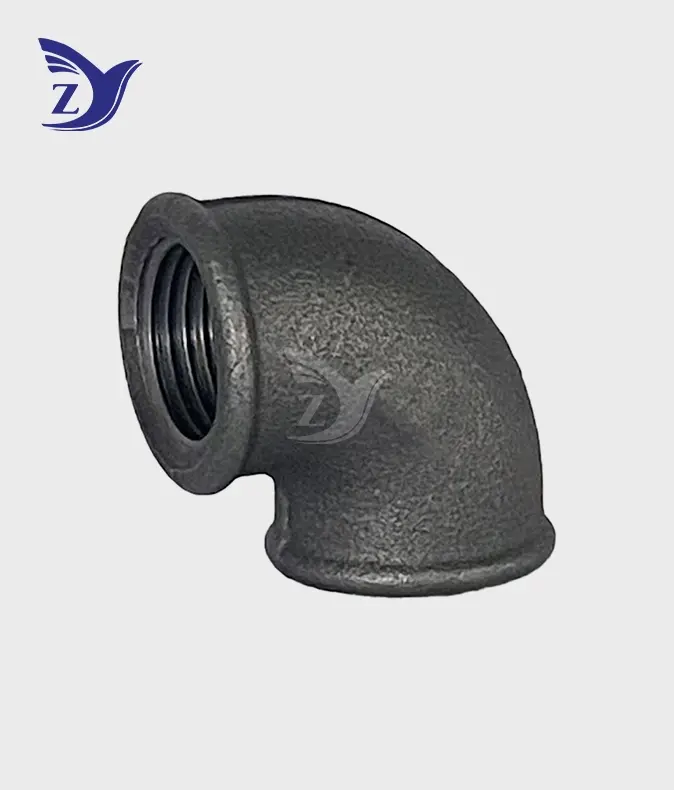
Understanding Elbow Pipe Fittings: Basics and Applications
When you have a lot of pipes, elbow fittings are the most important part. Because they change the shape of straight lines, they can go in more than one way and adapt to the needs of operations and building. Their main job is to change the flow's direction while keeping the pressure the same and lowering the roughness. In cases where safety and speed must be kept up, this is very important.
Core Function and Common Types
The main job of an elbow fitting is to change the flow of fluid at an angle. This stops the need for too much straight line and makes better use of space. Two popular types of elbow turns are 90° and 45°. Different kinds of planning can be done with each. There are three types of connections: welded, threaded, and flanged. Threaded elbows are the easiest to put together and take apart, which is great for places that need to be maintained often.
Industrial fittings with threads, like the 90° pipe redirecting elbow, are very useful for water and gas pipeline systems that need to be put together quickly and changed all the time on the job site. You don't need welding tools to put these parts together, which saves time and money on work while still giving you good sealing performance.
The NPT Black Round Face 90° Elbow Design
As per the National Pipe Thread (NPT) standard, the shape of the tapered threading makes a mechanical seal by distorting the thread. There is no need to use seals alone because the links will not leak this way. Black malleable iron is designed to be strong enough to stretch and bend without breaking when it comes to mechanical stress and heat expansion.
They are not the same as square-faced fittings because they have a round edge, which is also known as a beaded rim. System that are subject to changes in temperature and pressure last longer because of this stronger collar at the female hole. It fights wrench force and expansion stress. Carefully rusting metal gives it a black oxide finish that doesn't rust and can be used with non-potable water, natural gas, propane and low-pressure steam.
People work in oil and gas, chemical processing, HVAC, and many other fields that need to keep systems running smoothly. They use these NPT black round face 90° elbow pipe fittings. It is important for fire protection engineering firms to make sure that they can connect them to fire hydrants and water networks in case of an emergency. Municipal water and power companies use them a lot in underground networks because they last a long time in rough dirt.
When remodelling or putting things away in rooms that are already full, 90° elbows are a great way to save space. With these fittings, you can turn tight corners without having to run too many pipes. This saves money on materials, makes installation easy, and keeps hydraulic efficiency high.
Detailed Specifications and Dimensions of NPT Black Round Face 90° Elbows
The people who work in procurement and are in charge of making sure that parts work together, are safe, and last a long time need to know the technical details of precision-threaded NPT black round face 90° elbow pipe fittings.
Material Composition and Mechanical Properties
ASTM A197 guidelines say that NPT black round face 90° elbow pipe fittings that can be shaped must have a tensile strength of 40,000 psi and a yield strength of 30,000 psi. It can handle rapid changes in temperature without breaking easily because it has an elongation grade of 5%. Cast iron alternatives can break easily when temperatures drop.
During the malleabilization process, controlled heat is used to change hard white cast iron into flexible iron that can be shaped. That makes a material that can stand up to loads that vibrate and hit it. This design is strong and will last a long time. It is especially important in systems where pipes may move because of water hammer or changes in temperature.
Galvanised parts protect against corrosion in a different way than black parts. Surface rust can't form because of the black oxide layer, which also works with petroleum gases and fluids. Because of this, the valves work great with systems that move both natural gas and propane. If you use black flexible elbows instead of rusted fittings, the zinc doesn't flake off, which can block gas valves and injectors further down the line.
Dimensional Standards and Pressure Ratings
The NPT thread follows the rules set by ASME B1.20.1. It has a thread angle of 60 degrees and a drop of 1/16 inch for every inch of thread length. There is an interference fit that gets tighter as the fitting is threaded, which keeps pressure out. As part of quality control, thread gauging with L1 Go/No-Go ring and plug gauges makes sure that the measurements are correct.
Pipes usually come in sizes between 1/8 inch and 6 inches, and their wall thickness and radius must meet ASME B16.3 Class 150 or Class 300 standards. At room temperature, Class 150 fittings can handle 300 psi of water, oil and gas. They can also handle 150 psi of full steam. Higher pressures are needed in process systems in the business world, and Class 300 fittings can handle them.
It makes a difference in how the flow acts and the pressure drop whether the radius is short or long. When you have long radius bends, changes in direction happen more slowly. This lowers noise and wear and tear and makes systems that move quickly last longer. Short radius options save space when layout is very important and flow rates are low.
Temperature and Environmental Considerations
Black iron that can be shaped can work in temperatures from -20°F to 400°F, which is hot enough for most HVAC, water supply, and low-pressure steam jobs. Things could break down and the seal could fail if you go over these limits. That's why engineers have to think about thermal expansion rates when they build things that will change temperature a lot. So the pipes can move, and the stress is gone.
Things in the surroundings, such as the weather, the chemistry of the earth, and how much water it holds, can change how fast things rust. Bare steel fittings are more likely to rust than black ones, but they shouldn't be used in systems that handle drinking water because health codes say they need to be zinc- or plastic-lined instead.
How to Select and Install NPT Black Round Face 90° Elbow Pipe Fittings?
The performance, safety, and operating life of a system are directly affected by the choices that were made and the way they were installed. To get the best results, engineering and buying teams need to think about a lot of different things regarding NPT black round face 90° elbow pipe fittings.
Selection Criteria for Optimal Performance
Fitting selection is based on the needs of the application. Water supply networks, natural gas distribution networks, steam heating loops and fire protection networks all have different needs when it comes to materials, pressure levels and resistance to rust.
Fitting rates must be matched with enough safety margins to account for expected working pressures. If the system is constantly close to 300 psi, a Class 150 fitting should not be used. Instead, Class 300 fittings should be used to protect against pressure spikes and wear and tear caused by age.
Material compatibility includes more than just the fitting itself. It also includes the pipe material, the seals, and the chemistry of the fluid. When used with hydrocarbons, threaded joints need thread sealants that are compatible with oil and gas. Other compounds may work in water systems. Following the manufacturer's instructions will protect the seal for a long time.
Budget limits mean that initial costs and lifecycle costs must be balanced. If you choose high-quality fittings with long warranties and a history of working well in harsh conditions, you'll have less unexpected upkeep and emergency repairs, which can save you a lot more money than the initial savings from cheaper options.
Here are additional considerations that influence selection decisions:
- Certification Requirements: Projects that have to follow local building codes, insurance rules, or industry standards like NFPA 54 for gas piping or NFPA 13 for fire sprinkler systems need fittings that are certified to meet these standards and have a record of their compliance.
- Inventory Availability: Standard sizes and thread types can be shipped fast from stock at a wholesaler. However, speciality measurements may need to be ordered custom, which can take longer and cause delays in projects.
- Vendor Reputation: Buying from well-known companies with quality assurance programs and technical help tools is safer than buying from unknown companies that haven't been checked out.
All of these things work together to help people make buying choices that balance efficiency, compliance, and cost-effectiveness in a wide range of industrial settings.
Installation Best Practices
Preparing the threads correctly is the first step to a successful installation. Pipe ends need to be deburred so that the threads don't get damaged during assembly. The threads also need to be cleaned to get rid of cutting oils and other debris that can make it harder for the seal to form.
Which thread sealer to use varies on how the thread will be used. When used correctly—wrapping in the direction of thread rotation to keep it from coming apart when tightened—PTFE tape seals well in water and compressed air systems. Pipe dope is a paste-like sealant that works better in gas and steam uses than tape, which can break down in hot conditions.
Pay close attention during the tightening process to make sure you get the right engagement without over-torquing. The best way to seal something is usually to hand-tighten the joint until you feel resistance, then use a pipe wrench to make two or three more turns. Too much tightening can break the fitting or bend the threads, and too little tightening leaves holes that let pressure through.
Alignment during installation stops stress builds up that cause things to break before they should. Fittings must be properly supported by pipe runs so that cantilever loads don't bend connections or cause fatigue cracks. Systems that experience changes in temperature can use expansion loops or bendable connections to allow for thermal movement.
Conclusion
Because they are reliable, last a long time, and don't cost a lot of money, NPT black round face 90° elbow pipe fittings are important parts of industrial and business plumbing systems. If people in charge of buying things know about the specs of the items, how they will be used, and how they need to be put, they can make decisions that balance performance with price. This material is made of high-strength, malleable iron and has a black oxide finish that keeps it from rusting. It also has precision NPT threading, which makes it safe for use in fire protection, HVAC, water supply, and gas distribution. You can see how these sizes are better in some cases when you compare them to other choices. It will also be safe for a long time if you make sure you pick the right ones and put them in the right place. Getting from reliable sources that can show proof of certifications and quality control programs lowers risks and helps projects win in tough business environments.
FAQs
What distinguishes round face elbows from other NPT elbow designs?
When you use or install a round face elbow, the female hole has a collar with beads or that is stronger. This spreads the mechanical stress more evenly. This design is better than choices with a plain or square face at keeping it from cracking when the wrench is tightened and when it warms up. In places where temperatures change a lot, this makes it last longer.
Can NPT black round face elbows be used in high-pressure steam systems?
These fittings can handle 150 psi full steam, which is what the Class 150 standards say they should be used with for low-pressure steam. These limits are too low for high-pressure steam lines. You need Class 300 fittings or other ways to connect, like socket welds or flanged joints, that are made for high temperatures and pressures.
How do I ensure thread compatibility when replacing existing fittings?
Please use thread lengths or maker marks to find out what the latest thread standard is for NPT black round face 90° elbow pipe fittings. NPT and BSPT threads can't be switched out, even though they look the same. Pipe size tools can be used to make sure the measurements are correct. Check the thread pitch and diameter. Threads that don't match can cause leaks and the system to crash.
Are black malleable elbows suitable for corrosive environments?
Black iron that can be formed doesn't rust very well and can be used in systems that use dry air, natural gas, propane, and water that isn't safe to drink. Fittings made of stainless steel or a different metal are needed in places where chemicals, acids, or the sea are likely to rust. You should pick the right material by looking at the fluid's chemistry and the things going on around it.
Partner with Zhiyuan Malleable Steel for Reliable NPT Black Round Face 90° Elbow Pipe Fittings
Zhiyuan Malleable Steel has threaded piping options for businesses. They have been making the best goods for 18 years and can make up to 30,000 tonnes of them every year. They sell to fire protection contractors, local building firms, and wholesale distributors all over the world. As an NPT black round face 90° elbow pipe fittings supplier, we have ISO 9001, CE, UL, and FM certifications that show we meet quality standards around the world. We have a lot of tight-threaded fittings in more than 1,000 different sizes in stock. This lets us handle regular orders in two hours and make unique ODM/OEM solutions for each job.
Procurement professionals will like our free expert advice, low bulk prices, and full replacement guarantees for broken items. Your email address is q1236800000@gmail.com, and you can ask for technical datasheets, material certifications, or product samples that will help you make better decisions about specifications. Shipments are safe in our double-layer cardboard boxes while they cross international lines, and our expert export team takes care of the logistics to job sites in North America, Europe, and other places. By going to zymalleablepipefitting.com, you can see all of our high-strength, corrosion-resistant, and bendable steel fittings that are made for tough industrial uses.
References
- American Society of Mechanical Engineers. ASME B16.3: Malleable Iron Threaded Fittings. ASME Standards Committee, 2021.
- American Society for Testing and Materials. ASTM A197: Standard Specification for Cupola Malleable Iron. ASTM International, 2020.
- National Fire Protection Association. NFPA 54: National Fuel Gas Code. NFPA Standards Council, 2021.
- American Society of Mechanical Engineers. ASME B1.20.1: Pipe Threads, General Purpose. ASME Standards Committee, 2019.
- Underwriters Laboratories. UL 197: Standard for Commercial and Industrial Gas and Oil-Fired Assemblies. UL Standards Technical Panel, 2020.
- Factory Mutual Research Corporation. FM Approval Guide: Pipe Fittings for Fire Protection Service. FM Approvals, 2022.
Online Message