
Sep 24, 2026
What is a T pipe fitting called?
A T-pipe fitting is called a tee — one of the most fundamental components in any threaded piping system. Shaped like the letter "T," it creates a three-way branch connection that splits or combines fluid and gas flow within a pipeline. Among the many tee configurations available today, the NPT black square face straight tee pipe fittings stand out for industrial and fire protection applications. Its precision-threaded body, square-edge reinforcement, and black malleable iron construction deliver the leak-resistant, high-integrity connections that demanding systems require.
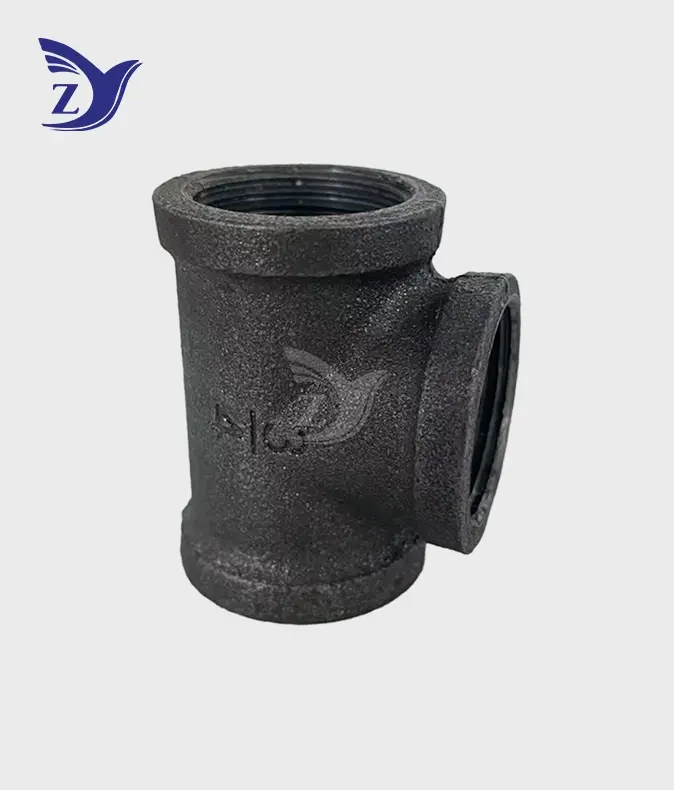
Understanding What a T Pipe Fitting Is
The Core Function of a Tee Fitting
A tee fitting joins two lines together or splits a pipeline into two directions without changing the pressure in the system as a whole. The "straight tee" type has all three openings with the same diameter. This makes it the standard choice for water, gas, and fire suppression pipelines in factories where even flow is important.
NPT Threading and the Square Face Design
ASME B1.20.1 sets the rules for NPT, which stands for "National Pipe Taper." As the joint gets tighter, the tapered thread shape makes an interference fit, which presses the thread sides together to make a mechanically secure seal. You can also call the "square face" a flat bead or a square-edge reinforcement. It makes the collar around each hole bigger and flatter. With this shape, pipe wrenches have a better grip during installation, so they are less likely to slip, and the fitting will not deform when high torque is applied. This structural feature is not just for looks for fire protection workers who need zero-leak joints in life-safety systems; it is necessary for the systems to work.
The British Standard Pipe Taper (BSPT) threading uses a compatible taper concept but has different rules for thread size and angle. Many global procurement teams look for fittings with markings that say they are compatible with both NPT and BSPT so they can work on projects in North America, the Middle East, and Southeast Asia all at the same time.
Key Dimensions, Materials, and Identification
Standard Dimensions and Pressure Classes
NPT/BSPT square-edge equal black malleable tees are made according to ASME B16.3, which specifies the hole sizes, wall thickness, and thread engagement lengths for sizes ¼" to 6". Class 150 fittings have a 300 psi WOG (Water, Oil, Gas) value at room temperature, which is more than enough for most fire control and industrial gas branching needs. When there is high pressure, like in high-rise sprinkler risers or compressed air headers that work above 150 psi, Class 300 fittings are used.
Material Comparison: Black Malleable Iron vs. Alternatives
The performance of a piping system changes over its whole life depending on the material that is used. Here are the main differences between the three main choices:
- Black malleable iron (KTH330-08 / KTH350-10): The standard for gas, steam, and fire safety lines. Controlled heating of white iron castings makes malleable iron, which has a tensile strength of 330–350 MPa and good flexibility, which means that the fitting can be bent before it breaks. The black oxide finish keeps the metal from rusting when it is stored and put in place in dry places. Because galvanizing surfaces can flake inside gas lines and clog sensitive regulator orifices, zinc coats are purposely left out.
- Galvanized malleable iron: A hot-dip zinc covering makes it more resistant to rust in damp or outdoor areas. It's fine for water service and general-purpose industrial pipelines, but it shouldn't be used where gas or steam will directly touch the zinc layer.
- Stainless steel tees: The most resistant to corrosion, but they cost a lot more to make. Only used in chemical processes, food-grade situations, or remote situations where black or galvanized iron would rust too quickly.
For fire protection contractors following rules like NFPA 13, black malleable iron tees always meet the material requirements and are the cheapest way to get materials for a project.
Identifying NPT vs. BSP Threads in the Field
Seeing the difference between NPT black square face straight tee pipe fittings and BSP threads stops mistakes that cost a lot of money. When you measure the width per unit length, NPT threads have sides that are 60° and a taper of 1/16-in. The flanks of BSP threads are 55°, and they have a Whitworth profile. When in doubt, a thread gage set takes away the need to guess and keeps installation teams from having to pay for the extra work that comes with cross-threaded joints.
Installation and Maintenance Best Practices
Step-by-Step Installation Protocol
A threaded branch link will stay structurally sound for years to come if it is installed correctly. For solid results, do these steps in order:
- Before putting the parts together, use a wire brush to clean the pipe ends and fitting threads to get rid of mill scale, dirt, and any cutting oil that is still there.
- Use PTFE tape (yellow for gas lines and white for water/oil) and a pipe thread compound that work with each other. This fills the spiral space between the thread roots and crests, which is where micro-leaks usually happen in NPT joints.
- First, fully tighten the fitting by hand. Then, use a pipe wrench on the square-face support collar to add the final torque, which is usually two to three turns more than hand-tight for normal carbon steel pipe.
- Check the position before the joint is fully seated; tees that aren't lined up right put stress on the pipe sections next to them and speed up thread wear.
Routine Maintenance and Inspection
Check threaded tee joints once a year in systems with set pipes or after any pressure increase. Check for rust spots on the thread surfaces (an early sign of micro-leakage), paint cracks on the fitting body (a sign of stress), and any changes to the shape of the square-edge collar. Replace any fittings that have thread galling or visible corrosion pitting. The cost of a new fitting is very small compared to the cost of shutting down the system without planning to.
Comparing Black Square Face Tees with Other Options
There is a good case for the NPT black square face straight tee pipe fittings versus other options when looking at four useful factors.
Galvanized tees have the same thread standard and pressure rating, but they cost more because they are zinc-coated and don't help in gas or steam service. Stainless steel tees can handle harsh chemicals and salty environments, but they cost three to five times more per unit, which can add up to a big difference when working on a project. Round bead (round face) tees are made of the same malleable iron base material, but their wrench contact area is smaller. This makes them a little less useful for tight places where high-torque hand installation is needed. The flat collar of the square-edge tee makes it a good choice for maintenance crews who work in small mechanical rooms.
For fire suppression contractors, black malleable iron tees are the most popular threaded fitting standard on current jobs because they meet the material requirements of NFPA 13 and are cheaper in bulk and available in all sizes.
Procurement Guide: How to Source These Fittings
Threaded tees are usually bought by industrial buyers through business-to-business (B2B) platforms, direct factory contacts, or local distributors. Check that the seller is ISO 9001 qualified, ask for dimensional inspection reports according to ASME B16.3, and make sure they can provide approved mill test results for heat traceability. This is a requirement for many public infrastructure and fire protection contracts.
Manufacturers with enough in-house machining capacity can offer customization choices like OEM labeling, private packing, and production in sizes that aren't standard. When planning logistics for large orders, you should know that it takes 25–35 days for sea freight to get from Chinese ports to US East and West Coast terminals, plus time for transiting through China. Spread out the shipping dates for a blanket buy order to keep inventory levels stable and avoid the delays that come from a single late container.
Conclusion
A tee pipe fitting, especially the NPT/BSPT black malleable iron straight tee, is an important part of any industrial or fire protection pipe system because it holds weight. Its precision-threaded openings, square-edge collar, and high-strength, malleable iron body work together to give engineers and project managers the leak resistance and installation durability they need with NPT black square face straight tee pipe fittings. Knowing the measurements, types of materials, ways to identify threads, and the right way to install something turns a simple purchase into an investment in the long-term reliability of the system.
FAQ
1. What is the difference between a square face and a round bead tee fitting?
A flat, bigger ring goes around each hole on the square face. This gives a pipe wrench a larger, non-slip surface to grip for high-torque assembly. The round bead has a curved reinforcement shape that does the same thing for the structure but gives the wrench a smaller area to touch. Most field workers prefer the square face because it is easier to work with in tight areas.
2. Can black malleable iron tees be used for potable water?
No, black malleable iron doesn't withstand corrosion well enough for drinking water use, and it usually doesn't meet lead-free approval guidelines (NSF/ANSI 61). Fittings made of galvanized steel or brass are the right choice for potable water lines.
3. What sealant is required for NPT threaded connections?
According to ASME B16.3 guidelines, the standard way to connect pipes is with PTFE tape and a pipe thread compound that is rated for the medium. For example, gas-rated yellow tape is used for natural gas or propane lines, and standard white tape is used for water and oil service.
4. How do I verify that a fitting is genuine malleable iron?
Real malleable iron fittings have the country of origin, the manufacturer's mark, and the pressure class number (150 or 300) cast into the body. It is different from gray cast iron because malleable iron deforms when hit instead of breaking. This is because it is made through a controlled melting process.
5. Are Class 150 fittings compatible with Schedule 80 pipe?
Class 150 malleable iron fittings literally screw onto Schedule 80 pipe, but their pressure rating is the same as that of Schedule 40. When it comes to uses that need Schedule 80 pipe's full pressure capacity, Class 300 or cast steel fittings are the right choice.
Partner with Zhiyuan Malleable Steel for Reliable NPT Black Square Face Straight Tee Pipe Fittings
Since 2006, Zhiyuan Malleable Steel has been making UL/FM-certified and ISO 9001-certified malleable iron pipe fittings that meet all threaded tee standards. The company can make up to 30,000 tons of these fittings every year. As a reliable NPT black square face straight tee pipe fittings supplier, we can do OEM work, offer bulk discounts, and deliver standard items within two business days. Contact our procurement team at q1236800000@gmail.com to request a product catalog, dimensional datasheet, or project-specific quotation.
References
1. ASME B16.3 — Malleable Iron Threaded Fittings: Classes 150 and 300, American Society of Mechanical Engineers, 2021.
2. ASME B1.20.1 — Pipe Threads, General Purpose (Inch), American Society of Mechanical Engineers, 2013 (reaffirmed 2018).
3. NFPA 13 — Standard for the Installation of Sprinkler Systems, National Fire Protection Association, 2022.
4. Malleable Iron Castings: Properties and Applications, Metals Handbook, ASM International, 2019.
5. Industrial Pipe Fittings: Selection, Installation and Maintenance, Hydraulics & Pneumatics Magazine, 2020.
6. ISO 9001:2015 — Quality Management Systems: Requirements, International Organization for Standardization, 2015.
Online Message