
Jul 9, 2026
What is a NPT elbow?
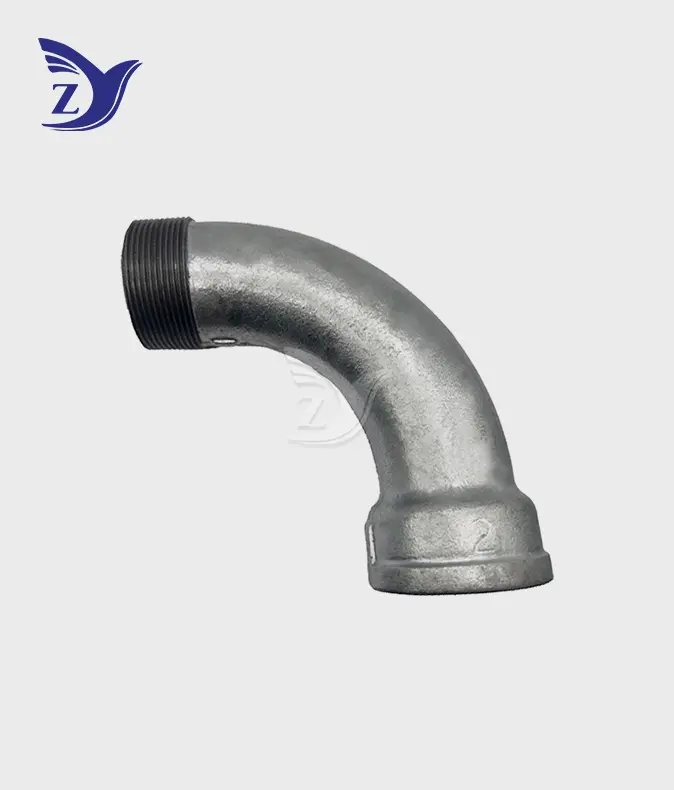
Choosing the right parts for industrial plumbing systems can mean the difference between running smoothly and having to pay a lot for downtime. NPT elbow fittings are very important because they let pipes change directions while keeping the threaded links safe and leak-free. One that stands out is the NPT galvanized male female 90° long radius elbow pipe fitting, which is a unique option that combines high durability with better flow qualities.
The people who should read this guide are buying managers, engineers, wholesalers, and OEM clients who need accurate information to choose what to buy. We'll talk about the technical features, material concerns, and quality control steps that make luxury NPT threaded fittings unique. These features will help you choose options that provide long-term value and system stability whether you're looking for parts for fire protection systems, municipal water supply, or petrochemical installations.
Understanding NPT Elbow Fittings: Definition and Key Features
An NPT elbow is a threaded pipe part that changes the direction of flow at a certain angle, usually 90°. The letters "NPT" stand for "National Pipe Thread." This is a standard method for fitting pipes that is based on ANSI/ASME B1.20.1 standards. Through thread interference, this taper design makes a mechanical seal that stops leaks in both gas and liquid uses, often without the need for extra gaskets.
What Makes the Male Female Configuration Unique?
In the business world, NPT galvanized male female 90° long radius elbow pipe fitting form is sometimes called a "street elbow." One end has outward threads and the other end has internal threads. By getting rid of the need for an intermediate nipple when attaching directly to equipment ports or current pipe ends, this dual-threaded design solves a common space problem. This means that your installation will take up less space and your system will have fewer possible leak spots.
Long Radius vs. Short Radius Design
According to the "long radius" standard, the centerline radius of curvature is about 1.5 times the specified pipe width. When compared to small radius bends, this extended sweep makes a smoother flow path, which greatly reduces turbulence, friction loss, and pressure drop. In real life, this means that the system will work better and use less energy over the fitting's lifetime.
Galvanization Process and Protection
In hot-dip galvanization, the bendable iron fitting is put into liquid zinc at temperatures around 830°F. This forms a coating that is metallurgically bound and is usually more than 70 microns thick. This layer of zinc works as a sacrifice anode, corroding more quickly to protect the steel below. The coating meets the requirements of ASTM A153, which means that it will always protect against oxidation in wet, outdoor, or chemically harsh conditions where parts that aren't covered would break down quickly.
Benefits of Using NPT Galvanized Male Female 90° Long Radius Elbow Fittings
Parts that work well in industrial settings need to be able to handle tough conditions and keep working well for long periods of time. NPT galvanized male female 90° long radius elbow pipe fittings give in a number of ways, giving you benefits that have a direct effect on your working efficiency and maintenance budgets.
Hot-dip galvanization makes fittings last a lot longer than black iron ones because it protects against rust. In ocean settings or places with a lot of humidity, the zinc coating can last for decades, while parts that aren't coated might break after just a few years. This means that they don't need to be replaced as often and cost less over their lifetime, so the original investment in galvanized fittings is a good investment.
Another important benefit is that it is easy to install. Standardized NPT threading makes sure that products from different makers can work together and makes assembly easy by using standard pipe tools and thread sealants. The male-female design works especially well in retrofit situations or installations with limited room, where standard ways of coupling would not work. When system changes need to be made, maintenance crews like how easy it is to take apart, which cuts down on labour time and costs.
The shape with a long radius improves hydraulic performance in ways that are good for both system designers and users. By keeping the pressure drop as small as possible when the flow direction changes, these fittings lower the amount of energy needed for pumps and make system sizing more efficient. In situations involving steam and condensate, the better flow path stops erosion and stops steam hammer from hurting short radius fittings. Agricultural businesses that use these fittings to move slurry say that less sediment builds up at the bends, so the flow capacity stays the same over time without having to be cleaned as often.
How to Choose and Procure the Right NPT Galvanized Elbow Fittings?
To choose the right parts, you have to make sure that the product specs match the needs of your system in a number of ways. Size compatibility starts with checking the standard pipe size and goes all the way up to checking the thread type. BSPT (British Standard Pipe Thread) is used in installations that meet foreign standards, while NPT is more common in North American markets. When you mix tapered and parallel threads, you get joints that aren't stable and are likely to leak.
Material Grade Considerations
Fittings made of malleable iron that meet ASTM A197 standards have a tensile strength of more than 300 MPa and enough flexibility to handle shock and heat expansion without breaking. This type of material can handle medium-pressure uses up to Class 150 or Class 300 rates, based on the thickness of the wall. For normal uses, temperature values usually cover -20°F to 150°F. For special processes, this range can be extended when needed.
Quality Control Checkpoints
Manufacturers with a good reputation use strict checking procedures that buyers should check. Using calibrated L1 and L2 ring and plug gauges to check the thread makes sure it meets ANSI B1.20.1 standards, which makes sure the threads connect and close properly. Optical comparators must be used to make sure that the 90° angle is within a range of ±0.5°. Deviation causes pipe stress and could lead to leaks. Nondestructive magnetic methods are used to check the thickness of the zinc covering and make sure it meets ASTM A153 standards. Hydrostatic testing at 1.5 times working pressure finds casting flaws before the fittings get to the job site.
Procurement Strategies
Buying in bulk usually saves you 15–30% compared to ordering in small amounts, so keeping an eye on supplies for sizes that you use often is a good idea. But weigh these savings against the risk of failure and the cost of keeping the item. Having links with makers that offer quick-turn production for standard items while still having OEM capabilities for custom needs gives you options when it comes to buying things. When negotiating with a seller, you should talk a lot about payment terms, minimum order quantities, and wait time guarantees.
Comparing prices from different sellers can help you figure out where you stand in the market, but you should look at the total cost of ownership instead of just the unit price. The best deal is found in a NPT galvanized male female 90° long radius elbow pipe fitting that costs 10% more but lasts twice as long. Before placing a big order, make sure you get samples of the product for important uses to check the accuracy of the measurements, the quality of the threads, and the stability of the coating.
Conclusion
NPT galvanized male female 90° long radius elbow pipe fittings are designed answers to common problems with industrial piping. They have standard threading, protect against corrosion, and provide the best hydraulic performance. The male-female configuration makes use of limited space while keeping the integrity of the system. The long radius design reduces pressure loss, which lowers running costs over the fitting's lifetime.
Knowing the technical details, like the ANSI B1.20.1 threading standards and the ASTM A153 galvanization requirements, lets you make buying choices based on standards that have been used for years in the business. Some quality control methods are thread gauging, coating thickness verification, and hydrostatic testing. These separate reputable providers from those who try to save money by cutting corners, which will cost you more in the long run in system failures and unplanned maintenance.
Buying high-quality galvanized parts is a good idea because they last longer, need less upkeep, and work better with the system. If you need parts for fire protection, city infrastructure, petrochemical processing, or farming irrigation, make sure you choose ones from makers with good reputations and complete quality systems. This will keep your operations running smoothly and prevent problems that could have been avoided.
FAQs
What distinguishes male female NPT elbows from standard elbows?
Male-female elbows have external threads on one end and internal threads on the other. This means that connection nipples are not needed when connecting pipe ends or equipment ports straight to each other. Most standard elbows have female threads on both ends, so they need to be connected to male-threaded lines or nipples. This street elbow design cuts down on the amount of room needed for fitting and the number of possible leak places.
Can galvanized NPT elbows handle uses with a lot of pressure?
Most ductile iron NPT elbows are qualified for Class 150 work, which means they can handle pressures up to 300 psi at normal temperatures. Higher pressures can be reached with Class 300 grades for walls that are thicker. Always compare the manufacturer's pressure-temperature rates to the needs of your application, keeping safety factors and possible pressure spikes in mind.
How does long radius design affect system performance?
When compared to short radius elbows, long radius elbows with a central radius 1.5 times the pipe diameter have 30–40% less friction loss. This means that there will be fewer drops in pressure, less energy used for pumping, and less damage to the inside of the fitting. When working with rough fluids or fast-moving gases, where turbulence speeds up wear, the softer flow path is especially helpful for NPT galvanized male female 90° long radius elbow pipe fittings.
Partner with Zhiyuan Malleable Steel for Premium Pipe Fitting Solutions
At Zhiyuan Malleable Steel, we've specialized in manufacturing high-quality NPT galvanized male female 90° long radius elbow pipe fittings since 2006, bringing over 26 years of casting expertise to every component we produce. Our 30,000-ton annual production capacity supports both large-scale projects and ongoing supply relationships, with over 1,000 specifications available to meet diverse industrial requirements.
Located in Taigu District, Shanxi Province, our 50,000-square-meter facility operates under strict ISO 9001 quality management protocols, with additional CE, UL, and FM certifications ensuring our fittings meet international standards. Our comprehensive quality control includes L1/L2 thread gauging, zinc coating thickness verification, and hydrostatic testing on production samples. Standard items ship from inventory within 48 hours, while our ODM/OEM capabilities address custom specifications that standard catalogs cannot fulfill.
As an NPT galvanized male female 90° long radius elbow pipe fittings manufacturer serving fire protection contractors, municipal engineering firms, and industrial clients across North America, we understand the critical role reliable components play in your operations. Our technical team provides specification assistance, and our defective product replacement guarantee protects your investment. Contact our procurement specialists at q1236800000@gmail.com or visit zymalleablepipefitting.com to discuss your fitting requirements and receive a detailed quotation tailored to your project specifications.
References
- American National Standards Institute. (2013). ANSI/ASME B1.20.1: Pipe Threads, General Purpose (Inch). American Society of Mechanical Engineers.
- ASTM International. (2017). ASTM A153/A153M-16a: Standard Specification for Zinc Coating (Hot-Dip) on Iron and Steel Hardware. ASTM International Standards Organization.
- ASTM International. (2018). ASTM A197-00: Standard Specification for Cupola Malleable Iron. ASTM International Standards Organization.
- Hydraulic Institute. (2015). Pipe Fittings and Their Effect on System Efficiency: Engineering Design Considerations. Hydraulic Institute Technical Publications.
- National Fire Protection Association. (2019). NFPA 13: Standard for the Installation of Sprinkler Systems - Component Specifications. National Fire Protection Association.
- Zinkowski, R. & Patterson, M. (2016). Corrosion Protection in Industrial Piping: Galvanization Performance and Lifecycle Analysis. Industrial Corrosion Management Journal, 34(2), 112-127.
Online Message