
Jul 10, 2026
What is a coupling pipe fitting?
A coupling pipe fitting is an important part of industrial and building pipeline systems because it connects two pipes and keeps the flow of fluids or gases going. NPT round face galvanized round edge coupling pipe fittings are one type of coupling design. They are made of special, pliable iron parts that use National Pipe Taper threads to make mechanical seals that don't leak. The round edge form with a reinforced bead at the exit makes the structure more resistant to internal pressure, and hot-dipped galvanization protects against rust very well. These threaded pipe joiners solve problems that keep coming up in networks for gas distribution, fire protection, water supply, and HVAC. In these networks, safe and long-lasting systems depend on links that work well.
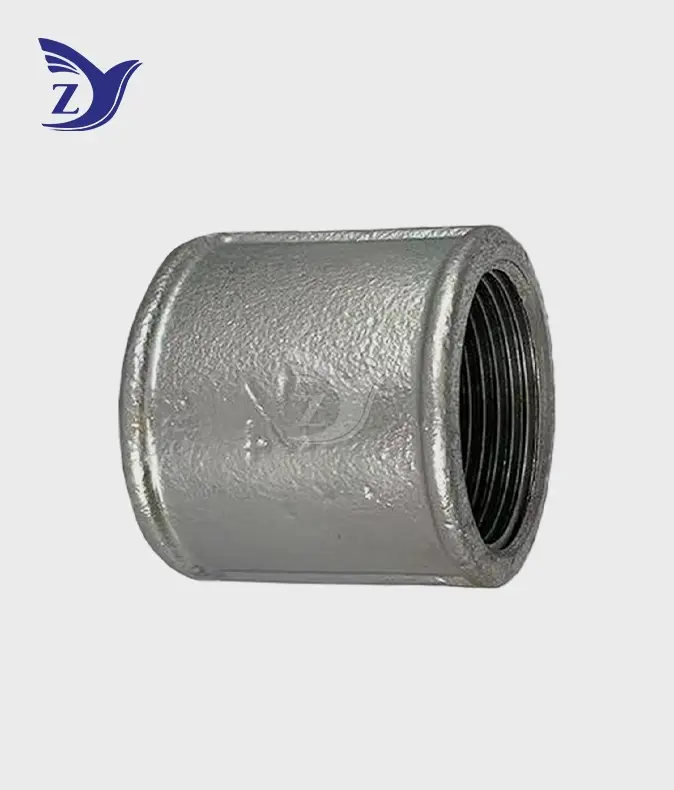
Introduction to Coupling Pipe Fittings
Coupling fittings are the most important part of pipeline equipment in petrochemical plants, fire safety engineering, and city water systems. These industrial-grade parts get rid of the complexity of welded joints and make links that can be used again and again and don't need much upkeep. They can also be adjusted to meet different operating needs.
Every pipeline system needs reliable points where two or more pipe pieces can join. Couplings meet this need by making safe, pressure-rated connections that can handle changes in temperature, shaking, and mechanical stress without affecting the flow rate. Couplings make it easy to quickly put together distribution networks that reach every area of a building for fire sprinkler systems. Municipal water officials depend on these fittings to keep service going while they upgrade infrastructure and replace old parts without having to shut down the whole system.
The technical value is more than just making a link. Precision-threaded couplings make interference fits between metals that can handle up to 300 PSI in normal Class 150 configurations. With this mechanical seal, you don't need to use gaskets or adhesives. This cuts down on failure spots and makes inventory management easier for wholesale sellers who work on a variety of project types.
Technical Insights into NPT Round Face Galvanized Round Edge Coupling Pipe Fittings
When procurement professionals know the technical details of these parts, they can match goods to application needs while keeping performance needs and price limits in mind.
Thread Types, Sizes, and Pressure Ratings
Sizes of standard NPT round face galvanized round edge coupling pipe fittings range from 1/8 inch to 6 inches, so they can connect instrument lines to main distribution ends. Class 150 rates can handle 300 PSI for water, oil and gas service at room temperature. For saturated steam uses, the rating drops to 150 PSI. Reducing connections connect 2-inch supply lines to 1.5-inch branch circuits, getting rid of the need for multiple adapters that create leak paths.
Thread engagement level has a direct effect on the quality of the seal. To get the interference fit that is typical of NPT connections, the threads must be hand-tightened 4-6 times before they can be installed correctly. Should you tighten too much, the threads could get galled on galvanized surfaces. If you tighten too little, there are holes that seals can't fill. During quality control, thread gauges check the accuracy of the dimensions. This makes sure that the connection is the same from one production batch to the next.
Corrosion Resistance: Galvanized vs. Stainless Steel
According to ASTM A153, NPT round face galvanized round edge coupling pipe fittings use zinc coats that are usually 70 to 100 microns thick. These coatings create a barrier of security and a cathodic shield. When water gets into the base metal, zinc oxidizes faster than iron, protecting the iron substrate. This dual system works great in outdoor settings, basement uses, and places near the coast where salt spray speeds up corrosion.
When working with acidic or basic fluids in industrial process lines, stainless steel is better at resisting chemicals. But because they are more expensive—stainless joints are often three to four times more expensive than galvanized malleable iron—they can't be used for big city jobs. When it comes to water treatment plants, heating systems, and irrigation networks where water solutions are common but harsh chemicals are not, galvanized fittings are the best choice. In the end, choosing the right material means weighing the risks to the environment against the money that can be spent. Galvanized choices work well for 80% of industrial water and gas uses.
Coupling Type Variations and Applications
In addition to normal straight couplings, malleable iron product lines also have reducing couplings for changing the width, extension pieces for repairs, and special designs for high-pressure uses. Round-edge versions are good for general industrial transport, while heavy-duty beveled-edge versions can handle high levels of shaking in mines or offshore platforms.
Threaded connections are the most common type because they let you take things apart for repair without having to cut pipes. Large-diameter mains can be installed faster with grooved mechanical connections, but the pipes need to be prepared in a certain way. Slip-on designs are used for low-pressure drains where speed of fitting is more important than leak-free performance. Fire protection workers like threaded malleable iron connections because thread engagement makes reliable seals that can survive decades of a dry-pipe system going to sleep and then being turned on in an emergency.
Choosing the Right Coupling for Your Application
NPT Round Face vs. Flat Face Couplings
Round face designs with chamfered openings help pipes line up, which speeds up the installation process, especially when working above or in piping runs with a lot of other pipes. Flat face options are a little less expensive, but they need to be perfectly aligned with the pipe. Misalignment at an angle ruins the threads and makes the seal less reliable. The round face extra usually makes up 8–12% of the cost of fitting. It pays for itself by cutting down on labor hours and the number of rejected parts during quality checks.
When placed correctly, sealing efficiency stays about the same for all types. The round edge bead gives mechanical support that flat designs don't have. This makes round face versions better for places with a lot of shaking, like compressor discharge lines or process systems with rotating pumps. Both types are kept in stock at distribution centers that serve a wide range of customers. This lets contractors choose based on the installation conditions rather than having to make general tradeoffs.
Galvanized Round Edge vs. Alternative Materials
For the widest range of uses, NPT round face galvanized round edge coupling pipe fittings strike the best balance between strength, resilience, and cost. PVC and CPVC fittings are cheap ways to distribute low-pressure cold water, but they break down when exposed to UV light and can't handle being hit by something solid. Brass joints work great in systems that handle drinkable water and need to be lead-free, but they cost twice as much as galvanized iron.
Carbon steel options are just as strong without being galvanized, so they can be used in dry places inside of buildings like air control systems. However, any contact to moisture starts oxidation quickly. For example, condensation in compressed air lines or humidity in machinery rooms cause things to break down too soon. The galvanized version protects against rust for an extra 15 to 20 years for a small extra cost, making it the smart choice unless certain chemicals don't work well together.
Selection Criteria for Outdoor and High-Pressure Applications
Temperature changes, rain, and UV light all make outdoor projects more likely to break down quickly. Hot-dipped galvanization is an important way to protect things, and the amount of the layer directly affects how long it will last. Check to see if the alternatives are compliant with ASTM A153 before choosing electroplated ones that only look nice and don't offer real corrosion protection.
Class scores and thread interaction need to be paid close attention in high-pressure situations. For systems that work above 200 PSI, you need Class 300 fittings with thicker walls and deeper thread profiles. Carefully look over the pressure-temperature values. For example, fittings that are designed for 300 PSI water service drop to 150 PSI when they come in contact with saturated steam because heat stresses out iron that is easy to shape. Safety gaps keep big problems from happening; systems should be designed to work at 60–70% of their stated capacity instead of the highest pressures that are allowed.
Purchasing and Procurement Considerations for B2B Buyers
Sourcing from Trusted Manufacturers and Suppliers
Manufacturers with a good reputation keep ISO 9001 quality systems that include written process controls for casting, heat treatment, galvanization, and finishing. You should ask for proof that the product meets the dimensions and galvanization standards set out in ASME B16.3 and ASTM A153. When manufacturers offer full tracking (heat numbers that connect finished goods to batches of raw materials), it's possible to figure out why something went wrong in the field if it does happen.
Established sellers offer expert help after the product has been delivered. Help from engineers with system design, pressure estimates, and choosing materials is useful, especially for complicated projects with a mix of services or unusual working conditions. Bulk buyers benefit from vendor-managed inventory programs, in which sellers keep consignment stock at customer sites. This lowers the cost of carrying stock and makes sure that parts are always available.
Price Comparisons and Cost-Benefit Analysis
Standard galvanized couplings cost between $2 and $15 per unit, based on the size. If you buy 20 or more of them on a box, you can save 20 to 30 percent. Even though foreign alternatives may be 15–25% cheaper than domestic ones, the saves are often not worth it because of things like longer wait times, inconsistent quality, and few ways to fix problems. Domestic makers usually ship regular sizes within 48 hours, while it takes 6–8 weeks for containers to arrive from other countries.
A study of lifecycle costs shows that high-quality parts from well-known brands have lower total costs of ownership. Products that meet strict quality standards need to be replaced less often, require less upkeep work, and have lower costs for unexpected downtime. Figure out how much a single system failure costs in terms of lost production, emergency repair fees, and damage to the company's image. This will help you understand the value of reliable parts versus small upfront saves.
Certifications and Quality Assurance Practices
For important apps, you should ask for testing data from a third party. Approvals from UL and FM for fire safety parts show that they work well in regular tests that mimic real-life situations. The NSF/ANSI 61 certification proves that it is safe to touch potable water and addresses concerns about lead levels and extractables that could harm water quality.
Quality verification includes shipping and packing as well. Galvanized surfaces are protected during shipping by double-layer cardboard, which keeps them from getting damaged during handling, which can damage coats. As soon as you get your packages, check them over and take pictures of any damage that happened during shipping before you accept delivery. Suppliers with a good reputation will always repair broken items and keep their quality promises by providing helpful customer service.
Conclusion
Coupling pipe fittings are important parts of infrastructure that connect industrial and public pipeline systems in a safe and reliable way. Because they are made with accurate threading, corrosion-resistant coatings, and strengthened construction, NPT round face galvanized round edge coupling pipe fittings have been used for fire protection, water distribution, HVAC, and gas service. Engineers and purchasing workers can choose parts that improve system performance while keeping costs low by knowing technical specs, best practices for installation, and procurement issues. Hot-dipped galvanization, malleable iron strength, and standard threading all work together to make parts that can be used in a wide range of businesses. Strategic buying from qualified makers makes sure that safety standards are met and that operations are reliable for longer periods of time.
FAQ
What makes NPT round face couplings different from other kinds of couplings?
NPT round face couplings have chamfered entries that help pipes line up correctly and raised round edge beads that spread the installation force out equally. The taper thread design makes interference fits that close themselves, so no gasket is needed. This mix of designs cuts down on installation time and makes connections that won't leak at pressures up to 300 PSI in oil, gas and water lines.
In what ways does galvanization make steel more resistant to rust than bare steel?
Hot-dipped galvanization uses zinc coats to protect against corrosion and act as a shield. The zinc also corrodes before the iron underneath it, providing cathodic protection. This two-part system lasts 15-20 years longer than bare steel in damp or outdoor conditions. The layer can handle more weather stress than stainless steel and is much cheaper for use in wet environments.
What affects the wait time and price for large orders?
Delivery times are affected by production capacity, the supply of raw materials, and the size of the order. Standard sizes from sources with stock can be shipped within 48 to 72 hours, but special designs take 3 to 4 weeks to make. Volume savings start at pallet numbers, which are usually between 500 and 1000 pieces, based on the size. Larger orders get better prices and faster production schedules.
Partner with Zhiyuan Malleable Steel for Superior NPT Round Face Galvanized Round Edge Coupling Pipe Fittings
Zhiyuan Malleable Steel is a reliable company that makes NPT round face galvanized round edge coupling pipe fittings. They have been making high-quality castings and pipeline parts for 26 years and sell them all over the world. Our 30,000-ton annual production capacity allows us to meet the needs of both quick delivery from a large inventory and large-scale project needs. Standard goods are shipped within two hours of an order being confirmed. We are committed to quality, as shown by our ISO 9001, CE, UL, and FM certifications. Hot-dipped galvanization according to ASTM A153 ensures the best corrosion protection for over 1,000 product standards.
For fire protection contractors, city engineering firms, and industrial facility owners, we can fully customize our ODM and OEM products to meet their specific threading needs, size requirements, and material changes needed for their particular applications. Our double-layer cardboard packing keeps galvanized surfaces safe during foreign shipping, so the coating stays in good shape from our factory in Shanxi to your project site. You can email our technical team at q1236800000@gmail.com to talk about your unique needs, get full specification sheets, or get competitive bulk prices for jobs you have coming up. You can see our whole selection of products at zymalleablepipefitting.com. That's why top system designers, wholesalers, and project engineers choose Zhiyuan Malleable Steel as their main source for industrial-grade safe pipe couplings.
References
- American Society of Mechanical Engineers. ASME B16.3 Standard for Malleable Iron Threaded Fittings: Classes 150 and 300. New York: ASME Press, 2021.
- ASTM International. ASTM A153: Standard Specification for Zinc Coating (Hot-Dip) on Iron and Steel Hardware. West Conshohocken: ASTM International, 2023.
- Nayyar, Mohinder L. Piping Handbook, 8th Edition. New York: McGraw-Hill Professional, 2019.
- National Fire Protection Association. NFPA 13: Standard for the Installation of Sprinkler Systems. Quincy: NFPA, 2022.
- Parisher, Roy A. and Robert A. Rhea. Pipe Drafting and Design, 4th Edition. Cambridge: Gulf Professional Publishing, 2020.
- Smith, Peter. The Fundamentals of Piping Design: Drafting and Design Methods for Process Applications. Houston: Gulf Publishing Company, 2018.
Online Message