
Jul 8, 2026
What inch sizes are available for hot dip galvanized no hub 90 degree elbow?
Hot dip galvanized 90-degree elbows without hubs come in a wide range of inch sizes, most commonly from 1½ inches to 12 inches in diameter. The no hub hot dip galvanized 90° elbow pipe fitting can be used in a wide range of household, business, and industrial piping systems. The most common sizes are 2 inches, 3 inches, 4 inches, and 6 inches, which cover most drainage, trash, air, and fire protection system needs. Larger sizes, like 8-inch, 10-inch, and 12-inch choices, are used for heavy-duty industrial projects and city infrastructure that needs a lot of flow.
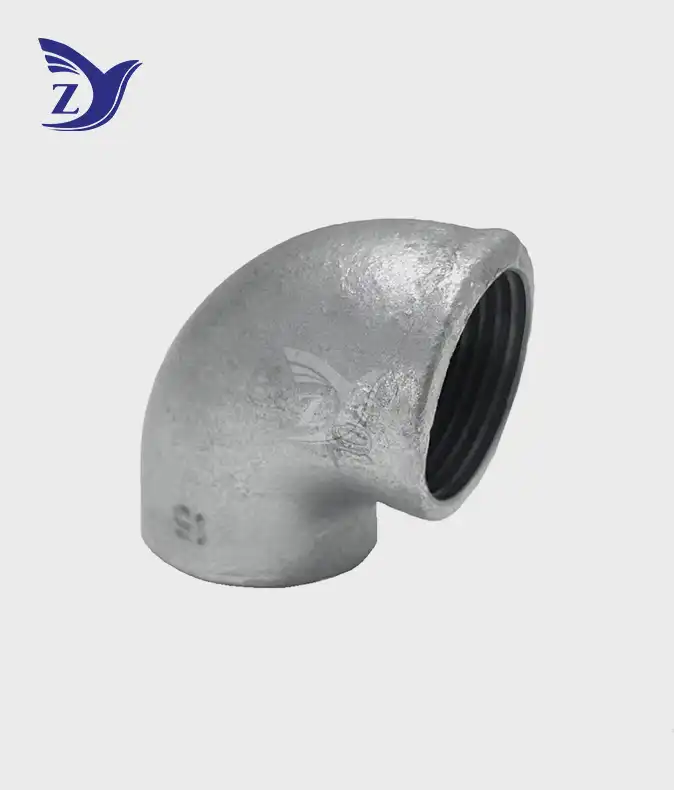
Available Inch Sizes for Hot Dip Galvanized No Hub 90° Elbows
To choose the right size for your standard no hub hot dip galvanized 90° elbow pipe fitting, you need to know both the standards for the industry and the unique needs of your project. Because of the wide range of sizes that are available, they can be used with almost any type of pipe system.
Standard Size Range and Selection Criteria
Heavy duty no hub hot dip galvanized 90° elbow pipe fittings usually come in sizes ranging from 1½ inches to 12 inches in nominal diameter. Some common standards are:
Small Diameter Applications (1½" to 3"): These sizes work for home plumbing, small business installs, and branch links in bigger systems. Fittings that are 1½ inches and 2 inches are often used in bathroom and kitchen drainage systems. Fittings that are 3 inches are used for major drain stacks in homes.
Medium Diameter Applications (4" to 6"): This is the most common size range for business buildings, multi-story homes, and light industry facilities. Fire protection system designers choose durable no hub hot dip galvanized 90° elbow pipe fittings with a 4 or 6 inch no hub for sprinkler system stems and standpipe connections. These sizes are common in building and local engineering projects because they combine flow capacity with installation flexibility.
Large Diameter Applications (8" to 12"): These bigger sizes are used for major distribution lines and high-volume process pipes by municipal water supply companies, petroleum plants, and power plants. The high pressure no hub hot dip galvanized 90° elbow pipe fitting comes in sizes 8 inches to 12 inches and can handle high flow rates while keeping its structural integrity at high system pressures.
Choosing the right size stops leaks and makes sure the system stays intact for as long as the installation is in use. When accuracy is important, procurement workers should use accurate calipers or templates to double-check measurements, comparing the pipe's outer diameter (OD) to its stated size. When sizes don't match, gaskets fail to close properly and systems break down too quickly.
Custom Sizing and Bulk Purchasing Options
Many makers offer tailored sizing options for industrial jobs with unique needs that aren't covered by their normal catalog sizes. Zhiyuan Malleable Steel has been researching and developing castings for 26 years and offers custom solutions through full ODM/OEM services. The factory can make up to 30,000 tons of goods every year, which is enough for both small prototypes and big production runs. Custom sizing is especially helpful when replacing old systems whose original specs don't match up with modern ones or when building restrictions require exact changes to the sizes. By taking advantage of economies of scale, buying in bulk can save you a lot of money. When procurement managers work with reliable providers, they can get better pricing, more efficient logistics, and better control over their goods. Zhiyuan has a large inventory, so they can deliver standard products within two hours for urgent project needs. Customized orders are given priority scheduling through four separate production processes, such as advanced casting workshops with eight sets of medium frequency electric furnaces.
Installation and Maintenance Best Practices for No Hub Galvanized 90° Elbow Fittings
To get links that work well and last a long time, you need to follow the right installation steps and do regular maintenance that takes into account environmental factors that can affect the system's stability.
Essential Tools and Preparation Steps
Installation teams should put together the tools they need, such as torque wrenches that are set to the connection manufacturer's specs, pipe cutters that make clean, perpendicular cuts, deburring tools that make the edges of cuts smooth, and marking tools that make sure everything is lined up correctly. The first step in getting ready is to clean the ends of the pipes well to get rid of any dirt, oil, or other debris that could make it harder for the gasket to seal. Before putting the parts together, check them all for obvious flaws like zinc dross (sharp spikes that could damage rubber seals) and differences in size. Measure and mark the places of the pipes to make sure they are spaced and lined up correctly, taking into account how they will expand and contract as the temperature changes in systems.
Step-by-Step Installation Guidance
Place the no hub hot dip galvanized 90° elbow pipe fitting at the angle you want and make sure that the pipe ends go all the way into the coupling depth marks. Move the protected stainless steel coupler over the joint and line it up so that both ends of the pipe are covered equally. Tighten the worm-gear clamps by hand at first, making sure they are lined up from different angles to avoid cocking, which causes the seal to compress unevenly. Using measured force based on the coupling size specifications—usually 60 inch-pounds for smaller diameters and up to 80 inch-pounds for bigger ones—is what you should do. Don't tighten too much because that can bend seals and make leak tracks. After fixing the system for the first time, wait 24 hours to make sure it is stable before checking the hydrostatic pressure. This waiting time lets the gasket material settle properly into the joint contact, creating the best conditions for closing.
Routine Maintenance and Troubleshooting
Inspections should be done every three months in harsh settings and once a year in mild ones. Check the obvious zinc covering for white rust, which is a normal byproduct of oxidation that actually improves protection, and red rust, which means the substrate is exposed and needs to be fixed. Clean the coupling covers of any buildup of dirt and make sure that the worm-gear mechanisms can still be reached and work. Fix common problems in a planned way: leaks usually happen because of not enough torque, misalignment, or damaged gaskets that need coupling replacement; corrosion spots that are darker than the normal patina mean that the coating has been damaged by mechanical impact or chemical exposure and may need to be fixed locally or replaced in sections; and misaligned fittings cause stress concentrations that can cause cracks to spread over time and can be fixed by realigning or installing strategic supports. Keep records of maintenance tasks to set performance standards and figure out when to replace something at the end of its useful life. This way, you can plan ahead and avoid having to make expensive fixes when you need to.
Conclusion
The no hub hot dip galvanized 90° elbow pipe fitting has been used successfully in household, business, and industrial settings where long-lasting, corrosion-resistant changes in the direction of piping systems are needed. These fittings come in sizes ranging from 1½ inches to 12 inches to meet the needs of a wide range of projects. The fact that they don't have hubs makes installation easier because they connect with clamps. The zinc coating thickness achieved by hot dip galvanization is higher than that of other methods, providing a longer service life of more than fifty years in corrosive settings. For procurement to go well, it's important to choose qualified manufacturers with clear certifications, a wide range of products, and quick expert help that fits with project deadlines and quality standards.
FAQs
What size range is most common for industrial applications?
The most common size range in industrial areas is between 4 and 6 inches, which provides enough flow capacity while still allowing for easy fitting. Fire safety systems, process pipes, and industrial drainage needs can all be met by these sizes.
How do I verify compatibility between elbows and existing piping systems?
Instead of depending only on nominal size marks, use calipers to find out the actual outer diameter of existing pipes and then compare that to fitting specs. Make sure the couplings work with each other by making sure the pipes and parts meet the same standard (CISPI 301 or ASTM A888).
Are hot dip galvanized no hub elbows suitable for outdoor installations?
Of course. The thick zinc coating does a great job of protecting against atmospheric corrosion. This makes these fittings perfect for use outside, in places like vent stacks, open drainage systems, and seaside sites that are exposed to salt air.
What is the expected service life of these fittings?
If you place hot dip galvanized parts correctly, they will last for 50 years or more under normal conditions. Harsh chemical conditions or high temperatures can shorten the life of something, so it needs to be checked and fixed on a regular basis.
Partner with a Trusted No Hub Hot Dip Galvanized 90° Elbow Pipe Fitting Manufacturer
Zhiyuan Malleable Steel is ready to help you with your buying needs by providing you with approved, high-quality galvanized parts that are made to strict international standards. We have been a top seller in the malleable steel business for 26 years thanks to our expertise in casting research and pipe production. There is a wide range of sizes in our store, from small 1½-inch fittings for homes to strong 12-inch industrial configurations. This lets us quickly meet the needs of important projects. Our ISO 9001, CE, UL, and FM certifications show that we are dedicated to quality, and our 30,000-ton annual production capacity can handle both regular catalog sales and OEM/ODM specifications. Our technical team is here to help you every step of the way, whether you're an international distributor looking for a reliable no hub hot dip galvanized 90° elbow pipe fitting supplier, a municipal engineering contractor in charge of big infrastructure projects, or a fire protection system integrator in need of FM-approved parts. Email us at q1236800000@gmail.com for full product details, competitive prices, and expert advice that is suited to your particular needs.
References
- American Society for Testing and Materials. (2019). ASTM A153/A153M-19: Standard Specification for Zinc Coating (Hot-Dip) on Iron and Steel Hardware. West Conshohocken, PA: ASTM International.
- Cast Iron Soil Pipe Institute. (2018). CISPI 301-18: Standard Specification for Hubless Cast Iron Soil Pipe and Fittings for Sanitary and Storm Drain, Waste, and Vent Piping Applications. Chattanooga, TN: CISPI.
- American Society for Testing and Materials. (2020). ASTM A888-20: Standard Specification for Hubless Cast Iron Soil Pipe and Fittings for Sanitary and Storm Drain, Waste, and Vent Piping Applications. West Conshohocken, PA: ASTM International.
- Porter, F. C. (2016). Corrosion Resistance of Zinc and Zinc Alloys. Boca Raton, FL: CRC Press, Taylor & Francis Group.
- National Fire Protection Association. (2021). NFPA 13: Standard for the Installation of Sprinkler Systems. Quincy, MA: NFPA Publications.
- McWane, Inc. Engineering Department. (2017). No-Hub Cast Iron Soil Pipe and Fittings: Installation Handbook. Birmingham, AL: McWane, Inc. Technical Publications.
Online Message