
Sep 22, 2026
What does a coupling do?
A coupling connects two lengths of pipe in a straight line, maintaining flow continuity without altering direction. In fire protection and industrial pipeline systems, this function is critical — a failed joint can cascade into catastrophic system failure. The NPT black square face coupling pipe fittings I recommend for demanding installations combine precision-machined tapered threads with a reinforced square-banded body, delivering leak-proof performance under sustained pressure. Whether you're commissioning a dry-pipe fire suppression system or a high-pressure gas distribution network, understanding what a coupling actually does — and which type to specify — directly shapes your project's compliance outcome and long-term reliability.
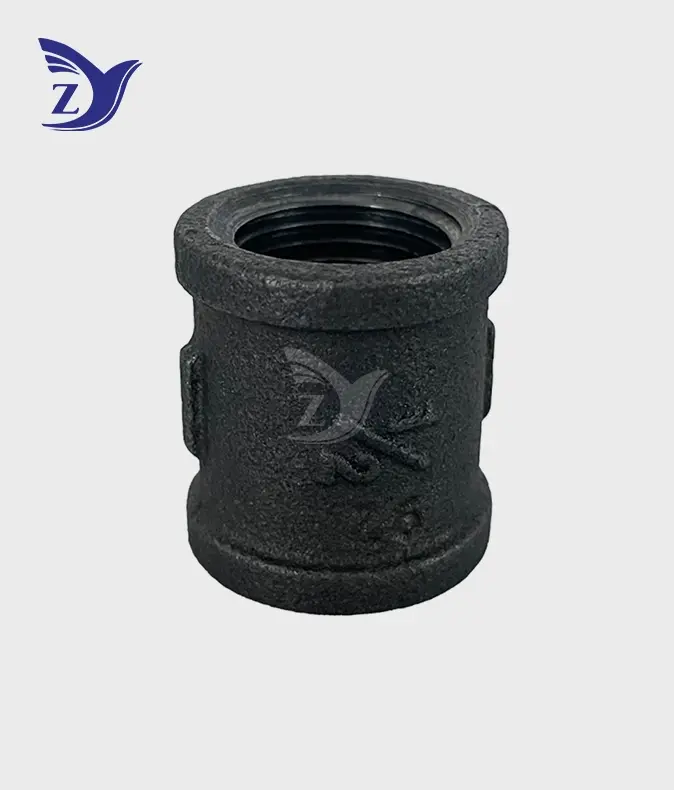
Understanding NPT Black Square Face Coupling Pipe Fittings
A pipe coupling is a short piece with threaded ends that holds two pipe lengths together. It may sound easy to make a high-performance coupling, but the engineering behind it is anything but.
What Makes the Square Face Design Different
There is a flat, strong ridge around each threaded opening on the square face, which is also known as the banded or heavy-duty banded profile. Compared to a plain-end coupling, this band adds about 20–30% more material mass to the most mechanically stressed area of the structure. That extra mass stops "bell-mouthing," which is the flaring outward that happens when high power or thermal cycling pushes against a hole with thin walls. The flat outside surface also makes it easy to hold a pipe wrench securely during installation, which is very important when you're tightening 2-inch Schedule 40 pipe in a crowded plant room.
Material Composition and Thread Standard
As per ASTM A197, these fittings are made from malleable iron that has to have a minimum tensile strength of 40,000 psi (276 MPa) and a 5% expansion. This is the main benefit over gray cast iron: the joint bends a little before it breaks, so it can handle water hammer and temperature shock without breaking. The thread shape follows ASME B1.20.1 NPT, which is a 60-degree profile with a 1°47' taper. This makes a pressure-tight seal through controlled thread distortion, so you don't need a separate gasket. ASME B16.3 is used for both Class 150 and Class 300 designs to make sure that the dimensions are correct. The black iron oxide or bituminous layer on the surface keeps it from rusting in oil, gas, and steam conditions that don't allow zinc pollution from galvanized fittings.
Key Benefits and Applications of Black Malleable Iron Couplings
Durable square-edge threaded pipe couplings are used in critical infrastructure because they work well and can be measured, not because of what the company says about them.
When making B2B purchasing decisions, these are the main things that set NPT black square face coupling pipe fittings apart:
- High-strength, corrosion-resistant body: The KTH330-08 or KTH350-10 grade composition of malleable iron makes it resistant to impact over a wide temperature range. The black oxide finish does a good job of stopping corrosion in closed-loop systems, oil lines, and dry fire suppression networks that don't let too much water in.
- Precision NPT/BSPT threading for zero-leak sealing: Measuring the threads against L1 and L3 plug-and-ring standards checks the taper, pitch, and depth during production. Field leakage is still mostly caused by threads that don't conform; precision machining gets rid of that problem before the fitting leaves the factory.
- Class 150 and Class 300 pressure ratings: Class 150 has a 300 psi WOG (Water, Oil, Gas) value at room temperature, which is enough for most fire control systems' static and surge pressure needs. Class 300 can handle up to 2,000 psi WOG at room temperature, which is what you need for high-pressure hydraulic or industrial gas tie-ins.
These benefits work together to cut down on installation mistakes, upkeep needs, and support compliance with NFPA 13 fire sprinkler system standards, which clearly list threaded malleable iron fittings as accepted joining parts.
The uses show how flexible they are. When fire suppression systems are dry-pipe or preaction, an industrial-grade black malleable pipe joiner can handle the pneumatic pressure that keeps the system ready and the hydraulic surge that happens when the system goes off. When natural gas is distributed, the black finish keeps zinc flake pollution from moving downstream and blocking pressure controls. When used in steam boiler lines with pressures below 150 psi, the fitting's ductile malleability can handle thermal cycling that would break a gray iron alternative.
Comparing Black Malleable Couplings with Other Coupling Types
I look at three different types of couplings when choosing ones for fire and industrial projects: the normal round-face malleable coupling, the grooved mechanical coupling, and the NPT black square face coupling pipe fittings.
Structural and Sealing Comparison
A round-face coupling has the same thread standard but less external reinforcement. This means it's fine for light-duty pipes in homes but can bell-mouth when installed with high pressure over and over again. A grooved coupling (Victaulic-style) needs the pipe end to be roll-grooved and a gasket seal to be used. It's faster to install in long runs with a lot of components, but many workers don't have the tools they need to prepare the pipe ends on site. The square-face threaded fitting doesn't need any special tools, a seal, or any changes to the pipe end other than standard NPT threading.
Cost and Lifecycle Value
The black malleable square-face coupling is in the middle of the price range for couplings, between the cheaper round-face unit and the more expensive grooved coupling. Over the course of a project's lifetime, the sealed-thread design removes the need to replace gaskets, and the reinforced body cuts down on repairs caused by failure. This lifetime estimate makes a big difference in the total cost of ownership for medium-sized fire engineering projects that buy $100,000 to $500,000 worth of fittings every year.
Installation and Maintenance Guide
A precision-threaded fitting will either work as expected or become a leaky point if it is not installed correctly. Correct implementation of NPT black square face coupling pipe fittings ensures long-term system integrity.
Step-by-Step Installation Protocol
First, prepare the threads by cleaning them of burrs and other debris. Next, use a thread sealant that is compatible with the service fluid, such as PTFE tape or anaerobic thread compound. Tighten the coupling onto the pipe by hand until it fits snugly. Then, use wrench turns to set the contact depth according to ASME B1.20.1. Usually, this means 2 to 3 turns past hand-tight for standard NPT. The pipe wrench has a flat bearing surface on the square face banding. Use that area carefully and avoid putting your jaw on your midsection.
Routine Inspection and Maintenance
I suggest that threaded joints in fire systems be looked at visually every three months to look for mineral stains or rust streaks that show micro-leakage. Any loosening in the initial thread engagement is found by checking the torque after the first seasonal thermal cycle. These parts don't have any elastomeric gaskets that can wear out like grooved joints do, which makes the cleaning checklist a lot easier.
How to Choose the Right Coupling for Your Project
Four things are needed to choose the right NPT black square face coupling pipe fittings: the working pressure, the service fluid, the installation setting, and the code that applies.
Choose the right pressure class for your system: Class 150 is best for general fire suppression, and Class 300 is best when the design pressure is higher than 300 psi. Check the main fluid. Galvanized fittings are used for drinkable water lines, while black iron fittings are used for gas, oil, steam, and non-potable water systems. Check the installation area for the chance of external corrosion. Black oxide coating works well in protected mechanical rooms, but it might need extra protection in coastal or chemical-exposure areas.
Qualification of the supplier is also important. Check that the company is ISO 9001 certified, ask for thread gage test results, and compare their annual production capacity to the number of orders they expect to receive. A supplier that makes 30,000 tons of product a year has enough stock to handle large project orders without causing delivery delays, which directly protects your construction schedule.
Conclusion
One thing a coupling does better than anything else is keep the pipeline protected and ongoing no matter what the system is doing. Because it is made of ASTM A197 malleable iron, ASME B1.20.1 precision threads, and a square-banded reinforcement profile, NPT black square face coupling pipe fittings can reliably do their simple job in fire suppression, gas distribution, and industrial steam applications. Choosing the right fitting during procurement protects both the project schedule and the lives of people who depend on the system working right when it matters the most.
FAQ
1. Are black malleable iron couplings suitable for potable water systems?
No, the black iron oxide finish doesn't protect well in oxygenated water; long-term contact causes internal corrosion and could lead to contamination. Gas, oil, steam, and closed-loop non-potable water systems can all use NPT black square face coupling pipe fittings. For uses with drinkable water, galvanized malleable iron connections are the best choice.
2. What is the pressure difference between Class 150 and Class 300?
Class 150 has a WOG value of 300 psi at about 150°F, which is enough for most fire systems that follow NFPA 13. Class 300 has a heavier square-face wall section that can handle up to 2,000 psi WOG at room temperature. It is made for high-pressure industrial gas and hydraulic applications.
3. Can these fittings work with BSPT-threaded pipe?
NPT and BSPT threads have the same taper angle, but their size and thread form are different, so they can't be used interchangeably. You can get fittings that are precisely made to BSPT standards. They all have the same square-face banded body shape. Before you buy, you should always check that the thread standard listed in your project plans is correct.
4. How do I verify thread quality before installation?
Ask your provider for L1 and L3 plug-and-ring gage test results. These papers show that the taper, pitch, and thread depth meet the requirements of ASME B1.20.1, which is the best way to tell if the field sealing is working properly.
Source Your NPT Black Square Face Coupling Pipe Fittings from Zhiyuan Malleable Steel
Since 2006, Zhiyuan Malleable Steel has been making certified malleable iron pipe fittings. They can make 30,000 tons of them each year, and all of them have ISO 9001, UL, and FM certifications to back them up. As a reliable provider of NPT black square face coupling pipe fittings, we keep a full stock of Class 150 and Class 300 items, and most orders are sent out within two hours. You can email our technical team at q1236800000@gmail.com right now to get examples, certification papers, or a quote for a large job.
References
1. American Society of Mechanical Engineers. ASME B16.3: Malleable Iron Threaded Fittings, Classes 150 and 300. ASME, 2021.
2. American Society of Mechanical Engineers. ASME B1.20.1: Pipe Threads, General Purpose (Inch). ASME, 2013.
3. ASTM International. ASTM A197: Standard Specification for Cupola Malleable Iron. ASTM, 2020.
4. National Fire Protection Association. NFPA 13: Standard for the Installation of Sprinkler Systems. NFPA, 2022.
5. Nayyar, Mohinder L. Piping Handbook, 7th ed. McGraw-Hill, 2000.
6. Shigley, Joseph E., and Charles R. Mischke. Mechanical Engineering Design, 9th ed. McGraw-Hill, 2011.
Online Message