
Sep 7, 2026
What are threaded elbows?
When I walk through industrial facilities or inspect commercial plumbing installations, I'm consistently reminded of how small components make the biggest difference. Among these unsung heroes, the threaded elbow stands out as a fundamental fitting that keeps fluids and gases flowing exactly where they need to go. A threaded elbow is a pipe fitting designed to change the direction of pipeline flow through screw-in connections, featuring internal or external threads on its ends. Available in common angles like 90° and 45°, these fittings eliminate the need for welding while providing secure, leak-resistant joints in medium to low-pressure systems. Whether you're sourcing components for water distribution networks or assembling HVAC systems, understanding these versatile fittings can transform your procurement strategy and installation efficiency.
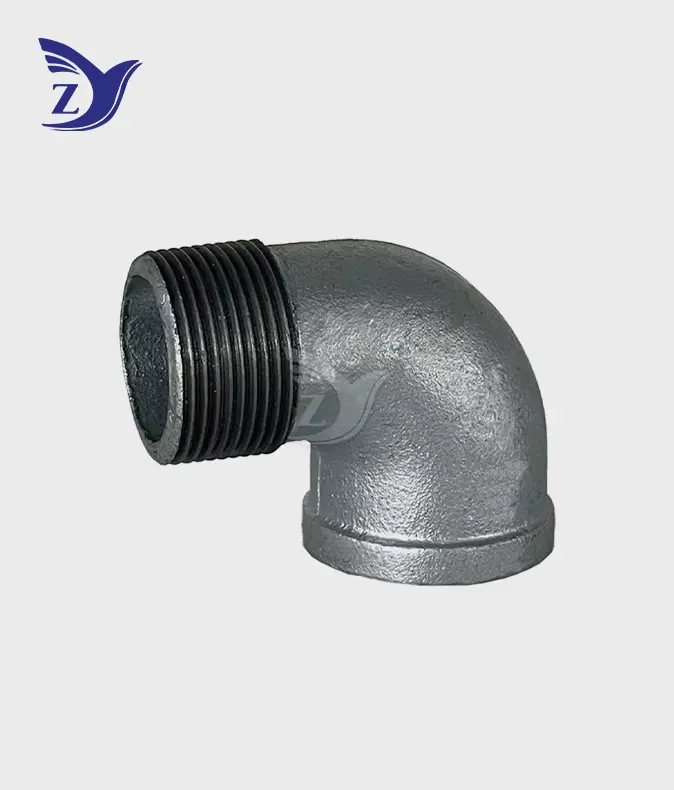
Understanding Threaded Elbows: Definition, Types, and Working Principle
The Core Function of Directional Change Fittings
Threaded elbows are important parts of pipeline systems where the flow direction needs to change without affecting the structure of the system. The way it works is based on carefully cut internal threads (usually female to female) that interfere mechanically with male threads on pipes or nipples that match them. This connection makes a pressure-tight barrier that can handle PN16 to PN25 grades when properly sealed with PTFE tape or thread sealant. The great thing about this design is that it can be used in both directions. Unlike welded joints, threaded connections can be taken apart for maintenance or system changes without having to cut any pipes.
Common Angle Configurations
The most common choice is the 90-degree version, which makes perpendicular flow changes in tight areas where pipes have to go around structural obstacles. A Zhiyuan Malleable Steel 90-degree bend made of malleable iron with a black finish and NPT threading is a good example of this type of product because it is strong and can be used in city water projects. 45-degree fittings, on the other hand, make direction changes more smoothly, which lowers turbulence and pressure drop—an important thing to think about in pump discharge lines or fluid transport systems that are sensitive to hydraulic resistance.
Speciality designs make it possible to use things in more ways than just normal arrangements. Changing directions and sizes are both possible with reducing threaded elbows. They connect bigger supply lines to smaller branch lines without the need for separate reducer fittings. When used in places like condensate return lines, where smooth fluid movement stops water hammer, long-radius bends keep flow from getting messed up. When installing street elbows with male-female thread combinations, you don't need any intermediate nipples. This cuts down on the length of the assembly when space is limited.
Material Options and Thread Standards
The water supply and sewage industry uses a lot of malleable iron because it is strong, flexible, and cheap. Different kinds of carbon steel can handle higher temperatures in steam systems and industrial process lines. Grades of stainless steel like 304 and 316 don't rust when they're exposed to toxic chemicals or salt water. Brass fittings are used in specific situations where they need to be non-sparking or resistant to dezincification.
Thread types decide how well two world markets can work together. In North America, NPT (National Pipe Taper) threads are widespread. They have a 60-degree thread angle and close by deforming. For leak-free joints, BSPT/RC (British Standard Pipe Taper) threads need to be sealed at the right angle, which is 55 degrees. When you mix thread standards, connections will fail and there will be safety risks.
Key Dimensions, Standards, and Materials of Threaded Elbows
Size Range and Selection Criteria
Threaded elbows are useful from 1/8 inch to 6 inches (DN6 to DN150), and they can be used for everything from sensor lines to industrial distribution mains. It's important for procurement managers to know that sizing refers to the nominal bore, not the real thread width. A 1-inch fitting can fit schedule 40 pipe that has an inside diameter of 1.05 inches and an outside diameter of 1.315 inches. Many of the specification mistakes I've seen during project checks are caused by mixing up nominal and real measurements.
To choose the right sizes, you have to look at the flow needs, the pressure drop estimates, and the room you have for installation. Oversizing slows things down and could lead to sediment buildup in water lines, while undersizing causes too much friction loss and could lead to cavitation damage. Volume price usually works out better for sizes 2 inches and up, which makes buying in bulk cheaper for wholesalers who work on a variety of projects.
Material Performance Characteristics
The choice between carbon steel, coated steel, malleable iron, and stainless steel depends on how the metal will be used and how it will react to the surroundings. Because they are so strong and easy to work with, malleable iron fittings, including a threaded elbow, are perfect for underground water lines where the ground moves. The process of malleablisation annealing turns white cast iron that is rigid into a matrix that is flexible and can handle installation pressures and changes in temperature.
For high pressure values and wide temperature ranges, carbon steel has a better tensile strength. Schedule 80 carbon steel threaded elbows can work with steam systems that are up to 300°F and 300 PSI. But defence against rusting is now required; galvanised coatings make outdoor installations last longer by adding zinc layers that rust faster than the base metal.
Stainless steel grades are worth the extra cost in places where they are likely to rust and where maintenance is hard to get to. Type 316 stainless steel doesn't react with chloride, so it can be used in seaside sites and chemical plants that work with acids or solvents. When scratched, the chromium oxide passive film heals itself, keeping corrosion barriers in place for decades of use. When I ask for stainless steel for systems that process drugs or food, I have to get material approval to make sure the austenitic makeup and surface finish are correct.
International Standards Compliance
In North America, ANSI B16.3 sets the rules for malleable iron threaded fittings. It says what the marking standards are and what the limits are for size and temperature. To make sure that flexible iron casts have the right tensile strength and elongation, ASTM A197 lists the material qualities that must be met. For international purchases, ISO 49 gives metric equivalents, but thread compatibility needs to be carefully checked.
Pressure ratings have a direct effect on safety gaps and following the rules. Because safety factors are built into ratings, Class 150 fittings can be used in most commercial plumbing and HVAC jobs. Different types of Class 300 can handle higher industrial pressures that are common in boiler feedwater systems or compressed air networks. Buyers should make sure that the manufacturer's certifications include data from hydrostatic testing and proof that the materials can be tracked back to their source.
Comparison and Selection: Threaded Elbow vs Other Elbow Types
Installation Method Trade-offs
Threaded elbows are great when you need to put something together without tools or take it apart often. With just pipe wrenches and sealant, a repair crew can fix a broken threaded elbow and get service back up and running in minutes. Welded elbows, on the other hand, need qualified welders, hot work permits, and strict rules for inspections after the join. Most of the time, the difference in labour costs is higher than the difference in material costs. This is especially true in repair jobs where some of the old systems are still working.
Welded butt-weld elbows are stronger and better at letting fluid flow in high-pressure or large-diameter situations above 6 inches. The smooth bore gets rid of the thread recesses that catch debris or cause flow to become turbulent. Different types of socket welds can be used on small-bore pipes less than 2 inches in diameter, where full penetration welds are not practical. Welded parts are strong, but they can be a problem when the system is changed often or when equipment needs to be taken apart for maintenance.
Flanged elbows make it easier to connect big pipes that need to be accessed often, like the pipes that bring in and out of a pump. The fixed joint lets the whole thing be taken apart without cutting any pipes, but the seal needs to be maintained and the bolts need to be tightened up. Compression fittings are useful in cooling and instrumentation where vibration protection is needed without having to thread thin tubes. In home plumbing, push-fit elbows make fitting faster, but they don't have the pressure ratings or temperature ranges for industrial use.
Material-Based Performance Comparison
Between stainless steel and brass, you have to weigh how resistant they are to corrosion against how much they cost and how easy they are to work with. Brass works great in systems that handle drinkable water because it doesn't contain any lead and meets NSF/ANSI 61 guidelines. Antimicrobial properties and great thread-cutting properties during installation are provided by the zinc content, making a threaded elbow a practical choice for many threaded connections. Brass can handle temperatures up to 200°F, but it loses its zinc when it comes into contact with water that has a low pH or a lot of salt.
Another common choice point is between carbon steel and galvanised steel. Inside places that need to be kept cool, like heating system return lines or compressed air circulation, bare carbon steel works well. The galvanised covering makes the metal a little thicker but twice as resistant to rust in wet situations. Hot-dip galvanising makes coatings that are stronger and last longer than electrogalvanising, but for fluid service uses, the coverage of the coatings inside needs to be checked.
These important differences have a direct effect on procurement strategy. For general construction needs, distributors keep a lot of malleable iron and galvanised steel in stock. They also keep speciality materials like 316 stainless steel and naval brass on hand for specific uses. When technical needs allow it, volume savings encourage product lines to use the same few grades of materials.
Installation Guide and Best Practices for Threaded Elbows
Essential Tools and Preparation Steps
Properly installing threaded elbows begins with putting together the right tools. You will need two pipe wrenches (one for holding and one for turning), PTFE tape or anaerobic sealer, a deburring tool, a wire brush, and a thread inspection gauge. Many leaks have been traced back to dirty threads or bad sealant application, both of which could have been avoided with careful planning.
Use a wire brush to clean all threads well and get rid of any manufacturing oils, storage rust, or installation debris. Check the thread profiles for damage like threads that are twisted, galling, or thread forms that aren't full. A thread gauge checks that the dimensions are in line with NPT or BSPT norms. No matter how good the sealant is, leaking will happen if the threads are damaged. Reject any fitting that has thread deformation that you can see.
Step-by-Step Assembly Process
Start wrapping the PTFE tape three to four full turns clockwise from the end of the thread, two threads from the fitting end. By overlapping each wrap by half of the width of the tape, you can get even covering without any bunching. Anaerobic seals work well for stainless steel joints that tend to gall, but they need to be carefully dosed so that the extra material doesn't get into the system and cause problems.
Tighten the pipe into the elbow by hand to make sure it fits smoothly and without any resistance. Stop and check for cross-threading if the threads bind or need too much force to engage at first. Once the connection is hand-tight, use pipe wrenches to turn it two or three more times for tapered pipe threads. The standard in the industry says that 3–4 threads should still be visible after the final tightening. This shows that the contact depth is right without putting too much stress on the fitting body.
The most common installation mistake I see during system setup is over-tightening. Fitting bodies crack when they are torqued too much, especially in grades of malleable iron where pressures build up around the thread roots. When threads are under-tightened, they don't join fully, which lets pressure break connections during service. For precise control in important situations, torque wrenches are useful, but experienced installers learn to feel the right tightness with their hands.
Quality Checks and Maintenance Practices
Before putting things into service, pressure testing makes sure that the work is solid. Hydrostatic tests that last 15 minutes at 1.5 times the working pressure find leaks without damaging the equipment. For gas pipes, air testing with a soap solution works, but there are pressure limits in place to keep release from going off in a violent way.
As part of routine upkeep, the system is looked at visually to see if there is rust, weeping connections, or damage from impact or heat stress. In places where vibrations are common, threaded joints may become loose over time and need to be retightened on a regular basis during repair windows. Thermal expansion cycles can make thread sealants less effective, so systems that go through a lot of temperature changes should be inspected every six months.
Conclusion
Though threaded elbows are just directional fittings, they are also examples of the engineering principle that choosing the right parts for a system is what makes it reliable and saves money. These fittings can be made from a variety of materials, such as malleable iron for use in city structures or stainless steel for use with harsh industrial media. They are very useful in a wide range of situations. Knowing thread standards, material properties, and the best ways to install something gives procurement workers the power to firmly define and bargain. As pipeline systems get more complicated and performance requirements rise, working with seasoned manufacturers guarantees access to top-notch products, expert technical advice, and a dependable supply chain that keeps a competitive edge.
FAQ
1. What pressure ratings do threaded elbows typically handle?
Standard threaded elbows made of malleable iron that are rated to Class 150 can handle working pressures of up to 300 PSI for gas, oil, and water at room temperature. As temperature rises, pressure rates drop. For example, at 300°F, the same fitting may only be able to handle 200 PSI. Higher grades are given to carbon steel and stainless steel versions because the materials are stronger. Class 300 fittings can handle 600 to 800 PSI, based on their size and temperature. Always look at the manufacturer's pressure-temperature charts instead of relying on grades, since performance limits are affected by differences in casting quality and wall thickness.
2. Can I use NPT threaded elbows with BSPT threaded pipes?
When you mix NPT and BSPT threads, you get weak connections that can leak under pressure. Even when a lot of sealer is used, the different thread angles (60° vs. 55°) and pitch shapes make it impossible to seal properly. Cross-threading hurts both parts, and it might look safe when it's installed but not when it's put under pressure or used. To make sure there is stability in the supply chain, procurement specs must clearly list thread standards. When working on old systems and running into mixed-thread issues, conversion adapters are the only safe way to fix them.
3. How do I determine the right material for my application?
The choice of material depends on the properties of the media, the working conditions, and the exposure to the surroundings. For drinking water systems, iron that can be shaped or copper that doesn't contain lead work best. Chemicals that are corrosive need grades of stainless steel that are matched to certain levels of chloride and pH. Installations outside that will be exposed to the weather need galvanised coatings or materials that don't rust naturally. Extreme temperatures are better for carbon steel or stainless steel than for brass and iron that can be shaped. When more than one material meets the technical needs, a life-cycle cost analysis that takes into account repairs and replacement costs helps make the best choice.
Partner with Zhiyuan Malleable Steel for Your Threaded Elbow Requirements
If a purchasing manager or project engineer is looking for a trusted threaded elbow provider, Zhiyuan Malleable Steel can help. Our 50,000-square-metre factory in Shanxi Province uses advanced casting technology and strict ISO 9001 quality systems to make over 1,000 different types of products in carbon steel, stainless steel, and malleable iron. We know how hard it is for distributors to find the right balance between investing in inventory and being responsive to customers. That's why we offer two-hour delivery on standard products and flexible MOQ policies that support just-in-time supply chains without lowering the quality of our products. Whether you need container-load quantities at low FOB prices or OEM parts that are customised with private marking, our expert team is here to help you with your requirements and applications all the way through the buying process. You can email us at q1236800000@gmail.com to talk about your needs with a threaded elbow manufacturer that wants to provide value beyond the purchase order.
References
1. Stewart, Harry L. Pipefitters Handbook. Industrial Press Inc., 2018.
2. American Society of Mechanical Engineers. ASME B16.3: Malleable Iron Threaded Fittings, Classes 150 and 300. ASME Standards, 2020.
3. Nayyar, Mohinder L. Piping Handbook, 8th Edition. McGraw-Hill Education, 2019.
4. British Standards Institution. BS EN 10242: Threaded Pipe Fittings in Malleable Cast Iron. BSI Standards Publication, 2021.
5. Cheremisinoff, Nicholas P. Industrial Solvents Handbook, Revised Edition. Marcel Dekker Inc., 2003.
6. Frankel, Michael. Facility Piping Systems Handbook, 3rd Edition. McGraw-Hill Professional, 2016.
Online Message