
Jul 14, 2026
What are the types of grooved pipe fittings?
As I walk through industrial building sites or city infrastructure projects across the United States, I see one trend getting stronger every year: grooved mechanical pipe systems are quickly replacing traditional welded and threaded connections. This change isn't a mistake. When procurement managers have to deal with tight deadlines, safety concerns, and budget constraints every day, grooved pipe fittings are a quick, reliable, and flexible way to solve these issues.
When you're in charge of defining parts that must meet system requirements and legal standards like NFPA, ASTM, and FM, you need to know about the different types of grooved pipe fittings. Using my almost twenty years of experience making things at Zhiyuan Malleable Steel, I'll walk you through the world of grooved mechanical joints in this book. Our portfolio includes more than 1,000 standards backed by ISO 9001, CE, UL, and FM certifications. This helps fire protection contractors, municipal planning firms, and industrial site managers make buying choices around the world.
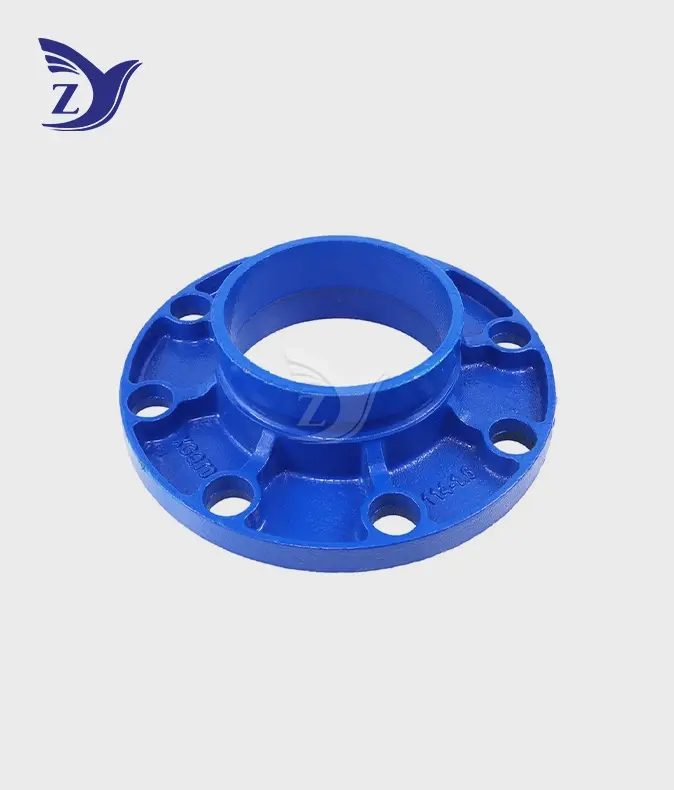
Understanding Grooved Pipe Fittings: Definition and Working Principles
What Makes Grooved Connections Unique?
Grooved pipe fittings are a way to join pipes mechanically. Pipes get grooves around the outside of their ends. The grooves are then clamped over by a coupling housing with special gaskets and bolts. This makes a leak-tight seal without the need for welding, threading, or flanging. The grooves physically hold the coupling in place, and the gasket sets the pressure limit.
This method is very different from welded joints, which forever join metal together, or threaded connections, which depend on metal-to-metal contact when torqued. The coupling device spreads the loads evenly around the pipe's outside, which lowers the stress levels that can cause standard joints to fail due to fatigue.
Core Performance Factors
The makeup of materials has a big effect on how well a system works. EPDM rubber gaskets are used for drinkable water, while nitrile rubber gaskets are used for oil-based goods. Ductile iron housings are strong and cost-effective, while stainless steel types can handle the harsh conditions in chemical production plants.
Steel, stainless steel, copper, and some other metals can all be used with pipes. The grooved pipe system can handle both thermal expansion and seismic movement thanks to its flexible connection designs. This is a huge benefit in places where temperatures are high or where earthquakes happen often. When compared to welding, installation speed goes up by a huge amount. Our clients say that assembly times have been cut by 60–70%, which directly saves them money on labor costs and speeds up the project finish.
Types of Grooved Pipe Fittings: A Categorized Overview
There are different types of grooved pipe fittings, and each one has a specific job to do in a network of pipes. Mechanical couplings, elbows and bends, tees and crosses, reducers and adapters, flanges, caps and plugs, and custom valves with grooved ends are the main kinds. When put together, these parts make full, effective piping systems that can be used for everything from fire sprinkler networks to industrial process lines.
Elbows and Directional Fittings
Standard 90-degree elbows shift flow at a right angle. They come in both short and long radius options. In high-speed situations, long radius models lower pressure drop and keep erosion to a minimum. When there is room, the 45-degree bend makes changes in direction more smooth, which lowers turbulence.
When you weld with grooved elbows, you don't have to worry about the dangers of hot work. This makes them safer to put in buildings with people inside or near materials that can catch fire. We have both standard and custom-angle elbows in stock at Zhiyuan so that we can meet the needs of a wide range of projects.
Tees, Crosses, and Branch Connections
Equal tees are often used in sprinkler system branch lines to split the flow evenly between three exits with the same width. Reducing tees have one exit that is smaller than the run, which lets you change sizes and make branch connections at the same time. This arrangement keeps the flow speed at the right level as systems split up.
Crosses are used when four-way flow distribution is needed, but they aren't used very often because they take up more room and make the flow more complicated. Because grooved pipe fittings are mechanical, they make it easy to change current systems. For example, to add a branch, all you have to do is cut the pipe, groove the ends, and place the fitting without having to shut down areas nearby.
Materials and Standards Governing Grooved Pipe Fittings
Material Selection Criteria
Ductile iron is the most common material used to make grooved pipe fittings because it is strong, flexible, and cheap. The material doesn't get damaged by impacts during shipping or installation, and it's resistant enough to rust for most indoor uses. Hot-dip galvanizing makes things last longer in harsh or bottom level of drainage systems constant.
Grades 304 and 316 stainless steel are used in chemical plants, food processing plants, and sites near the coast where resistance to corrosion explains higher costs. Carbon steel fittings are used in industries that use high pressure, and they often come with protection coats that are made to withstand certain chemicals.
Regulatory Framework
ASTM guidelines describe the qualities of materials and how they are made. ASTM A536 sets the minimum numbers for strength and elongation for ductile iron molds. ASTM A792 talks about the quality of steel sheets for coated goods. Following these rules makes sure that all production lots have the same mechanical features.
ANSI/AWWA C606 sets dimensions for grooved mechanical connections so that products from different makers can work together. Standardization like this lets companies get parts from more than one provider while still keeping the system compatible, which is very important in competitive bidding situations.
NFPA rules govern how fire prevention systems work. NFPA 13 talks about grooved pipe fittings that are okay for sprinkler systems, and NFPA 24 talks about private fire service mains. Products must have FM or UL labels that show they are compliant by showing that they were tested by a third party. Zhiyuan keeps these certifications up to date and gives buying teams the paperwork they need for approval from the right authorities.
Comparing Grooved Pipe Fittings with Other Connection Methods
Installation Speed and Labor Costs
For welded joints to be safe, they need licensed welders, hot work permits, fire watches, and a check after the weld is done. Each joint takes a lot of time, and work stops next to it because of safety zones. These problems are not a problem with grooved pipe fittings. Two people with simple tools can put together joints in minutes, and the work can be done in a place where people are already there without creating a fire risk.
Threaded connections work well for pipes with small diameters but aren't useful for pipes larger than 4 inches because they need a lot of power and are hard to contact with the threads. Cutting threads weakens the walls of pipes, and leaks happen when sealants are not applied correctly. Grooved pipe systems keep the full width of the pipe wall and allow for clear installation verification—either the coupling engages properly or it doesn't.
Lifecycle Cost Analysis
When it comes to the cost of materials, grooved pipe fittings usually cost more than threaded joints but less than flanged systems. When labor is added, the formula changes in a big way. Grooved assembly work costs 40–50% less than welding, so projects with a lot of fittings can recover material premiums.
Maintenance ease should be thought about. Grooved pipe systems let you change sections without having to cut, thread, or weld, which cuts down on downtime while fixes are being done. A broken coupling or failed gasket can be swapped out in minutes instead of hours for welded fixes that need to drain the system, cut it, join it, and test the pressure.
Energy economy has to do with how the flow moves inside a system. Instead of threaded connections, which have sudden changes in diameter at each joint, smooth grooved pipe fittings interiors reduce noise and pressure drop. Lower pressure drops mean lower pumping costs over the life of the system, which is something that local water officials really like.
Conclusion
Grooved pipe fittings have been used for a long time and have been shown to work well. They can handle real-life fitting problems and provide solid long-term performance. This guide has talked about how different types of fittings are better for certain jobs, how choosing the right material affects longevity, and how grooved pipe fittings are better than traditional joining methods in a number of ways. As time goes on, makers keep improving gasket formulas, making the technology more flexible, and making special products for tough uses.
To successfully select and buy these parts, you need to know exactly what you need, look at more than just price when evaluating suppliers, and work with manufacturers who offer both quality goods and expert support. Grooved pipe fittings have benefits that you should think about when planning your next project, whether it's for fire protection systems, public structures, or commercial buildings.
Partner with Zhiyuan Malleable Steel—Your Trusted Grooved Pipe Fittings Manufacturer
Zhiyuan Malleable Steel has been making specialized steel products for 26 years and can help you with your pipeline projects. Our wide range of products includes grooved pipe fittings, elbows, tees, crosses, reducers, mechanical couplings, flanges, and threaded adapters. For fire protection contractors, city engineers, and industrial building managers, this means they can get everything they need in one place, which makes supply chain management easier.
Are you ready to talk about your grooved pipe fittings needs? Get in touch with our purchasing experts at q1236800000@gmail.com to find out how Zhiyuan's wide range of products, high-quality making, and customer-focused service can help your business succeed. We can give you the quality, dependability, and value your projects need, whether you need standard parts right away, large supply deals for ongoing projects, or custom solutions for one-of-a-kind uses.
FAQ
How do I select the right grooved fittings for my specific system requirements?
Start by writing down the details of your application, such as the type of fluid, the ranges of pressure and temperature, the material and size of the pipe, and any codes that apply. Compare these to the fitting's requirements, paying attention to the pressure class grades, the materials that can be used, and the certificates that are needed. Talking to the expert teams of makers can help you get through tricky situations where a lot of different factors are at play. We help you make a choice by giving you detailed information about the application and making sure that the grooved pipe fittings we suggest meet both performance goals and legal requirements.
Are grooved pipe fittings suitable for high-pressure and fire sprinkler systems?
Of course. When the right rated parts are given, grooved mechanical joints can be used for high-pressure tasks. Standard pressure classes go up to a working pressure of 300 PSI, and some specific items can handle higher pressures. One of the biggest uses for grooved pipe fittings in the world is in fire sprinkler systems, which have full FM and UL listings that prove their performance in fires. To get proper performance, it's important to choose components with the right ratings and put them according to the manufacturer's instructions.
How does installation time for grooved fittings compare to welded connections?
With grooved pipe fittings methods, installation speed goes up by a huge amount. Welded joints need to be beveled, tacked, welded more than once, cooled, and inspected. For skilled teams, this usually takes 30 to 45 minutes per joint. Once the pipes are grooved and ready, grooved joints are put together in three to five minutes. The time savings add up over projects with hundreds or thousands of joints. This means that schedules are sped up by weeks, labor costs drop by a lot, and there are no more delays caused by hot work permits.
References
1. American Water Works Association. ANSI/AWWA C606: Grooved and Shouldered Joints. Denver: AWWA, 2021.
2. ASTM International. ASTM A536: Standard Specification for Ductile Iron Castings. West Conshohocken: ASTM, 2020.
3. National Fire Protection Association. NFPA 13: Standard for the Installation of Sprinkler Systems. Quincy: NFPA, 2022.
4. Nayyar, Mohinder L. Piping Handbook. 8th ed. New York: McGraw-Hill Education, 2019.
5. Factory Mutual Research Corporation. Approval Standard for Grooved Pipe Couplings and Fittings. Norwood: FM Approvals, 2018.
6. International Organization for Standardization. ISO 9001: Quality Management Systems—Requirements. Geneva: ISO, 2015.
Online Message