
Sep 10, 2026
What are common uses for malleable iron plugs?
Malleable iron plugs serve as one of the most dependable pipe-sealing solutions across industrial and commercial environments. These threaded fittings close off unused pipe openings, preventing leaks, pressure loss, and contamination in water, gas, and oil pipeline systems. Their annealed iron construction delivers a balance of mechanical toughness and ductility that gray cast iron simply cannot match. From HVAC installations to upstream petroleum infrastructure, malleable iron plugs appear in virtually every sector that relies on threaded pipe systems — making them a high-turnover product for distributors and a critical procurement item for engineering contractors.
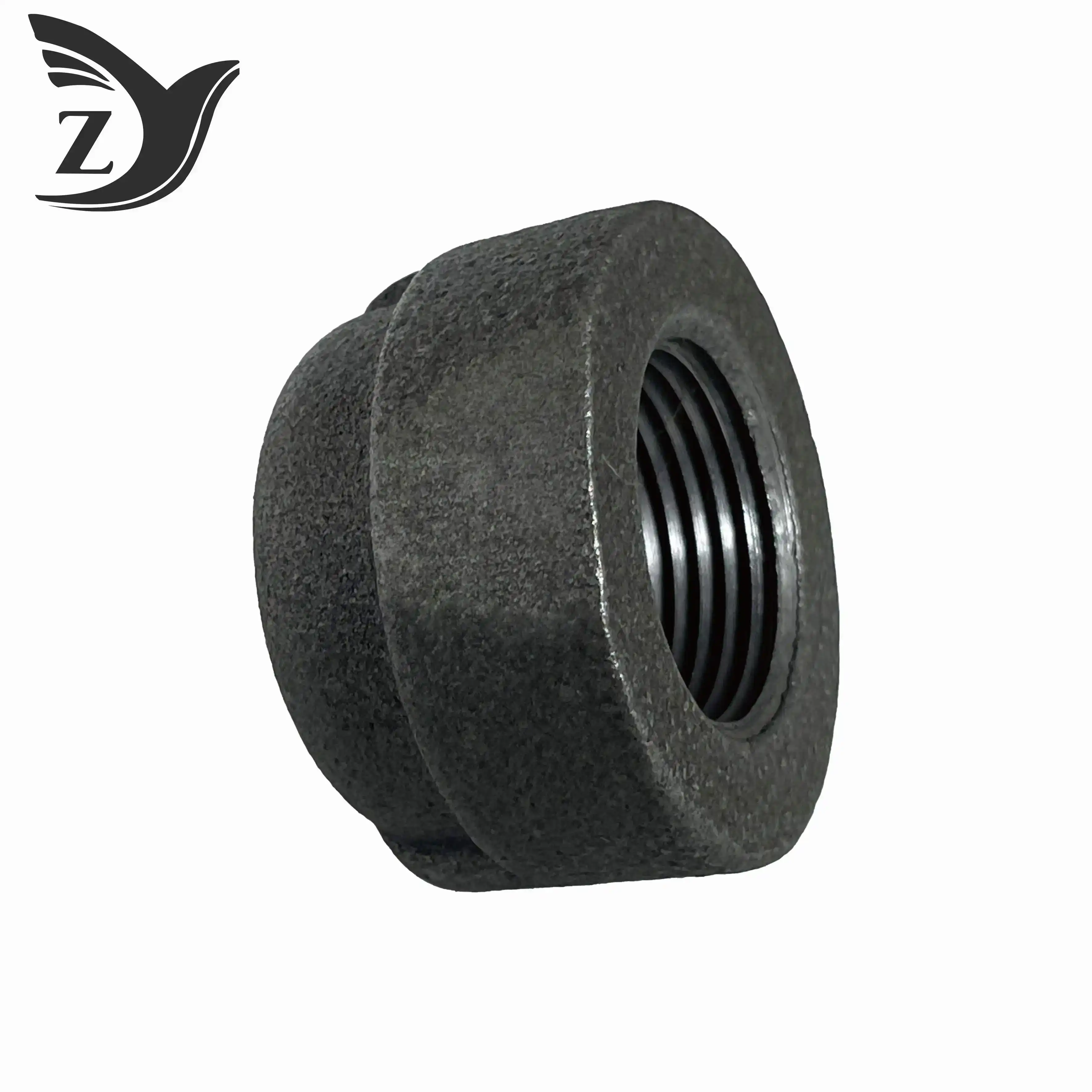
Understanding Malleable Iron Plugs and Their Material Properties
What Makes Malleable Iron Different from Cast Iron
The way that malleable iron and regular gray cast iron are made is what makes them different. An annealing cycle that lasts for a long time—usually 50 to 70 hours—changes brittle iron carbides into tempered carbon nodules. This makes a fitting with a tensile strength of more than 300 MPa and an elongation rate of more than 6%. This means that when it is overloaded, it deforms instead of breaking. ASTM A197, which is the standard for cupola malleable iron, says that this material is perfect for pipe fittings that hold pressure up to Class 150 service.
Threading Standards and Surface Finish Options
There are two main thread shapes used to make industrial pipe plugs: NPT (60° angle, ASME B1.20.1) and BSPT (55° Whitworth angle, ISO 7-1). If you mix these threads, spiral leakage paths and thread damage will happen, so you have to make sure you're buying the right standard before you buy it. Hot-dip galvanized coating, with a zinc layer of 45–85 µm according to ASTM A153, protects against rust over time in water and gas environments. A black lacquer or oxide finish is better for oil and steam environments, where zinc is not needed.
Because these material and threading traits directly affect service life and system compatibility, buying teams should make requirements a main selection factor instead of something that is added at the end.
Common Industrial and Commercial Uses of Malleable Iron Plugs
Threaded pipe plugs are used in more fields than most buyers know. Due to their high mechanical strength, resistance to rust, and ability to reliably seal threads, they are the first choice in many challenging industries.
Here are the primary application environments where these fittings deliver proven value:
- Industrial water pipeline systems: NPT/BSPT unflanged plugs that have been hot-dipped galvanized seal open branch tees, headers that aren't being used, and hydrant connections in both municipal and industrial water distribution. EPA rules say that internal rust that could hurt water quality can't happen because of the zinc coating.
- Natural gas and petroleum infrastructure: Black malleable iron plugs that can be shaped tightly block off metering station ports, valve bypasses, and manifold exits in gas lines that are upstream and intermediate. The surface isn't galvanized, so zinc flaking that could block flow control equipment doesn't happen. This is a known failure mode described in the NFPA 54 gas code.
- HVAC and steam heating systems: When business buildings are retrofitted, precision-threaded plugs are used to cover boiler tapping points and radiator supply lines that aren't being used. The temperature expansion rate of malleable iron is very close to that of carbon steel pipe. This means that thread engagement stays strong even after many heating and cooling cycles.
- Fire suppression systems: During staged installation, high-strength iron plugs are used to cover the openings on dry-pipe sprinkler systems. Their shear strength meets the standards of NFPA 13 for fitting stability under seismic and hydraulic surge loads.
- Automotive and manufacturing facilities: In auto and manufacturing plants, corrosion-proof pipe plugs are used to separate unused circuit branches in hydraulic test benches and pneumatic tool lines. The industrial-grade design can handle vibrations from the shop floor and cutting fluids without speeding up the thread's wear.
These application scenarios reflect the broad demand profile that makes pipe plugs a reliable, high-volume SKU for wholesalers. Full-range inventory is valuable because one construction project may need plugs from three or four of these categories at the same time.
Comparing Malleable Iron Plugs to Other Plug Types for Better Decision-Making
Purchasing managers often compare four different materials to malleable iron. Steel plugs can withstand higher burst pressures, but they rust more quickly in wet places if they are not coated. Plastic malleable iron plugs made of PVC or CPVC work well in low-pressure, non-corrosive water lines but don't work well above 93°C. Brass plugs don't rust and can be used in drinkable water, but they cost 3–5¢ more than rusted iron plugs of the same size. Gray cast iron plugs are less expensive, but they break when they are hit, which leads to warranty claims in the field that cut into the distributor's profit margins.
Galvanized malleable iron is in the middle in terms of practicality. It is strong mechanically, stable at temperatures up to 300°C, resistant to corrosion, and cheap enough to buy in bulk. Grand View Research's 2021 market review says that this cost-performance mix is exactly why iron pipe fittings continue to have the largest part of the global industrial market.
How to Select and Install Malleable Iron Plugs for Optimal Performance?
Key Selection Criteria
To choose the right fitting, you need to match four things: the specified pipe size (1/8" to 4" works for most uses), the thread standard (NPT or BSPT), the pressure class (Class 150 is normal, Class 300 for high-level service), and the surface finish (galvanized for water and gas, black for oil and steam). To make sure that materials meet the standards set by ASME B1.20.1, sourcing teams should ask for material certifications and thread gage test results. These should include L1 and L3 plug gage proof.
Installation and Maintenance Protocol
Before using, clean the pipelines by getting rid of any dirt or burrs. Use either PTFE tape or anaerobic pipe sealant, but not both at the same time. Doing so can cause stress cracks in iron fittings. Tighten with a pipe wrench until the torque specs from the maker are met. If you over-tighten, the hex head will crack, and if you under-tighten, weeping leaks will happen. Set up an annual visual inspection to check for thread corrosion and zinc coating wear, especially in coastal or chemically harsh areas.
Procuring Malleable Iron Plugs: Supplier Insights and Market Overview
When you buy in bulk, like 20GP or 40HQ container loads, you have to look at more than just the price on the supplier's list. ISO 9001 certification for quality management, CE/UL/FM product certifications for compliance with target market regulations, documented thread gage inspection records, and hot-dip galvanizing line capability with measurable zinc coating thickness reports are some of the things that set reliable manufacturers apart from sources that cut into margins.
The market price for galvanized malleable iron plugs changes with the price of zinc and cast iron. Strategic buyers agree on prices every three months with manufacturers who keep finished goods in stock. This way, buyers don't have to worry about lead times during busy construction seasons. Private labeling, custom packing, and non-standard sizes are some of the ways that OEM and ODM customization helps wholesalers stand out in regional markets that are already very competitive.
Conclusion
In water, gas, HVAC, fire suppression, and industrial fluid systems, malleable iron plugs provide dependable, cost-effective pipe closure. The annealed iron they are made of, the exact NPT/BSPT threading, and the hot-dipped zinc finish give them a long life that makes them an important item for any wholesale pipe fittings collection. When distributors and purchasing managers know about material specs and application needs, they can cut down on returns, build stronger relationships with clients further down the supply chain, and make more money on every container order.
FAQ
1. Are malleable iron plugs and ductile iron plugs interchangeable?
No, ductile iron has a higher tensile strength (usually 420 MPa+) and can stretch longer than malleable iron because it is cast in a magnesium-treated process that creates spheroidal graphite. Ductile iron plugs are better for higher-pressure service classes, but they cost more. According to ASTM A197, the norm for Class 150 threaded fittings is still malleable iron.
2. Can galvanized plugs be used in natural gas lines?
When distributing high-pressure gas above the meter, galvanized joints are usually not a good idea. When zinc flakes off under the flow of gas, they can jam valves and meters. Following the advice in NFPA 54, black malleable iron is the best choice for those uses.
3. What thread sealant is compatible with malleable iron plugs?
It is possible to use both PTFE tape and liquid anaerobic pipe thread sealants, such as Loctite 545 and Rectorseal. Petroleum-based substances will speed up the breakdown of zinc coatings over time, so don't use them on galvanized surfaces.
4. How do I confirm batch quality on a large order?
Ask for a crush test on some sample pieces. Malleable iron that has been properly treated flattens a lot before it cracks. This should be done along with checking the L1/L3 thread gauge and measuring the thickness of the zinc covering using a standardized magnetic gauge in line with ASTM A153.
Source Your Next Container of Malleable Iron Plugs from Zhiyuan Malleable Steel
Since 2006, Zhiyuan Malleable Steel has been making precision-threaded pipe fittings. They can make 30,000 tons of them each year and have more than 1,000 active SKUs. The NPT/BSPT unflanged plugs we sell are hot-dipped galvanized and have CE, UL, and FM certifications. They also come with full thread gage inspection records. We are a direct maker of malleable iron plugs, so we can offer factory-direct prices, tiered volume discounts, and OEM packaging to protect your brand in places where prices are competitive. To get a price right away, email our team at q1236800000@gmail.com.
References
1. U.S. Environmental Protection Agency. (2022). Lead and Copper Rule Revisions: Pipe and Fitting Material Guidance.
2. Grand View Research. (2021). Iron Pipe Fittings Market Size, Share & Trends Analysis Report.
3. International Organization for Standardization. (2018). ISO 49: Malleable Cast Iron Fittings Threaded to ISO 7-1.
4. ASTM International. (2020). ASTM A197/A197M: Standard Specification for Cupola Malleable Iron.
5. American Society of Mechanical Engineers. (2021). ASME B1.20.1: Pipe Threads, General Purpose (Inch).
6. National Fire Protection Association. (2021). NFPA 13: Standard for the Installation of Sprinkler Systems.
Online Message