
May 6, 2026
Specifications Guide for Galvanized Threaded Union 343 Pipe Fittings
When choosing threaded pipe connections for industrial use, galvanized male female threaded union 343 pipe fittings are a unique option that combines the ability to disconnect with a design that saves room. These detachable, dual-threaded connectors have one internal threaded end and one external threaded end. This means that they don't need any extra nipples and have half as many possible leak points as standard systems. High-strength, moldable iron that meets ASTM A197 standards is used to make these unions. They are then hot-dip galvanized with a zinc coating that is thicker than 70 microns. This gives them the corrosion resistance needed for water, gas, and HVAC systems in fire protection, municipal infrastructure, and industrial process piping.
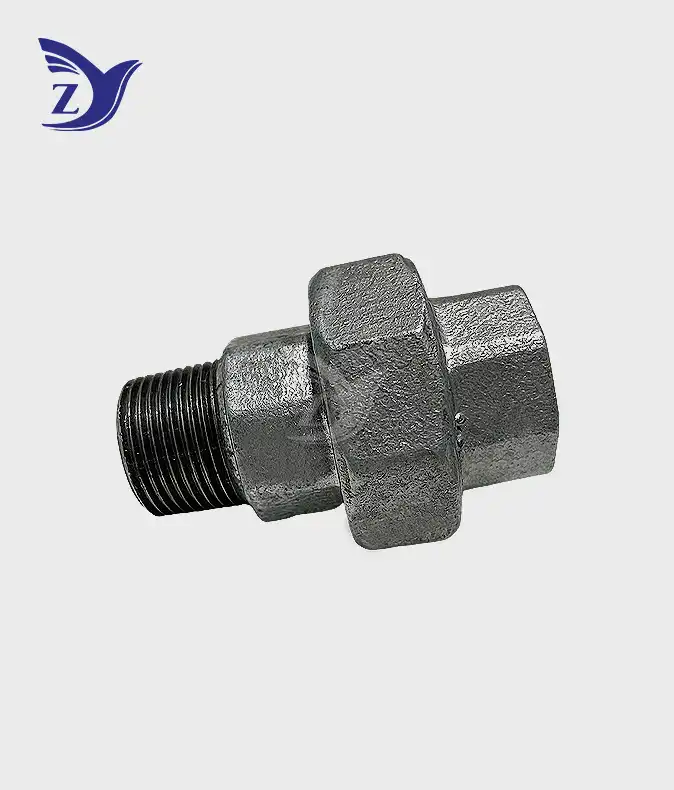
Galvanized Male Female Threaded Unions and 343 Pipe Fittings
What Makes the 343 Configuration Unique
The number 343 refers to a certain type of union that has both male and female threads built into one unit. Standard female-to-female unions need barrel nipples to join equipment, but this design works as both an adapter and a disconnect point at the same time. We've seen this design solve important problems in retrofit cases where pipe-nipple-union setups can't be made in the usual way because of size limitations. The union nut mechanism lets techs separate sections of pipe without moving equipment that is attached to them. This is very useful when maintaining pumps or replacing valves in systems that are already in place.
Material Composition and Galvanizing Process
Real cast iron that can be shaped goes through a process called annealing, which turns brittle white cast iron into pliable black-heart material. This heat treatment makes the material stronger than 330 MPa and allows it to stretch at least 8%. This means that the fitting can handle changes in temperature and pressure without breaking. Using liquid zinc at about 450°C in a hot-dip galvanization bath forms a metal bond that protects the base iron without expecting anything in return. The coating's weight usually hits 500 g/m², which is a lot more than electroplated options, which break down quickly in damp or outdoor settings.
Thread Standards: NPT Versus BSPT
The thread type you choose has a direct effect on the quality of the seal and its ability to work with other countries. NPT (National Pipe Taper) threads that are made to ANSI/ASME B1.20.1 standards have a flank angle of 60 degrees and a taper ratio of 1:16. This creates a pressure-tight seal through interference fit as the connecting threads compress. BSPT (British Standard Pipe Taper) threads have side angles of 55 degrees and follow ISO 7/1 standards. They are made to work with EN 10255 steel lines that are common in European and Commonwealth markets. When you try to mate NPT and BSPT threads, they don't connect properly, which leads to leaks no matter what glue you use. To avoid costly field mismatches, procurement specs must clearly state thread standard requirements.
Technical Specifications and Performance Ratings
Pressure and Temperature Capabilities
Class 150 ratings are most common in small industrial and local settings. Galvanized male female threaded union 343 pipe fittings can handle up to 300 psi of pressure at temperatures between -20°F and 150°F. This rating allows normal water supply levels with a large safety cushion, but it limits saturated steam service to 150 psi. Class 300 fittings are made for 750 psi cold working pressure and are used in industrial process systems that need higher grades. European markets use PN25 ratings, which mean 25 bar at 120°C. Between 120°C and 300°C, the grade drops to 20 bar. Knowing these differences keeps you from having to pay too much for over-specification in low-pressure situations or too little for dangerously high-demand situations.
Critical Quality Control Parameters
Pressure pipe systems have a lot of legal risks because of mistakes made during production. Thread gauging with measured plug and ring gauges checks that the dimensions are correct within certain error zones, which are usually ±1 turn. Underwater pneumatic testing at 80 to 100 psi shows pinholes or sand particles that are caused by casting porosity. The Preece Test, which uses a copper sulfate solution, checks for uneven galvanization and finds bare spots that speed up rusting. Pay extra attention to the surfaces that seal unions. In iron-to-iron designs, the conical metal-to-metal joint needs to have a smooth finish that doesn't have any casting burrs, cutting tool marks, or zinc drips that could affect the airtight sealing.
Relevant Certifications and Compliance
ISO 9001 approval shows that quality management is orderly, but it doesn't prove that a product works. Compliance with ASTM A197 proves the qualities of malleable iron materials, and compliance with ASTM A153 sets the rules for galvanizing. UL and FM ratings are very important for fire safety system parts because they show that the materials have been tested for pressure and can be tracked back to their source, which is what NFPA standards require. When pressure equipment has a CE mark, it means that it meets European safety standards. Buyers should ask for mill test results and licensing paperwork with every shipment, especially for projects that need official approval from engineering authorities before they can be put into service.
Installation, Maintenance, and Best Practices
Step-by-Step Installation Procedure
Before you put galvanized male female threaded union 343 pipe fittings correctly, you should check the threads. Take off any shipping plugs and make sure the threads are clean, undamaged, and free of any dirt. Use the right thread sealant that is compatible with the service media. PTFE tape is still not good for curved threads that need paste sealants that cover up small flaws. Tighten the male end of the pipe into the female port by hand until there is more resistance. Then, use a wrench to apply torque according to the standard rules: 1/2" fittings need 25 to 30 ft-lbs of torque, and 2" sizes need 75 to 85 ft-lbs. When you over-torque, bolts crack or threads get stripped, but when you under-torque, leaks happen.
Cross-threading during the initial contact, mixing thread standards that don't work together, and trying to fix misalignment by applying too much force are all common installation mistakes. If you use pipe wrenches on union nuts, you will damage the hexagonal flats. Instead, you should always use open-end or flexible wrenches that are the right size. When putting unions on vertical runs, make sure the pipes are properly supported so that the fitting doesn't have to carry the weight of the pipes, which would cause shear stress to go beyond what is allowed by design.
Maintenance and Inspection Protocols
In corrosive settings, eye checks should be done every six months to look for white rust products, which are signs of zinc coating degradation. If brown rust shows up through the galvanizing, it means that the base metal is exposed and the fitting needs to be replaced. To find leaks, systems must be pumped up to working pressure while soap solution is applied to threaded joints and bubbles are watched for to show that the seal has failed.
If you need to take something apart to service it, use wire brushes to clean the threads well before putting it back together. Check the sealing surfaces for damage like gouges, rust pits, or distortion. If you see thread damage in a union, it's better to replace it than to try to fix it, because threads that are damaged will never bond properly, no matter how much sealer you use. Write down what you do for maintenance, such as the torque values and kinds of sealant, so that you have a service log that can be used for lifecycle cost analysis.
Selecting the Right Galvanized Threaded Union for Your Needs
Galvanized Versus Stainless Steel Comparisons
When choosing materials, you have to think about how much they cost, how well they prevent rust, and how strong they are. Galvanized malleable iron unions work very well in HVAC, natural gas distribution, and freshwater systems, and they usually cost 40 to 60 percent less than stainless steel options. In most weather conditions and drinkable water systems, the zinc covering lasts for decades. Grades 304 and 316 stainless steel are needed in harsh chemical environments, pharmaceutical processes that need to be very pure, or seaside sites where salt spray speeds up the loss of zinc. When you look at how much replacement parts cost and how much downtime there is in harsh work conditions, the higher starting cost of stainless steel parts may end up being worth it.
Union Versus Coupling Functional Differences
People often get unions and couplings mixed up, even though they are used for different things. Couplings forever connect two pipe ends by engaging threads on both sides. To install or remove a coupling, the pipe must be rotated. Unions have a union nut and sealing surfaces that make it possible to disconnect pipes or tools that are attached without having to turn them. This difference is very important when servicing things in small areas or when related machines can't turn because they need to be lined up correctly or because of mechanical limitations.
The male-female union design is used when one connection point needs to thread directly into equipment ports, like pump cases, valve bonnets, or manifold tappings, while still being able to be disconnected at that point. Standard female-female unions would need a threaded tip between the union and the equipment. This would add another way for water to leak and take up more room during installation.
Procurement Considerations for Volume Buyers
The prices of industrial galvanized male female threaded union 343 pipe fittings are based on the costs of raw materials, the difficulty of production, and the number of orders. The current market for malleable iron parts shows that the base price ranges from $3 to $8 per unit for typical sizes (1/2" to 1") and orders of more than 500 pieces. Depending on the size, galvanizing adds about 15 to 25 percent to the cost of base fitting. Volume savings usually start at 1,000 pieces, and prices go down gradually as you go up to 5,000 and 10,000 units. Lead times range from right away for basic configurations that are stocked in the United States to 6 to 8 weeks for container orders from makers abroad.
Buyers should look at the total cost of the purchase, which should include freight, any import taxes that apply, inspection fees, and the cost of keeping the item in stock. Payment terms for suppliers have a big effect on cash flow. For example, net 30 or 60-day terms versus prepayment requirements can have a big effect on how much working capital a big project needs. Long-term supply deals with yearly volume commitments can often get better prices and make sure that products are available when the fitting industry experiences market shortages.
Conclusion
It's important to find a balance between technical needs, application conditions, and the way you plan to buy the galvanized male female threaded union 343 pipe fittings. The special dual-threaded setup gets rid of link points that aren't needed while keeping serviceability, which is important for long-term system management. Knowing the qualities of the material, the standards for threads, and the pressure levels will help make sure that the system works as it should. The service life is increased and premature problems are avoided by using the right installation methods and upkeep schedules. Choosing qualified providers with the right licenses, production capacity, and quick customer service sets procurement teams up for successful project completion.
FAQs
What distinguishes NPT from BSPT threading in union fittings?
NPT threads have a side angle of 60 degrees that meets the requirements of ANSI B1.20.1. This makes interference rings by compressing the taper. BSPT threads use angles of 55 degrees that meet ISO 7/1 standards and are mostly used in European markets. These threads are not replaceable; mixing them leads to bad contact, which lets water in no matter what sealant is used. Before you buy, check the equipment's specs to make sure the threads will work with it. Putting in the wrong threads after the fact means replacing the whole fitting.
How do I verify authentic galvanizing quality?
When hot-dip galvanizing is done correctly, it leaves a uniform gray finish with a splattered surface pattern. Magnetic thickness gauges can be used to make sure that the coating is thicker than 70 microns. Copper sulfate solution is used in the Preece Test to find bare spots or layer that isn't enough. Ask for proof that you follow ASTM A153, such as finishing weight certificates. Poor electro-galvanizing has coatings that are thinner and less lasting, making it look smoother and not ideal for industrial use.
Can these unions handle steam service applications?
Class 150 fittings can handle full steam up to a maximum pressure of 150 psi, making them good for low-pressure heating systems. For higher steam pressures, grades of at least Class 300 are needed. Temperature limits show the temperature stability of gasket materials in flat-seat designs and thread sealants. Before choosing fittings for steam service, you should always look at pressure-temperature rate charts that are made for your unique use.
Partner with a Trusted Galvanized Male Female Threaded Union 343 Pipe Fittings Manufacturer
Zhiyuan Malleable Steel makes industrial-grade threaded unions that meet strict requirements and are used in process industries, fire safety, and public structures. With ISO 9001, CE, UL, and FM certifications and a production capacity of 30,000 tons per year, we can guarantee quality that meets world standards. We keep a lot of stock on hand, so we can deliver basic configurations in just two hours. Our ODM/OEM skills allow us to meet the specific needs of specialized uses. We have been a seller of galvanized male female threaded union 343 pipe fittings to customers around the world for 18 years, so we know what's important when it comes to buying: reasonable pricing, clear technical documentation, and replacement guarantees that protect your investment. Email our technical team at q1236800000@gmail.com to talk about details, group prices, and delivery times that work with your project's plan. You can see all of our products at zymalleablepipefitting.com.
References
- American Society of Mechanical Engineers. (2020). ASME B1.20.1: Pipe Threads, General Purpose (Inch). ASME Standards Collection, New York.
- ASTM International. (2019). ASTM A197/A197M Standard Specification for Cupola Malleable Iron. ASTM Volume 01.02: Ferrous Castings, West Conshohocken, PA.
- ASTM International. (2018). ASTM A153/A153M Standard Specification for Zinc Coating (Hot-Dip) on Iron and Steel Hardware. ASTM Volume 01.06: Coated Steel Products, West Conshohocken, PA.
- British Standards Institution. (2015). BS EN 10240: Internal and/or External Protective Coatings for Steel Tubes - Specification for Requirements and Test Methods for Hot Dip Galvanized Coatings on Ferrous Hollow Sections. BSI Standards Publication, London.
- International Organization for Standardization. (2017). ISO 7/1: Pipe Threads Where Pressure-Tight Joints Are Made on the Threads - Part 1: Dimensions, Tolerances and Designation. ISO Technical Committee 5, Geneva.
- National Fire Protection Association. (2022). NFPA 13: Standard for the Installation of Sprinkler Systems. NFPA Codes and Standards, Quincy, MA.
Online Message
YOU MAY LIKE
High quality furniture manufacturer
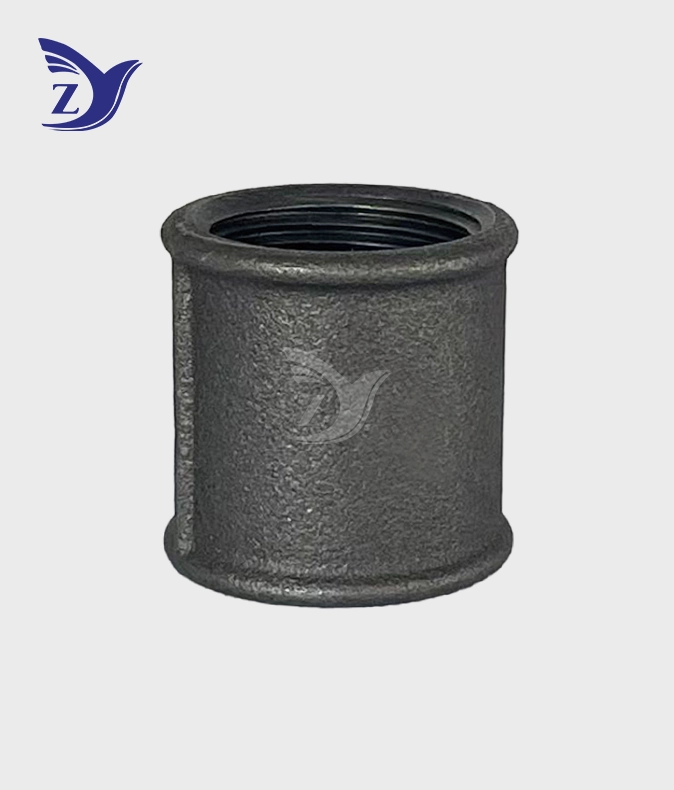
NPT Black Round Face Coupling Pipe Fittings
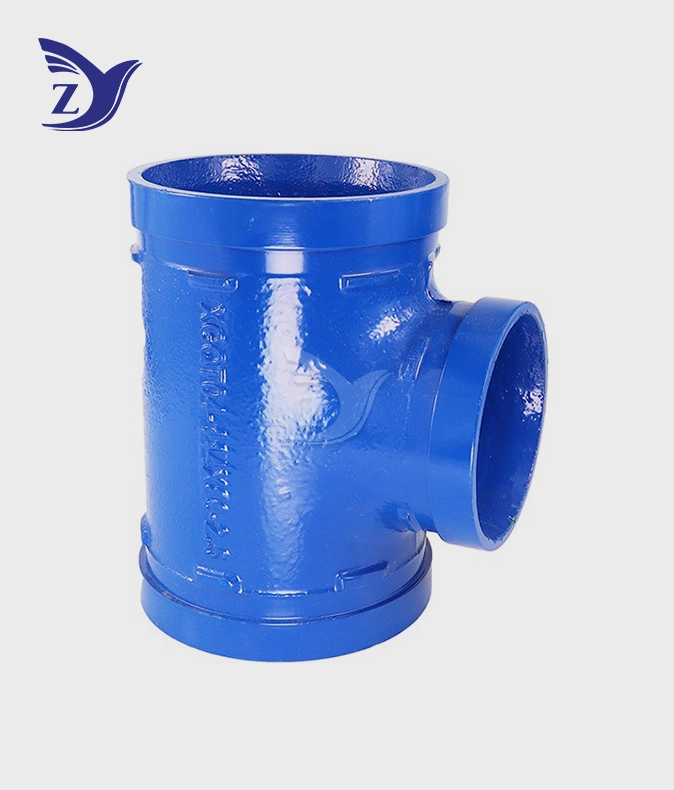
Water Grooved Straight Tee
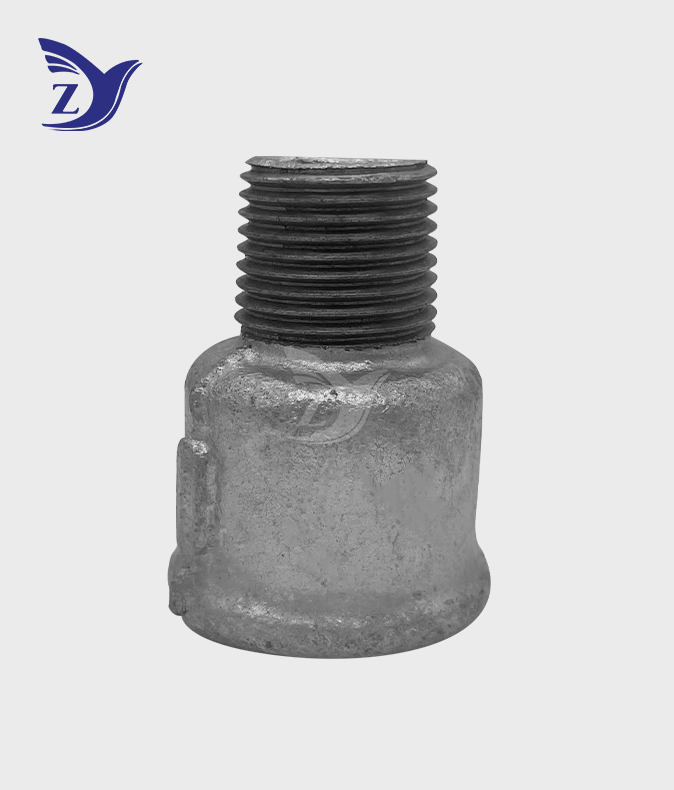
Beaded Galvanized BSPT Round Edge Male-Female Reducing Coupling
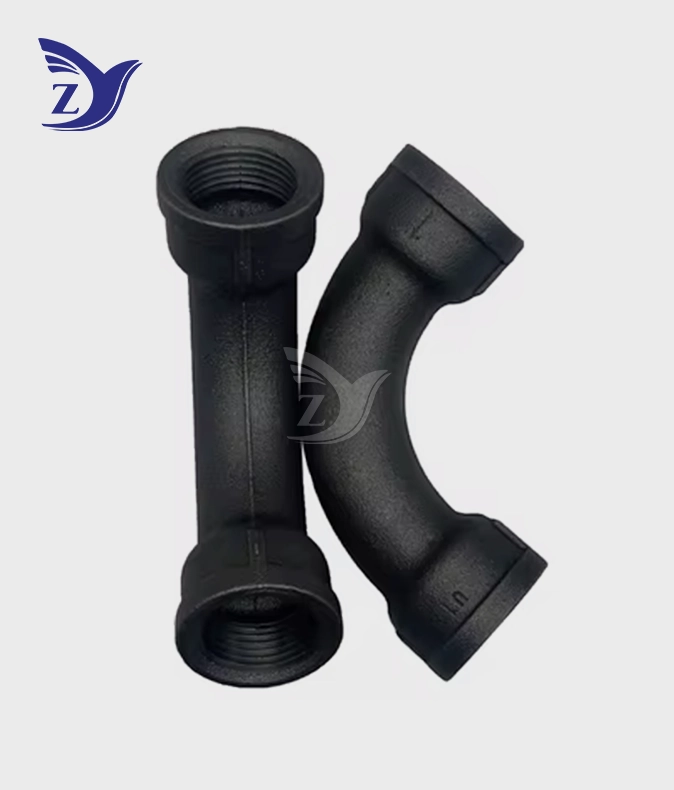
BSPT Black FxF 90° Long Bend Malleable Iron Pipe FittingsFittings
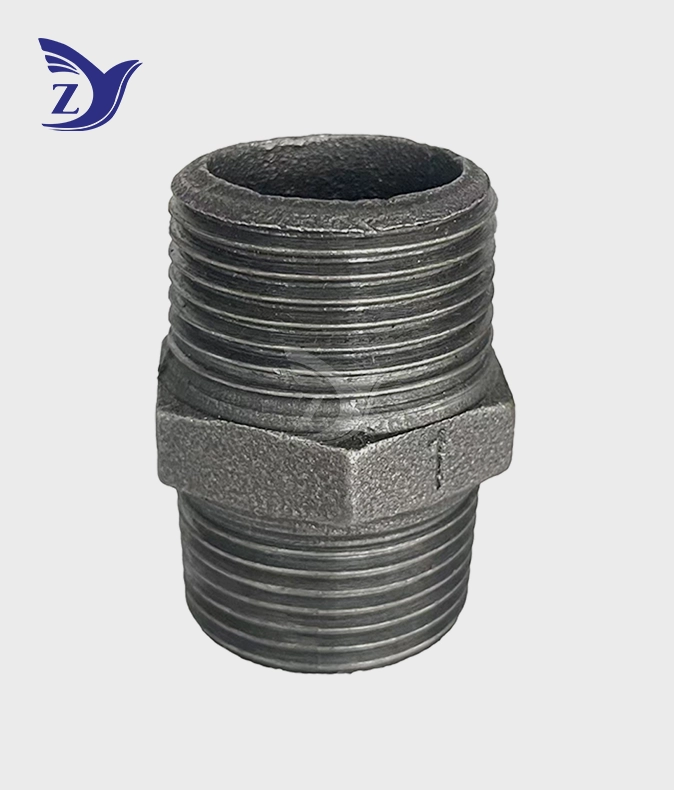
BSPT Black Male Nipple Pipe Fittings
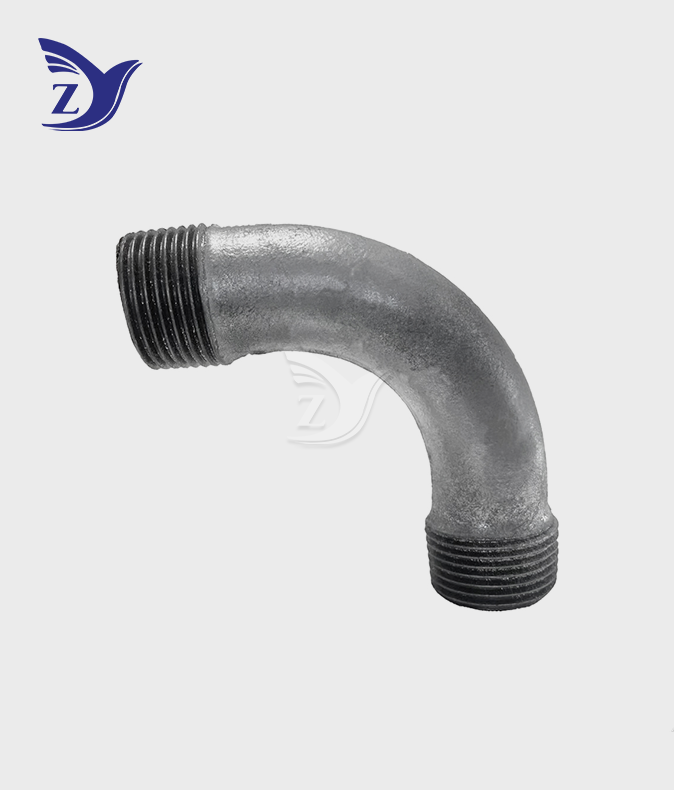
BSPT Round Face Galvanized Round Edge 90° Elbow Pipe Fittings
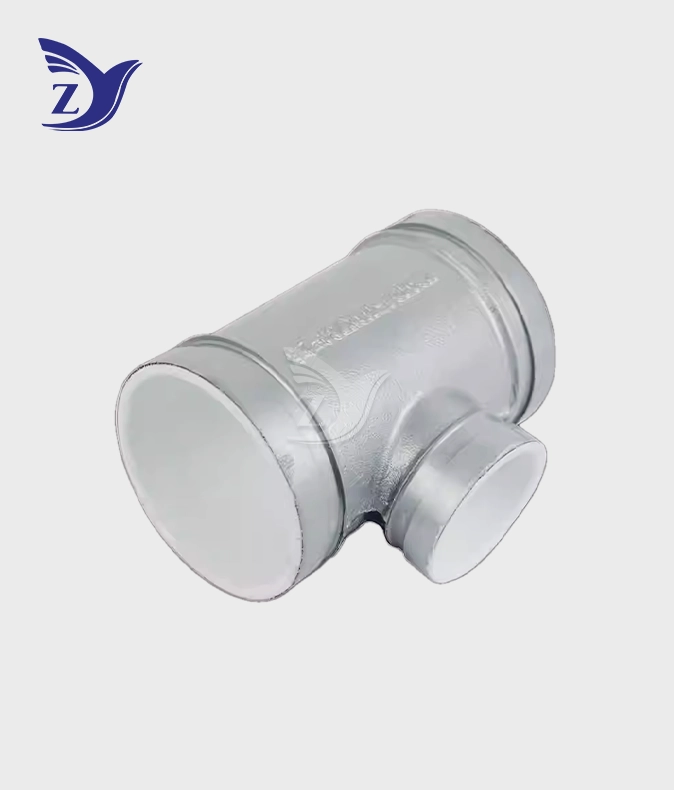
Water Grooved Reducing Tee
NPT Black Square Face Reducing Tee Pipe Fittings