
Nov 10, 2026
Should I use thread sealant with a galvanized pipe plug?
If you work with piping systems, this question comes up more often than you'd think. The short answer is yes — you should use thread sealant with a galvanized pipe plug. Even though NPT and BSPT threads are designed to seal by interference fit, microscopic spiral gaps still form between the thread crests and roots. Galvanized non-flanged pipe plug pipe fittings' zinc coating adds slight dimensional variation that makes proper sealant application even more important. Whether you're closing off an industrial water line or capping a gas pipeline, skipping the sealant is a risk not worth taking.
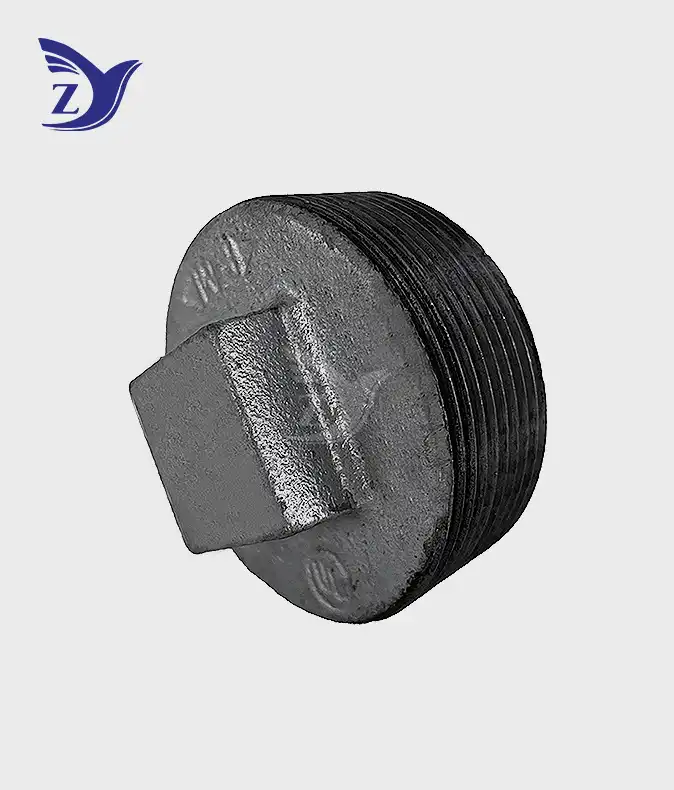
Understanding Galvanized Non-Flanged Pipe Plugs
It helps to know what these parts are and why they're made the way they are in order to understand the sealer better.
What Makes a Pipe Plug "Non-Flanged"?
The non-flanged pipe plug's head is either square or hex, and it sits flush against the body's threads. The washer-face rim or collar is not bigger and doesn't stick out. Due to its small size, it works well in fitting areas that aren't very big, lines that aren't easy to see, and other places where a ring sticking out could catch something. You can also use the wrench directly with either the hex or square head, which is useful for controlling the torque while installing.
The Hot-Dip Galvanizing Advantage
Astm A153 is usually used to finish galvanized non-flanged pipe plug pipe fittings. The hot-dip zinc layer is about 70 to 85 microns thick. The zinc layer below keeps the iron metal below it from rusting by giving it life. When used outside or in moderately damp places, properly coated plugs can last 20 to 50 years longer than black iron fittings that aren't coated. For closing water and gas pipelines in factories, how long it lasts is very important.
Thread Standards: NPT vs. BSPT
These plugs have two kinds of threads: NPT (ANSI/ASME B1.20.1) and BSPT (ISO 7-1 / BS 21). It is 60 degrees on the side and ¾ inch per foot on the curve of an NPT thread. When making BSPT threads, a Whitworth shape of 55 degrees is used. Interference seals are made by both designs as the plug is tightened. These seals get stronger over time, but neither stops tiny leak routes completely without a thread sealant.
The Role of Thread Sealants in Pipe Plug Installation
Thread seals are an important part of a well-engineered joint that you can't leave out. This is why zinc pipe plugs are important.
Why Galvanized Threads Need Sealant
The thread profile of a galvanized non-flanged pipe plug gets stronger when zinc is added to it. It might be harder to build and the parts might be a little different sizes because of this. If you want to seal threaded pipe fittings to the pressure rating in ASME B16.14, you need to use sealer or tape. Galvanizing doesn't get rid of this need; instead, it changes it by making it even more important to properly grease so that the parts don't gall during assembly.
PTFE Tape vs. Pipe Dope: Which to Use
For plugs made of malleable iron you can use either PTFE tape or pipe thread glue, which is also called "pipe dope." PTFE tape is clean, easy to use, and good for water and gas lines. Because it fills thread gaps better, pipe dope is often used for plugs with a bigger diameter or devices that need to handle more pressure. Some workers use both to keep things safer. Most of the time, anaerobic sealants are only used when the seal needs to be strong and the parts are not likely to come apart.
Sealant and Pressure Ratings
Galvanized non-flanged pipe plug pipe fittings from Standard Class 150 zinc can handle 300 psi WOG (Water, Oil, and Gas). Class 300 plugs can handle up to 1,000 psi WOG. The rated pressure seal is different for each case and depends on how well the threads are engaged and how much sealant is used. In real life, pressure tests always show higher leak rates when sealer is not used. This is especially true when lines are heated and cooled, which weakens the thread links between the metals.
How to Properly Install a Galvanized Non-Flanged Pipe Plug with Thread Sealant?
Good installation practice takes less than five minutes but protects a system for years. Here are the steps that actually matter.
Clean and Inspect the Threads First
Before applying any sealant, wipe the male threads on the plug and the female threads on the pipe with a clean cloth. Zinc dross — small lumps of solidified zinc — can appear on galvanized threads and will cause galling or mating failures if not removed. Inspect the thread profile visually or with a BSPT/NPT ring gauge. A plug failing the go/no-go gauge test should not be installed, regardless of sealant type.
Apply Sealant Correctly
Wrap PTFE tape clockwise (when looking at the thread end) for 2–3 layers, starting at the second thread from the end. If using pipe dope, apply a thin, even coat to the male threads only — avoid getting compound inside the pipe. Overapplication does not improve the seal; it creates contamination risk and makes future disassembly messy. The goal is to fill the spiral leak path, not pack the joint.
Tighten to the Right Torque
Hand-tighten the plug first to confirm proper thread engagement, then use a wrench for 2–3 full turns. Over-torquing is one of the most common installation errors with galvanized plugs. The zinc coating increases surface friction, making it easy to apply too much force. Excessive torque can crack the fitting or strip the threads. Always use a torque wrench for critical applications and follow the manufacturer's specifications.
Comparing Thread Sealant Use: Galvanized vs. Other Pipe Plug Materials
Not all pipe plug materials behave the same way, and sealant requirements vary accordingly.
Galvanized Iron vs. Stainless Steel
Stainless steel pipe plugs are corrosion resistant and do not require a sacrificial zinc coating. Stainless is, however, susceptible to galling, a type of surface damage that causes threads to seize during assembly. Stainless plugs generally require anti-seize compound. Galvanized malleable iron plugs are more forgiving for field installation teams because they are less likely to gall when properly lubricated with PTFE tape or pipe dope.
Non-Flanged vs. Flanged Sealing Approaches
A face-seating gasket is often the primary seal for a flanged pipe plug, with threads providing mechanical retention. Non-flanged designs, like the square-head or hex-head galvanized plug, rely solely on thread engagement and sealant for sealing. This makes thread sealant truly more important for non-flanged arrangements. Distributors who sell to hardware stores or installation contractors should make this distinction clear to end users to minimize field failures.
Where Galvanized Plugs Outperform
Hot-dipped galvanized, precision-threaded malleable iron plugs have a distinct advantage over plain steel options in terms of corrosion resistance in outdoor applications, irrigation systems, and industrial water or gas pipeline closure uses. The anti rust malleable iron base material and zinc coating makes for a durable corrosion proof pipeline cap that will stand up to conditions where uncoated fittings would fail within months.
Procurement Considerations When Buying Galvanized Non-Flanged Pipe Plugs
For bulk buyers and distributors, the product specification conversation goes beyond basic installation.
Verify Thread Gauging and Coating Standards
When sourcing galvanized non-flanged pipe plug pipe fittings at scale, ask suppliers for certified BSPT or NPT ring gauge records and zinc coating thickness reports. Salt spray test results (ASTM B117) exceeding 500 hours without red rust indicate acceptable hot-dip coating quality. These are objective, verifiable metrics that protect your downstream customers from quality complaints.
Evaluate MOQ, Lead Times, and Packaging
For distributors managing large inventories, minimum order quantities and packaging standards affect total landed cost and shelf condition. Export-standard woven bags or wooden crates with moisture-barrier liners prevent zinc oxidation and thread damage during ocean freight. Ask specifically about packaging for humid climates if you're shipping to Southeast Asia, the Middle East, or South America.
Check for Full-Range Specification Coverage
One of the most common pain points for wholesale distributors is sourcing from multiple suppliers to cover all sizes. A supplier offering 1,000+ SKUs across NPT and BSPT thread standards, in sizes from ⅛" to 4", means you consolidate purchasing, reduce logistics complexity, and negotiate better volume pricing — all of which directly affect your margin.
Conclusion
No matter what, you have to use thread sealer with a malleable iron pipe plug. This is the way pipes are put and the standards for pressure ratings. To make sure there are no leaks, the curved thread shape isn't enough on its own because the zinc covering changes the thread's size. It is always necessary to use PTFE tape or pipe dope when installing a hot-dipped galvanized, precision-threaded pliable iron plug in a water or gas line. To keep customers trusting you, make sure that galvanized non-flanged pipe plug pipe fittings' directions include how to use sealant and that plugs meet verified coating and thread standards. This will cut down on returns and protect your customers' trust.
FAQs
Do I always need thread sealant, even on new galvanized plugs?
Yes. New galvanized plugs have microscopic gaps in the threads which allow fluid or gas to escape under pressure. The zinc coating does not provide a hermetic seal by itself. Always use PTFE tape or pipe dope.
Can galvanized pipe plugs be used in gas lines?
Yes, if the plug is rated for the system pressure and local codes permit it. NPT and BSPT are tapered threads which, when assembled correctly with sealant, form a gas-tight seal. Check for ASME B31.1 or B31.3 compliance before installation, always.
What is the difference between solid and cored plugs?
Solid plugs are made from bar stock or solid castings and are stronger and can be used for higher pressures (Class 300, up to 1,000 psi WOG). Cored plugs have a hollow underside which lowers the material cost and are generally used in standard Class 150 plumbing applications.
How often should installed plugs be inspected?
In high pressure or corrosive environments, inspect threaded plugs yearly. Check for breakdown of zinc coating, corrosion of the thread and any evidence of weeping at the joint. If you find plugs with white zinc corrosion products or damaged threads, replace them immediately.
Does over-torquing a galvanized plug improve the seal?
No. Over-torquing can ruin threads and crack the fitting. Proper application of sealant fills in thread gaps much more effectively than excess force. Always tighten to torque specifications set forth by the manufacturer.
Get a Quote from Zhiyuan Malleable Iron — Galvanized Non-Flanged Pipe Plug Supplier
Zhiyuan Malleable Iron has been making galvanized non-flanged pipe plug pipe fittings since 2006. They have a yearly capacity of 30,000 tons and more than 1,000 specs across NPT and BSPT standards. ISO 9001, CE, UL, and FM have all approved our products. Please contact us directly for quick lead times and low bulk prices. To get examples or a personalized price, go to zymalleablepipefitting.com or email q1236800000@gmail.com.
References
- ASME B16.14 — Ferrous Pipe Plugs, Bushings, and Locknuts with Pipe Threads, American Society of Mechanical Engineers, 2018.
- ASTM A153 — Standard Specification for Zinc Coating (Hot-Dip) on Iron and Steel Hardware, ASTM International, 2016.
- ANSI/ASME B1.20.1 — Pipe Threads, General Purpose (Inch), American Society of Mechanical Engineers, 2013.
- ASME B31.3 — Process Piping, American Society of Mechanical Engineers, 2022.
- ASTM B117 — Standard Practice for Operating Salt Spray (Fog) Apparatus, ASTM International, 2019.
- ISO 7-1 — Pipe Threads Where Pressure-Tight Joints Are Made on the Threads — Part 1: Dimensions, Tolerances and Designation, International Organization for Standardization, 2021.
Online Message