
Aug 14, 2026
Round Face Galvanized Straight Tee Fittings for Efficient Flow Control
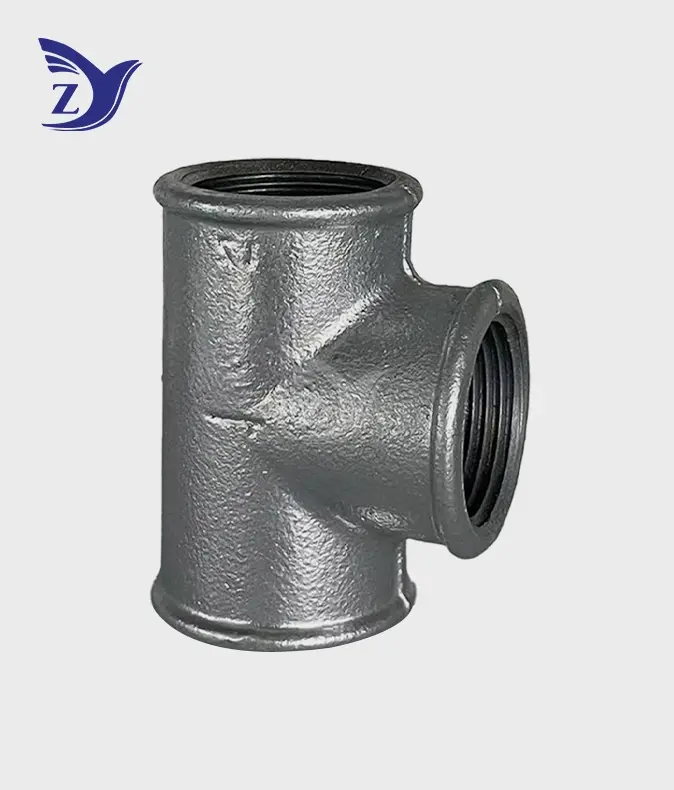
When designing efficient piping systems, the choice of connectors determines both performance and longevity. Round face galvanized round edge straight tee pipe fittings serve as critical junction points in industrial pipeline networks, offering three equal-sized openings configured at 90-degree angles to facilitate fluid or gas distribution. These malleable iron fittings feature a distinctive beaded reinforcement ring around each outlet—commonly called the "round edge" or "round face"—that strengthens the fitting against mechanical stress during high-torque installations. Hot-dip galvanized coatings provide robust corrosion resistance, extending service life in water supply, gas distribution, and fire protection applications where moisture exposure remains constant. The precision-threaded design ensures secure connections that minimize leakage risks while maintaining system integrity under pressure.
Understanding Round Face Galvanized Straight Tee Pipe Fittings
What Defines Round Face Construction
Round Face Galvanized Round Edge Straight Tee Pipe Fittings are made of pliable cast iron and are designed to last in harsh industrial environments. The "round face" name refers to the half-circle beaded edge that is shaped around each of the three threaded holes. This reinforcement solves a major problem in the industry: fittings breaking during installation when technicians use too much torque to make sure the seals are tight. The rounded bead spreads mechanical stress more evenly across the fitting body, making it less likely to break in places with a lot of shaking, like pumping stations or heavy machinery operations. This is in contrast to square edge or banded options, which have flat support ribs.
During the galvanization process, the cast iron part is submerged in liquid zinc that is about 450°C. This forms a metallurgical bond that usually results in a coating thickness that meets EN 10242 or ASTM A153 standards. This hot-dip method makes sure that the zinc goes through surface flaws and internal threads, protecting against corrosion better than electro-galvanized coatings. The matte gray finish that was left behind shows that the zinc adhered properly, and tests with salt spray in a lab proves that it can withstand over 500 hours of constant exposure without breaking down. This is an important performance measure for outdoor or marine installations.
Thread Standards and Compatibility
Threading requirements have a direct effect on how well a system works with others and how reliable the seal is. The thread profiles on these fittings are usually either NPT (National Pipe Taper) or BSPT (British Standard Pipe Taper). Following ANSI B1.20.1 standards, which are widely used in North American industries, NPT threads have a flank angle of 60 degrees. According to ISO 7-1 standards, BSPT threads use a 55-degree angle, which is common in European and Commonwealth markets. The taper design—about a 1:16 ratio—makes interference fits as the parts contact, creating pressure-tight seals without the need for extra sealants in many low-pressure uses. For gas systems, however, thread sealant tape or pipe dope is still the standard.
Before defining fittings, people who work in procurement must make sure that the threads will work together. When you try to mate an NPT to a BSPT, the threads don't fully engage because the angles aren't right. This leaves gaps at the thread roots that will leak under operational pressures. Quality makers either tap the threads after the zinc layer has been added or change the sizes of the taps before the zinc layer is added to account for the thickness of the layer. This keeps the parts from binding during assembly while still meeting the standards.
Material Properties and Manufacturing Process
White cast iron with a lot of carbon is the starting material for malleable iron. This iron goes through a controlled heat treatment called annealing. Fittings go through this process by being heated to around 900°C in special kilns for 60 to 100 hours. This changes the brittle cementite structures into nodular graphite forms in a ferrite core. This change in the metal's structure makes it more flexible, so it can handle impact loads and cycles of thermal expansion without breaking. These are important qualities for systems that have to deal with temperature changes or mechanical vibrations.
In a straight tee configuration, all three ports have the same diameter. This is different from reducing tees, where the branch outlet is smaller. The standard sizes range from 1/4 inch to 6 inches, and the pressure ratings are usually either Class 150 (for 300 PSI water, oil, and gas service at room temperature) or Class 300 for higher pressures. Precision casting with sand molds is used in the manufacturing process, followed by grinding operations that make sure the dimensions are accurate to within ±0.5 degrees across all three exits. This is important to avoid pipe stress and alignment problems during installation.
Benefits of Using Galvanized Round Face Straight Tee Fittings in Flow Control
Superior Corrosion Resistance Extends Service Life
The zinc coating protects the iron substrate below in two ways: it acts as a barrier and a sacrifice anode. The thick layer of zinc physically stops air and moisture from getting to the base metal. Also, the zinc's electrochemical qualities make it degrade more quickly when it comes in contact with electrolytes, which protects the iron below. This protection is especially useful in public water systems, where chlorine treatments and mineral content make it faster for unprotected ferrous metals to rust.
Comparative studies show that in normal water service environments, Round Face Galvanized Round Edge Straight Tee Pipe Fittings last three to five times longer than black iron ones. A fire protection contractor in Houston said that by using hot-dip galvanized parts in all of their sprinkler systems, they were able to cut down on repair times from 8 years to 25 years. Even though stainless steel is better at resisting rust, galvanized malleable iron is often 300–400% more expensive. This makes it the better choice for projects that need solid mid-term performance rather than long-term durability.
Mechanical Strength Supports High-Pressure Systems
When practical stresses are applied, the round edge reinforcement design gives the structure real benefits. Researchers in materials did a finite element analysis that shows the beaded rim spreads installation torque forces over a larger surface area than outlets that aren't reinforced. This lowers peak stress concentrations by about 35%. This engineering detail has real-world benefits: technicians can use the right amount of tightening force to make sure seals don't leak without breaking fittings, even when they're working with impact wrenches in tight spaces.
The ability to control pressure meets strict business requirements. These fittings can normally handle working pressures of up to 300 PSI in water, oil, and gas uses at normal temperatures. For service at higher temperatures, the specs have been lowered. The soft iron matrix can handle hydraulic shock from sudden valve closings or pump starts ups that would break more fragile cast iron options. This makes these fittings good for systems that have changes in pressure. Municipal water utilities like this because underground distribution networks are constantly changing pressure because of daily changes in demand and regular system tests.
Installation Efficiency Reduces Labor Costs
The round face shape makes field assembly easier, which cuts down on installation time and the costs of labor. The beaded edge helps techs line up parts properly during initial placement by giving them visual and tactile alignment guides. This feature is especially useful in small mechanical rooms or underground vaults where it's hard to see what you're doing. The smooth, curved shape also lowers friction when fittings are moving during thread engagement. This makes assembly smoother than with square-edged versions, which can catch on nearby pipes or building parts.
The quality of the thread has a direct effect on how well it installs and how reliable it is in the long run. With precision tapping, threads are made to connect easily, and there is no chance of cross-threading, which can damage both the fitting and pipe ends. When made correctly, galvanized threads can hold standard hemp, PTFE tape, or anaerobic sealant compounds without galling or seizing, even after being stored for a long time. Accessibility for maintenance is also taken into account—rounded edges are less likely to be damaged by accidental tool strikes during nearby work, which keeps the thread integrity for future system changes or fixes.
How to Choose the Right Galvanized Straight Tee Fittings for Your Application?
Evaluating Material Grade and Specifications
Before choosing a material, make sure that the part meets the industry standards for your area and the type of application. In foreign markets, parts made of malleable cast iron must follow ISO 49 and EN 10242. In North America, they must follow ANSI/ASME B16.3 and ASTM A197. These standards set limits on chemical composition, mechanical property requirements, dimensional tolerances, and testing procedures that make sure that the quality of each batch of Round Face Galvanized Round Edge Straight Tee Pipe Fittings is the same. These standards should be directly mentioned in the procurement documents instead of using general "industrial grade" descriptions.
The choice of thread type is based on regional tastes and the machinery that is already in place. In the United States, NPT threading is most common in setups like city water systems, HVAC systems, and industrial process pipes. Following British engineering traditions, BSPT is still the standard in all markets. When you try to save money by mixing thread types, you end up with a maintenance nightmare. You have to keep both standards on hand for future fixes, and field workers are more likely to make mistakes when the specs aren't clear from looking at the installed parts.
Sizing and Pressure Rating Considerations
The right size strikes a balance between the flow capacity needed and the available space and cost. Fittings that are too small cause pressure drops that make the system less effective and may cause flow speeds that are higher than what is recommended, which speeds up erosion when the flow direction changes. Oversized choices lose money on materials and take up room that isn't needed in crowded installation areas. Flow calculation guidelines, like the Hazen-Williams solution for water systems, give us a way to figure out what diameters are right based on the flow rates we need and the amount of friction we can handle.
Pressure grade verification is more than just making sure that the working pressure standards are met. Think about the highest pressure that is expected, including sudden spikes, how temperature can lower the rating, and the right safety factors. At steam temperatures, a fitting designed for 300 PSI cold water service loses a lot of its pressure capacity. For example, Class 150 specs might say that the fitting can only handle 150 PSI of working pressure at 250°C. For safety-important uses like fire suppression systems, ratings should be cautious and leave enough room for error in the worst possible situations, such as when maximum demand and potential pressure surges happen at the same time.
Supplier Qualification and Certification Verification
Suppliers you can trust show compliance through certifications from a third party, not by saying they are compliant themselves. Getting ISO 9001 quality management certification means that production is controlled in a planned way and methods for ongoing growth are in place. UL (Underwriters Laboratories) and FM (Factory Mutual) approvals make sure that parts of a fire protection system meet strict safety standards for life-safety uses. For these certifications to stay valid, there must be regular surveillance audits and product testing. This makes sure that the quality stays the same throughout production runs and isn't just a reflection of the initial qualification samples.
When projects need to follow non-standard specs or meet private marking needs, OEM and customization options are important. Manufacturers who offer design engineering support can change standard products to fit specific size restrictions, threading needs, or to provide better corrosion protection in harsh chemical environments. Verifying suppliers' production capacities is important to make sure they can meet volume demands within the required timeframes. This is especially important for large building projects with tight deadlines where delayed component deliveries can stop whole work sequences.
Conclusion
Round Face Galvanized Round Edge Straight Tee Pipe Fittings have been shown to work well in a wide range of demanding industrial, municipal, and commercial piping uses. This is because they are designed to solve problems that come up in real life. The round edge construction's beaded reinforcement ring gives it mechanical strength during installation and service, and hot-dip galvanization protects against corrosion, making it last a lot longer than alternatives that aren't protected. There are NPT and BSPT threading choices to meet the needs of different regions and current infrastructure standards. Precise production ensures that the pressure is kept in and the system works without any leaks. Instead of just looking at the price of the initial purchase, strategic procurement takes into account things like material certifications, the supplier's abilities, and the total cost of the project, which includes the cost of long-term maintenance. This helps keep operations running smoothly and systems reliable throughout the lifecycle of a building.
Partner with Zhiyuan Malleable Steel for Your Piping Component Needs
When it comes to making Round Face Galvanized Round Edge Straight Tee Pipe Fittings that meet strict international standards, Zhiyuan Malleable Steel has more than 18 years of experience. Our Taigu plant has eight medium-frequency electric furnaces that can produce 30,000 tons of steel each year. It also has blue-flame natural gas annealing kilns and electric heating galvanization systems that make sure the quality of all of our more than 1,000 product specs is the same. Before being packed in double-layer cardboard to protect goods during foreign shipping, each fitting is tested for hydrostatic pressure and coating thickness. Our quality control systems are backed by ISO 9001, CE, UL, and FM certifications, and we can send standard items from a large inventory within two hours to meet your project deadlines. Our technical team offers ODM/OEM customization services for non-standard requirements, backed by thorough substitute policies that cover any quality issues. Find out why fire protection companies, public utilities, and factories all over North America choose Zhiyuan as their top supplier of round face galvanized round edge straight tee pipe fittings. Email us at q1236800000@gmail.com or go to zymalleablepipefitting.com to talk to one of our application engineers about your needs right away.
FAQs
Can I Connect NPT and BSPT Threaded Components?
When you mix NPT and BSPT threads, you get weak connections that can leak under pressure. The main problem is that NPT and BSPT pin angles are not the same—NPT uses 60 degrees and BSPT uses 55 degrees. When these uneven profiles are pushed together, they leave gaps at the thread roots where sealing should happen. This lets fluid pass through even though the joint looks tight. Changing temperatures and pressures make leaks worse because the different temperatures put stress on the bad link. To do things the right way, you need to use approved adapter fittings that are made to go from one thread standard to another. This keeps the integrity of the system throughout the link.
How Does Round Edge Design Compare to Square Edge Fittings?
Round edge fittings have semicircular beaded reinforcements that make them better at resisting impact and handling torque. This is especially useful in systems that are vibrating mechanically or where installation requires rough twisting. Square-edged versions have flat reinforcing plates that offer more mass concentration, which some standards like for keeping pressure as low as possible. Most of the time, there aren't big changes in performance. Instead, selection is based on area preferences, current inventory standardization, or specific project requirements, not huge functional benefits. Both designs work well as long as they are made and installed correctly according to industry standards.
What Indicates High-Quality Galvanization?
When you use premium hot-dip galvanization, the finish is a uniform matte gray color. There are no black spots that show bare iron or too much zinc dross that clogs the threads. Using magnetic gauges to measure the thickness of the coating should show layers of 70 to 100 microns, which is in line with EN 10242 or ASTM A153 standards. Documentation from salt spray tests showing 500-hour or more of rust resistance is an objective way to check quality beyond eye inspection. An internal thread study shows whether makers tap the threads after galvanizing or account for the thickness of the zinc during pre-galvanization tapping. Both methods are fine as long as they are done correctly, but post-galvanization tapping usually results in more accurate end dimensions.
References
American Society of Mechanical Engineers. (2016). ASME B16.3: Malleable Iron Threaded Fittings, Classes 150 and 300. New York: ASME Press.
British Standards Institution. (2018). BS EN 10242: Threaded Pipe Fittings in Malleable Cast Iron. London: BSI Standards Publication.
National Fire Protection Association. (2019). NFPA 13: Standard for the Installation of Sprinkler Systems. Quincy: NFPA Publications.
Smith, Robert J. (2020). Industrial Piping Systems: Design, Installation, and Maintenance. Boston: Engineering Technical Press.
Thompson, Margaret L. (2017). Corrosion Protection in Water Distribution Systems. Denver: American Water Works Association.
Zhang, Wei and Anderson, Lars. (2021). Metallurgical Properties of Malleable Cast Iron Components. Journal of Materials Engineering, 45(3), 287-304.
Online Message