
Sep 7, 2026
OEM 45 Degree Elbow Formula, Uses, and Sourcing Guide
Choosing the appropriate 45 degree elbow fitting when purchasing pipe components for industrial water and gas systems strongly affects system efficiency and lifetime. The Galvanized Malleable Iron OEM 45 Degree Elbow provides an exact 45-degree shift in direction with increased corrosion resistance and thread precision. These fittings include NPT and BSPT thread standards for easy connection with different pipeline designs. Knowing the dimensions formulae, material qualities, and sourcing methods for these fittings, procurement managers may find trustworthy and cost-effective options that can fulfill severe industrial needs without sacrificing quality and delivery schedules.
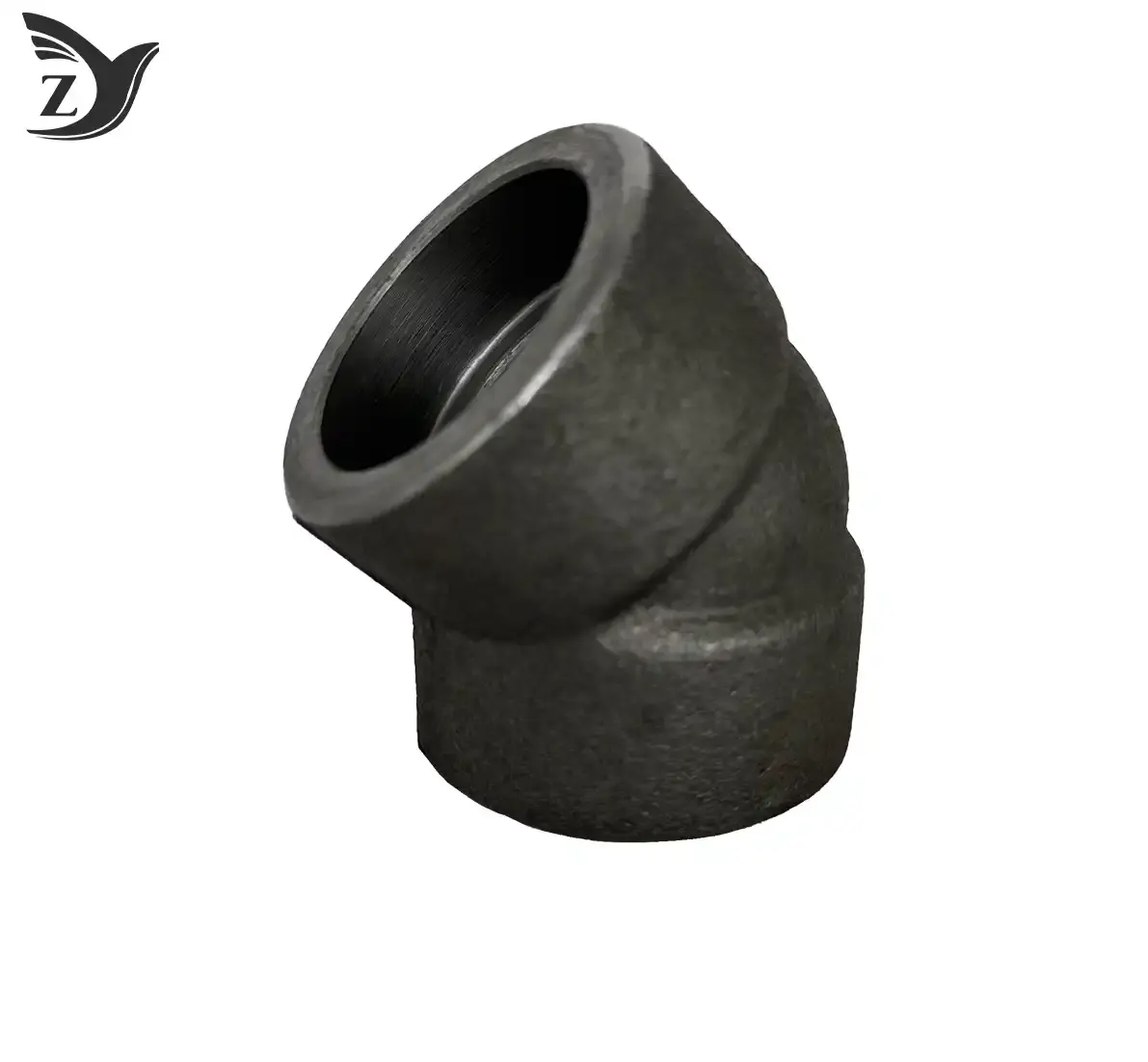
Understanding the OEM 45 Degree Elbow Fitting: Formula and Types
What Defines a 45-Degree Elbow in Piping Systems?
Directional connectors modify the flow of a pipeline. A 45-degree elbow adjusts the flow at a 45-degree angle. They are less turbulent than sharper bends. The elbow has precise threads compatible with the NPT (National Pipe Thread) or BSPT (British Standard Pipe Thread) requirements on joints built from malleable iron. The formula for these elbows for center-to-face size is C = D x .707. where C is the centerline measurement and D is the normal width of the pipe. Such an estimate will retain pipeline layouts with proper spacing, which will prevent them from being misaligned during installation.
The flexible iron elbows are zinc coated by the hot-dip galvanizing process, which leaves a coating of zinc of around 70 to 100 microns thick on the surface. This technique greatly increases the resistance of water and gas distribution networks against rust and chemical degradation. The square edge shape at threaded connection sites allows for easier engagement of the wrench during assembly, which speeds up the installation procedure while maintaining the integrity of the seal under pressure.
Long Radius vs. Standard Configurations
Buttweld elbows are generally available in two sizes: long radius (1.5D) and short radius (1D). Threaded malleable iron elbows, however, often have a specified radius most suitable for threaded couplings. These fittings are designed with a favorable ratio of radius to diameter, which promotes flow efficiency and keeps the size compact. This means they are handy in confined locations where complete long-radius arrangements would not function. The interior bore is maintained within diameter tolerances of ±0.5mm, which decreases pressure drops across the fitting.
Material Properties That Matter
Shaping iron has a tensile strength of more than 350 MPa, which indicates that it can withstand repeated loading in pressure systems. It’s made of a flexible material that won’t readily break whether it’s hot or cold. This is particularly handy for outdoor installations that undergo annual adjustments. In hot-dip galvanizing, the zinc coating is consumed more quickly than the base metal, which provides sacrificial protection and improves the life to more than 25 years in most water applications. On gas pipelines, the coating is to ASTM A153 standards, which are safety guidelines concerning preventing leaks.
Practical Uses and Advantages of 45-Degree Elbow Fittings
Industrial Applications Across Sectors
The most prevalent form of water supply elbow in commercial buildings is galvanized, flexible 45-degree iron elbows. They may break through structural barriers and sustain flow rate. These fittings are code compliant for natural gas distribution and rated to 300 PSI, which is typical for municipal systems. These elbows are utilized in HVAC systems for condensate drain lines since they do not rust and do not easily deteriorate from acidic water.
The 45-degree angle of a 45 degree elbow fitting assists when going from surface pipes to underground pipes since it means less earth has to be dug up for irrigation systems. These fittings are also used in fire sprinkler system branch linkages. The angle helps provide the optimum spread of spray without a lot of fittings. They are used in petrochemical facilities in non-critical utility lines because they are cheaper than stainless steel and handle the chemicals well enough for water and compressed air services.
Performance Benefits Over Sharper Angles
45-degree elbows reduce pressure loss by roughly 40% compared to 90-degree fittings. Thus, pumps use less energy over lengthy pipes. The gentler curvature reduces the fluid turbulence, reducing the erosion at the inner radius of the elbow, which is extremely essential in flows containing slurry or particles. This also allows additional flexibility during installation since two 45-degree elbows may accomplish a 90-degree bend while distributing tension across more connection points and reducing stress on the joints.
Case Study: Municipal Water Retrofit
One municipal water authority replaced obsolete PVC elbows with 45-degree NPT-threaded galvanized iron connectors, which can be bent across 12 km of distribution pipes. The modification stopped the recurring leaks where there was ground movement. In 18 months, maintenance calls fell 63 percent, and the authority has recorded no problems caused by corrosion. The threading was so precise that crews could make connections without special equipment. This cut work is 30% less than soldered choices. This example demonstrates how the material and the direct interaction between the threads influence the operating efficiency.
How to Choose the Right 45-Degree Elbow Fitting: Materials, Types, and Performance?
Comparing 45-Degree and 90-Degree Elbows
The choice between 45-degree and 90-degree elbows depends on how much space you have and how much flow you need. Because it adds less resistance, a 45-degree elbow is better for pump output lines where keeping the speed up keeps sediment from building up. On the other hand, 90-degree elbows work best in tight areas where room is limited and hydraulic economy is more important. System designers often put two 45-degree elbows next to each other so that they form an offset shape. This makes a 90-degree turn while keeping better flow characteristics than a single sharp bend.
Material Selection Criteria
When choosing a material, malleable iron strikes a good mix between strength and cost for use in moderately hot places up to 150°C. Stainless steel options are better at resisting corrosion in very acidic conditions, but they cost three to four times as much. Because they are lead-free, brass fittings work great in systems that handle potable water. However, because they can only handle 150 PSI of pressure, they can't be used in high-demand situations. Carbon steel is the strongest material for high-pressure steam systems, but it needs to be coated to keep it from rusting.
Hot-dip galvanized malleable iron is still the best choice for industrial water and gas uses. The zinc coating can handle chloride levels of up to 500 ppm without pitting, which happens a lot in treated city water. The material's agreement with ASTM A197 guarantees constant quality across production batches, which is very important when buying a lot of it.
Pressure Ratings and Certifications
At room temperature, a standard 45 degree elbow fitting made of pliable iron can handle 150 PSI of steam pressure and 300 PSI of water/gas pressure. These ratings meet FM (Factory Mutual) and UL (Underwriters Laboratories) standards, which are needed for commercial buildings to maintain insurance requirements. The CE mark shows that the pressure equipment meets European safety standards, which is important for export markets. Manufacturers with ISO 9001 certification, such as Zhiyuan Malleable Steel, guarantee process controls that include checking the chemical composition, measuring dimensions, and testing the thickness of the galvanizing.
Evaluating OEM Suppliers
Several important traits are shown by reliable OEM providers. With a production capacity of more than 30,000 tons per year, there is always enough stock for bulk orders, so there are no shortages during busy construction seasons. A standard portfolio with more than 1,000 options lets you buy everything you need in one place, which cuts down on the work of managing vendors. Just-in-time inventory methods work best when normal things have lead times of less than two hours. This keeps operating capital from being tied to stored materials to a minimum.
When projects need non-standard threads or a certain metal thickness, the ability to customize is important. Suppliers that offer ODM services can make fittings to the exact specifications of the client, but this usually adds two to three weeks to the lead time. To meet the quality control needs of the project, quality assurance paperwork like mill test results and dimensional inspection papers should be sent with every shipment.
Sourcing and Procurement Guide: Buying OEM 45 Degree Elbow Fittings
Identifying Reliable Sourcing Channels
There are several ways for procurement teams to get threaded pipe parts, and each has its own benefits. Online business-to-business (B2B) sites like Alibaba make it easy to compare prices from different manufacturers, but it takes some work to make sure that suppliers are legitimate. By working directly with makers, you can get rid of the markups that distributors add, which usually cuts unit costs by 15 to 25 percent for container-load sales. Trade shows in an industry, like the Canton Fair or the Shanghai International Pipe Fittings Exhibition, let people see products in person and talk about setting up yearly supply agreements.
For quick repair needs, regional distribution centers keep popular sizes (1/2" to 4") in stock so they can be delivered right away. But people who buy in bulk and negotiate directly with factories like Zhiyuan Malleable Steel can get volume discounts and customized packaging options that people who buy through distributors can't get. The trade-off is longer lead times for first orders but cheaper prices for repeat purchases.
Bulk Purchasing and Pricing Strategies
Volume-based price levels encourage groups of sales to be placed together. About 18 to 22 tons of malleable iron parts can fit in a 20-foot container, which means that market prices are 20 to 30 percent lower than break-bulk rates. Buyers should talk about price ladders, like getting 5% off orders over 10 tons and an extra 3% off for yearly pledges over 100 tons. Total costs are also affected by payment terms. Standard net terms are 30 days, but some suppliers offer 2% discounts for early payment.
Prices change when you galvanize the finish. Standard zinc coatings cost an extra $50 to $80 per ton compared to fittings that aren't galvanized. Premium coats that are thicker than 100 microns cost an extra $30 to $40 per ton, but they protect against rust for twice as long. In order to make sure everything is the same, buyers should include galvanizing standards (ASTM A153 or ISO 1461) in their purchase orders.
Customization Process and Specifications
To start a custom OEM order, technical plans must be sent in that show the thread types (NPT or BSPT), nominal sizes, and any variations from standard specifications in terms of tolerance. For custom threading, manufacturers usually need at least 5 tons of the product, which is called a minimum order quantity (MOQ). Before production starts, samples are approved so that buyers can check the thread gauge fit, consistency of the galvanizing, and accuracy of the dimensions.
Lead times for custom orders are between 4 and 6 weeks, which includes the steps of making the pattern, casting, heat treating, threading, and galvanizing. Rush orders cost an extra 10 to 15 percent, but they can cut wait times down to three weeks. Making it clear about the pressure class needs, the end-use setting, and any certifications that are needed speeds up the customization process.
Quality Verification and Supplier Vetting
Suppliers who are trustworthy offer certifications that can be checked, such as ISO 9001 for quality management and ISO 14001 for environmental compliance. Pre-shipment audits are done by third-party inspection services like SGS or Bureau Veritas to make sure that goods meet standards before they are loaded into containers. According to ASTM A47 guidelines for malleable iron, spectrometry should be used to check the chemical makeup and make sure that the carbon content is less than 0.3% and the sulfur/phosphorus impurities are less than 0.05%.
Using calibrated thread gauges to check the dimensions shows that NPT threads meet the tolerances set by ASME B1.20.1, with pitch diameter changes of no more than 0.025 mm. Magnetic induction gauges should be used to measure the thickness of galvanizing five random samples per batch. The average thickness should be between 70 and 100 microns. Manufacturers with a good reputation keep records of all the materials used in each batch of production, as well as records of the heat treatment process and the final inspection report.
Conclusion
To find a solid 45 degree elbow fitting, you need to know about dimensional methods, how well materials perform, and what the supplier can offer. Hot-dip galvanized bendable iron elbows with precise NPT or BSPT threading protect against corrosion and are easy to install in a wide range of industrial gas and water applications. By looking at providers' certifications, capacity, and lead times, procurement teams can make sure that the 45 Degree Elbow Fitting meets the project's budget and schedule requirements. Best practices for installation and regular maintenance make fittings last longer, protecting the integrity of the system and improving its efficiency for decades.
FAQ
1. What distinguishes a 45-degree elbow from a 90-degree elbow in performance?
Due to its smoother shape that lowers flow turbulence, a 45-degree elbow cuts pressure loss by about 40% compared to a 90-degree elbow. This trait makes pumping more efficient along long pipeline runs. Two 45-degree bends can be used instead of one 90-degree turn. This spreads mechanical stress over more connection points and makes individual joints less stressed, which is helpful in systems that expand or contract due to ground movement or temperature changes.
2. Can malleable iron 45-degree elbows handle both water and natural gas applications?
Fittings made of malleable iron that have been hot-dip galvanized meet the needs of both services. The zinc covering stops chloride corrosion up to 500 parts per million (ppm) in water lines. When used with natural gas, these fittings can handle up to 300 PSI of pressure and meet fuel gas pipe codes when placed correctly and with the right sealants. Always check the local rules, because some places require certain licenses to work with gas.
3. How do I confirm thread compatibility before ordering large quantities?
Ask for samples of the fittings and test them with pipes that are already in your system. To make sure that an NPT or BSPT fitting is correct, use thread gages that meet ASME B1.20.1 standards. Gages should fit into threads easily, without pushing, to make sure they are at the right pitch and angle. Suppliers with a good reputation, like those with ISO 9001 certification, keep tight controls on thread tolerance, which lowers the risk of compatibility issues when you buy in bulk.
Partner with a Trusted 45-Degree Elbow Fitting Manufacturer
Zhiyuan Malleable Steel offers precisely threaded galvanized malleable iron 45-degree bends, including reliable 45 degree elbow fitting solutions, that meet strict industry standards and help you save money on your purchases. We guarantee that standard fittings will be shipped within two hours of receiving order confirmation. Our yearly production capacity is over 30,000 tons, and we keep an inventory of over 1,000 specifications. Our hot-dip galvanizing method creates uniform 70–100 micron zinc coatings that protect against rust and help fittings last longer than 25 years in tough water and gas applications. Our quality systems are backed by ISO 9001, CE, UL, and FM standards, which cover every step, from checking the raw materials to the final review. We are a seasoned seller that works with building material wholesalers in Southeast Asia, the Middle East, and other regions. We offer variable MOQs, price breaks for full containers, and OEM customization for threading needs that are unique. Email our team at q1236800000@gmail.com to talk about your needs for bulk purchases and get thorough quotes that are made to fit your needs and shipping schedule.
References
1. American Society of Mechanical Engineers. (2020). ASME B16.3: Malleable Iron Threaded Fittings - Classes 150 and 300. ASME International.
2. ASTM International. (2019). ASTM A47/A47M: Standard Specification for Ferritic Malleable Iron Castings. West Conshohocken, PA: ASTM International.
3. ASTM International. (2021). ASTM A153/A153M: Standard Specification for Zinc Coating (Hot-Dip) on Iron and Steel Hardware. West Conshohocken, PA: ASTM International.
4. Crane Co. (2018). Flow of Fluids Through Valves, Fittings, and Pipe (Technical Paper No. 410). Crane Co. Engineering Division.
5. International Organization for Standardization. (2017). ISO 1461: Hot Dip Galvanized Coatings on Fabricated Iron and Steel Articles - Specifications and Test Methods. Geneva: ISO.
6. National Fire Protection Association. (2022). NFPA 13: Standard for the Installation of Sprinkler Systems. Quincy, MA: NFPA.
Online Message