
Sep 22, 2026
NPT vs BSPT Coupling Fittings: Which One Should You Choose?
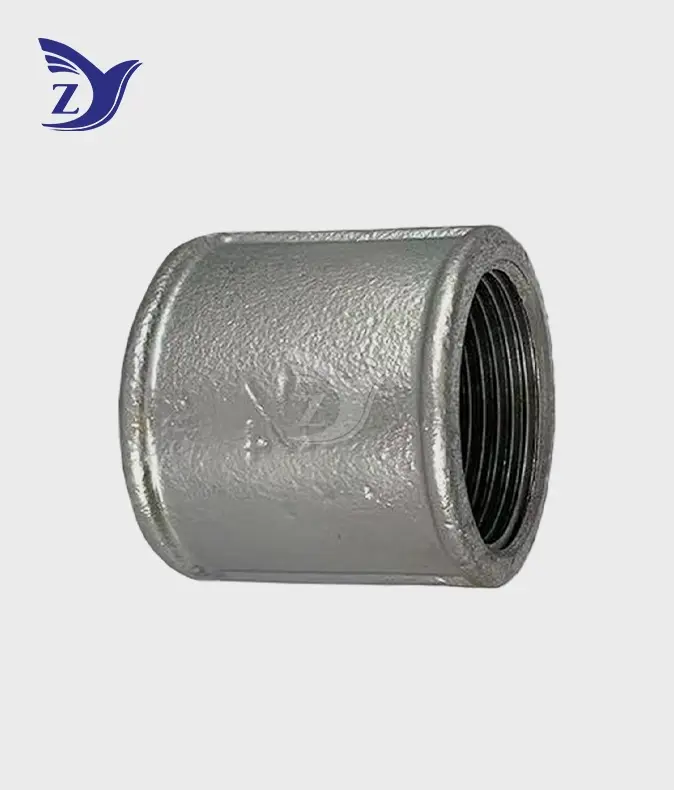
If you've ever ordered pipe fittings for a plumbing or gas pipeline job and ended up with parts that simply wouldn't thread together, you already understand why this question matters. The short answer: NPT and BSPT are fundamentally incompatible standards, and choosing the wrong one costs time, money, and project credibility. For contractors working on U.S. water or gas infrastructure, the NPT round face galvanized round edge coupling pipe fittings are the correct, code-compliant choice — and understanding why makes every future procurement decision cleaner and faster.
Understanding NPT and BSPT Coupling Fittings
What Makes These Two Standards Different?
ASME B1.20.1 sets the rules for NPT (National Pipe Taper) threads, which have a 60° thread angle. Under BS 21/ISO 7-1, BSPT (British Standard Pipe Taper) threads have a 55° thread angle. Not only does that 5° difference look different, but it also changes how threads engage, how sealing pressure is distributed, and whether a joint will hold up under water pressure.
Through thread taper interference, both standards make a mechanical seal, but the shapes can't be put together. If you force an NPT male thread into a BSPT female connection, or the other way around, you will break the thread crests, and leaks will happen.
Identifying NPT vs. BSPT in the Field
The best tool is a thread gauge, but a quick eye check is also useful. The crest of an NPT thread is flatter and wider, while the crest of a BSPT thread is a little sharper. A ½" fitting has 14 threads per inch (TPI), which means that both NPT and BSPT have 14 TPI. This means that TPI alone won't help you. Check the thread angle and cut rate all the time. It's important to note that NPT and BSPT both taper at 1°47′ per side, but the different flank angles make them not work together.
In real life, if you are working on a job in the United States that involves plumbing, HVAC, gas distribution, or fire control, you have to use NPT. The UK, Australia, and some parts of Asia use BSPT the most.
Technical and Performance Comparison of NPT vs BSPT Couplings
Thread Compatibility and Sealing Integrity
The metal-to-metal thread interference in NPT fittings makes the joint pressure-tight, but PTFE tape or anaerobic pipe sealant should always be added to fill the spiral leak path. According to ASME B16.3 Class 150 ratings, an NPT round face galvanized round edge coupling pipe fitting joint that is properly put together can handle up to 300 PSI at room temperature, which is enough for most commercial gas and water applications.
Depending on whether they are parallel (BSPP) or taper (BSPT), BSPT fittings can rely on thread interference alone or a glued face seal. This difference doesn't really matter for installations in the U.S.; local inspectors and gas utilities expect NPT.
Corrosion Resistance and Material Durability
Hot-dip galvanized malleable iron couplings that are coated according to ASTM A153 have a zinc layer that protects the base metal even when it gets small scratches on the surface in NPT round face galvanized round edge coupling pipe fittings. When compared to bare black iron fittings, this zinc barrier greatly increases the service life in damp places, underground installations, or outdoor fire suppression lines.
The base material is just as important. The tensile strength of KTH350-10 grade malleable iron is ≥350 MPa, which means that the fitting will stay strong even when the wrench is tightened and the pipeline moves. The round edge (beaded) design at the outlet of the coupling adds hoop strength in the area with the most stress, making it better than plain-end couplings when pressure is applied and removed many times.
Price Trends and Long-Term Cost Efficiency
Galvanized NPT connections cost a little more than black iron ones—usually 15–25% more per unit. But over the course of a project's lifetime, that extra cost is recouped by fewer breakdowns caused by corrosion and better inspection results. For small to medium-sized companies working with tight project budgets, the extra money spent up front is worth it to avoid a single failed pressure test, which can mean reinstalling the whole part.
Decision Support: Selecting the Right Coupling Fitting for Your Needs
It's easy to choose between NPT and BSPT once you know the installation country and code that applies. Choosing the right product version from the NPT steel family is the more difficult choice. Before they place an order, buying managers and site directors should look at these main factors:
- Thread standard verification: Use a calibrated L1 ring gauge to make sure the NPT is correct before taking any shipping. Cross-threading will happen during installation if there are thread burrs or broken crests. This wastes time and effort.
- Galvanization quality: needs ASTM A153 approval. The Preece Test (copper sulfate dip) and magnetic thickness measurement both show that the zinc coating is even. An uneven layer means that the hot-dip process is not being controlled well.
- Pressure rating alignment: ASME B16.3 Class 150 is used for most water and gas distribution tasks. Make sure that this standard is clearly mentioned in the supplier's product documentation.
- Size range coverage: If a supplier has a catalog with sizes from 1/8" to 6", you don't have to manage multiple vendors, which cuts down on the work that needs to be done on multi-phase projects.
These evaluation points directly lead to fewer inspection failures and a faster project closeout, which are two very important results on jobs where every day of delay costs money.
If you need to change the width of two pipes, the NPT round face galvanized round edge coupling pipe fittings (in a reducing configuration) can handle them both in one fitting. This means you don't have to stack bushings, which can add more places for leaks to happen.
Practical Insights and Maintenance Tips for Galvanized NPT Couplings
Common Applications Across Industries
In many tough settings, NPT round face galvanized round edge coupling pipe fittings are used. These include plumbing in homes and businesses, HVAC hydronic systems, natural gas distribution, fire suppression dry-pipe systems, and high-pressure irrigation in agriculture. In all of these situations, the hot-dipped zinc covering protects against the water, condensation, and dirt that would normally speed up the rusting of iron that isn't protected.
Maintenance Best Practices
When installed properly, a galvanized coupling doesn't need much maintenance, but it should be checked on a regular basis to make sure it stays strong. Check the areas where the threads engage for white rust, which is caused by zinc oxide buildup and means that water is getting in early. If the white rust is only on the surface, you can protect it again with zinc-rich touch-up paint and a wire brush. If you see red rust at the thread roots of a fitting, that means the zinc has been used up, and the base metal is being exposed.
When installing something, you should always use thread sealer. Even NPT threads that are carefully machined leave a helical micro-gap that lets fluid seep out slowly when pressure is kept up. This path can be blocked with PTFE tape or anaerobic pipe dope, which also greases the joint to keep it from grinding during the last few turns.
Procurement and Transaction Guidance for NPT Galvanized Couplings
When buying in bulk from a direct manufacturer, the prices are always 20–40% lower than those offered by distributors for standard sizes. When looking for a supplier of NPT round face galvanized round edge coupling pipe fittings, make sure you get their ISO 9001 certificate, ASTM A153 galvanization test reports, and ASME B16.3 dimensional compliance records right away.
Lead time is just as important for busy job sites. Standard sizes can be shipped within 24 to 48 hours from suppliers who keep stock in warehouses. Custom sizes, like non-standard diameters, special thread lengths, or OEM-branded fittings, usually need two to four weeks to produce, which should be planned for in the project schedule.
Mixed-SKU orders from a single source that include different types of fittings make handling easier and lower freight costs for small to medium-sized contractors. Before agreeing, make sure you know the minimum order quantity (MOQ) for each SKU. A strict high MOQ on unusual sizes adds to the inventory load that isn't necessary.
Conclusion
When U.S. companies have to choose between NPT and BSPT, there is no gray area. NPT is the standard, and using anything else raises risks for compliance and sealing. The NPT round face galvanized round edge coupling pipe fittings design—made from KTH350-10 malleable iron and hot-dip galvanized to ASTM A153—gives plumbing and gas installations the thread accuracy, corrosion resistance, and pressure integrity they need. Get it from a company that has certifications that can be checked, stocks items in all sizes, and can handle both standard and custom orders. That protects both the standard of your job and your bottom line.
FAQ
1. Can I use an NPT fitting on a BSPT pipe?
It's not true. The thread side angle for NPT is 60°, but it's 55° for BSPT. Because the shapes don't match, the threads won't connect properly. You might get a few turns of make-up, but the joint will leak under pressure, and the threads will be damaged permanently. Make sure the thread standard fits your pipe system every time.
2. Why choose galvanized over black iron for water lines?
According to ASTM A153, galvanized couplings have a hot-dip zinc coating that keeps oxygen and water from getting to the iron substrate. Black iron fittings, which are usually used for gas lines, rust quickly when they come into contact with water. Galvanized is the best choice for environments that get wet, like home water systems, HVAC thermal loops, and so on.
3. How do I verify the galvanization quality of a fitting I've received?
Ask for the mill test record that references ASTM A153. On-site, a magnetic thickness gauge checks the thickness of the zinc layer. For threaded fittings, the thickness must be at least 43 µm (1.7 mil). Putting a sample in a copper sulfate solution for the Preece Test shows coating gaps by copper depositing on iron that is exposed.
4. What sealant should I use with NPT galvanized couplings?
You can use either PTFE tape (two to three wraps around the male thread) or anaerobic pipe dope. Pipe dope is better at filling in gaps in threads that are a little worn. To keep the line clean, never put sealant on the female coupling threads. Instead, only put it on the male pipe end.
Get a Fast Quote on Certified NPT Galvanized Couplings — Zhiyuan Malleable Steel
Since 2006, Zhiyuan Malleable Steel has been making precise malleable iron pipe fittings. They have ISO 9001, CE, UL, and FM certifications, and they can make 30,000 tons of them every year. Our team can quickly help you whether you need standard NPT round face galvanized round edge coupling pipe fittings in bulk or fittings that are made to your exact measurements. To get a price right away, email us at q1236800000@gmail.com.
References
1. American Society of Mechanical Engineers (ASME). ASME B16.3: Malleable Iron Threaded Fittings, Classes 150 and 300. ASME, 2021.
2. American Society of Mechanical Engineers (ASME). ASME B1.20.1: Pipe Threads, General Purpose (Inch). ASME, 2013.
3. ASTM International. ASTM A153/A153M: Standard Specification for Zinc Coating (Hot-Dip) on Iron and Steel Hardware. ASTM International, 2016.
4. British Standards Institution. BS EN ISO 7-1: Pipe Threads Where Pressure-Tight Joints Are Made on the Threads — Taper External Threads and Parallel Internal Threads. BSI, 2019.
5. Nayyar, Mohinder L. Piping Handbook, 7th ed. McGraw-Hill, 2000.
6. Swanson, Leonard. Industrial Piping and Equipment Estimating Manual. Gulf Professional Publishing, 1999.
Online Message