
Aug 7, 2026
NPT Threaded Four Way Galvanized Cross Connectors For Industrial Water Gas Pipeline Distribution
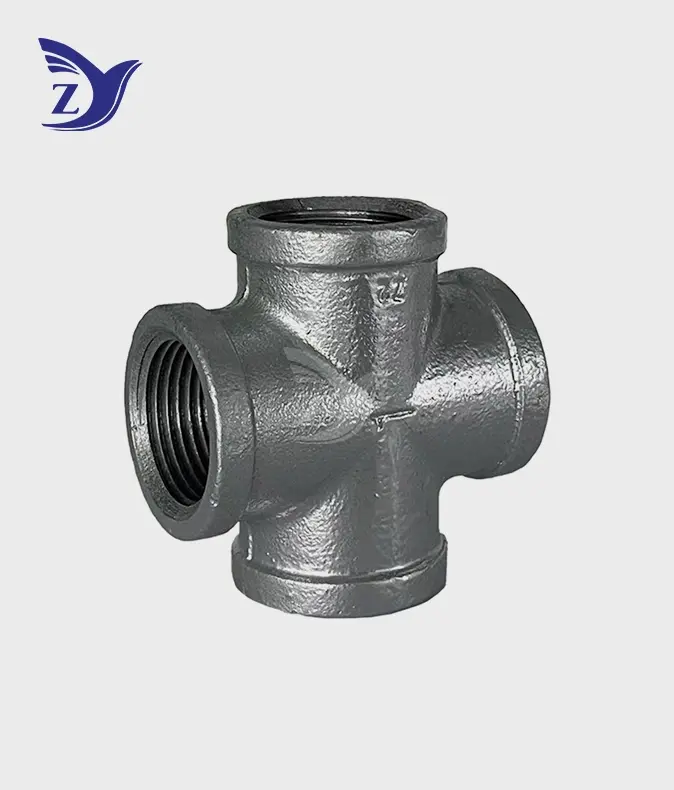
In current industrial water and gas pipeline delivery systems, NPT threaded four-way galvanized cross connectors are very important parts. NPT square-face galvanized square-edge cross pipe fittings are always the best choice when procurement managers and engineers are looking for reliable ways to handle complex fluid networks. These special fittings use hot-dipped galvanization and the accuracy of National Pipe Thread standards to make strong junction points that can handle flow in more than one way and don't rust in harsh conditions. When choosing parts for fire safety systems, water infrastructure in cities, or industrial plants, it's important to know the technical benefits and correct way to use these four-way connections. This will directly affect how long the system lasts and how safely it works. This guide gives you useful information based on real-life setups to help you make smart purchasing choices that meet performance needs and stick to your budget.
Understanding NPT Threaded Four Way Galvanized Cross Connectors
The tech behind NPT threaded four way galvanized cross connections is the result of many years of improving the way pipe fittings are made. This part's main job is to be a junction where four different pipe runs meet at right angles. This lets water, gas, or other fluids flow smoothly across multiple branches. ANSI/ASME B1.20.1 standards are followed by the NPT threading, which has a 60-degree thread angle and a 1°47' curve that causes mechanical interference as the pipes are tightened together. In most cases, this tapered design gets rid of the need for extra gaskets because the metal-to-metal contact creates a seal that can handle up to 300 psi in normal setups.
Material Composition and Galvanization Process
The first step in making these parts is using black heart malleable iron that meets the requirements of ASTM A197. This choice of material has a tensile strength of about 40,000 psi and an elongation of about 10%. It is flexible enough to keep it from breaking during installation pressure or thermal cycles. The ductile iron goes through precision casting and then a heating process that changes the carbon structure. This makes the iron more flexible without weakening it. After being machined to specific dimensions according to ASME B16.3 standards, the parts are hot-dip galvanized in a way that meets ASTM A153 standards. In this method, the fittings are submerged in liquid zinc that has been heated to about 840°F. This forms a metallurgical bond that covers the parts with a protected layer that is usually more than 85 microns thick. This zinc layer acts as both a barrier and a galvanic (sacrificial) shield, making the product last 20–30 years longer than ungalvanized options in outdoor circumstances.
Square Edge Design Advantages
These fittings are different from regular beaded ones because they have a square edge support. This part of the design adds mass to areas where there is a lot of stress, like where wrenches grip during installation. The squared banding gives the tool more surface area to contact, which lowers the chance that the fitting will deform when the required pressure is applied to make a good seal. In addition to its mechanical benefits, the square face shape visually suggests high-quality construction. This makes it easier for procurement teams to quickly spot fittings that were made to higher standards during receiving checks.
Benefits and Applications of Galvanized Square Edge Cross Pipe Fittings
When you choose NPT square-face galvanized square-edge cross pipe fittings, you get measured benefits in a number of performance areas that have a direct effect on the total cost of ownership. Zinc coatings protect steel from rust, which is especially useful in situations where water, temperature changes, or chemical contact would quickly break down steel that isn't protected. Industrial field data shows that zinc fittings keep their structural integrity and good looks for a long time, even in tough conditions like chemical processing plants with acidic vapors or facilities near the coast that are exposed to salt air.
Industrial Water Distribution Networks
These cross connections are very important for municipal water supply systems because they make distribution valves that send pressurized water from main lines to service lines in neighborhoods. The four-way setup lets engineers make small junction boxes where flow splits to go to different consumption places while keeping the pressure evenly spread. The flexible iron construction doesn't crack like PVC or composite options do when exposed to water hammer shock and external mechanical loads from ground movement. The galvanized layer stops rust scale from forming, which could pollute drinking water or lower flow rates by limiting the width inside the pipe.
Gas Pipeline Infrastructure
These fittings are used by natural gas companies and industrial gas distribution systems to connect transmission lines to places where gas is used. Stringent standards for preventing leaks are met by the NPT threading, which makes a gas-tight seal. The malleable iron material provides the impact resistance needed for underground installs where digging equipment may accidentally touch pipe. rust resistance is especially important in parts of gas systems that are prone to condensation, where water buildup would cause internal rust in fittings that aren't protected.
Fire Protection Systems
Fire sprinkler system builders use these links to make grids that connect various sprinkler drops to main supply risers. Being able to send flow in four directions at the same time makes planning geometry easier and cuts down on the number of fittings that need to be used compared to using multiple tees and elbows. The galvanized finish makes the system reliable over time, even if it doesn't get used for years at a time. It also keeps rust debris from blocking sprinkler holes during an emergency. Meeting the requirements for UL and FM certification gives you the proof you need for building code approval and insurance.
Galvanized cross fittings are always included in the standard specifications of fire protection engineering firms, building firms, and local infrastructure operators because they can be used in so many different ways. When you combine mechanical strength, resistance to corrosion, and code compliance, you get a solid solution that works the same way in all kinds of working situations and needs very little upkeep over many decades of service.
Comparing NPT Square Face Galvanized Cross Fittings with Alternatives
When making procurement decisions, it's helpful to know how NPT square-face galvanized square-edge cross pipe fittings stack up against other materials and shapes on the market for industrial pipe fittings. There are trade-offs between each choice in terms of cost, performance, installation needs, and service life that depend on the needs of the project.
Galvanized vs. Black Iron Fittings
Standard black iron fittings are made of the same pliable iron and are the same size as galvanized ones, but they don't have the zinc covering to protect them. Because of this, they can only be used indoors, where they won't be exposed to much wetness from the air, like in climate-controlled machinery rooms. Black iron is usually 15-20% cheaper than coated iron, but the savings quickly disappear when rusting means early replacement or rust scale gets into the system and causes problems with how it works. Even though they cost more at first, galvanized fittings are the better choice for outdoor installs, basement uses, or any place where they will be exposed to moisture. The longer life and lower upkeep needs of zinc parts make them more valuable over their entire lifecycle.
Malleable Iron vs. Stainless Steel
Because they don't rust and look good, stainless steel fittings are popular in food processing, pharmaceuticals, and building uses that people can see. The higher cost of the material—often 300–400% more than coated malleable iron—keeps it from being widely used in large-scale industrial processes. When working with corrosive environments, stainless steel needs to be carefully matched with the right metal grade (304, 316, etc.). Galvanized malleable iron, on the other hand, works successfully in most industrial settings. Because it is more resistant to pressure and easier to shape, malleable iron is better for uses that might be affected by vibration, heat shock, or possible mechanical damage. For projects that need to be both cheap and reliable, galvanized malleable iron is usually used for rough pipe that needs to be hidden. Stainless steel, on the other hand, is only used for specific tasks where its special qualities make it worth the extra cost.
Threaded vs. Grooved Mechanical Fittings
Grooved mechanical joining systems are easier to take apart for repair and can be put together faster than threaded connections. For uses with a diameter of 4 inches or more, the groove-and-coupling method works well because threading isn't realistic. On the other hand, threaded fittings are easier to use and cost less for smaller diameter systems. Grooved systems need extra parts like couplings and seals, which raises the cost of materials and makes it harder to keep track of supplies. The NPT threaded connection makes a stable, rigid link that is especially useful in structural applications or systems that need to be completely leak-proof without relying on the stability of the gasket. Knowing these trade-offs helps engineers choose the joining method that best matches how quickly it can be installed with how reliable it will be in the long run for their particular pipeline design.
Conclusion
NPT square face galvanized square edge cross pipe fittings give industrial water and gas distribution systems the dependability, durability, and flexibility they need. Precision NPT threading, strong, pliable iron construction, and corrosion-resistant galvanization work together to make junction points that don't leak even after decades of use in harsh conditions. By reading this guide and understanding the technical specs, right installation methods, and buying factors explained, engineers and purchasing professionals can choose parts that improve system performance while keeping total cost of ownership low. Choosing reliable galvanized fittings from certified manufacturers is important for building fluid distribution systems that can handle both current operational needs and future growth. This is true whether you're working on fire safety infrastructure, municipal water networks, or industrial process piping.
FAQ
What distinguishes NPT square face designs from standard beaded cross fittings?
The square edge support makes the material thicker where the wrench will touch, giving the tool more surface area to grip while it's being installed. This keeps the fitting body from deforming when installation force is applied and makes a clear quality sign. Standard beaded fittings have smooth ends that make it harder to hold on to a wrench and can bend when torqued too hard, which could damage the thread.
How does hot-dip galvanization extend fitting service life?
Through diffusion at high temperature, hot-dip galvanization forms a metal link between the zinc covering and the base iron. The coating that forms has two types of protection: barrier protection, which keeps air and moisture from touching the base metal; and galvanic (sacrificial) protection, where the zinc rusts more quickly to cover any iron that is revealed at cuts or scratches. This mix makes steel last 20 to 30 years longer than steel that isn't protected in normal industry settings.
Can these fittings accommodate custom sizing for non-standard applications?
Manufacturers who can do both casting and machining can make unique setups with non-standard size pairs, different thread types, or changed shapes. When compared to stock items, custom production usually has lower minimum order numbers and longer wait times. Talk to makers early on in the planning process about specific needs to find out if the project is possible and what the time frame will be.
Partner with Zhiyuan Malleable Steel for Premium Galvanized Cross Fittings
Zhiyuan Malleable Steel can help you with your industrial pipeline projects by making high-quality NPT square-face galvanized square-edge cross pipe fittings that meet international quality standards. Because we've been making pipe fittings and moldable iron castings for 26 years, we can offer consistent high-quality products, full expert support, and quick customer service. We can handle over 1,000 different product specs and 30,000 tons of cargo every year, so we can quickly handle both large distribution orders and special engineering needs. Our ISO 9001, CE, UL, and FM standards show that we are dedicated to quality excellence. Our strategic position in Shanxi allows us to produce goods at low costs and ship them safely to markets around the world. As a well-known company that makes NPT square face galvanized square edge cross pipe fittings, we know how important these parts are to the success of your project and the stability of your system. Email our technical team at q1236800000@gmail.com to talk about your unique needs, get competitive quotes for your future projects, or ask for full product specifications. You can look at our full line of products at zymalleablepipefitting.com and learn how our engineering know-how can help you make your pipeline distribution systems work better.
References
- American Society of Mechanical Engineers. (2022). ASME B16.3: Malleable Iron Threaded Fittings, Classes 150 and 300. New York: ASME Standards Publishing.
- ASTM International. (2021). ASTM A197/A197M: Standard Specification for Cupola Malleable Iron. West Conshohocken, PA: ASTM International.
- ASTM International. (2020). ASTM A153/A153M: Standard Specification for Zinc Coating (Hot-Dip) on Iron and Steel Hardware. West Conshohocken, PA: ASTM International.
- American National Standards Institute. (2019). ANSI/ASME B1.20.1: Pipe Threads, General Purpose (Inch). Washington, DC: American National Standards Institute.
- National Fire Protection Association. (2022). NFPA 13: Standard for the Installation of Sprinkler Systems. Quincy, MA: NFPA Publishing.
- Smith, R.J. & Peterson, M.K. (2021). Corrosion Control in Industrial Piping Systems: Materials Selection and Protective Coatings. Houston: Pipeline Engineering Journal Press.
Online Message