
Sep 17, 2026
NPT Elbow Fittings Size Guide: How to Choose the Right Size
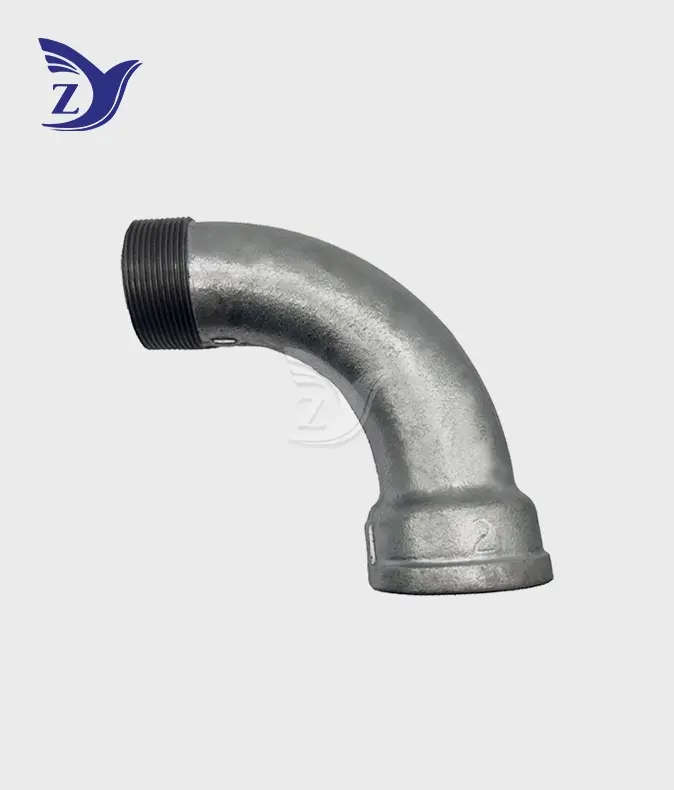
Choosing the right NPT elbow fitting size is one of the most practical decisions you will make during any piping project. Whether you are working on industrial water systems, gas pipelines, or HVAC condensate lines, the wrong size creates leaks, delays, and costly rework. This guide focuses on NPT galvanized male female 90° long radius elbow pipe fittings — covering size conventions, selection criteria, installation best practices, and procurement strategy — so you can order with confidence and install without setbacks.
Understanding NPT Elbow Fittings and Sizes
ANSI/ASME B1.20.1 sets the rules for NPT, which stands for "National Pipe Taper." Because the tapered thread design makes a mechanical interference seal as the fitting gets tighter, NPT connections are still the most common choice for plumbing and industrial piping in North America.
Male vs. Female NPT Ends
A male NPT end has threads that go on the outside, and a female NPT end has threads that go on the inside. One end of a street elbow — which is another name for a male-female configuration — threads directly into a valve, pump port, or tee, so it doesn't need an extra nipple in the middle. This gets rid of one more joint, which cuts the number of possible leak lines by about half and saves time during installation on tight job sites.
What "Long Radius" Actually Means
When an elbow is marked with a "long radius," its central radius is 1.5 times the pipe's standard diameter. A 1-inch long radius 90° elbow, for example, has a central bend radius of 1.5 inches. According to published hydraulic resistance data, that smooth sweep lowers frictional resistance by about 30% to 40% compared to an elbow with a short radius. In systems that move fast-moving gas or water, that decrease immediately leads to less pump energy use and less internal erosion.
NPT Size Conventions You Must Know
A lot of first-time buyers are surprised to learn that nominal pipe size (NPS) and actual thread diameter are not the same thing. The outside width of a 1/2" NPT fitting's threads is about 0.840 inches. Standard malleable iron fittings come in sizes from 1/8" to 6". Before you place an order, you should always compare the NPS name to the ASME B16.3 dimensional tables.
How to Choose the Right Size NPT Elbow Fitting
To get the right size, you have to look at three things at the same time: the pipe bore diameter, the system working pressure, and the fitting geometry.
Step 1 — Match Nominal Pipe Size to Your Pipe Schedule
Find the pipe's NPS and schedule that is already in your system. Both the pipe and the NPT galvanized male female 90° long radius elbow pipe fittings must have the same NPS. Mixing a 3/4" fitting onto a 1/2" pipe run will create a weak spot in the structure that breaks when the pressure changes. This is true even if the threads partly engage.
Step 2 — Verify Thread Standard Before Ordering
You can't use an NPT thread on a BSPT thread. When it comes to thread side angles. Forcing threads that don't match leads to permanent galling and almost certain leaking. If your project follows US rules, you should specify NPT. If the country you're exporting to follows British or Australian standards, you should mention BSPT. Zhiyuan Malleable Steel makes fittings that are compatible with both NPT and BSPT, so confirming the standard at the quotation stage completely removes this risk.
Step 3 — Account for Pressure and Temperature
At room temperature, ASME B16.3 Class 150 malleable iron fittings can handle 300 PSI for sizes up to 1". The pressure rating goes down as the temperature goes up. The same fitting can handle about 175 PSI at 400°F. Up to 392°F (200°C), the hot-dip galvanized coating works consistently. Above that temperature, the zinc layer starts to break down, and black malleable iron is the better material for gas lines in high-heat areas.
Comparison Between Long Radius and Short Radius NPT Elbows
Both types of radius can be used for valid reasons; the best one to use depends on the limitations of your system. Long radius elbows are better at managing flow than other types. Their longer bend path lowers the pressure drop across the turn, stops the pipe wall from wearing away, and reduces noise. They work best in runs where sustained flow efficiency is important, like boiler feed lines, condensate returns, irrigation mains, and any other similar run.
Elbows with a short radius take up less space along a line. A short-radius fitting's small shape makes it possible to work in crowded mechanical rooms or behind walls where routing options are limited. This is something a long radius design cannot physically do. In exchange, there is more turbulence and more wear over time, especially when media are rough or moving quickly.
Here is a practical comparison to guide your selection:
- Long radius 90° elbow — This type of elbow is best for water and gas mains with high flow rates, condensate systems, and outdoor pipeline runs where performance against rust and flow efficiency are important. The hot-dip galvanized, precision-threaded design of industrial-grade fittings makes these the default choice for demanding applications.
- Short radius 90° elbow — This type of elbow is best for low-speed applications with limited room where the larger sweep cannot fit physically. You can expect more pressure to be lost around the bend.
When a system is being analyzed hydraulically, or a gas line needs to pass a pressure-hold inspection, these differences are the most important. Choosing the wrong radius type can lead to pressure loss that could have been avoided, which can cause test failures.
Procurement Considerations for NPT Galvanized Elbow Fittings
It's not enough to just compare unit prices when you're buying. Quality of the casting, accuracy of the threads, thickness of the galvanized coating, and dependability of delivery all affect how much your whole job costs.
Verified thread gauging is the most critical quality checkpoint. Reliable manufacturers check NPT galvanized male female 90° long radius elbow pipe fittings threads with L1 and L2 ring and plug gauges in line with ANSI B1.20.1 to make sure the standoff distance is within the allowed range. If a thread is out of tolerance by even a tiny fraction of a millimeter, it will either seize up during installation or leak under pressure. Either way, it will cost a lot to fix.
Zinc coating thickness is important both outdoors and in humid places. The minimum zinc weight for hot-dip galvanized pipe fittings is set by ASTM A153. Instead of accepting verbal promises, ask for mill test certificates that prove compliance. Procurement managers can check the compliance files of projects with suppliers who are ISO 9001 certified and have traceable quality records. CE and FM certifications further demonstrate that the product has been tried independently against well-known performance benchmarks.
Installation Tips and Best Practices for NPT Galvanized Elbow Fittings
Installing the parts correctly will protect the investment you made in quality fittings. Clean the threads before assembly. If there are metal chips, debris, or leftover cutting oil on either the male or female NPT threads, they will not connect fully, and the seal will be compromised. A wire brush and solvent wipe can prevent a leak in less than a minute, saving hours of troubleshooting work later.
Before putting the parts together, apply a quality thread sealant, like PTFE tape or anaerobic pipe dope, to the male threads. When NPT is used, the spiral leak path at the thread root is closed by controlled thread deformation and sealant. Sealant by itself is not enough if the threads are not properly engaged; thread engagement without sealant is also insufficient.
Tighten until it is two to three turns past finger-tight for most diameters. When the threaded 90° joint is less than 1/2" in size, overtightening it can crack the female socket. To keep the galvanized layer from getting damaged, do not use toothed jaw pliers on galvanized joints; instead, use a strap wrench.
Inspect completed joints after the first pressure test. If you see any seepage around the threads, you should take the whole thing apart, clean it again, put on new sealant, and reassemble. Never attempt to over-tighten a joint that is leaking on a live system.
Conclusion
Once you know about nominal pipe sizing rules, thread standards, radius geometry, and material ratings, it's easy to choose the right NPT galvanized male female 90° long radius elbow pipe fittings size. In most industrial water and gas applications, long radius 90° elbows work better and last longer than short radius options when it comes to flow efficiency and service life. When you use the right installation method and precision-threaded, hot-dip galvanized malleable iron fittings, the joints will pass pressure tests and remain leak-free for the life of the system. The most common and expensive problems in the field can be avoided by taking the time to check the size, standard, and supplier references before placing an order.
FAQ
1. What is the difference between NPT and BSPT threads on elbow fittings?
ANSI/ASME B1.20.1 says that NPT threads must have a flank angle of 60°. BSPT threads follow BS 21 and have a flank angle of 55°. The two standards are dimensionally incompatible, and trying to mix them leads to thread damage and leaks. Before you buy, you should always confirm the thread standard required by your local code.
2. How do I measure my pipe to identify the correct NPS?
Find the pipe's outside diameter (OD) and then compare it to the figures in ASME B36.10 tables. An OD of 1.050" means that the pipe is NPS 3/4". The nominal size is just a guide; it's not a direct measurement of the thread diameter.
3. Are galvanized fittings suitable for natural gas lines?
Fittings made of galvanized malleable iron are structurally compatible with gas service. However, some local codes and ASME B31.2 guidelines recommend black iron for gas lines to make them easier to identify. Before selecting galvanized fittings for gas projects, you should always check the applicable area codes.
4. Can I reuse an NPT elbow fitting after disassembly?
When NPT threads are first put together, they deform slightly. Reuse is possible in low-pressure, non-critical situations as long as new sealant is applied. However, it is usually not a good idea for gas or steam lines that are under pressure where the joint's integrity is safety-critical.
Get a Quote from Zhiyuan Malleable Steel — Your Trusted NPT Elbow Fittings Supplier
Since 2006, Zhiyuan Malleable Steel has been manufacturing high-strength, anti-rust malleable iron pipe fittings. We have an annual capacity of 30,000 tons and cover a full range from 1/8" to 6". Our NPT galvanized male female 90° long radius elbow pipe fittings meet ISO 9001, CE, and FM standards, with in-stock availability and standard orders dispatched within two hours. Reach us at q1236800000@gmail.com to request specifications, samples, or bulk pricing today.
References
1. American Society of Mechanical Engineers. ASME B16.3: Malleable Iron Threaded Fittings. ASME, 2021.
2. American Society of Mechanical Engineers. ANSI/ASME B1.20.1: Pipe Threads, General Purpose (Inch). ASME, 2013.
3. American Society for Testing and Materials. ASTM A153: Standard Specification for Zinc Coating (Hot-Dip) on Iron and Steel Hardware. ASTM International, 2016.
4. Hydraulic Institute. Pipe Friction Manual. 3rd ed., Hydraulic Institute, 1990.
5. American Society of Mechanical Engineers. ASME B31.2: Fuel Gas Piping. ASME, 2019.
6. NSF International. NSF/ANSI 61: Drinking Water System Components — Health Effects. NSF International, 2023.
Online Message