
Sep 14, 2026
Is an elbow a 45 or 90?
An elbow pipe fitting can be either 45 or 90 degrees ,both are standard configurations used across industrial piping systems, and neither is universally "correct." The right choice depends entirely on your pipeline layout, flow velocity requirements, and spatial constraints. A 45 degree elbow redirects flow at a gentler angle, reducing turbulence and pressure drop. A 90-degree elbow makes sharper directional changes where space is limited. For procurement teams sourcing galvanized malleable iron fittings at scale, understanding this distinction directly affects system performance and downstream customer satisfaction.
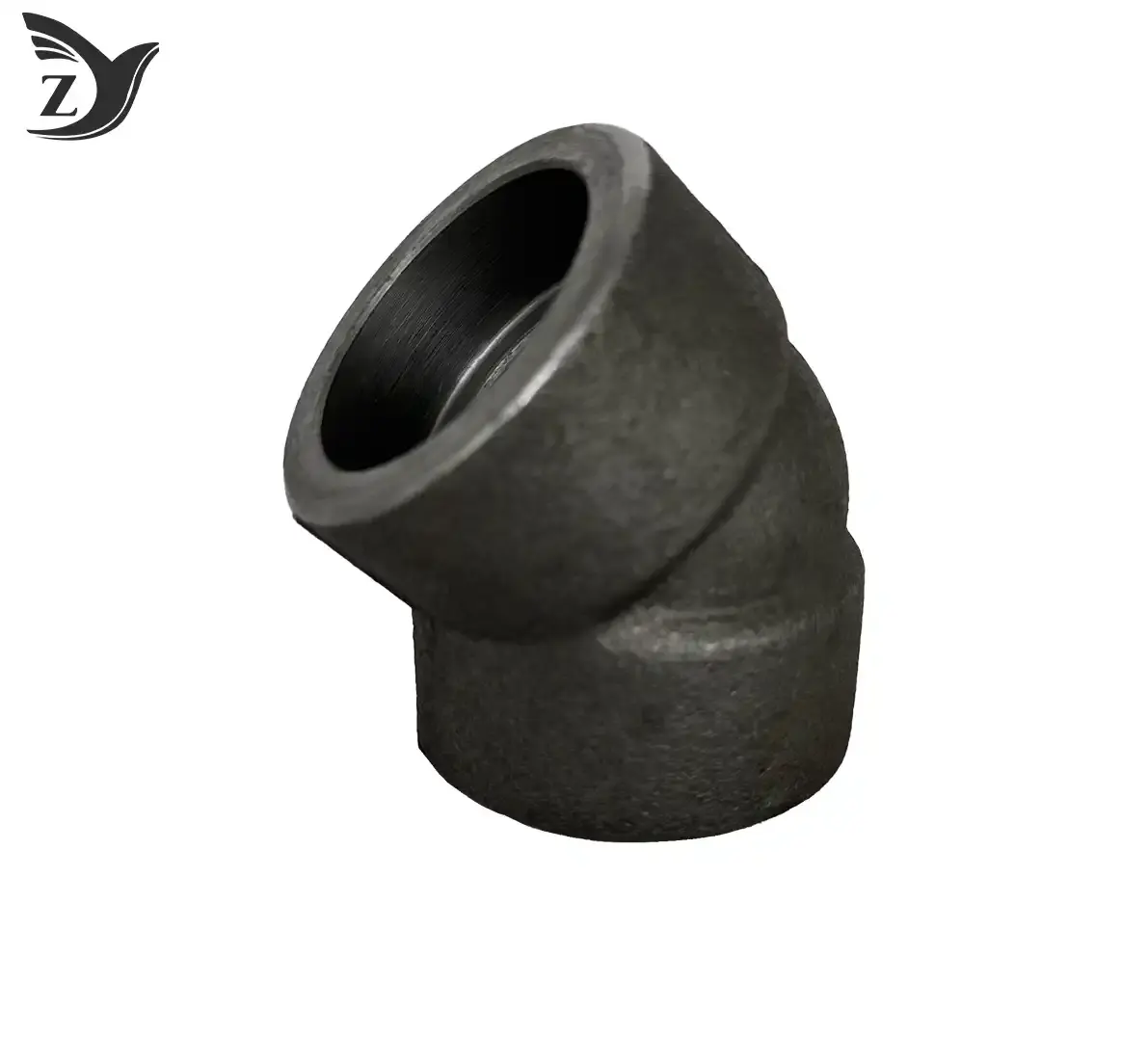
Understanding Elbow Pipe Fittings: 45 vs. 90 Degrees
What Each Angle Actually Does in a Pipeline
A 45 elbow changes the direction of flow by half of a right angle. This makes the change gradual, which keeps momentum and reduces resistance. The Hydraulic Institute's Engineering Data Book (2020) says that for the same flow conditions, a 45-degree elbow causes about 30–40% less pressure drop than a 90-degree elbow [1]. Pressure loss builds up over dozens of fittings in a water distribution or gas transmission network, so this is very important.
A 90-degree elbow, on the other hand, makes a sharper turn that works better in small mechanical rooms or lift links where saving space is more important than hydraulic performance. Contractors in the building and HVAC industries often keep both angles on hand because different runs inside the same building need to change directions in different ways.
Industry Applications by Angle
Here is a list of the best places for each type to work:
- 45 elbows are good for long-distance water lines, natural gas headers for distribution, irrigation systems, and process pipes in petrochemical plants. The gentle turn lowers the risk of cavitation and greatly increases the service life of the pipe walls.
- 90-degree elbows are the best option when you can't avoid sharp corners inside walls, like in drain-waste-vent (DWV) stacks, residential plumbing risers, and HVAC chilled-water returns.
Picking the wrong angle is more than just a problem for engineers. When downstream installers get parts that don't fit, they send them back, which cuts into dealer margins. This is a direct pain point for high-volume bulk buyers who have to deal with thin profit spreads per unit.
Key Differences and Dimensions: Choosing the Right Elbow
Dimensional Standards You Must Know
In North America, malleable iron threaded 45 elbows must meet ASME B16.3 standards. In Europe and many Southeast Asian countries, parts that are the same must meet ISO 49 standards. At every nominal pipe size (NPS), the center-to-face measurement of a 45-degree elbow is different from that of a 90-degree elbow. This means that mixing the two in a bulk order without clear paperwork leads to mistakes during installation in the field.
The center-to-face measurement for a ½-inch NPS malleable iron elbow under ASME B16.3 is about 22 mm for a 45-degree elbow and 38 mm for a 90-degree fitting. At a 2-inch NPS, those numbers rise to about 41 mm and 57 mm, respectively. When wholesale buyers specify by part number instead of nominal description, mistakes in substitution that cost a lot of money don't happen on the job site.
Mitered vs. Standard Elbows: A Manufacturing Distinction
Standard elbows are made from a single piece of metal, so the wall thickness is the same all the way around the bend. When you cut and join straight pipe pieces together to make mitered elbows, you lose some structural continuity at the weld line. The cast single-piece construction is the standard and more reliable choice for threaded malleable iron fittings that are used for water and gas service with high pressure.
Materials and Performance: Finding the Best Fit for Your Application
When it comes to pipe fitting materials, malleable cast iron stands out. Its controlled annealing process turns brittle white iron into a ductile, shock-resistant metal that can be threaded without breaking. This is a quality that can't be found in gray cast iron or PVC at the same sizes. Carbon steel has a higher tensile strength, but joints must be welded. Stainless steel is better at resisting corrosive media, but it costs more and isn't useful in most industrial and building settings.
The NPT/BSPT Square-edge 45° galvanized malleable iron elbow from Zhiyuan Malleable Steel is a good example of the performance mix that buyers who buy a lot of these items need. It has precision-threaded NPT or BSPT ends and is hot-dip galvanized to protect against rust. This means it can be used directly with current pipeline infrastructure in North America and other countries. According to ASTM A153, hot-dip galvanizing adds a zinc layer that is about 85 µm thick. This type of coating lasts much longer than electroplating options in damp or mildly corrosive conditions.
Here are the core advantages that make this fitting relevant for industrial procurement:
- The high-strength malleable iron body doesn't bend when it's being installed or when the working pressure changes in gas and water service.
- Hot-dipped galvanized finish protects against rust for a long time and is good for outdoor and partially exposed pipeline runs. This means that end users don't have to do as much maintenance over time.
- Precision NPT/BSPT threading makes sure that standard pipe thread gauges can be used to make a code-compliant seal that doesn't leak. This eliminates the need for repair in the field due to tolerance drift.
- The square-edge design at the fitting face's squared-off form makes it easier to cleanly make up with standard wrenches, which speeds up the installation process for contractor teams.
These benefits directly address the issues that hurt a distributor's image further down the line: threaded joint leaks, premature rust, and thread forms that don't work together. As soon as your customers stop calling to complain about broken fittings, you'll get more orders.
Installation, Maintenance, and Troubleshooting of 45-Degree Elbows
Step-by-Step Installation Protocol
Before putting on PTFE tape or pipe thread compound, clean the pipe threads of cutting oil and other debris. Tighten the 45-degree 45 elbow by hand until it is fully engaged, then move it forward another 2–3 turns with a wrench. If you over-torque malleable iron threads, they will break in tiny cracks that show up as slow leaks weeks after installation. Before final tightening, make sure the fitting body is lined up with the direction of flow. Moving it after full torque damages the thread seal.
According to ASME B31.3 process piping standards, test the completed section under 1.5 times its working pressure for at least 30 minutes before hiding it in walls or trenches.
Maintenance and Common Issues
Check threaded joints once a year for water service and every six months for gas service. Weeping at the thread contact usually means that the thread isn't tight enough or is damaged, not that the material has failed. In coastal settings, galvanized fittings may show white zinc corrosion products after 5–7 years. This surface oxidation is only for looks and doesn't affect the structural integrity unless the zinc layer is less than 45 µm when inspected.
Procurement Guide: Buying and Sourcing 45-Degree Elbow Fittings
When distributors spend between $200,000 and $1,000,000 a year on hardware, they often compare five to eight factories at the same time. When they do this, they should focus on three things that can be checked: ISO 9001 certification with up-to-date audit dates; documented thread gage inspection records per lot; and hot-dip galvanizing bath records that show zinc temperature and immersion duration.
Price-per-piece calculations only make sense when you have data on confirmed consistency. A supplier with a 5% lower unit price but a 3% reject rate actually loses money because of the work that needs to be redone, the returns, and the customers who leave. Zhiyuan Malleable Steel has ISO 9001, CE, UL, and FM certifications, and can produce up to 30,000 tons of steel each year. They already have over 1,000 product specs in stock. Standard goods are shipped within two hours of proof of an order, which is a practical benefit that directly helps distributors plan their inventory.
Tiered pricing structures reward commitment. Buyers consolidating 45 elbows and 90-degree elbows, tees, couplings, unions, bushings, and caps into a single container order unlock the factory-direct pricing that makes 30%+ gross margins achievable at the wholesale level.
Conclusion
Elbow pipe fittings come in two different shapes: 45-degree and 90-degree. Each is designed to work in a different hydraulic and physical situation. Wherever a smooth flow change, low pressure drop, and long service life are important, a 45 elbow is the best option. Galvanized malleable iron is still the best material for threaded industrial uses because it is resistant to rust and strong. When procurement professionals match the fittings they choose with what is needed for installation further down the line, they cut down on returns, protect margins, and build trust in the supplier, which leads to repeat business.
FAQ
1. Can I substitute a 45-degree elbow for a 90-degree elbow on the same run?
Not right away. The two curves divert flow in different ways and have different center-to-face sizes. When you switch a 45-degree elbow for the other, the physical endpoint of the pipe run changes, so you have to make changes to the layout. In some setups, two 45-degree bends can work as a 90-degree turn with less pressure loss, but the line length and fittings needed are longer.
2. What is the maximum working pressure for a threaded malleable iron elbow?
As per ASME B16.3 Class 150, a bendable iron elbow can handle 300 PSI at room temperature for steam service and higher pressures for cold water service. As the temperature rises, pressure ratings go down. For your specific service conditions, look at the manufacturer's published tables of pressure versus temperature.
3. How often should I inspect threaded galvanized elbows for leaks?
For standard water service, an inspection once a year is enough. Gas service pipelines should be checked every six months. If you see rust streaks on the thread faces, hear a hiss, or feel pressure loss while checking the system, it needs to be taken apart and sealed again right away.
4. Does thread standard (NPT vs. BSPT) affect interchangeability?
Yes. NPT and BSPT threads have the same size, but their thread angle and taper shape are different. In pressure-rated work, they can't be switched out. Before you place large orders, make sure you know what thread standard your users further down the line need.
Get Competitive Factory-Direct Pricing on Certified 45 Elbow Fittings — Contact Zhiyuan Malleable Steel
Zhiyuan Malleable Steel has supplied certified galvanized malleable iron fittings globally since 2006, with 30,000 tons of annual capacity and 1,000+ specifications ready for container orders. Our NPT/BSPT Square-edge 45° galvanized malleable iron elbows meet ISO 9001, CE, UL, and FM standards, backed by defective-product replacement guarantees. Whether you need a full catalog as a 45 elbow supplier for your distribution network or a custom OEM specification, contact us at q1236800000@gmail.com for a volume quote today.
References
1. Hydraulic Institute. Engineering Data Book, 3rd ed. Parsippany, NJ: Hydraulic Institute, 2020.
2. ASME. ASME B16.3: Malleable Iron Threaded Fittings, Classes 150 and 300.
3. ASM International. Metals Handbook: Casting, Vol.
4. ASTM International. ASTM A153/A153M: Standard Specification for Zinc Coating (Hot-Dip) on Iron and Steel Hardware.
5. ASME. ASME B31.3: Process Piping. New York: American Society of Mechanical Engineers, 2022.
6. International Organization for Standardization. ISO 49: Malleable Cast Iron Fittings Threaded to ISO 7-1.
Online Message