
Aug 10, 2026
Industrial Grade NPT Compatible Corrosion Proof Square Edge Cross Pipe Fittings Overview
When choosing pipe fittings for mission-critical infrastructure, the difference between standard and industrial-grade parts can mean the difference between a system that works reliably for decades and one that breaks down in a few months, costing a lot of money. NPT square face galvanized square edge cross pipe fittings are a special type of bendable iron parts made to meet the toughest needs in industries like fire protection, local water systems, and industrial processing. These four-way threaded connections offer strong flow distribution in multiple directions and are resistant to corrosion thanks to hot-dipped galvanization methods that make the coatings thicker than 85 microns. The square edge design makes it easier to use a wrench and improves the strength of the connection points. This makes these fittings perfect for high-torque setups where regular beaded fittings might break.
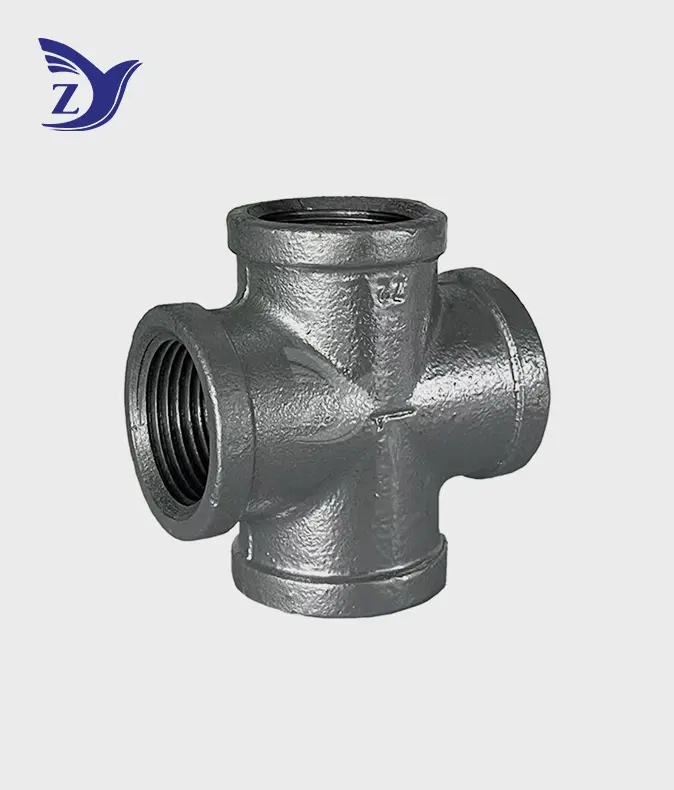
Understanding Industrial Grade NPT Square Face Galvanized Square Edge Cross Pipe Fittings
Industrial-grade cross pipe fittings connect four different pipe sections at right angles, making flow lines that can go in more than one direction. This is necessary for complex distribution networks. The letters "NPT" stand for "National Pipe Taper threading." This is a standard method based on ANSI/ASME B1.20.1 that uses a 60-degree thread angle and a 1:16 taper ratio to make mechanical seals that are pressure-tight without the need for extra coatings or gaskets in many situations.
Material Composition and Manufacturing Standards
These fittings are made from malleable iron that meets the requirements of ASTM A197, which says that they must have a minimum tensile strength of 40,000 psi and controlled bending qualities. Through controlled melting processes, white cast iron can be changed into pliable iron. This makes a material matrix that has the ability to be cast like iron but can be bent like steel. This stops the brittle fractures that happen a lot in cast iron that hasn't been tempered when it's put under shock loads or installation stresses.
NPT square face galvanized square edge cross pipe fittings were hot-dip galvanized according to ASTM A153 standards, which means that the malleable iron base was put into molten zinc at temperatures above 815°F. This forms a mechanical link between the base metal and the zinc coating, creating a protective layer with eta, zeta, and delta phases of the zinc-iron alloy. The layer that forms is usually between 3.4 and 4.2 mils thick. It provides sacrificial protection that extends service life in environments that are wet, salty, or chemically active, where black steel fittings would rust in months.
Square Face Versus Round Face Design Differences
NPT square face galvanized square edge cross pipe fitting are different from standard beaded or round-face options because they have a square edge and a strengthened band geometry at each exit. This design adds about 30% more material to areas of high stress, which spreads installation torque loads more widely across the fitting body. When techs use pipe wrenches to put things together, the square face's flat sides keep the tool from slipping and let them apply more force without damaging the threads or deforming the fitting body.
Round-face fittings have smooth, rounded transitions at the connection places. These make the fittings look better and make checking easier, but they make the fittings less strong mechanically. The square shape of the edges also makes it easier to get a good mechanical grip on structural uses where these fittings do double duty as both fluid transport and load-bearing framework parts in modular scaffolding or fence systems.
Compliance with Industrial Standards
Conforming to ASME B16.3 in terms of size makes sure that these fits work well with pipe parts made by a number of different companies. These parts have Class 150 pressure ratings, which means they can easily handle 150 psi at 366°F for saturated steam uses and 300 psi WOG (Water, Oil, Gas) at room temperatures between -20°F and 150°F. The ISO 9001 quality management certification shows that the manufacturing process is consistent by keeping track of processes, materials, and quality statistics.
Third-party approvals from groups like UL (Underwriters Laboratories) and FM (Factory Mutual) show that these fittings meet the standards for sprinkler system parts in the fire protection business. These approvals need a lot of pressure testing, proof of corrosion resistance, and long-term performance records that procurement professionals use to choose parts for setups that meet building codes.
Installation and Maintenance Guide for Galvanized Square Edge Cross Pipe Fittings
The right way to put NPT threaded connections decides whether they last for decades without leaking or break down too soon. The amount of thread contact, the type of glue used, and the amount of torque applied all affect how well joints work and how well they can handle changes in pressure and temperature.
Essential Tools and Preparation Steps
To install NPT square face galvanized square edge cross pipe fittings, you need precise alignment tools like pipe alignment clamps, thread gages (L1 ring type), and measured torque wrenches that can measure 50 to 150 ft-lbs, based on the size of the fitting. Before putting the parts together, look at the threads to see if they have any shipping damage, casting flash, or zinc buildup that could stop them from engaging properly. Cleaning brushes for threads get rid of protection oils and loose zinc particles without hurting the galvanized layer.
Apply PTFE tape or pipe dope made just for NPT threads, starting at the second thread and wrapping clockwise when looking at the fitting from the end. When sealant is used correctly, it fills the spiral hole that the tapered thread profile makes without causing hydraulic lock, which can cause fittings to crack when they are finally tightened. When working with oxygen or chemicals that oxidize, don't use compounds that are based on petroleum. Instead, use oxygen-safe seals that are suitable and rated for the service media.
Common Installation Challenges and Solutions
Cross-threading is the most common installation mistake. It happens when workers press together parts that aren't lined up properly. This changes the shape of the thread profiles and makes leak paths that can't be fixed with more sealer. To solve the problem, parts must be hand-threaded for at least three full turns before wrenches can be used. This makes sure that the threads engage easily and without any resistance.
When zinc buildup goes beyond what is acceptable, galvanized coats can sometimes cause thread interference. Instead of pushing the assembly together, get a thread chaser or tap that is made for NPT profiles and use it to get rid of the extra coating while keeping the base thread shape. Another risk is over-torquing, which can happen especially with fits of smaller diameters because too much force can cause cracks to spread from the stresses inside the casting. By following the manufacturer's torque recommendations, you can avoid both under-tightening, which can cause leaks, and over-tightening, which can damage the structure.
Routine Inspection and Preventive Maintenance
Visual checks every three months find early signs of coating wear, mechanical damage, or joint tears so that small problems don't get worse and cause system failures. Check for white zinc oxide powder buildup, which means galvanic corrosion has begun, rust spots from covering breaks, or water buildup at threaded joints, which means the seal is breaking down. Every year, checking the system's stability at 1.5 times its working pressure finds any leaks that are just starting to form.
How you store something has a big effect on how long it lasts before you install it. To stop zinc rust, keep parts in places that are dry, well-ventilated, and have a relative humidity below 60%. The best protection is in the original packing, but if you need to store things in bulk, make sure to stack fittings with threaded ends that are covered and make sure there is enough airflow to keep moisture from building up. Avoid touching the ground directly and being near chemical fumes that break down coatings faster.
Applications and Industry Use Cases of NPT Square Edge Cross Pipe Fittings
The main use for NPT square face galvanized square edge cross pipe fittings is in fire protection systems, where dependability has a direct effect on life safety. Sprinkler distribution networks in warehouses, business buildings, and factories depend on these four-way connections to quickly branch supply lines while keeping the pressure steady throughout the system. The galvanized finish stops interior rust that could make trash that can block sprinkler holes, and the square-edged design can handle pressure spikes when the system is turned on without any joints breaking.
Cross fittings are used in municipal water distribution projects where main supply lines split to serve more than one neighborhood or building. The water hammer effects of pump cycles and valve operations are handled by the pressure-resistant malleable iron construction. The zinc coating extends the service life in underground sites where soil conditions encourage corrosion. In one interesting case, a city in the Midwest replaced old black steel infrastructure with galvanized, bendable parts that were expected to last 40 years, compared to only 15 years for uncoated options.
These fittings are used in process water systems, cooling tower circuits, and utility distribution networks in industrial, power generation, and food production plants. The chemical protection of galvanized coats is very important in places where process leaks or air pollution would quickly weaken steel that isn't protected. High-strength, pliable iron can handle the thermal expansion loads that come with systems that normally work in temperatures ranging from room temperature to 300°F.
Cross fittings are useful in cold water, hot water, and steam heating networks because they let flow go in more than one direction. The square edge shape makes installation easier in small mechanical rooms where techs have to work with little room for their wrenches. In setups of rooftop equipment, these fittings hold pipe loads and direct flow through distribution manifolds at the same time.
Conclusion
When choosing industrial-grade NPT square face galvanized square edge cross pipe fittings, you have to weigh the instant cost against the expected performance over the long term. When you combine the mechanical strength of malleable iron with the rust resistance of hot-dip galvanization and the ease of installation of square edges, you get a part that is perfect for demanding uses in fire protection, city infrastructure, and industrial processing. Procurement pros can check the quality of products and make sure they work with current systems by understanding compliance standards like ASTM A197, ASME B16.3, and ASTM A153. When installed correctly and maintained regularly, the service life can last longer than 30 years in most normal working conditions, giving you the best return on your investment.
FAQs
Are These Fittings Compatible with BSPT Threaded Pipes?
When mixed directly, NPT (National Pipe Taper) and BSPT (British Standard Pipe Taper) threads can't lock securely because they use different angles, 60 degrees for NPT and 55 degrees for BSPT. But a lot of companies make valves that work with both types of pipes or offer BSPT versions of the same product. Always check the thread specs before buying it to avoid having to make expensive changes in the field.
What Maintenance Schedule Extends Product Lifespan?
Visual checks every three months and pressure tests once a year at 1.5 times normal pressure find problems before they break. In places where corrosion is likely to happen, like chemical processing plants or sites near the coast, inspections should be done once a month, and the thickness of the zinc covering should be checked with magnetic gauges to plan replacements before breakthrough corrosion starts.
Can Galvanized Fittings Function in Marine Atmospheres?
Hot-dip galvanization is a safe way to protect things in marine settings, but the service life is shorter than for installations on land because salt exposure shortens the zinc's usefulness. Expect performance to last 15 to 20 years along the coast and 30 years or more inland. Extra protective coats can make seafaring equipment last longer if they are asked for when the equipment is bought.
Partner with Zhiyuan Malleable Steel for Certified Industrial Pipe Fittings
Zhiyuan Malleable Steel has been making high-quality NPT square face galvanized square edge cross pipe fittings for more than 18 years. We make them in a 50,000-square-meter factory in Shanxi Province. As a major supplier to fire protection contractors, municipal engineering firms, and industrial plant operators across North America, we keep a large inventory that allows standard specifications to be delivered within two hours. Our 30,000-ton annual capacity also meets the needs of large-scale projects. Our ISO 9001, CE, UL, and FM certifications show that our quality is always the same, and our OEM/ODM services let us meet special needs that our normal stock items can't. We stand behind every fitting with guarantees that will replace any broken items and full technology help throughout the whole buying process. Email our engineering team at q1236800000@gmail.com to get full specification sheets, bulk pricing for future projects, or to talk about custom solutions that are made to fit the needs of your particular application. You can look through our full list of products at zymalleablepipefitting.com and find out why top builders choose Zhiyuan as their go-to manufacturer for malleable steel pipe fittings.
References
- American Society of Mechanical Engineers (2016). "ASME B16.3: Malleable Iron Threaded Fittings - Classes 150 and 300." ASME Standards Publication.
- ASTM International (2018). "ASTM A197: Standard Specification for Cupola Malleable Iron." Annual Book of ASTM Standards, Volume 01.02.
- ASTM International (2017). "ASTM A153: Standard Specification for Zinc Coating (Hot-Dip) on Iron and Steel Hardware." Annual Book of ASTM Standards, Volume 01.06.
- American National Standards Institute (2013). "ANSI/ASME B1.20.1: Pipe Threads, General Purpose (Inch)." ANSI Standards Committee Publication.
- National Fire Protection Association (2019). "NFPA 13: Standard for the Installation of Sprinkler Systems." NFPA Code Standards, Chapter 6 - System Components.
- International Organization for Standardization (2015). "ISO 5922: Malleable Cast Iron - Specification." ISO Technical Committee 25 Standards Publication.
Online Message
YOU MAY LIKE
High quality furniture manufacturer