
Aug 6, 2026
Industrial Grade Hot Dipped Galvanized Anti Rust Reducing Pipe Connection Fittings
When professionals choose parts for fire safety systems, public water lines, or industrial process pipes, they know that links that work are essential. BSPT square face galvanized square edge reducing coupling pipe fittings made for industrial use give strong performance and long-lasting resilience needed in tough situations. With their corrosion-resistant malleable iron structure and protective zinc coating, these precision-threaded parts make sure safe transfers between different pipe sizes while keeping the integrity of the system.
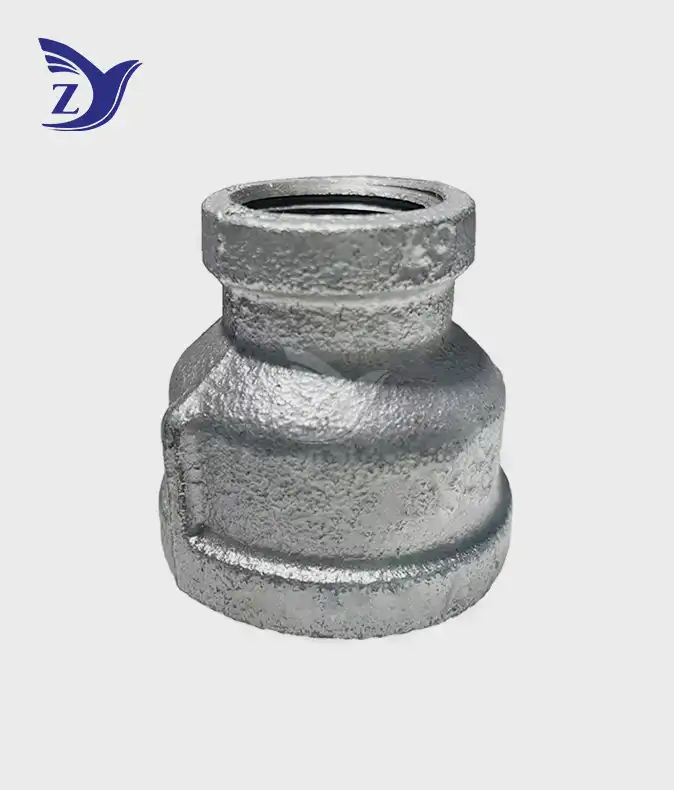
Comparing BSPT and Other Pipe Fittings: Making the Right Choice
Thread Profile Differences and Their Impact
The main difference between BSPT and NPT threads goes beyond measuring angles; it also affects how well they lock and how they need to be installed. For leak protection, BSPT threads rely mostly on thread contact and sealant application. NPT threads, on the other hand, use both taper interference and sealant. This difference affects the torque specs. When tightening BSPT fittings, it's important to follow the manufacturer's instructions very carefully so you don't damage the threads by over-tightening or the seal by under-tightening.
When it comes to high-torque uses, BSPT square face galvanized square edge reducing coupling pipe fittings are clearly better than beaded edge options. The flat, strengthened band makes sure that the wrench always makes touch with the whole gripping surface. This keeps the wrench from slipping during installation and lowers the chance that it will damage the fitting. This feature of the design is especially useful in small areas where it's hard to get the tools in the right place.
Material Selection: Galvanized Versus Stainless Steel
When it comes to corrosion protection, mechanical strength, and cost, galvanized malleable iron fittings and stainless steel options are used in different situations. For most commercial water, gas, and HVAC needs, hot-dip galvanized malleable iron is the best value. The zinc layer protects well against rust in air and stays intact in water systems with a pH of zero. The high tensile strength of malleable iron (at least 350–400 MPa) makes structures strong even when they are vibrating or being hit by something.
Stainless steel fittings are needed in places where corrosion is a big problem, like chemical plants, seaside sites that get hit by salt spray, or places where acidic or alkaline fluids are used. The more expensive material is because it is more resistant to rusting over a wider range of pH levels and temperature changes. The choice of material should be based on a study of its lifecycle costs, not just its starting price.
Certification Standards for Reliable Performance
Quality BSPT fittings meet a number of international standards that control the qualities of the materials, the limits for size, and the performance characteristics. The types of malleable cast iron that are defined by ISO 5922 and EN 1562 are usually W400-05 or W350-04. EN 10242, on the other hand, describes the sizes and shapes of fittings and threads. With these certificates, parts from different makers can be used together, and the performance will be the same no matter what the installation conditions are.
Protocols for pressure testing make sure that fittings are solid by using air testing at 5 bar or hydrostatic testing above 20 bar. This finds holes in casts that could affect their long-term dependability. Third-party approval from well-known groups adds to the confidence in important uses like fire safety, distributing drinkable water, and industrial process systems.
Benefits and Material Considerations of Hot Dipped Galvanized Square Edge Couplings
Corrosion Protection Through Hot Dip Galvanizing
In the hot-dip galvanizing process, iron parts that can be shaped are put into liquid zinc that is about 450°C. This makes a strong bond between the zinc coating and the base metal. This method creates several layers of a zinc-iron mixture below the pure zinc layer on top, which makes it stick better than electroplating or mechanical coating. The zinc covering mass that is made usually goes over 500g/m², which is equal to about 70 microns of protection.
This thick layer acts as a sacrifice for protection, as the zinc rusts faster than the iron underneath, greatly extending the life of BSPT square face galvanized square edge reducing coupling pipe fittings. When exposed to normal air, galvanized parts don't rust for decades without any upkeep. Zinc's electrolytic action helps the covering heal small scratches, so it stays protected even if the surface gets damaged during installation or use.
Malleable Iron Material Properties
Because of the way its grain is formed during the melting process, malleable iron is different from gray cast iron or ductile iron. A high-temperature heat treatment changes brittle iron carbides into irregular graphite clusters. This makes a material with a tensile strength of 350–400 MPa that still has the casting benefits of iron. This mixture is better at resisting impact and being flexible than gray cast iron, but it's still cheaper than steel options.
The choice of material has a direct effect on how well the fitting works in places where vibrations are common, where temperatures change, and where systems are sometimes subject to mechanical shock. Because it can absorb impact energy without breaking, malleable iron is very useful in fire prevention systems that may experience water hammer or in industrial process piping that is exposed to pressure surges.
Maintenance and Longevity in Industrial Environments
When used in the way they were meant to be used, hot-dip galvanized malleable iron parts don't need much upkeep. Any coating damage that needs to be fixed is found through regular eye checks during planned system maintenance. Galvanized fittings don't need to be maintained for 25 to 50 years, based on the location, in most industrial water, gas, and HVAC uses.
The dampness in the air, changes in temperature, chemical contact, and galvanic interaction with nearby materials are all environmental factors that can shorten the life of something. Coastal areas with salt spray make zinc wear off faster, but galvanized parts still last a lot longer than metal materials that aren't protected. Systems that work at temperatures below 60°C get the best performance from coatings, while higher temperatures may speed up the rusting of zinc.
Regular inspections should record the state of the coating, the strength of the joints, and any signs of weeping or small leaks. Early discovery lets preventive maintenance be done before small problems get worse and cause the system to fail. This proactive method extends the life of assets and cuts down on unexpected downtime.
Procuring Industrial Grade BSPT Galvanized Reducing Couplings: Best Practices
Supplier Qualification and Certification Verification
Before you choose a provider, you should check their manufacturing certifications and quality control systems. Getting ISO 9001 approval shows that you have a method for controlling quality that includes buying materials, making things, inspecting them, and keeping records of where they came from. For each production batch, suppliers should give test results that prove the grade of malleable iron, its chemical makeup, and its mechanical properties for BSPT square face galvanized square edge reducing coupling pipe fittings.
Product certifications that are specific to target markets make sure that regulations are followed and make it easier to get projects approved. If something has a CE mark, it means it meets the standards of the European Union. If it has a UL or FM mark, it means it meets the standards of North America for fire safety. For international jobs, it may be necessary to get extra certifications that match local rules and building standards.
A supplier's ability to make things and their technical know-how decide whether they are right for big projects or long-term supply deals. For casting, drilling, heat treatment, and galvanizing, production centers should keep the right tools on hand. Technical staff with knowledge in metallurgy and engineering help with customization requests and give advice on how to use the product.
Bulk Ordering and Customization Capabilities
To buy a lot of things, you need to know how your suppliers manage their supplies, how long it takes to make things, and how they handle transportation. Well-known makers keep common sizes and shapes in stock, which makes it easy to meet standard needs quickly. Custom sizes, special threading, or changed designs usually need production runs with longer wait times, which depend on the need for tools and the schedule for production.
With ODM and OEM capabilities, you can get custom thread setups, changes to the size or shape of the parts, or special surface treatments that go beyond normal galvanizing. Suppliers who offer these services help with engineering during the development of specifications, make prototypes for validation testing, and make sure that the quality paperwork meets the needs of the project. This working together makes sure that parts exactly match system designs and stay in line with all the rules that apply.
Different suppliers have different minimum order amounts, price systems, and bulk discounts because of how their products are made and how they place themselves in the market. Framework deals for recurring needs help keep prices stable, set priorities for production capacity, and make the buying process easier. Long-term partnerships are good for both parties because they make it easier to plan for regular demand and supply.
Quality Assurance and Warranty Considerations
Comprehensive quality assurance includes more than just manufacturing licenses. It also includes processes for inbound inspections, controls during production, and final proof testing. Measuring the dimensions of a thread with standardized tools makes sure it is accurate, and checking it under water or air pressure makes sure it is strong. Magnetic induction measurements of galvanization thickness make sure that the layer meets the requirements.
Material approvals, measurement inspection reports, pressure test records, and coating thickness proof are some of the documents that help with quality assurance. These papers make it possible to track controlled applications and help with warranty claims if problems happen. Digital documentation systems are replacing paper records more and more, which makes them easier to find and more reliable for archiving.
If a product fails too soon, the warranty terms show that the maker is confident in its quality and give you options for what to do. Standard warranties usually cover problems in the materials or the way they were made, and they cover repair of the product instead of work for fitting. Knowing the limits of the guarantee, how to file a claim, and when to expect an answer stops arguments and makes sure that quality problems are properly fixed.
Conclusion
Industrial-grade BSPT square face galvanized square edge reducing coupling pipe fittings work well, last a long time, and are reliable, just what fire protection workers, city engineers, and industrial building managers need. The precision-threaded BSPT design with square edge support makes sure that the joints are safe and leak-tight, and that they can handle high temperatures and pressures. Hot-dip galvanization protects against corrosion for decades, and building with malleable iron gives it great power. Installing the system correctly by following the manufacturer's instructions and choosing a seller carefully based on certifications and quality guarantees will make the system last longer and cost less over its lifetime.
FAQ
Can I Mix BSPT and NPT Threads in the Same System?
Because their thread angles are different—55 degrees for BSPT and 60 degrees for NPT—BSPT and NPT threads cannot be used together. When you try to connect these different threads, they won't join properly, which will damage the seals and cause leaks. During forced assembly, thread damage often happens, which means that parts need to be replaced. When attaching pieces of equipment or pipes with different thread standards, make sure you use the right adapters that are made to go from BSPT to NPT threads.
What Pressure Rating Should I Expect?
Heavy-duty BSPT valves made of malleable iron usually have a PN25 grade, which means they can handle 25 bar (362 psi) of pressure at temperatures between -20°C and 120°C. This grade is for fittings that are properly fitted and used within the limits of their design. When pressures or temperatures are higher, they need to be checked against the manufacturer's specs and may mean that better materials or designs need to be used. During the installation's projected service life, system safety factors should take into account effects like pressure spikes, thermal expansion, and wear and tear.
How Do I Read Reducing Coupling Size Designations?
When you reduce the size of a coupling, you show the bigger bond first, then the smaller one. On one end of a 2-inch by 1-inch BSPT square face galvanized square edge reducing coupling pipe fittings is a 2-inch male pipe thread, and on the other end is a 1-inch male pipe thread. This convention is the same for all producers who follow foreign norms. When joining pipes from different manufacturers, check the real thread dimensions to make sure they work, even if the stated sizes match.
Source Quality BSPT Square Face Galvanized Square Edge Reducing Coupling Pipe Fittings from Zhiyuan Malleable Steel
Zhiyuan Malleable Steel combines 26 years of casting expertise with comprehensive certification coverage including ISO 9001, CE, UL, and FM approvals, providing the quality assurance and regulatory compliance critical for fire protection, municipal infrastructure, and industrial process applications. Our 30,000-ton annual production capacity across more than 1,000 specifications ensures availability of standard configurations while our ODM/OEM capabilities address custom requirements for non-standard dimensions, special threading, and project-specific designs. As a leading BSPT square face galvanized square edge reducing coupling pipe fittings manufacturer, we maintain substantial inventory enabling standard product delivery within two hours for urgent project needs. Our quality guarantee includes replacement of defective products, supported by comprehensive material certifications and inspection documentation. Contact our technical team at q1236800000@gmail.com to discuss your specific piping requirements and receive detailed specifications, competitive pricing, and delivery schedules tailored to your project timeline.
References
- British Standards Institution. "BS 21: Specification for Pipe Threads for Tubes and Fittings Where Pressure-Tight Joints Are Made on the Threads (Metric Dimensions)." London: BSI Group, 2015.
- International Organization for Standardization. "ISO 5922: Malleable Cast Iron." Geneva: ISO, 2019.
- European Committee for Standardization. "EN 10242: Threaded Pipe Fittings in Malleable Cast Iron." Brussels: CEN, 2013.
- American Society for Testing and Materials. "ASTM A153/A153M: Standard Specification for Zinc Coating (Hot-Dip) on Iron and Steel Hardware." West Conshohocken: ASTM International, 2022.
- Factory Mutual Research Corporation. "FM Approval Guide: Pipe Fittings for Fire Protection Service." Johnston: FM Global, 2023.
- Underwriters Laboratories. "UL 860: Standard for Safety Fittings for Use with Fuel Gases." Northbrook: UL LLC, 2021.
Online Message