
Jun 18, 2026
How to measure a galvanized reducing tee?
To correctly measure an NPT square face galvanized square edge reducing tee pipe fitting, you must first find its three most important openings: two run ends and one branch exit. To find out what sizes are needed, like 1" x 1" x ½", use calibrated vernier calipers to measure the outer diameter at each opening and then compare these measurements to nominal pipe size charts. Use NPT thread gauges to check the thread engagement and make sure the taper is correct. Measure the square face flatness and edge thickness directly to make sure the sealing surfaces meet ASME B16.3 tolerances and stop leaks during installation.
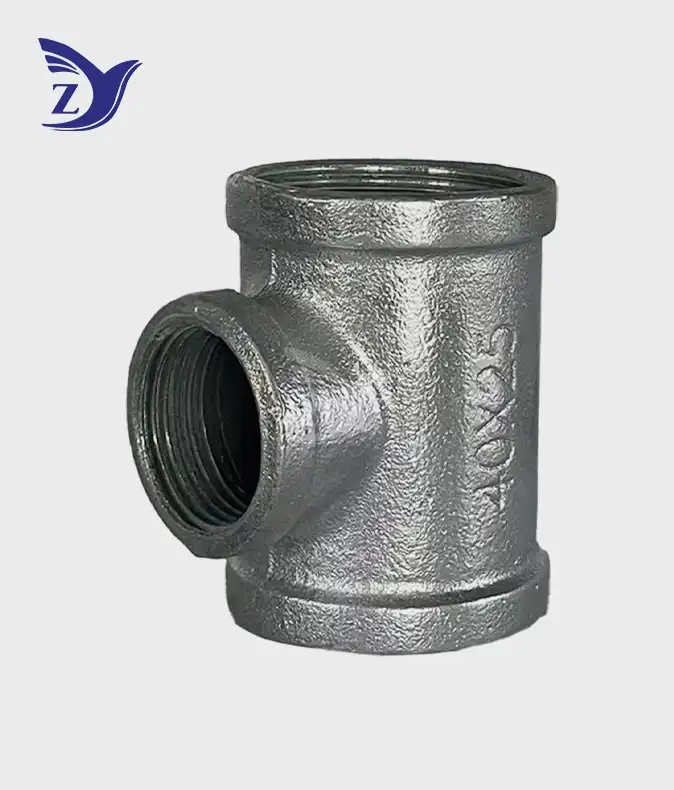
Understanding Galvanized Reducing Tees and Their Importance
When I walk through industrial facilities, like fire protection systems or municipal water plants, there is one part that always stands out as being important to the system's reliability: the threaded reducing tee. These corrosion-resistant fittings are used as important branching points in water, gas, and HVAC pipelines, but choosing the right one depends on exact measurements.
What Makes NPT Square Edge Reducing Tees Different?
The NPT square face galvanized square edge reducing tee pipe fittings design is different from standard round-bead fittings because it has reinforced, banded geometry at the thread openings. The flat surface makes it easier to use a wrench during installation, and maintenance teams can apply more torque without deforming the part. The "reducing" function gets rid of the need for separate bushings by building diameter transitions directly into the tee body. For example, a 1½" x 1½" x ¾" configuration connects two main lines while branching to a smaller outlet in the same part.
NPT square face galvanized square edge reducing tee pipe fittings are made from malleable iron that meets ASTM A197 standards, and they are hot-dip galvanized according to ASTM A153 standards. The zinc layer makes a metallurgical bond that is more than 85 microns thick. This keeps the metal from oxidizing in damp places and from galvanic rusting happening in systems with mixed metals. This process makes the product last a lot longer than options that aren't coated, especially when it's installed outside or exposed to chemicals.
Why Precise Measurement Prevents Costly Failures?
I've seen wrong measurements during procurement cause a lot of problems, including shipping delays when replacements come, downtime for the installation crew, and the possibility of system leaks if fittings that don't fit are pushed into place. A fire sprinkler builder once told how a ⅛" mistake in branch outlet size meant that the whole installation of a pump house had to be redone, which took three days and cost a lot of money in labor.
Making sure measurements are correct is important for following project requirements and industry standards like NFPA 13 for fire protection systems. When measurements exactly match engineering drawings, installation goes smoothly, pressure testing passes on the first try, and system integrity stays the same throughout its operational life. If measurements are off, changes in the field or emergency reorders cause delays and cost more money.
Key Dimensions to Measure on a Galvanized Reducing Tee
When you know which measures are the most important, you can turn buying from guesswork to precision engineering. Each dimension plays a different role in how well and how compatible a system is with other systems.
Main Run Inlet and Outlet Diameters
The two main openings that make up the straight-through flow path of NPT square face galvanized square edge reducing tee pipe fittings need to be measured at the widest point of the thread. Pipe size markings like "1 inch" don't show the actual sizes; "NPS" stands for "approximate inner diameter" for historical reasons. At the thread crest, a 1-inch NPT fitting has an outer diameter of about 1.315 inches.
Place the jaws of your vernier caliper perpendicular to the fitting axis and measure across the external thread peaks. Write down the outer diameter and then check the nominal size in NPS conversion tables. This step avoids confusion when a physical measurement of 2.375 inches corresponds to a 2-inch NPS rating. Correct interpretation makes sure the fitting fits your existing pipeline specifications.
Branch Outlet Diameter Assessment
The reducing function is based on this third hole, which is usually smaller than the run ends. A 2" x 2" x 1" reducing tee has two 2-inch run connections and one 1-inch branch. This is what it's used for in industrial water and gas pipeline branching uses.
Use the same caliper method to measure this exit, being extra careful if the branch extends at a perfect 90-degree angle. Some reducing setups use the format 2" x 1½" x 1", but even the run ends are different sizes. Before making an order, check the orientation marks on the fitting or the supplier's images to see which measurement goes with which hole.
Square Face Flatness and Edge Thickness
For high-torque setups, square edge fittings are better because each opening has a reinforced banding that gives them a mechanical advantage. Use calipers to measure the flat surface width; this size usually goes from 0.5 to 0.75 inches based on the fitting size.
Using a precision straightedge across the square face to check for flatness. Any gaps show signs of warping or casting flaws that make the seal less effective. The edge thickness, measured from the banding surface to the thread root, should stay the same all the way around. Differences show signs of manufacturing flaws that could cause cracking during installation.
National Pipe Thread Measurement Standards
Use a special NPT thread gauge—these precise tools have both "Go" and "No-Go" ends that are set to ASME B1.20.1 standards. The 1:16 taper in the threads makes a mechanical seal that stops leaks without gaskets.
The "Go" gauge should thread smoothly into the fitting for a certain number of turns (usually 3–5 turns, depending on size), while the "No-Go" side should stop after only one turn. This makes sure that the taper, pitch (threads per inch), and thread depth are correct. A thread pitch gauge checks the TPI rating, which is 27 TPI for sizes ⅛" to ¾" and 8 TPI for sizes 3" and up.
Step-by-Step Guide: How to Properly Measure Your Galvanized Reducing Tee?
Systematic measurement gets rid of doubt and boosts trust in choices about buying. I suggest following this order when looking at fits to buy or making sure that shipped parts match what was ordered.
Essential Tools and Safety Precautions
Before you start, make sure you have a precision straightedge, steel rulers or tape measures, digital vernier calipers with a scale of at least 0.001 inches, and NPT thread gauges in the right sizes. When working with zinc parts, wear gloves that won't cut you because they sometimes still have sharp edges from the manufacturing process.
Place the parts on a stable surface and work in well-lit areas. The zinc layer is safe, but it can leave marks on your hands and tools, so keep clean rags handy. When measure parts right after touching them, don't use a caliper right away because galvanization residue could change the results by a few thousandths of an inch.
Measurement Process for Run and Branch Openings
In most cases, one of the run ends is the best place to start. A wire brush can be used to remove any protection layer or dirt from the threads. Place the jaws of the caliper across the external thread diameter, making sure they touch the thread crests instead of the roots. Take three measures at three different points of rotation and then average them to account for small differences in how the parts were made.
Keep track of this dimension, and then do it again for the second run opening. If the tees are "straight" (not reducing), measure both ends separately to make sure they are the same. Move to the branch exit and make a note of whether the position of its axis changes where the measure goes. Some techs find it easier to measure branch ports when they are looking at them from the side instead of straight on.
Using normal reference tables, change all measures of the pipe's outer diameter to its nominal size. An OD measurement of 1.660 inches means a 1¼-inch NPS, and a measurement of 2.375 inches means a 2-inch NPS. Instead of depending on memory during procurement, write down these changes right away.
Verifying Square Face Geometry
Write down the width of the square face banding at each hole along with the measurement in 0.01-inch steps. You can move your straightedge across the flat surface in three different ways: horizontally, vertically, and diagonally. Any noticeable light gap bigger than 0.005 inches is a sign of unacceptable pitch deviation.
To find the edge thickness of NPT square face galvanized square edge reducing tee pipe fittings, take the outer bands surface measurement and remove the thread root depth. To do this, you need to put one caliper jaw inside the threaded hole at the thread root and the other jaw on the outside of the square face. Thickness that stays the same (within 0.020 inches) means that the casting is of good quality and has enough structural support.
Thread Engagement Testing and Documentation
Choose the NPT thread gauge that fits the standard size you measured. For the gauge threads, use light machine oil. Next, hand-thread the "Go" end into the fitting. Count the turns until you can feel the resistance rising. For most sizes, this should happen between 3.5 and 5.5 turns.
Right away, check the "No-Go" gauge. It should engage in less than one full turn and then stop. If the "Go" gauge stops too soon or the "No-Go" threads go all the way in, the fitting doesn't meet ASME B1.20.1 standards and could leak while it's being used.
Write down the date the measurements were taken, a description of the fitting (material, finish, layout), all the measurements, the results of the thread gauge, and the inspector's names. Before you approve the order or take delivery, compare these numbers to the supplier's standard sheets. This paperwork is very helpful if there are disagreements about how well two parts work together.
Conclusion
By consistently measuring run and branch diameters of NPT square face galvanized square edge reducing tee pipe fittings, checking square face geometry, and testing thread conformance, you can make sure that new systems will work with the ones that are already in place and avoid costly installation delays. The combination of hot-dip galvanization and square edge reinforcement provides corrosion resistance and mechanical durability, which supports choosing high-quality parts. When measurement discipline is combined with quality manufacturing and dependable suppliers, industrial piping projects go smoothly from design to decades of operational service, protecting both short-term budgets and long-term maintenance costs.
FAQ
What tools are essential for measuring NPT reducing tees accurately?
For accurate measurements of the outside diameter, digital vernier calipers with a resolution of 0.001 inches are needed. NPT thread gauges, including "Go" and "No-Go" types, make sure that the thread meets ASME B1.20.1 standards, which stops leaks caused by incorrect taper or pitch. A precision straightedge checks the flatness of the square face, and thread pitch gauges confirm the correct number of threads per inch. You can get these tools from industrial suppliers for $100 to $300, and they pay for themselves by avoiding just one wrong-size order.
Does measurement approach differ between square face and round face designs?
The outer diameter and thread measurements are the same for both styles because they both follow the same NPT specifications and nominal sizing conventions. To make sure the square face is flat, you need to use a straightedge and measure the banding width. For round-bead fittings, which don't have a flat surface, you would measure the radius of the beaded reinforcement instead. Thread engagement testing is the same for both styles because the only difference is the external gripping surface and not the internal threading.
How does galvanization affect fitting dimensions and installation?
Hot-dip galvanizing adds about 3 to 6 thousandths of an inch to the outside surfaces because of the zinc coating. This small increase doesn't affect thread engagement because NPT taper tolerances allow for such differences. However, if pipe hangers or supports have very small clearances, this coating thickness might need to be taken into account. During installation, the zinc surface makes thread engagement easier than with bare iron because it's lubricious. Welding galvanized fittings, on the other hand, releases toxic zinc oxide fumes and damages the heat treatment of the malleable iron, making joints that are more likely to break.
Partner with Zhiyuan Malleable Steel for Reliable NPT Square Face Galvanized Square Edge Reducing Tee Pipe Fittings
Accurate measurements mean nothing without a trusted NPT square face galvanized square edge reducing tee pipe fittings supplier backing your projects. Zhiyuan Malleable Steel brings 18 years of casting expertise and 30,000-ton annual capacity to your procurement needs. Our ISO 9001-certified manufacturing processes, CE/UL/FM certifications, and comprehensive quality control—from thread gauging through hydrostatic testing—ensure every fitting meets ASTM and ASME standards. Whether you need standard inventory shipped within hours or custom configurations developed through our ODM/OEM services, our 38-member technical team provides the expertise your complex installations demand. Contact us at q1236800000@gmail.com or visit zymalleablepipefitting.com to discuss your specifications with experienced professionals. As a leading NPT square face galvanized square edge reducing tee pipe fittings manufacturer, we replace uncertainty with reliability, protecting your project timelines and budgets through consistent quality and responsive service.
References
1. American Society of Mechanical Engineers. (2020). ASME B16.3: Malleable Iron Threaded Fittings - Classes 150 and 300. New York: ASME Standards Publishing.
2. ASTM International. (2019). ASTM A197: Standard Specification for Cupola Malleable Iron. West Conshohocken: ASTM Publishing.
3. ASTM International. (2021). ASTM A153: Standard Specification for Zinc Coating (Hot-Dip) on Iron and Steel Hardware. West Conshohocken: ASTM Publishing.
4. National Fire Protection Association. (2022). NFPA 13: Standard for the Installation of Sprinkler Systems. Quincy: NFPA Publications.
5. American National Standards Institute. (2018). ANSI/ASME B1.20.1: Pipe Threads, General Purpose (Inch). Washington: ANSI Standards Distribution.
6. Galvanizers Association. (2020). Hot-Dip Galvanizing for Corrosion Protection of Steel Products: A Comprehensive Technical Guide. Birmingham: Galvanizers Association Publishing.
Online Message
YOU MAY LIKE
High quality furniture manufacturer
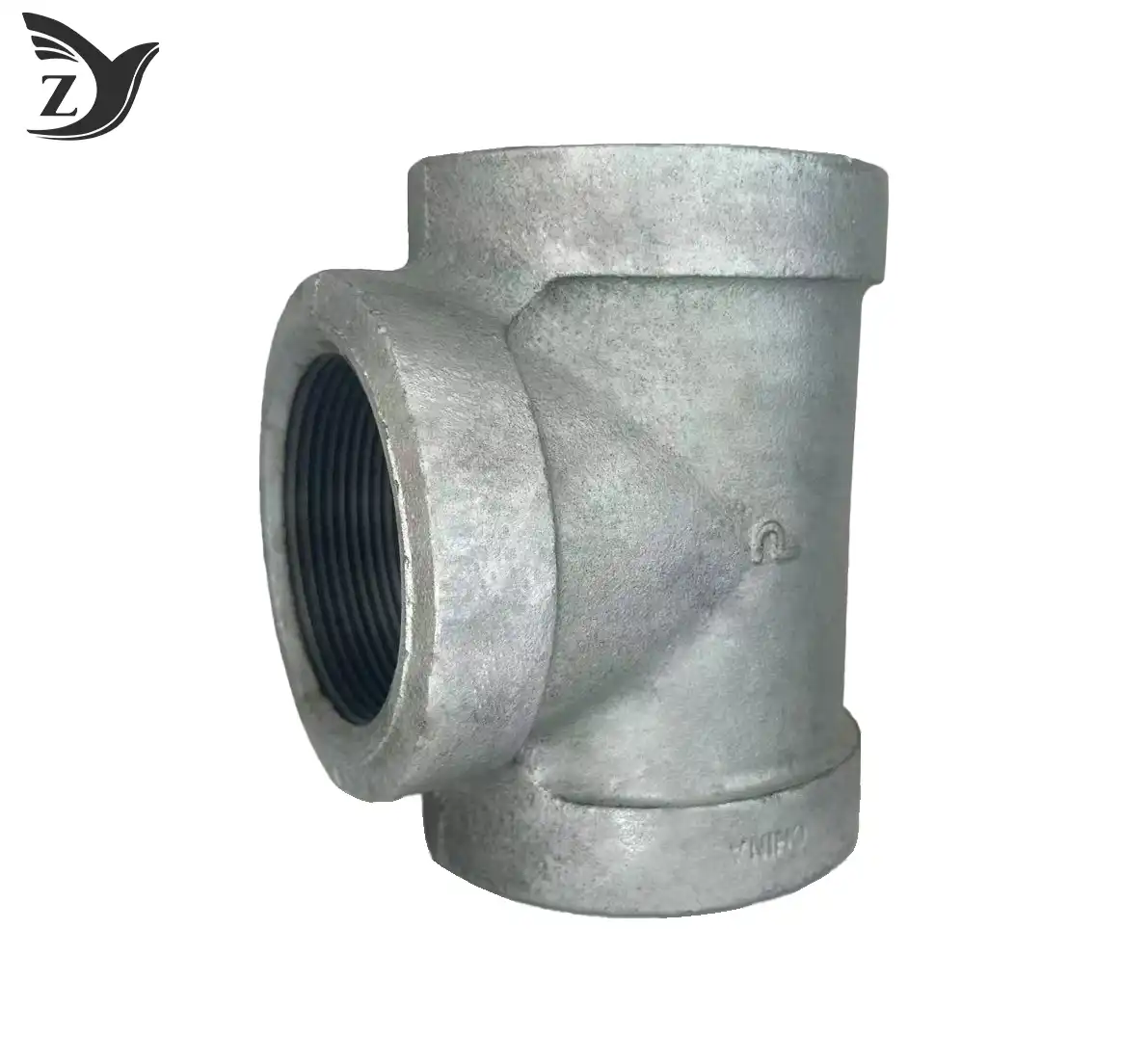
Class 300 Hot Dipped Galvanized Malleable Iron Equal Tee
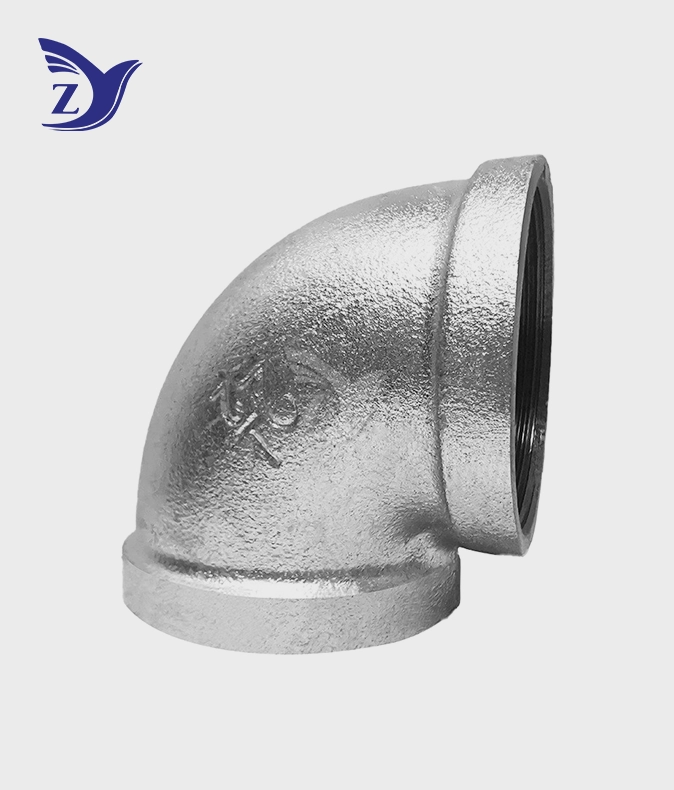
NPT Square Face Galvanized 90° Square Edge Elbow Pipe Fittings
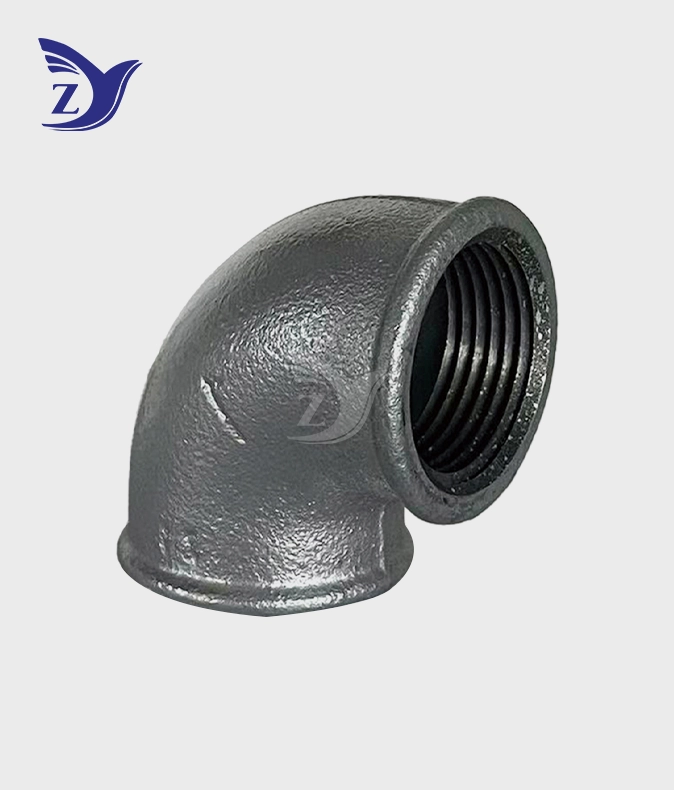
Hot-Dip Galvanized Round Edge BSPT 90° Elbow
NPT Black Union 330 Pipe Fittings
NPT Black Round Face Male-Female 90° Elbow Pipe Fittings
NPT Black Union 340 Pipe Fittings
No Hub Hot Dip Galvanized 90° Elbow Pipe Fitting
NPT Black Malleable Iron Tee Pipe Fittings