
Sep 10, 2026
How to identify high-quality malleable black iron fittings?
Identifying high-quality malleable black iron fittings requires examining several concrete factors: material certification (ASTM A197 or ISO 49 compliance), dimensional accuracy within tight tolerances, thread precision verified by Go/No-Go gauges, and surface finish consistency. A reliable crush test distinguishes genuine malleable iron — which deforms before fracturing — from brittle gray cast iron, which shatters immediately. For bulk procurement on infrastructure projects, consistent batch quality, full documentation including material test reports, and ISO 9001-certified manufacturing are non-negotiable benchmarks.
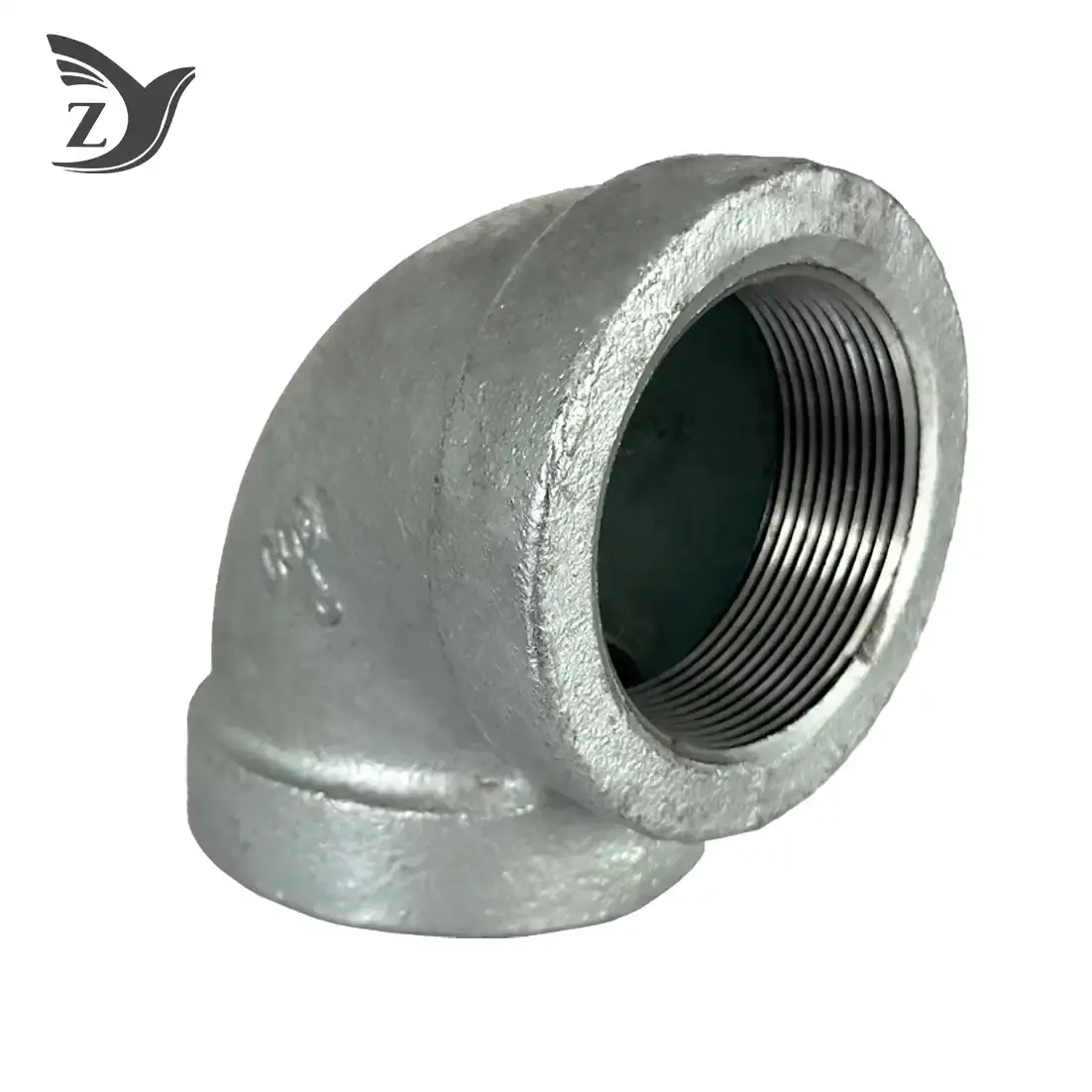
Understanding Malleable Black Iron Fittings: Key Characteristics
In industrial piping, heat-treated malleable black iron fittings have a special place because the annealing process changes brittle white iron into a ferritic, ductile structure. This change, which is outlined in ASTM A197, gives the material a tensile strength of more than 300 MPa and an elongation rate of more than 6%. This keeps it from breaking into weak pieces when it is under mechanical stress or heat cycling.
When hit, standard gray cast iron breaks. Bendable iron can be shaped. Because of that one mechanical difference, only malleable fittings are allowed in municipal water systems, natural gas distribution networks, and fire suppression lines. The black coating on the surface, which could be bituminous paint or iron oxide, is not there for looks. It actively stops rusting in places like oil, steam, and gas where galvanized zinc coatings can flake off and get into fluid lines, contaminating them.
These fittings can be made in a huge number of different ways. The catalog at Zhiyuan Malleable Steel has more than 1,000 specifications. These include galvanized 45° square edge elbows, NPT square face galvanized 90° square edge elbows, BSPT square face galvanized straight tees, NPT reducing tees, and galvanized reducing street elbows. The catalog covers both NPT and BSPT thread standards for both domestic and international project needs.
Core Criteria to Identify High-Quality Malleable Iron Fittings
Teams in charge of buying big pieces of infrastructure can't just rely on eye inspection. Bad products are thrown away before they even get to the job site using a structured screening method.
Here are the main checks that every buying engineer should use:
- Material certification and traceability: Ask for mill certificates that say the material meets ASTM A197 or EN 10242 standards. The right amounts of Carbon, Silicon, Manganese, Phosphorus, and Sulfur should be checked using spectrometry. This will also make sure that the metal has been properly annealed and that it doesn't have any primary carbides that make it hard to shape.
- Thread precision under gauge verification: Both NPT (60° angle, 1:16 taper) and BSPT (55° Whitworth angle, 1:16 taper) threads must pass calibrated Go/No-Go plug and ring gauge tests according to ISO 7-1 or ASME B1.20.1. This shows that the thread is accurate when checked with a gauge. At the right engagement depth, gauge depth compliance makes sure that the tapered thread has a self-sealing interference fit.
- Dimensional accuracy and perpendicularity: The bearing face of every fitting needs to be straight across from the thread line, and there must be no room for error. In third-party acceptance inspections, deviation leads to uneven gasket compression and faster thread stripping, which are two of the most common reasons why parts are rejected.
- Surface finish uniformity: Black oxide or bituminous coats must be smooth and even, with no bare spots, casting inclusions, or sand pores. Variants that have been galvanized should have a smooth, even layer of zinc covering them, with no drips or bare spots near the thread roots.
These requirements are the same whether you are looking for galvanized square NPT 90° reducing elbows or NPT square face 90° male-female threaded elbows. Consistency in the batch is just as important as quality in each part.
Using these criteria consistently when qualifying suppliers lowers the number of rejections that happen on-site and keeps project timelines from getting pushed back by expensive material delays.
Common Misconceptions That Lead to Low-Quality Purchases
A number of common misunderstandings cost procurement teams a lot of time and money. By understanding them, you can avoid making mistakes.
Malleable Black Iron vs. Black Steel — They Are Not Interchangeable
Malleable black iron fittings and black steel are not the same thing. The mechanical qualities and thread engagement patterns of black steel pipe and malleable iron fittings are not the same. Heavy-duty black steel fittings are made by welding and milling steel plates. Fittings made of malleable iron are cast and annealed. When you swap one for the other in a threaded assembly, the dimensions often don't match up, especially at the reducer and elbow joints where the wall thickness limits are very different.
Mixing NPT and BSPT Threads Causes Hidden Leaks
The 60° thread angle of NPT and the 55° angle of BSPT are not compatible geometrically. Fittings may thread together partially, making it look like the joint is sealed, but there is actually a spiraling leak path along the flank contact surface. On a system for distributing gas, this is a safety risk. Before accepting the whole system, you should always check the lines on each fitting for thread standards and make sure they match the system design specification.
Low-quality sellers often leave out all thread standard marks. If you don't have the paperwork, ask for a sample batch and test it yourself before giving the money.
Comparing Suppliers for Bulk Infrastructure Procurement
When purchasing managers are looking for things worth $100,000 to $500,000 a year, they need to look at more than just unit price when choosing suppliers. Whether a supplier can keep your project on track through multiple delivery steps depends on how reliable their lead times are, how much they can produce, and how thorough their certifications are.
Established malleable black iron fittings set themselves apart by the way they set up their factories. Eight SN KGDX-35003T medium-frequency electric furnaces and two Blue Sky HTL-1 natural gas energy-saving annealing kilns with a 100-ton capacity each are run by Zhiyuan Malleable Steel. Electric heating environmental protection furnaces are used in the galvanizing workshop, and 156 machining units work on the threading and finishing line. The annual production capacity is 30,000 tons, which is enough to meet large-scale orders for gas pipeline, municipal, and hydraulic projects without stopping the supply.
The business is certified by ISO 9001 and makes material test records and quality inspection papers for every shipment. ODM/OEM customization services can meet the specific needs of a project, and faulty products are always replaced. Standard stocked items are shipped within two hours of proof of an order, which is a huge benefit when building schedule goals can't be moved.
Practical Installation and Maintenance Standards
Even approved parts break early if they are put in the wrong way. How much thread sealant is used, how much force is required, and how the fitting is inspected after placement all affect how long it lasts.
It is helpful that malleable iron is flexible in service, but it can be dangerous when putting it together if it is over-torqued. When you exceed the manufacturer's torque recommendations, which is usually two to three turns past hand-tight for NPT tapered threads, the fitting body cracks near the thread relief groove. This type of failure shows up days after installation when the operating pressure increases. Follow the steps in ASME B31.3 for construction and use torque wrenches that have been calibrated on important parts.
As part of a regular checkup, thread engagement at exposed joint faces should be checked, rust bleeding at thread roots should be looked out for as it can mean a coating breach, and pressure should be tested on assembly sections before backfilling buried city pipe. Replacement times depend on the type of fluid and the operating pressure, but most engineering standards say that corrosion that covers more than 10% of the wall thickness is a sign that it's time to replace it.
Conclusion
It takes more than a quick look to tell if malleable black iron fittings are really of high quality. It needs material approvals that have been checked, thread gauge compliance, proof of dimensional accuracy, and a provider whose output capacity can be checked. Partnering with a manufacturer that has ISO 9001 certification, makes over 1,000 specifications, and has a production capacity of 30,000 tons per year can lower the risk of delivery delays and batch quality failures that cost a lot of money on big infrastructure projects. When placed and kept properly, high-quality fittings will work reliably for decades in water, gas, and oil pipeline systems.
FAQ
1. Are malleable black iron fittings suitable for potable water systems?
Malleable black iron fittings do not have zinc galvanized on them, so they will rust over time if they come into contact with oxygenated water. For uses with drinkable water, galvanized types, like the NPT square face galvanized 90° square edge elbow, meet health and safety standards thanks to their zinc shield. Always check the water rules in your area before making a decision.
2. How do I confirm a fitting is genuinely malleable iron?
A crush test is still the standard way to break something. Gray cast iron breaks right away, while malleable iron deforms a lot before it breaks. To make sure something is correct without damaging it, ask the maker for spectrometric material test results that show the material has been properly annealed and does not contain any primary carbides.
3. Can BSPT and NPT fittings be used together in the same system?
No, the 55° BSPT thread angle and the 60° NPT thread angle can't be used together automatically. When you mix them, spiral leak paths appear even when the joints feel tight to the touch. In the purchase paper, make sure that your thread standard is clear, and ask for gauge certificates for each batch.
4. What certifications should I require from a supplier?
A quality control certification like ISO 9001 is the starting point. Ask for CE, UL, or FM approvals based on the use, as well as material test results and records of dimensional inspection for each shipment lot.
Partner with Zhiyuan Malleable Steel for Certified Bulk Supply
For your next big pipe job, you need a maker of malleable black iron fittings who can work with your timeline and meet your quality standards. Zhiyuan Malleable Steel can produce up to 30,000 tons of steel each year and has more than 1,000 specifications. They are also ISO 9001 certified and include material test reports with every shipment. You can email q1236800000@gmail.com right now to ask for a bulk quote or a sample verification package.
References
1. American Society for Testing and Materials. ASTM A197: Standard Specification for Cupola Malleable Iron.
2. British Standards Institution. BS EN 10242: Threaded Pipe Fittings in Malleable Cast Iron.
3. International Organization for Standardization. ISO 49: Malleable Cast Iron Fittings Threaded to ISO 7-1.
4. American Society of Mechanical Engineers. ASME B16.3: Malleable Iron Threaded Fittings, Classes 150 and 300.
5. Valve and Fitting Industry Market Report. Global Malleable Iron Pipe Fittings Market Analysis.
6. American Society of Mechanical Engineers. ASME B31.3: Process Piping Code — Assembly and Erection Requirements.
Online Message