
Jul 3, 2026
How to connect coupling to pipe?
It takes careful planning and the right tools to connect a coupler to a pipe. Before you start working with NPT round face galvanized round edge coupling pipe fittings, make sure the pipe threads and coupling threads are completely clean of any dirt, oil, or rust. Wrap PTFE tape or pipe thread sealer around the male threads in a clockwise direction, making sure to cover two or three thread peaks. Tighten the coupling onto the pipe by hand until it fits snugly. Then, use a pipe wrench to turn it an extra 1.5 to 2.5 times to make sure the threads connect properly without being too tight. This method makes a mechanical seal that is stable and won't leak. This is important for systems that handle water, gas, and industrial fluids.
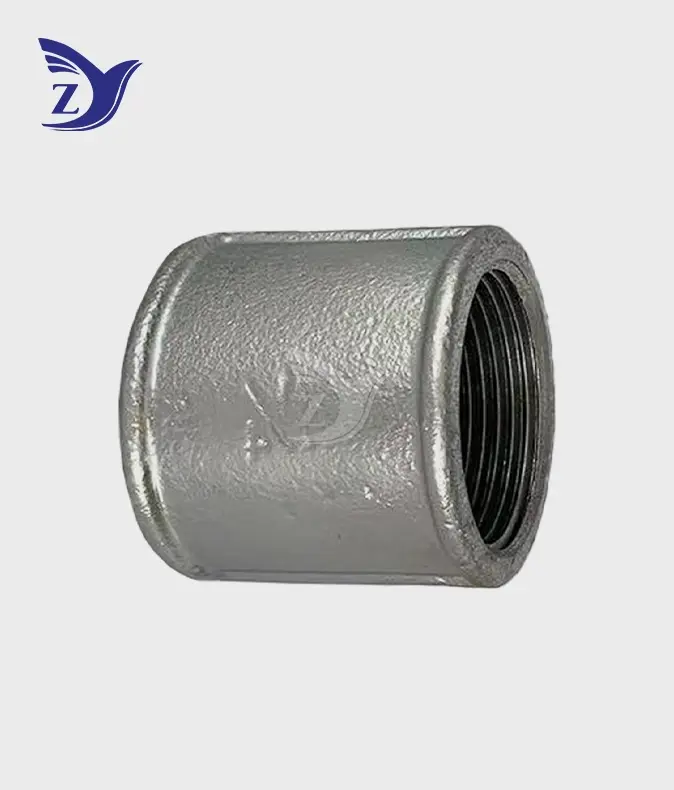
Step-by-Step Guide: How to Connect Coupling to Pipe
Whether your pipe joint doesn't leak for years or fails during pressure tests depends on how well it was installed. Professional installs are different from amateur ones because professionals pay attention to the details of planning and control torque.
Preparation and Sizing Verification
Before you start putting the parts together, make sure that the pipe and coupler are the same specified size and thread standard. A 1-inch NPT pipe needs a 1-inch NPT coupler. Trying to fit two different sizes together or mixing them up will damage the threads and cause leaks. Look and feel the pipe threads to see if the crests are damaged, if there is cross-threading from earlier installs, or if there are burrs from cutting. Clean the outside threads of the pipe and the inside threads of the coupling with a wire brush. This will get rid of any factory waste, pipe dope from old connections, or corrosion products. The quality of the threads directly affects the integrity of the seal, so don't use any pipes that have more than two broken thread peaks or any that show cutting.
Applying Thread Sealant Correctly
The thread protector you choose is very important. Most people still use PTFE tape for water and air uses, but anaerobic pipe dope works better in places with a lot of shaking. When using PTFE tape, wrap it around the pipe clockwise when looking at it from the end. Keep the stress on the tape without bending it too much. Start two threads away from the end of the pipe and wrap them around it, crossing them over by about half the width of the tape. Cover two to three thread peaks fully, but don't let the tape hang into the pipe hole, where it could get dirty. Once the threads are in place, anaerobic sealants fix without air, covering tiny holes that tape can't reach. Put an even, thin bead around the male threads, paying special attention to the first three threads that are connected. This is where the binding pressure is strongest.
Hand-Tightening and Wrench Technique
By hand, thread the NPT round face galvanized round edge coupling pipe fittings onto the pipe and turn it clockwise until you feel resistance, which means the taper is starting to connect tightly. Before using wrench force, this hand-tight position makes sure that everything is lined up correctly. Put the pipe wrench on the connection body, not the round edge bead, because that can bend when pressure builds up. Instead of quick, jerky movements, use steady, controlled force. As a general rule, most NPT connections need 1.5 to 2.5 more turns than hand-tight, but the exact amount needed depends on the width of the pipe. Pipes with a diameter of 2 inches or more may need a few more turns, while pipes with a diameter of 1/2 inch to 3/4 inch need fewer. If you listen and feel for the right tightening resistance, you'll know that the threads are properly engaged. When you over-tighten, the threads deform or the iron body breaks. When you under-tighten, there are holes in the seal that allow fluids to pass through.
Pressure Testing and Leak Detection
Once the link is made, you should never assume it's leak-proof without checking. Slowly raise the pressure in the system until it reaches working pressure. Hold the pressure for at least 15 minutes while you watch the joint. For water systems, a visual check is enough—any moisture means the seal has failed and needs to be taken apart and put back together again. Systems that use gas or compressed air need more thorough testing. Put soapy water or a store-bought leak-finding solution on the joint and watch for bubbles, which show that gas is leaving. To be safe, pneumatic testing is usually done at 1.5 times the working pressure. If leaks show up, don't try to tighten the joint while it's under pressure, because you could hurt yourself or cause it to fail suddenly. Completely release the pressure, take the parts apart, check the threads for damage, reapply the sealer and put them back together using the right steps.
Advantages of Using Galvanized Round Edge Coupling Pipe Fittings
Choosing the right fitting material and design affects not only how well the system works and how much it costs to maintain in the long term, but also how well it works during the building process. NPT round face galvanized round edge coupling pipe fittings have measured benefits that make them a good choice for many difficult uses.
Corrosion Resistance and Service Life Extension
The zinc layer on galvanized parts protects them in three different ways. As a barrier layer, it keeps oxygen and water from getting to the iron base. When the zinc layer is exposed to air, its natural passivation makes the surface solid and non-reactive. Most importantly, zinc works as a sacrifice anode—its electrochemical properties make it corrode more quickly when water gets between it and the iron, saving the iron even after the coating is damaged. Studies in the field show that properly galvanized malleable iron parts in city water systems last 50–75 years, while uncoated black iron only lasts 15–25 years in the same circumstances. When facilities are within 10 miles of the coast, where salt spray speeds up rusting even more, the changes are even more noticeable.
Installation Efficiency and System Compatibility
For threaded connections, all you need is a normal pipe wrench. For welded joints, on the other hand, you need trained welders and hot work permits. This makes projects go faster and increases the number of trained workers who can do the work. Nearly all markets in North America use NPT threading, which makes sure that parts from different makers can safely connect. A coupling from one seller can be used with pipes from any other NPT-compliant source. This gives buyers choices and keeps them from being locked into one provider. The round edge shape makes it easy for wrenches to grip, which lowers the risk of damaging the fitting during installation. Maintenance workers like threaded joints because they let parts be taken apart for inspection or change without having to cut and re-weld, which keeps the system's value and adaptability.
Conclusion
To connect couplings to pipes correctly, you need to know how the materials work, follow the right fitting steps, and buy quality parts from reputable sources. NPT round face galvanized round edge coupling pipe fittings have been used successfully in water, gas and industrial settings because they are built to last and have standard threads. The steps described—careful cleaning, using the right caulk, slowly tightening, and checking the pressure—ensure that the joints don't break and stay strong for a long time. Organisations are better prepared for project success and operating dependability when their procurement strategies balance quality assurance, source capability, and total cost of ownership.
FAQ
What Tools Do I Need to Install Galvanized Pipe Couplings?
For basic fitting, you need two pipe wrenches: one to hold the pipe still and the other to turn the connection. The wrench should be the right size for the pipe diameter. For example, a 10-inch wrench is good for half-inch to one-inch pipes, while a 14-inch or 18-inch wrench is better for bigger diameters. You'll also need PTFE tape or pipe thread glue, a wire brush to clean the threads, and maybe a pipe threading die if you want to cut the pipe to a specific length. For checking pressure, you need a soapy water solution or an industrial leak detection fluid. Professional setups use thread tools to make sure the measurements are correct and torque wrenches to make sure the screws are tightened consistently.
Can I Reuse a Coupling After Disassembly?
Using connections again depends on how they look after being taken off. Carefully look at the threads to see if they are galling, cross-threading damaged, or deformed. For low-pressure uses, small thread wear might be okay, but for important systems, new parts are needed. When using a wrench, the galvanized covering often gets damaged, revealing bare iron that will rust quickly. Clean all of the old sealer really well before you use it again. Most of the time, the small cost of new connections is less than the chance of leaks from threads that aren't working right. This is especially true when working with potable water, natural gas, or fire protection systems, where failure can have very bad results.
How Do I Prevent Cross-Threading During Installation?
Cross-threading happens when parts connect at an angle instead of following the thread coil correctly. To avoid this, carefully start threads by hand instead of using tools right away. If everything is lined up right, the coupler should turn easily and with little resistance for the first few turns. Stop right away and back out the connection if you feel binding or uneven resistance. Check both the male and female threads for damage or foreign objects that could throw them off. Before engaging, make sure that the pipe axis and the coupler axis are lined up. Most cross-threading damage happens when installation is rushed or when wrench force is used before the threads are properly hand-tightened.
What Working Pressure Ratings Apply to These Couplings?
Most Class 150 malleable iron connections can handle 300 PSI working pressure for gas, oil and water at room temperature up to 150°F. Because of thermal stress, steam uses lower the grade to 150 PSI when the steam is full. There are safety factors in these grades that are right for normal installations. If there are system pressure spikes, water hammer effects, or high temperatures, you may need higher-class fittings or different materials. Always make sure that the pressure values on the fittings are higher than the highest pressure that the system can handle plus any short-term spikes. When an application is getting close to its rating limits, a technical study is helpful to make sure there are enough safety margins. The manufacturer's documentation gives exact grades for each type and size of product.
Are Galvanized Fittings Safe for Potable Water Systems?
When made using high-purity zinc and lead-free methods that are in line with NSF/ANSI 61, galvanized valves meet standards for drinkable water. This guideline stops heavy metals from leaking into the ground, which could make drinking water dirty. Make sure that your seller gives you NSF approval or other proof that their products are safe for use with potable water. The zinc layer doesn't hurt your health and, compared to some other materials, actually stops germs from growing. The chemistry of the water affects how well it works. Water that is very soft or acidic can make zinc dissolve faster, while water that is hard forms protective chemical layers. The water quality in most city water systems is good enough that galvanized valves work regularly for decades without any problems.
Partner with Zhiyuan Malleable Steel for Superior NPT Round Face Galvanized Round Edge Coupling Pipe Fittings
Zhiyuan Malleable Steel can help you with your pipeline projects by making Class 150 malleable iron connections that are certified by ISO 9001 and tested to meet international standards. With 26 years of experience casting and a 30,000-ton yearly capacity, we can guarantee steady quality and on-time deliveries. We keep more than 1,000 product specs in stock at all times, so we can quickly meet both standard needs and OEM uses. We serve fire protection workers, city engineers, plumbing distributors, and manufacturing sites all over the world from our 50,000-square-meter building in Shanxi Province. Every production batch goes through a full quality control process that includes checking the thread gauge, trying the air pressure, checking the thickness of the galvanization, and making sure the measurements are correct. As a top provider of NPT round face galvanized round edge coupling pipe fittings, we can offer you low prices for large orders without lowering the quality of the materials your projects need. You can talk to our team at q1236800000@gmail.com about your needs, ask for technical information, or get a full quote. You can look at our full line of products at zymalleablepipefitting.com and learn how our tech help and replacement warranty will protect your investment.
References
American Society of Mechanical Engineers. (2016). ASME B16.3: Malleable Iron Threaded Fittings - Classes 150 and 300. New York: ASME Press.
ASTM International. (2019). ASTM A153/A153M-16a: Standard Specification for Zinc Coating (Hot-Dip) on Iron and Steel Hardware. West Conshohocken, PA: ASTM International.
McAllister, E. W. (2013). Pipeline Rules of Thumb Handbook: A Manual of Quick, Accurate Solutions to Everyday Pipeline Engineering Problems (8th ed.). Houston: Gulf Professional Publishing.
Nayyar, M. L. (2015). Piping Handbook (8th ed.). New York: McGraw-Hill Education.
Stewart, H. L., & Stewart, J. M. (2016). Pipefitters Handbook. Indianapolis: Industrial Press.
Whitman, W. C., Johnson, W. M., Tomczyk, J. A., & Silberstein, E. (2017). Refrigeration and Air Conditioning Technology (8th ed.). Boston: Cengage Learning.
Online Message