
Sep 20, 2026
How to Choose the Right NPT Galvanized Tee Pipe Fitting?
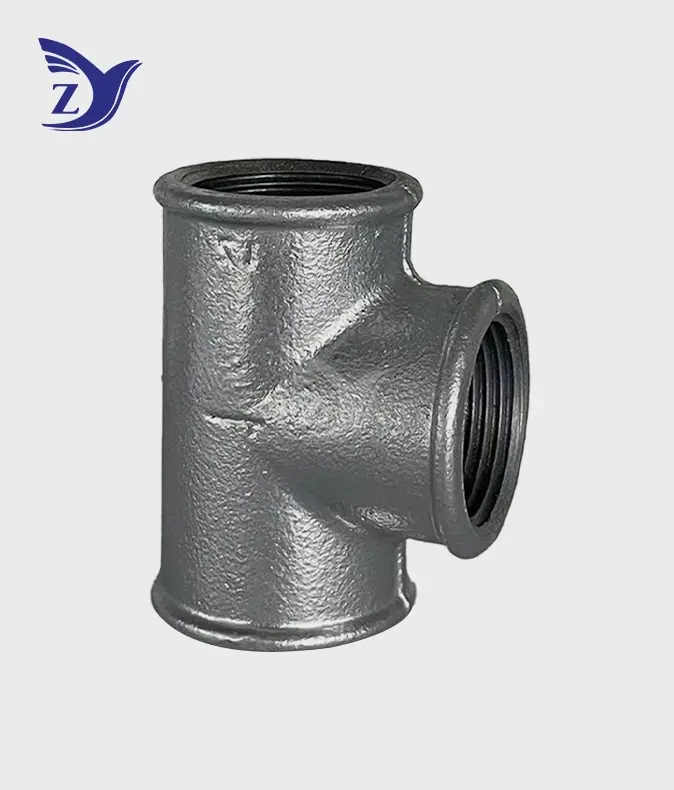
Choosing the right NPT round face galvanized round edge straight tee pipe fittings comes down to five core factors: thread precision, material grade, corrosion protection, pressure rating, and supplier certification. For water and gas pipeline branching, the NPT round face galvanized round edge straight tee pipe fitting stands out as a dependable choice. Its hot-dipped zinc coating, precision-cut NPT threads, and malleable iron body combine to deliver leak-free performance across plumbing, HVAC, and industrial gas distribution systems. Getting these specifications right from the start prevents costly rework and failed inspections down the line.
Understanding NPT Galvanized Tee Pipe Fittings
Tee fittings with threads are not all made the same. Knowing the differences between fitting types in terms of how they are built and what they do will help you avoid mistakes that waste time and money on the job site.
Round Edge vs. Round Face: What Actually Differs
At each outlet opening on the round edge tee, there is a raised rounded bead. This bead is a mechanical support that spreads the stress on the hoop evenly while it is being put together and tightened with a key. The round face design, on the other hand, has a flat surface for sitting. Both meet ASME B16.3 Class 150 standards, but the round edge geometry is better for older city systems and situations where pipe vibration is a problem.
Material and Finish Options
ASTM A197 malleable iron is the most popular body material. It has a tensile strength of at least 40,000 psi, which is strong enough for water, oil, and gas service in industry. According to ASTM A153, hot-dip galvanized fittings have a zinc covering that is thicker than 86 microns. This provides sacrificial cathodic protection against rust. The zinc layer is left off black malleable iron fittings, which are the standard choice for gas pipes in places where galvanization is not needed by law. There are alternatives made of stainless steel, but each one costs a lot more.
NPT round face galvanized round edge straight tee pipe fittings threads have a 60-degree thread angle and a 0.75-inch per foot drop, which is what ASME B1.20.1 says. As the joint gets tighter, this curve creates the mechanical seal. At room temperature, these fittings can handle 300 psi of water, oil, and gas pressure, and 150 psi of saturated steam pressure.
Key Criteria to Consider When Choosing NPT Galvanized Tee Pipe Fittings
One of the most common reasons why pressure tests and inspections fail is choosing the wrong fitting standard. Before you place an order, you need to pay close attention to these key technical and purchasing factors.
- Thread compliance: According to ASME B1.20.1, all fittings must pass a Go/No-Go ring gauge test. Threads that are too shallow can cause leaks, and threads that are cut too deeply could crack the fitting body when torqued.
- Galvanization method: Hot-dip galvanizing (ASTM A153) gives a thicker, rougher finish and is better at resisting rust than electroplating. Before buying something for outdoor or basement use, you should always check the finishing method.
- Pressure rating alignment: Align the fitting class with your pipe plan to get the right pressure rating. Fittings from Class 150 can be shaped fit Schedule 40 pipe. When using Schedule 80 pipe in high-pressure situations, you need Class 300 fittings.
- Certification and standards compliance: Look for suppliers with ISO 9001 quality management certification. Also, check to see if the goods have CE, UL, or FM marks, based on the rules that apply to your project.
These factors together tell us if a fitting will pass hydrostatic testing at 1.5 times its maximum working pressure. This is the usual test that testers use for both gas and water projects.
Painted fittings protect the appearance a little, but they don't do what zinc does for the body's electrochemical system. Hot-dip galvanized malleable iron lasts much longer than painted iron in places where it will be in contact with soil or stay wet for a long time. Stainless steel works well with highly corrosive materials, but it's too expensive for most water distribution work.
Installation Best Practices for NPT Galvanized Tee Pipe Fittings
Good parts either show how valuable they are or lose their value because of bad installation. A few focused habits during fitting can make a big difference in how well the seal works in the long run.
Thread Sealing and Torque Control
For standard NPT threads, the helical leaking path between the male and female threads needs to be filled with Teflon tape or a pipe dope solution. NPT round face galvanized round edge straight tee pipe fittings dryseal threads do not seal metal to metal on their own as NPTF dryseal threads do. Start one thread back from the lead end and only put sealer on male threads. Tighten by hand, then use a pipe wrench to move it forward two or three turns. If you tighten something too much, the bolts will crack, and if you tighten something too little, the joint could leak when the pressure changes.
Alignment and Post-Installation Checks
Within 0.5 degrees, the three axes of a tee fitting must stay straight. Deviations above this point put bending stress on the pipe runs next to them. After the system is installed, it should be put through a hydrostatic pressure test at 1.5 times its working pressure before it is turned on. Check the thread entry points visually for signs of galling or zinc displacement, which means the engagement isn't right.
Comparing NPT Galvanized Tee Pipe Fittings with Other Options
There is a clear market niche for galvanized malleable iron tees. Procurement teams don't have to over- or under-specify parts when they know where they perform better than options and where they don't.
Most natural gas lines are made of black steel tees, which are made of the same ASTM A197 malleable iron. They are a little cheaper than coated versions, but they need extra protection against rust when they are wet or outside. Plastic fittings (PVC, CPVC) are lighter and won't rust, but they aren't as strong as iron when it comes to high temperatures or pressures. For a medium-sized plumbing company that works with city water or compressed air networks, a hot-dipped galvanized, precision-threaded equal tee in the 3/4" to 2" range is the best value in terms of cost, longevity, and code compliance.
Buying in bulk is also important. If a seller has sizes from 1/8" to 6", contractors can combine their orders, which lowers the costs of managing the source and the cost of shipping each unit by a large amount.
Making the Final Decision: How to Choose the Right Supplier and Product
The fitting standard is important, but the provider that made it is just as important. A compliant product from a source that can't be trusted can cause lead-time risk, which can stop a whole project.
Before agreeing to a purchase order, use this useful guide to evaluate possible suppliers:
- Verify ISO 9001 approval and ask for CE, UL, or FM paperwork that is important to your market.
- Request the specific product batch's thread gauge test records and hydrostatic test reports.
- As per ASTM A153, make sure that hot-dip galvanization is used and not electroplating.
- Check to see if popular sizes are in stock; delays on standard parts can mean there are gaps in the supply chain.
- If your project needs unique sizes or finishes that aren't available on the market, ask about ODM/OEM capabilities.
- Before you place your first order, make sure you understand how to get a defective product replaced.
A company that does all of its own casting, annealing, galvanizing, and thread cutting has better quality control than one that hires many middlemen. When quality problems happen, vertical integration cuts down on the time it takes to get feedback.
Conclusion
It's not easy to choose the right zinc tee fitting because thread accuracy, material grade, coating quality, and the dependability of the seller all affect how your project turns out in the end. Hot-dip galvanized malleable iron tees with precision NPT round face galvanized round edge straight tee pipe fittings are still the standard for splitting water and gas pipelines because they are strong, don't rust, and meet code requirements at a price that is easy to handle. If you take the time to check the specifications and check out your supplier before buying, the fittings will work well in both pressure tests and long-term use.
FAQ
1. What is the functional difference between round edge and round face galvanized tee fittings?
The round edge design has a raised bead at each exit that protects the hole from stress when wrenching and spreads the force of assembly more evenly. A flat rim sits on top of the round face. Both meet ASME B16.3 Class 150, but round-edge fittings are better for systems that will be vibrating or that will be put together many times.
2. Are NPT galvanized malleable iron tees suitable for natural gas lines?
Yes, as long as it's legal in your area. NPT threading is a standard for gas lines, and iron that can be shaped doesn't break easily when hit. Use a sealant substance that is rated for gas service—standard Teflon tape is not always approved for gas in all jurisdictions.
3. How do I verify the galvanization is hot-dip and not electro-plated?
When you hot-dip galvanize something, the surface gets thicker and a little matte. Coatings that are electroplated look smoother and lighter. Electroplating is likely if the magnetic thickness gauge reading is less than 45 microns. For business service, make sure the provider gives you ASTM A153 paperwork.
4. What size range should I source to minimize supplier management complexity?
If a supplier has a catalog with sizes from 1/8" to 6", you won't have to deal with multiple vendors, which makes logistics easier. Make sure that the sizes you use most often are in stock before you commit to a supply relationship.
Partner with Zhiyuan Malleable Steel for Your Next Project
Since 2006, Zhiyuan Malleable Steel has manufactured certified NPT round face galvanized round edge straight tee pipe fittings, supplier-grade products, backed by ISO 9001, CE, UL, and FM certifications. With 30,000-ton annual capacity, full 1/8"–6" size coverage, and standard products ready to ship within two hours, we eliminate the lead-time risk that disrupts project schedules. Reach us at q1236800000@gmail.com to request a quote today.
References
1. American Society of Mechanical Engineers. ASME B16.3: Malleable Iron Threaded Fittings, Classes 150 and 300. ASME, 2021.
2. American Society for Testing and Materials. ASTM A197: Standard Specification for Cupola Malleable Iron. ASTM International, 2020.
3. American Society for Testing and Materials. ASTM A153: Standard Specification for Zinc Coating (Hot-Dip) on Iron and Steel Hardware. ASTM International, 2016.
4. American Society of Mechanical Engineers. ASME B1.20.1: Pipe Threads, General Purpose (Inch). ASME, 2022.
5. Nayyar, Mohinder L. Piping Handbook, 7th ed. McGraw-Hill, 2000.
6. Frankel, Michael. Facility Piping Systems Handbook, 3rd ed. McGraw-Hill, 2010.
Online Message