
Aug 6, 2026
How to Choose Corrosion Resistant Square Edge Reducing Coupling for Industrial Pipelines?
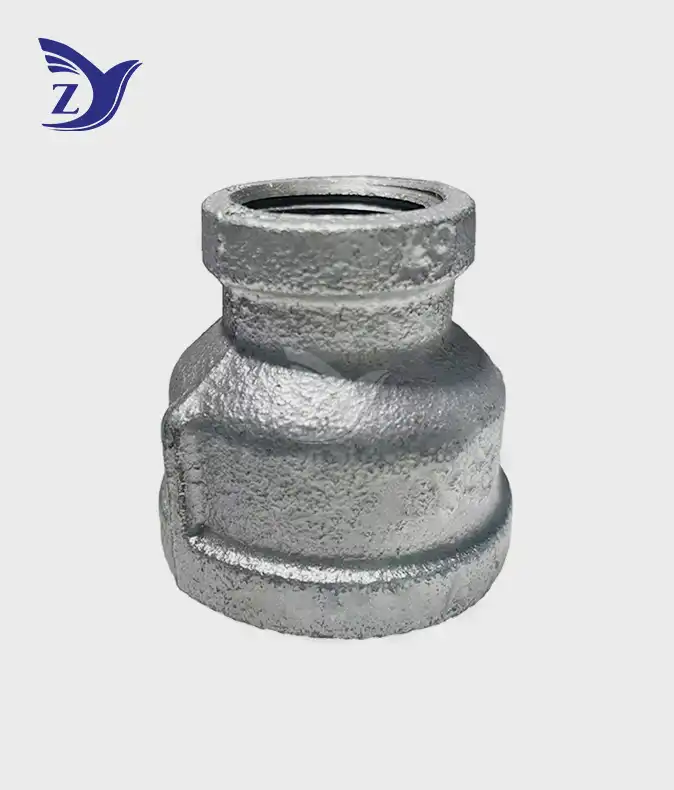
Choosing the right corrosion-resistant square edge reduction coupling has a direct effect on the stability of the system and how long it works. BSPT square face galvanized square edge reducing coupling pipe fittings are very durable because they are hot-dip galvanized, have precise threading that meets British Standard Pipe Taper specifications, and are made with a reinforced square edge. They are used in industrial settings to connect pipes of different diameters. These bendable iron valves don't rust in tough conditions and make it easy to switch between different pipe sizes in systems that handle water, gas, heat, and chemicals. With the right choice, you can avoid costly downtime and replacements that are too soon.
Essential Criteria for Choosing Corrosion Resistant Square Edge Reducing Couplings
To choose the right BSPT square face galvanized square edge reducing coupling pipe fittings, you need to carefully look at them from the point of view of scientific, practical, and financial issues. After decades of producing experience and feedback from industrial buyers, we've come up with an organized framework.
Corrosion Resistance Requirements by Environment
Corrosion problems are different in different working settings. Coastal sites are exposed to salt spray, which means the zinc covering needs to be thicker. Fittings that can handle certain acids, alkalis, or liquids are needed in places that process chemicals. Soil chemistry changes that speed up galvanic rusting happen in underground water transport systems. Thermal cycling in municipal heating networks puts stress on protective layers. Before choosing parts, you should look at the specific conditions you will be exposed to, such as humidity levels, temperature ranges, chemical touch, and air pollutants. Standard hot-dip galvanization is usually enough for industrial water and gas pipeline size adaptation uses in cities. However, connecting points that will be exposed to harsh chemicals may need better coatings or different materials like stainless steel.
Mechanical Strength and Pressure Ratings
Most BSPT square face galvanized square edge reducing coupling pipe fittings have a tensile strength of 350 to 400 MPa, which is strong enough for most business and industry uses. Ratings for pressure rely on the type of fitting, its size, and the temperature. Heavy-duty reducing joints can usually handle working pressures up to 25 bar at room temperature. When temperatures get close to 120 degrees Celsius, they need to be downrated. Make sure that the parts you choose meet or go beyond the highest pressure that your system can handle, even during surges. The strengthening along the square edge makes the hoop stronger and gives you more room to spare in case the inside pressure or temperature changes cause it to expand. When linking pipes with different sizes, make sure that the reducing coupling and mating pipes have the same pressure levels to avoid weak spots in the system.
Thread Compatibility and Dimensional Accuracy
Thread compatibility is a regular reason why installations go wrong and leaks happen. Concerns about NPT and BSPT compatibility arise when pipe diameters change, and need careful attention. Because of their different angles and pitches, BSPT and NPT threads can't be used together immediately. Trying to push threads that don't match leads to partial engagement, thread damage, and leakage. The specs for buying things must make it clear what thread standards are needed for all parts that fit together. Dimensional accuracy affects the integrity of the seal; threads that are cut too short or too deep mess up the interference fit that is necessary for BSPT sealing. Manufacturers of good products, like Zhiyuan Malleable Steel, use calibrated plug gauges that meet ISO 7-2 standards to check the thread accuracy during production. This makes sure that the parts always fit together correctly and seal well when put the right way.
Certification and Quality Standards Compliance
Real quality control includes checking by a third party and following well-known world standards. Having ISO 9001 approval means that quality management is used systematically throughout the whole production process. Standards for individual products, such as EN 10242 for moldable iron fittings and ISO 5922 for material specs, set standards that can be used to measure progress. Certifications like CE, UL, and FM show that a product meets regional safety standards, which is very important for projects in controlled industries. When reviewing providers, ask for proof that the certification is real. Fake parts that haven't been properly tested can cause catastrophic system breakdowns. Reputable makers give material certificates, pressure test records, and measures of coating thickness with every production lot. This makes it possible to track the materials and ensure quality.
Comparison of BSPT Square Face Reducing Couplings with Alternative Fittings
Knowing how different types of fittings work in different situations can help you make the best choices about what to buy for different uses.
BSPT Versus NPT Thread Performance
Both standards for taper threads achieve mechanical closing, but they are not compatible, so they need to be clearly defined. When it comes to closing, BSPT's 55-degree angle is a little different from NPT's 60-degree shape. BSPT connections usually need fewer thread turns to engage properly, which can speed up installation when there are a lot of connections to make. In North America, it's easier to find NPT connections, but BSPT standards are more common in projects in Europe, Asia, and the Middle East. System uniformity is the most important thing to think about—mixing thread standards leads to long-term leaking problems. For lowering pipe links to last, the thread standard must be the same across the whole network of pipes, and adapters should only be used when they are really needed to connect systems that don't work with each other.
Galvanized Steel Versus Stainless Steel Cost-Benefit Analysis
Before choosing a material, you have to weigh its original prices against its long-term costs. BSPT square face galvanized square edge reducing coupling pipe fittings made of galvanized malleable iron usually cost 40–60% less than similar stainless steel parts, which makes them a good choice for projects that need to stay within a budget. But stainless steel is better at resisting rust in harsh settings, which could make up for the higher initial cost by extending service life and lowering the number of times it needs to be replaced. The choice grid should look at how bad the environment is, how easy it is to fix or replace things, and the total cost of ownership. Galvanized fittings work great in places where corrosion isn't too bad, like standard water distribution, gas supply, and HVAC systems. Stainless steel is a good choice for cost reasons in chemical handling, marine uses, or high-purity systems that need to keep contamination to a minimum. In order to save money, many projects choose to use galvanized fittings for most of the links and only stainless steel for high-exposure spots.
Threaded Versus Grooved Connection Systems
When you compare threaded reducing joiners with corrosion protection to grooved mechanical connections, they have clear pros and cons. Threaded connections have small features that work well in tight areas and don't require any special tools other than pipe wrenches. They make joints that last forever and hold pressure very well. Grooved systems are easy to take apart for upkeep and can be put together faster because they don't need any threading tools. Threaded fittings usually have lower prices per connection point and can be used in situations where they can be permanently installed. Grooved systems make systems that need to be changed on a regular basis more flexible. Many projects use both technologies in a smart way, using threaded links for long-term infrastructure and grooved fittings where easy repair access is needed. Your choice will rely on how hard it is to build, how you plan to keep it up, and how many skilled workers are available.
Procurement Strategies for BSPT Galvanized Reducing Couplings
Strategic methods to buying make sure that projects of all sizes, from small installations to large-scale developments, have a steady supply of goods, the right quality, and prices that are competitive.
Identifying Reliable BSPT Square Face Galvanized Reducing Coupling Manufacturers
The choice of BSPT square face galvanized square edge reducing coupling pipe fittings supplier has a big effect on the success of a project through the quality of the products, the reliability of delivery, and the professional help. Give more weight to makers who have experience with the casting and galvanizing of pliable iron. Zhiyuan Malleable Steel was founded in 2006 and has been specializing in pipe fittings for 26 years. They are a great example of the production depth that leads to consistent quality. The amount of food that can be produced each year is important. Plants that can produce 30,000 tons per year can keep prices low by taking advantage of economies of scale and spending in infrastructure for quality control. Geography plays a role in how well logistics work. Zhiyuan's position in Taigu District, Shanxi Province, makes it easy to get to raw materials and transportation networks. For example, the city is close to Taiyuan Airport, which makes foreign shipping possible. Some signs of a supplier's stability are the number of committed workers, the amount of expert staff, and investments in new machines like medium frequency electric furnaces and automated galvanization systems.
Customization Capabilities and MOQ Considerations
Private marking or non-standard specs are often needed for big projects. Check out the customizing services that the provider offers, such as changing the size, applying special coatings, or adding OEM branding. Companies that do their own research and development (R&D) can better adapt to different customer needs. Different suppliers have different minimum order numbers (MOQs) for different types of products. Standard items may have smaller MOQs, while custom requirements need bigger pledges to cover the costs of tooling and setup. Zhiyuan Malleable Steel provides both ODM and OEM services to meet the needs of a wide range of customers in foreign markets. When planning your purchases, you should weigh the costs of keeping goods against savings for buying in bulk and setup fees. Wholesalers and wholesalers gain when sellers offer full specification ranges. For example, Zhiyuan's catalog has over 1,000 different product versions, which makes consolidated buying easier and makes managing vendors and shipping easier.
Lead Time Management and Supply Chain Resilience
Due dates for projects require solid supply performance. Keeping standard products in stock makes it possible to complete orders quickly. Zhiyuan keeps commonly asked-for items in stock so that standard goods can be delivered within two hours in service areas. For custom or big orders, the production schedule needs to be in sync with the project's goals. During the procurement discussion, be clear about wait times and make sure that the times given include getting materials, making things, inspecting them for quality, and sending them. Set up backup plans for things on the important path. Transportation delays, lack of raw materials, or problems with production can all mess up the supply chain and throw off project plans. Reduce risks by approving more than one supplier for standard items and keeping relationships with skilled makers like Zhiyuan for unique needs. Strong relationships with suppliers based on open communication and realistic lead time expectations are good for both parties throughout the lifecycle of a project.
Conclusion
When picking corrosion-resistant square edge reducing joints, you have to balance scientific requirements with environmental needs and cost considerations. BSPT square face galvanized square edge reducing coupling pipe fittings have been shown to work well thanks to their precise threading, strong square edge support, and zinc finish that protects them. To make a good choice, you need to make sure that the threads will work together, that the product will not rust in the right conditions, that the pressure ratings are correct, and that the seller has good qualifications. Service life is greatly increased by installing it correctly, following the manufacturer's instructions, and keeping up with regular upkeep. Partnering with experienced makers that offer a wide range of products, quality certifications, and quick support makes purchasing easier and guarantees that the system will work well for decades.
FAQ
How Do I Identify Authentic BSPT Square Edge Reducing Couplings?
Genuine parts have even hot-dip galvanization, with no bare spots or rough spots. The square edge band has sharp corners and uniform sizes. Threads look smooth and have normal shapes. Reliable makers stamp the size, standard, and country of origin on their products. Ask for certificates of the materials that show their chemical make-up and engineering test results. If a product is priced much lower than its market value, it's probably a fake made with cheap materials or bad processing.
Can BSPT Fittings Connect Directly to NPT Threaded Pipes?
Because their thread angles are different—55 degrees for BSPT and 60 degrees for NPT—these two types of threads can't be used together. Forcing threads that don't fit together hurts the thread profiles and causes leaks. When joining threads with different standards, you should use adapters that are properly designed and made just for that reason, making sure that both thread types meet the right requirements.
What Pressure Ratings Apply to Galvanized Square Edge Reducing Couplings?
Heavy-duty reducing joints made of malleable iron can usually handle working pressures of up to 25 bar (362 psi) at room temperature for oil, gas, and water. As the temperature rises toward 120 degrees Celsius, pressure numbers go down. Always check exact rates with the manufacturer's literature and make sure they work with your system's highest pressure, even during surges.
How Does Galvanization Thickness Affect Corrosion Resistance?
Hot-dip galvanization usually adds zinc coats that are more than 70 microns thick, which is a lot better than electroplating. In corrosive settings, thicker coats last longer and protect better. Magnetic induction scales can be used to measure the thickness of zinc. Depending on how harsh the climate is, coatings that meet ASTM A153 or EN 10240 standards will not rust for 25 to 50 years.
Partner with Zhiyuan Malleable Steel for Superior Corrosion-Resistant Pipe Fittings
With 26 years of experience, Zhiyuan Malleable Steel makes sure that every BSPT square face galvanized square edge reducing coupling pipe fitting is of the highest quality. Our 50,000-square-meter facility in Shanxi Province can handle 30,000 tons of cargo every year and works with fire protection companies, local engineering projects, wholesale distributors, and industry facilities all over the world. We have ISO 9001, CE, UL, and FM standards, and our product lines cover more than 1,000 requirements. Our OEM and ODM customization services meet the specific needs of each project with tech help and quick turn-around times. Standard items are shipped within two hours of being in stock, and special orders are given priority scheduling that fits with the goals of your project. Our quality promise says that we will replace any defective goods right away. You can email our expert sales team at q1236800000@gmail.com to get help with your specifications, get low wholesale prices, or look at samples. You can look through our full catalog of industrial-grade corrosion-proof couplings at zymalleablepipefitting.com. You can also learn how working with a reliable BSPT square face galvanized square edge reducing coupling pipe fittings source can make your pipeline system more reliable.
References
- British Standards Institution. "BS 21: Specification for Pipe Threads for Tubes and Fittings Where Pressure-Tight Joints Are Made on the Threads." London: BSI Standards Publication, 2019.
- ASTM International. "ASTM A153/A153M-16a: Standard Specification for Zinc Coating (Hot-Dip) on Iron and Steel Hardware." West Conshohocken: ASTM International, 2016.
- International Organization for Standardization. "ISO 5922: Malleable Cast Iron." Geneva: ISO Standards Catalogue, 2018.
- American Water Works Association. "AWWA Manual M11: Steel Pipe—A Guide for Design and Installation." Denver: AWWA Press, 2017.
- European Committee for Standardization. "EN 10242: Threaded Pipe Fittings in Malleable Cast Iron." Brussels: CEN Standards Publication, 2020.
- National Fire Protection Association. "NFPA 13: Standard for the Installation of Sprinkler Systems." Quincy: NFPA Publications, 2022.
Online Message