
Sep 11, 2026
How to choose a reliable mechanical tee supplier from China?
Choosing the right mechanical tee manufacturer from China requires a clear framework. I recommend evaluating suppliers across four pillars: certification validity (ISO 9001, UL, FM), manufacturing capacity, thread precision, and after-sales accountability. A credible supplier should hold verifiable credentials, maintain consistent production output, and offer NPT/BSPT-compatible fittings that meet ASME B16.3 or equivalent standards. Suppliers with dedicated fire protection product lines and documented quality control systems reduce your compliance risk significantly. This guide walks you through every step of that process.
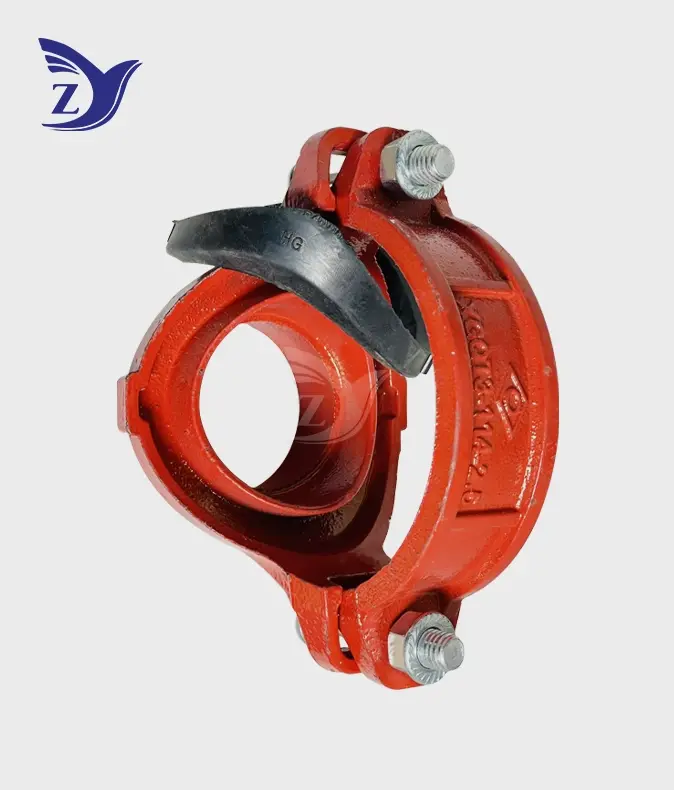
Understanding the Mechanical Tee Market in China
One of the biggest places in the world that makes pipe fittings, like threaded and grooved mechanical tees, is China. There are hundreds of makers in the market, ranging from small workshops to vertically integrated plants that can make more than 30,000 metric tons of goods every year. There are many types of products, such as black malleable iron tees, galvanized versions, and ductile iron grooved fittings that meet both NPT and BSPT thread standards.
That variety is like a sword with two edges. When purchasing managers are looking for suppliers for projects like fire protection or industrial pipelines, they often find ones that offer low prices but can't back up their certifications or thread tolerances. According to the NFPA, improper pipe connections are a known cause of fire suppression system problems. When system stability is at stake, you have to check not only a supplier's catalog but also the quality of their real output.
There is also a lot of regional clustering in the China market. For example, Shanxi Province has become a well-known center for making pipe fittings out of malleable iron. It has many well-established companies that follow ISO 9001 standards and sell their goods to markets in the Middle East, Southeast Asia, and North America.
Key Criteria to Evaluate a Mechanical Tee Supplier
It's not always true that factories that say "mechanical tee manufacturer" on their homepage make good products. It's easy to get past marketing noise when you limit your review to clear, measurable criteria.
Here are the main things that buying teams should look at:
- Certification authenticity: Make sure that the ISO 9001, CE, UL, or FM certificates are up-to-date and came from a recognized organization. When buying fire protection in the U.S., UL and FM certifications are given extra weight. Make sure you double-check the certificate number in the issuing body's database after getting it.
- Thread standard compliance: NPT and BSPT threads need to meet ASME B1.20.1 and BS 21 standards, respectively. A seller should give you records of how the gauges were calibrated. Field leakage is a critical failure point in any pressurized pipeline system, and even a small thread deviation can cause it.
- Material traceability: Fire safety parts made of black malleable iron should meet ASTM A197 or a similar standard. The KTH330-08 and KTH350-10 grades set standards for tensile strength and elongation. Ask for material test records (MTRs) that are linked to runs of production.
- Production capacity and delivery reliability: A plant that can produce 30,000 tons of goods per year means that it can handle big project orders without delaying your schedule. Check to see how much of each standard SKU is in stock. Well-run factories can get stocked items to customers in less than two weeks.
- Pricing structure transparency: For fire safety projects, bulk sales often include dozens of SKUs. If a supplier lets you order elbows, couplings, unions, crosses, and tees all at once, it saves you time and effort when looking for them.
These factors make up a useful grid for screening. Before you place a sample order with a supplier, you should look at them more closely if they have trouble answering questions about material grades or certification numbers.
How to Verify and Shortlist Reliable Suppliers
Verification is more than just looking over a PDF list. An organized three-step plan is what I suggest.
Phase 1 — Document and Certification Review
Ask for audit reports from the plant, certificates of third-party review, and copies of the most recent ISO and product approvals. Online, you can compare UL or FM listings. A real supplier would welcome this scrutiny.
Phase 2 — Sample Testing
You can order samples of the size you need, like a 1" NPT round-edge equal black malleable tee. Check the thread gaging against the tolerances set by ASME B1.20.1, check the wall thickness, and do a hydrostatic pressure test that is right for the rated pressure class of your system. Dimensional errors are found in this step before they become field problems.
Phase 3 — Responsiveness and Technical Support
Check to see how quickly and correctly a mechanical tee manufacturer answers technical questions. A good provider should be able to quickly and clearly explain pressure ratings, surface treatment choices (black vs. galvanized), and packaging needs. Post-sale help, such as a clear process for replacing broken products, shows that the business is operationally mature.
Practical Steps for Procurement and Order Management
Once you have a short list of two or three good providers, organized order management will protect both quality and cost.
Making your technical needs clear from the start saves you a lot of money in rework. Give full drawings and list the thread standards, pressure class (Class 150 or Class 300), and surface treatment. Black malleable iron fittings are the standard for fire protection pipelines. Galvanized fittings are better for places where corrosion is a problem.
When you talk about wait times, keep production plans in mind. If you're ordering a lot, make sure the provider can schedule production to fit the stages of your project. Setting up a long-term supply deal with a single, audited source makes it easier to manage each order and usually gives you better price consistency than buying things on the spot.
For repeated purchases, a supplier with a warehouse full of standard items, like the NPT/BSPT-compatible 3-way pipe branching fittings that are widely used in industrial water and gas distribution, can beat companies that only make things when they are ordered.
Mechanical Tee vs. Welding Tee: What Procurement Managers Should Know
Choosing between a bonded tee and a threaded mechanical tee changes both the cost of the fitting and how well the system works. Threaded malleable iron tees, like a durable threaded pipeline branching fitting in Class 150, can be installed with just tools and don't need hot work permits. This makes them the best choice for retrofit projects and buildings that are already occupied.
Welding tees, on the other hand, make a permanent, high-integrity joint that works well in systems with high pressure or temperature where a flexible mechanical joint is not wanted. On the other hand, installation takes longer, permits are needed, and it costs more for skilled workers.
Choices about materials also matter. For fire safety and industrial gas pipes, black malleable iron has been shown to last and not rust. Galvanized tees have a zinc shield that makes them last a lot longer in harsh settings where surface oxidation is a problem. That choice should be based on lifecycle cost, not just unit price.
Conclusion
If you use a structured review method, buying mechanical tee from China can really save you money and time in the supply chain. Pay attention to licenses that can be checked, thread quality that can be proven, material grades that can be tracked, and output capacity that has been shown. If a supplier gives clear paperwork, lets you try samples, and keeps in touch with you clearly throughout the order cycle, you should consider working with them for a long time. Skipping any of these steps raises the risk, especially in fire defense situations where the integrity of the fitting is a matter of life and death.
FAQ
1. What certifications should a mechanical tee supplier hold for U.S. fire protection projects?
When buying fire protection in the U.S., look for UL listing, FM approval, and ISO 9001 certification. These show that the product meets the performance and safety standards set by NFPA 13 for sprinkler systems. For European markets, CE approval is important. Instead of depending only on documents given by the supplier, you should always check certificate numbers directly with the organization that issued them.
2. How do I confirm NPT thread accuracy before placing a bulk order?
Get examples and check them against the guidelines in ASME B1.20.1. A good provider should give you records of the gages' accuracy. One of the main reasons for field leaks in threaded pipeline systems is thread error, so this step is very important to do before placing large orders.
3. What is the standard pressure rating for black malleable iron tees in fire systems?
Class 150 malleable iron tees have a working pressure rating of 300 psi WOG (Water, Oil, Gas). This pressure level is enough for most sprinkler systems that follow NFPA 13. For high-pressure uses, you can get Class 300 connections.
4. Can I source multiple fitting types from one supplier?
Yes, and doing so makes the buying process easier. A full-line provider that offers elbows, tees, couplings, crosses, and unions makes it easier to handle logistics, buy everything at once, and keep track of everything.
Partner with Zhiyuan Malleable Steel for Your Next Project
Since 2006, Zhiyuan Malleable Steel has been making approved mechanical tee manufacturers. They can make 30,000 tons of these every year, and their goods are CE, UL, and FM-certified. Our team responds quickly and reliably, whether you need NPT/BSPT black malleable tees for fire safety or a full-category order from a verified mechanical tee supplier. You can get samples or a bulk quote right now by emailing us at q1236800000@gmail.com.
References
1. National Fire Protection Association (NFPA). NFPA 13: Standard for the Installation of Sprinkler Systems, 2022 Edition.
2. American Society of Mechanical Engineers (ASME). ASME B16.3: Malleable Iron Threaded Fittings, 2021.
3. International Trade Administration, U.S. Department of Commerce. Importing from China: Supply Chain Best Practices, 2023.
4. ASTM International. ASTM A197: Standard Specification for Cupola Malleable Iron, 2023.
5. Underwriters Laboratories (UL). UL 860: Standard for Pipe Unions for Flammable and Combustible Fluids and Fire Protection Service, 2022.
6. FM Approvals. FM 1920: Approval Standard for Grooved and Shouldered Mechanical Couplings, 2022.
Online Message