
Apr 22, 2026
How many inlets does a straight or reducing tee have?
Engineers and procurement specialists dealing with industrial pipe systems must have a solid grasp of the inlet configuration of pipe tee fittings. One inlet and two outlets form a 90-degree branching connection in a straight tee, which has three equally sized holes. Similarly, reducing tees have three holes, but they come in varying sizes to fit pipes with varied diameters. Water distribution, fire prevention systems, and industrial pipeline networks all rely on these fitting types because of their three-opening design, which effectively divides or redirects fluid flow.
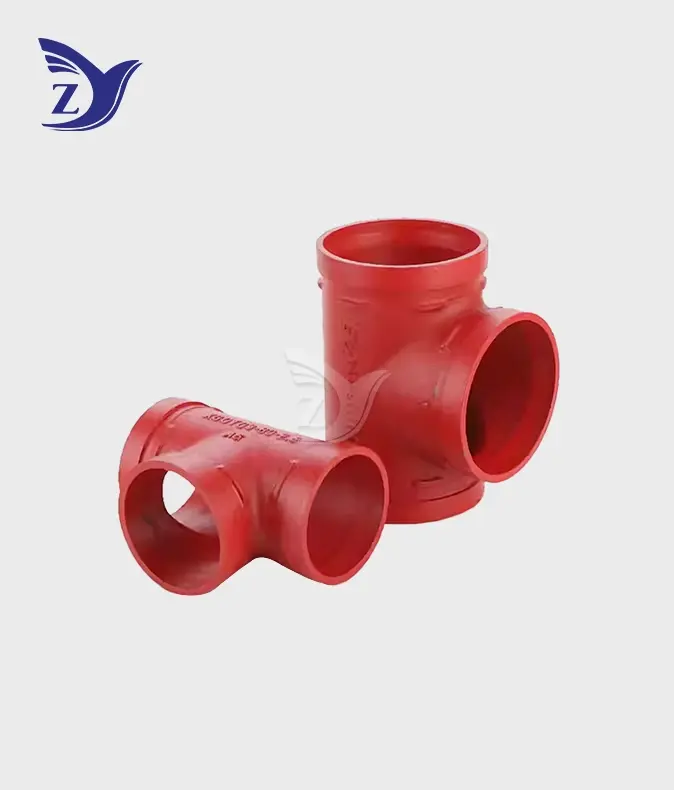
Basics of Straight and Reducing Tee Fittings
When it comes to managing the distribution of fluids in pipeline systems, tee fittings are crucial. These parts are essential because they allow for the complicated network topologies needed by today's industrial applications by acting as junction points when single flow streams split into many paths.
Fundamental Design Characteristics
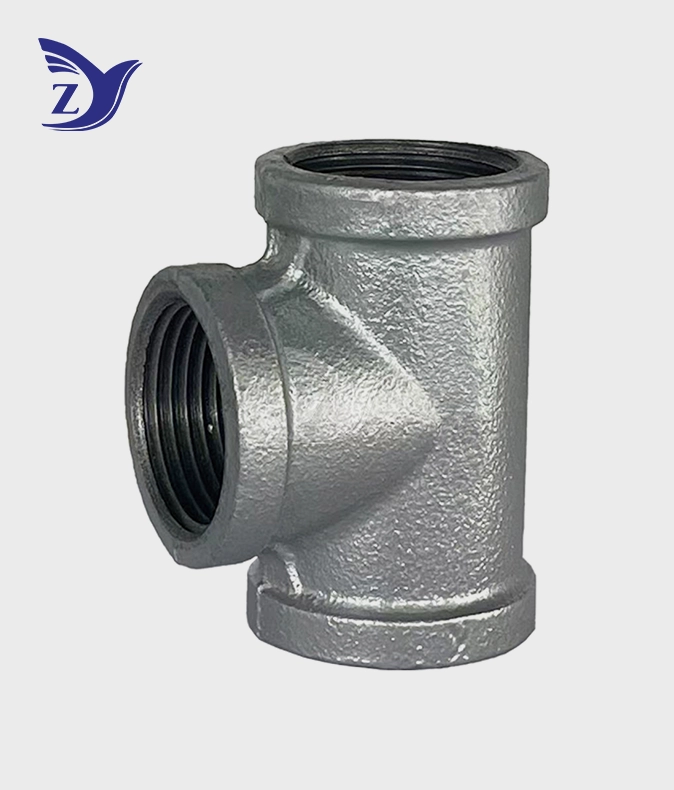
Tee fittings get its name from the unique T-shaped arrangement that they produce, which results in three connecting points that are perpendicular to one another. The continuous flow characteristics throughout the connection are ensured by the straight tee's identical diameter across all three apertures. Applications requiring uniform flow distribution independent of pressure fluctuations greatly benefit from the equal-diameter construction of straight tees.
By accommodating a range of inlet and outlet diameters in a single fitting, reducing tees provide dimensional flexibility. There is no longer a need for separate reducer fittings in many applications because to this design flexibility, which enables engineers to transition between pipe diameters while preserving directional flow control.
Material Composition and Standards
The material used to make modern tee fittings varies according to their intended use, but malleable iron is quickly becoming the material of choice in harsh industrial settings. The combination of malleability and high strength makes malleable iron tees ideal for use in threading and connecting procedures. Because of their high resistance to corrosion, hot-dipped galvanized coatings last longer even when subjected to extreme working circumstances.
Secure connections that keep systems intact under pressure are made possible by adhering to NPT and BSPT threading standards, which guarantee interoperability across various pipe systems. Round-edge designs help to increase durability and decrease maintenance needs by minimizing stress concentrations during installation and operation.
Dimensional and Functional Analysis of Tee Fittings
Efficiency, flow characteristics, and system performance are all affected by the tee fittings' dimensions. When making decisions on system design and component selection, it helps to understand these linkages.
Flow Dynamics and Pressure Considerations
The three apertures of a straight tee have the same interior diameter, allowing engineers to precisely forecast the flow patterns. Because of this regularity, the system maintains its ideal efficiency during operation, eliminating the possibility of sudden pressure reductions caused by poorly constructed connections.
When dividing single streams into two paths, the equal-diameter design of straight tee fittings facilitates balanced flow distribution. This quality is especially useful in fire alarm systems, as the correct operation of the system depends on the constant distribution of pressure to various zones.
Size Range and Specifications
The diameter of industrial tee fittings usually falls between 1/8 inch and 6 inches, allowing them to meet the needs of a wide variety of applications, from tiny process lines to large distribution networks. Thanks to their malleable iron composition, these fittings can withstand pressure ratings of up to 300 PSI. This makes them ideal for use in chemical processing, water treatment, and municipal infrastructure projects, among other demanding industrial uses.
The elimination of sharp edges and stress concentration sites during precise manufacturing procedures results in round-edge equal galvanized malleable tees, which provide greater durability. Better field performance and fewer failures over longer service durations are the results of meticulous manufacturing.
Comparison: Straight Tee vs. Reducing Tee Inlets and Applications
System needs, flow characteristics, and operational goals must be carefully considered when deciding between a straight or reducing tee arrangement. Different application requirements call for different designs, yet each has its own set of benefits.
Application-Specific Performance
If your application calls for a uniform distribution of flow regardless of pipe diameter, then a straight tee fitting is the way to go. Because constant pressure supply guarantees correct activation over all protected zones, fire sprinkler systems benefit from this consistent size. When it comes to municipal water distribution networks, straight tees are just as important for connecting service lines and keeping pressure uniform throughout neighborhoods and businesses.
Because they may accommodate changes in pipe size inside the same fitting, reducing tees are useful for a variety of operational purposes. These parts are helpful because they eliminate the need for several fittings, which may be expensive and complicated, when connecting larger distribution lines to smaller branch circuits.
Installation and Maintenance Benefits
When compared to other connection techniques, the three-way pipe branch design of both fitting types makes installation more easier. By doing away with sharp edges that might harm sealing materials or cause alignment issues during assembly, round-edge layouts save installation times.
Reliability and low maintenance over the long term are guaranteed by the high-strength, anti-rust malleable iron structure. Reduced downtime and replacement frequency are results of hot-dipped galvanized coatings' corrosion resistance, which protects against environmental deterioration.
Installation Principles and Best Practices for Tee Fittings
The performance and durability of tee fitting installations are maximized when the installation processes are followed correctly. Throughout the operating lifespan, following defined standards maximizes system dependability while minimizing possible difficulties.
Pre-Installation Preparation
The chosen fittings must be compatible with the system's intended use in terms of pressure, temperature, and chemicals, and this is confirmed by system design verification. For leak-free connections that keep systems intact under operational circumstances, thread preparation is necessary for NPT/BSPT compatible round-edge fittings.
Pipe end preparation includes cleaning, deburring, and thread inspection to eliminate potential sealing problems. Industrial water/gas pipeline distribution systems demand particular attention to cleanliness, as contamination can affect system performance and component longevity.
Assembly Procedures and Techniques
For the purpose of avoiding damaging fitting bodies from over-tightening or leakage from under-tightening, thread engagement adheres to industry standards. Careful torque application with calibrated equipment is necessary to provide optimum connection strength without material stress when utilizing precision-threaded fittings.
The correct amount of sealant and thread engagement depth are crucial for ensuring the safe distribution of fluids. Industrial-grade equal pipe tees include design elements that make them easy to install and visually demonstrate that they are assembled correctly.
Quality Assurance and Testing
In order to ensure the system's integrity and detect any possible flaws before commissioning, post-installation pressure testing is performed. Before, during, and after installation, round-edge 3-way fittings should be inspected thoroughly to ensure correct alignment and high-quality connections.
In order to facilitate future maintenance and troubleshooting, it is highly recommended to document the installation processes and test findings. The maintenance plans may be optimized using real-time data on field performance, and warranty compliance can be ensured with this record-keeping.
Choosing and Procuring the Right Straight or Reducing Tee Fittings
To ensure a smooth fitting procurement process, it is necessary to thoroughly assess the technical requirements, supplier capacities, and needs for ongoing assistance. The efficiency and success of a project are directly affected by the choices made throughout the selecting phase.
Technical Specification Requirements
Choosing the right materials involves striking a balance between performance, affordability, and compatibility with the rest of the system. The combination of galvanized coatings' great corrosion protection and the malleable iron's outstanding strength qualities makes it an ideal material for demanding applications.
Certified fittings are those that have been thoroughly tested and found to adhere to all relevant safety, performance, and environmental regulations. Third-party certifications like as CE, UL, and FM ensure that products are of high quality and function as expected.
Supplier Evaluation Criteria
Among the components of a manufacturing capability evaluation are records of delivery performance, quality control systems, and production capacity. In order to accommodate project deadlines and financial constraints, dependable suppliers have sufficient inventory on hand and provide flexible delivery dates.
With customization services, fittings may be optimized to meet the needs of individual applications, which can lead to better performance and less system complexity. Custom product development and OEM services help with one-of-a-kind project requirements that generic options may not meet.
Building partnerships with suppliers that consistently provide high-quality products, prompt delivery, and helpful technical assistance is beneficial to the procurement process. By working together, we can lessen the chances of component failures or supply interruptions, which in turn increases the likelihood of a successful project completion.
Conclusion
One inlet and two exits meet various flow distribution demands in straight tee and decreasing tee fittings, which both contain three apertures placed in a T-configuration. For consistent flow characteristics, straight tees have uniformly sized apertures, whereas decreasing tees may handle pipe sizes that vary within a single fitting. By grasping these core distinctions, procurement experts and engineers can choose the right components for the right jobs, guaranteeing dependable and optimum system performance all through its operational lifetime.
Partner with Zhiyuan Malleable Steel for Superior Tee Fitting Solutions
Zhiyuan Malleable Steel delivers industrial-grade straight tee fittings engineered for demanding applications across fire protection, municipal infrastructure, and industrial processing sectors. Our NPT/BSPT round-edge equal galvanized malleable tees combine high-strength, anti-rust construction with precision threading for secure, long-lasting connections. With 26 years of casting expertise, 30,000-ton annual production capacity, and comprehensive certifications including CE, UL, and FM, we support your procurement needs with reliable delivery and customization capabilities. Contact our technical team at q1236800000@gmail.com to discuss your straight tee supplier requirements and discover how our corrosion-resistant, precision-manufactured fittings enhance your pipeline systems.
FAQ
How many connection points does a standard tee fitting have?
Standard tee fittings contain three connection points arranged in a T-shaped configuration, typically consisting of one inlet and two outlets positioned at 90-degree angles to each other.
What distinguishes straight tees from reducing tees in terms of inlet design?
Straight tees feature three openings of identical diameter, while reducing tees incorporate different sizes across the three openings to accommodate pipe diameter transitions within the same fitting.
Are NPT and BSPT threading compatible with most tee fitting applications?
NPT and BSPT threading standards provide broad compatibility across industrial piping systems, with round-edge designs enhancing installation reliability and connection integrity.
What pressure ratings do malleable iron tee fittings typically support?
Malleable iron tee fittings commonly support pressure ratings up to 300 PSI, making them suitable for demanding industrial applications including water distribution and fire protection systems.
How does galvanized coating affect tee fitting performance?
Hot-dipped galvanized coatings provide superior corrosion resistance, extending service life in challenging environments while maintaining structural integrity and connection reliability throughout extended operational periods.
References
1. American Society of Mechanical Engineers. "Pipe Fittings and Flanged Joints: Design Standards and Applications." ASME Press, 2023.
2. National Fire Protection Association. "Installation Standards for Fire Protection Piping Systems and Components." NFPA 13 Guidelines, 2022.
3. International Organization for Standardization. "Pipe Threads Where Pressure-Tight Joints Are Made on the Threads: Specifications and Testing Methods." ISO 7-1 Standards, 2023.
4. American Water Works Association. "Steel Pipe Design and Installation Manual: Fittings and Connections." AWWA Manual M11, 2022.
5. Crane Technical Paper. "Flow of Fluids Through Valves, Fittings, and Pipe: Engineering Design Guidelines." Crane Co. Technical Publications, 2023.
6. Malleable Iron Research Institute. "Malleable Iron Castings: Properties, Applications, and Performance Standards." MIRI Technical Bulletin, 2022.
Online Message
YOU MAY LIKE
High quality furniture manufacturer
Water Grooved Blind Flange
NPT Black Union 330 Pipe Fittings
NPT Black Round Face Coupling Pipe Fittings
NPT Square Face Galvanized Square Edge Straight Tee Pipe Fittings
NPT Galvanized Non-Flanged Pipe Plug Pipe Fittings
NPT Square Face Galvanized 90° Male Female Threaded Elbow Pipe Fittings
Fire Grooved Mechanical Tee
NPT Galvanized Union 342 Pipe Fittings