
Sep 16, 2026
How Does a Long Radius NPT Elbow Reduce Flow Resistance?
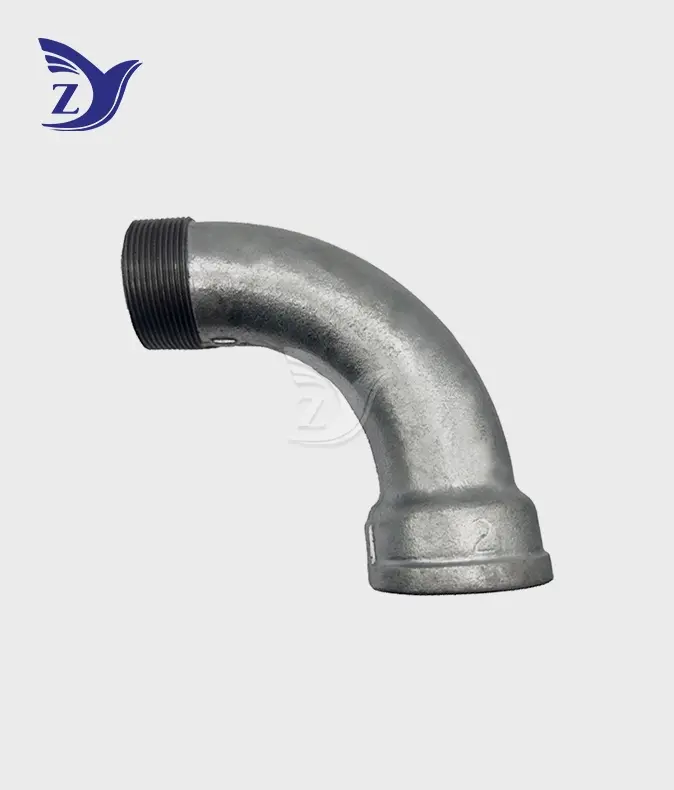
When a pipeline changes direction, the fitting at that bend becomes the most hydraulically sensitive point in the entire system. A short, abrupt turn forces fluid to fight gravity and momentum simultaneously, bleeding pressure from every gallon that passes through. The solution many engineers overlook is already proven: the NPT galvanized male female 90° long radius elbow pipe fittings. By extending the bend radius to approximately 1.5 times the nominal pipe diameter, this fitting guides fluid through a gentler arc, cutting turbulence, reducing pressure drop, and protecting both the pipe and the pump from accelerated wear.
Understanding the Basics of Long Radius NPT Elbows
Before getting into hydraulics, it's helpful to know what makes this fitting different from a normal 90° elbow.
What the Male-Female Configuration Actually Solves
One externally threaded end and one internally threaded end are built into the male-female (street elbow) form as a single body. This gets rid of the need for a close nipple when attaching directly to a valve port or tank inlet. Compared to a nipple-plus-elbow assembly, this cuts the number of possible leak lines by about half. The rules for NPT threading are set by ANSI/ASME B1.20.1. It has a tapered shape that gets tighter when pressure is applied. This makes a mechanical interference seal instead of a gasket.
Why Hot-Dipped Galvanization Matters
In the hot-dip galvanizing process, a layer of zinc is metallurgically bonded to an iron base that can be shaped. Zinc is used as a sacrificial anode because it corrodes more quickly than the steel below, protecting it even if the coating gets scratched. This NPT galvanized male female 90° long radius elbow pipe fitting doesn't rust in places that are wet, outside, or chemically harsh, where black iron would rust in months. Hot-dipped galvanized malleable iron is much cheaper than brass or stainless steel alternatives and has the same level of corrosion protection for NPT galvanized male female 90° long radius elbow pipe fittings. This is a big plus for small to medium-sized plumbing and gas workers who are trying to stay within tight project budgets.
The Problem with Flow Resistance in Elbow Pipe Fittings
It is called a "minor loss" by hydraulic engineers. Every bend in a pipe system causes a drop in pressure because the flow separates and swirls. The resistance coefficient (K-value) of a standard short-radius 90° elbow is usually between 0.9 and 1.5, but it can be higher or lower based on the pipe width and flow rate. That number goes up a lot when there are a lot of elbows in a row, which is common in HVAC condensate returns, gas distribution manifolds, and municipal water supply branches.
The effects that happen later are real. To keep goal flow rates, pumps have to work harder, energy use goes up, and the erosive action of swirling fluid speeds up wall thinning at the elbow throat. A fitting that causes too much pressure drop is not only inefficient for a builder whose gas pipeline needs to pass a pressure-retention test on the first try; it's also a risk.
How Long Radius NPT Elbows Reduce Flow Resistance
The Engineering Principle Behind the Geometry
When you look at a long radius elbow, the bend in its midline is 1.5 times the pipe diameter, or D. This slow sweep stops the sudden flow separation that causes turbulence in fittings with a short radius. There is a lot of information out there that says a 90° elbow with a long radius has a K-value that is 30–40% lower than an elbow with a short radius when the flow speeds are the same (Crane Co., Flow of Fluids Through Valves, Fittings, and Pipe, Technical Paper No. 410).
Real-World Performance Gains
Take a look at a 1-inch gas delivery branch that goes in four different directions and runs at 60 psi. When you replace four standard 90° elbows with NPT galvanized male female 90° long radius elbow pipe fittings, the total length of the pipes is cut by about 8–12 feet. This means that the delivery pressure at the end appliance stays the same. In irrigation systems for farms that use rough slurry, the better interior sweep also lowers the buildup of sediment at the bend, which lowers the number of times that the system needs to be flushed and increases the time between services.
Technical Considerations for Using NPT Galvanized Long Radius Elbows
To get the most out of NPT galvanized male/female 90° long radius elbow pipe fittings, you need to pay attention to how you measure and how you place them.
Measuring NPT Threads Correctly
1°47' per side, or 3/4 inch per foot of length, is how narrow NPT threads get. ANSI B1.20.1-approved L1 and L2 ring and plug gages are used to make sure that the engagement depth is correct. This makes sure that the tapered flanks lock together without galling. Depending on the diameter, the standard assembly torque is two to three turns past finger-tight. If you go beyond this range, the female port could crack. If you don't go far enough, a spiral leak path will form through the thread helix.
Protecting the Galvanized Coating During Installation
If you are not careful, pipe wrenches can bite through the copper layer at the hex flats. When you use strap wrenches or jaw guards, you protect the mechanical bond at the contact zone and stop the white rust that happens when iron is exposed to water. Always use PTFE tape or a suitable pipe thread sealer (pipe dope) on the male threads before putting them together. NPT relies on sealant to fill the spiral space that remains even after all the threads are engaged.
Note: NPT (60° thread angle) and BSPT (55° thread angle) can't be used together. Trying to mate them will damage the thread flanks and cause a leak. Make sure you know the thread standard before you order.
Procurement Insights: Choosing and Buying the Right Long Radius NPT Elbow
Galvanized vs. Alternative Materials
Here are the main material trade-offs that buying teams have to deal with:
- Galvanized malleable iron doesn't rust, has a high tensile strength (KTH350-10 grade, ≥350 MPa), and the lowest unit cost of all metals. It's perfect for water supply, HVAC, and low-pressure gas systems.
- Black malleable iron is better for natural gas lines in many U.S. jurisdictions because techs can easily tell which pipes are which because of its color coding, and it doesn't flake zinc like sulfide-rich gas streams do (per ASME B31.2 fuel gas piping code).
- Stainless steel can handle harsh chemicals and high-temperature steam, but it costs 4–6× more than galvanized iron, which is hard to justify for most water and gas applications.
These differences have a direct effect on which fittings fit into a certain system. A dual-threaded NPT/BSPT compatible elbow that works with both thread standards also cuts down on the number of SKUs a builder needs to keep on hand, which makes buying things for mixed-standard jobs easier.
Supplier Evaluation Criteria
A trustworthy company that sells NPT galvanized male female 90° long radius elbow pipe fittings should have certifications like ISO 9001, CE, UL, and FM, keep enough stock of popular sizes to ship the same week, and offer OEM/ODM services for custom needs. Testing for hydrostatic pressure at 1.5 times working pressure, checking the zinc finish according to ASTM A153, and measuring the length and width of the long radius are the three quality checks that set reliable providers apart from those who only ship to print.
Conclusion
An NPT galvanized male-female 90° long-radius elbow pipe fitting lowers flow resistance by switching from a sudden change in direction to a gradual, hydraulically efficient arc. This lowers turbulence, keeps the system pressure steady, and increases the service life of the fitting. This type of fitting is made from hot-dipped galvanized malleable iron, which makes it last longer, resist rust better, and be easier to install than short-radius options that cost the same. If contractors define the right shape from the start, they can protect their pressure-test results, lower the amount of energy their pumps use, and avoid the costs of fixing pipe joints that leak or don't work right with NPT galvanized male female 90° long radius elbow pipe fittings.
FAQ
1. Are NPT and BSPT threads interchangeable on these fittings?
No, the thread angle for NPT is 60°, and the angle for BSPT is 55°. When you mix them, you damage the thread edges and create leak paths. Before buying, you should always check the thread standard.
2. Can galvanized fittings be used on natural gas lines in the United States?
Codes change by area. For gas line marking, some places allow galvanized joints while others need black iron. Hydrogen sulfide can also cause the zinc covering to break off. Before making a specification, you should always check ASME B31.2 and any local utility rules.
3. What sealant should I use with NPT threads?
Applying high-quality PTFE tape or a compatible pipe thread sealant (pipe dope) to the male threads fills in the spiral gap that comes with the NPT shape. Thread friction is not enough to make a gas-tight seal.
4. At what temperature does the zinc coating begin to degrade?
Up to about 392°F (200°C), the hot-dipped zinc layer stays stable. For use above this temperature range, like high-temperature steam lines, you need black iron or stainless steel.
Request a Quote from Zhiyuan Malleable Steel
Since 2006, Zhiyuan Malleable Steel has been making precision-threaded pipe fittings. They can make 30,000 tons of them each year and have ISO 9001, CE, UL, and FM certifications. If you need NPT galvanized male/female 90° long-radius elbow pipe fittings supplier stock in sizes from 1/8" to 6", or if you have your own OEM specifications for NPT galvanized male female 90° long radius elbow pipe fittings, we can get back to you within hours. To get a quote for your job, email us at q1236800000@gmail.com.
References
1. Crane Co. — Flow of Fluids Through Valves, Fittings, and Pipe, Technical Paper No. 410, 2013.
2. American Society of Mechanical Engineers — ASME B1.20.1: Pipe Threads, General Purpose (Inch), 2013.
3. American Society of Mechanical Engineers — ASME B31.2: Fuel Gas Piping, 2019.
4. ASTM International — ASTM A153: Standard Specification for Zinc Coating (Hot-Dip) on Iron and Steel Hardware, 2016.
5. NSF International — NSF/ANSI 61: Drinking Water System Components — Health Effects, 2023.
6. Hydraulic Institute — Pump Life Cycle Costs: A Guide to LCC Analysis for Pumping Systems, 2001.
Online Message