
Sep 8, 2026
How do you install a pipe plug?
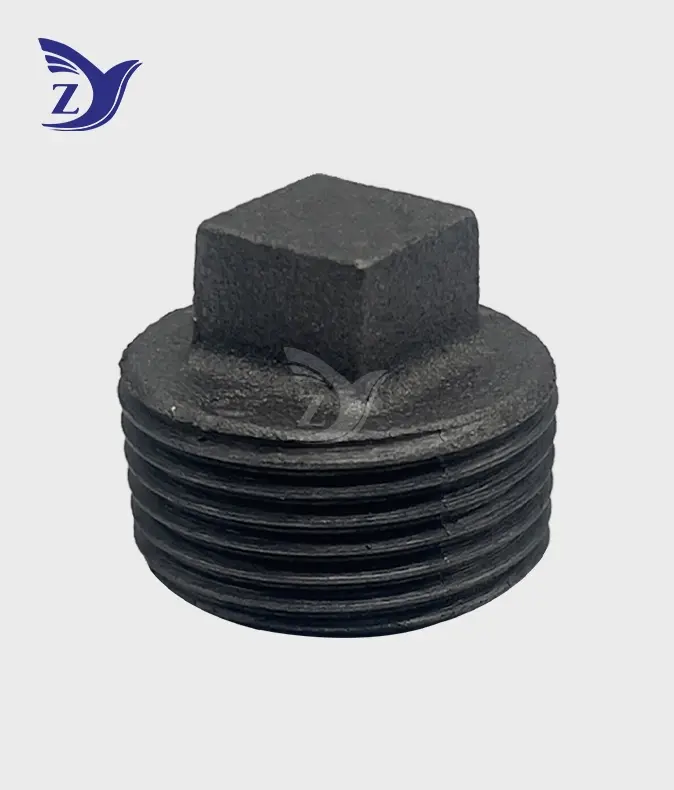
Installing a pipe plug fitting correctly starts with choosing the right plug for your pipe thread standard, NPT or BSPT, and pipe material. Clean the pipe threads thoroughly, apply thread sealant tape or compound, then hand-thread the plug fitting into the opening. Use a wrench to tighten it to the manufacturer's specified torque, typically 1/2 to 2 turns past hand-tight for tapered threads. Never overtighten. Confirm the seal with a pressure or leak test before returning the system to service. Proper installation prevents leaks, pressure failures, and costly downtime across water, gas, and industrial pipeline systems.
Why Proper Pipe Plug Installation Is Non-Negotiable
A single broken pipe plug can stop a whole production line. The Pipeline and Hazardous Materials Safety Administration (PHMSA) of the U.S. Department of Transportation says that pipeline accidents cause over $2.8 billion in property damage and lost business every year. Many of these accidents are caused by poor closing at pipe terminations.
The main problem is that pipe plug failures don't usually let you know before they happen. Under pressure, micro-leaks form slowly over time. Corrosion, thermal cycling, or thread mismatch can speed up this process. Even a 0.1% closing gap in industrial gas and water systems can turn into a safety risk, a violation of the rules, or the shutdown of the whole system.
Every safe plug placement is based on three rules:
- Seal integrity depends on how deeply the threads engage and how consistent the sealant is. For example, tapered NPT threads don't use a seal but instead depend on mechanical interference, so the state of the thread is very important.
- Material compatibility: Long-term longevity is based on how well two materials work together. When they are wet or in a chemically active environment, plugs made of malleable iron that have been hot-dip galvanized last much longer than plugs that have not been coated.
- Operational safety: For operational safety, you must carefully follow the torque specifications. When parts are too tight, they crack, and when they are too loose, leaks happen.
Getting these three things right from the start is what makes the difference between a reliable installation and one that needs urgent maintenance in the future.
Types of Pipe Plugs and Their Suitable Applications
Threaded Pipe Plugs for Permanent Pipeline Closure
Threaded plugs, especially NPT/BSPT unflanged pliable iron plugs, are the most common way to close pipe holes forever in oil, gas, and water systems. Their tapered thread shape makes a mechanical link that seals itself and gets tighter when pressure is put on it. Hot-dipped galvanized versions have a zinc coating that is thicker than 45 microns, which meets ASTM A153 standards and protects against rust for a long time, whether they are buried or exposed. For industrial pipeline closure tasks, these are the most popular plug fitting types recommended by engineers.
Expansion and Inflatable Plugs for Temporary Sealing
Inflatable and rubber expansion plugs are used to separate pipe parts during hydrostatic tests or repair work. They are also good for temporary or testing purposes. They don't have threads, so they can be used with PVC, concrete, and metal pipes because they grip the inside walls of pipes through radial compression. They aren't meant to be permanently installed or used with high pressure.
Test Plugs for Leak Verification
Test plugs are specially designed to test pipes for pressure before they are put into service. They can handle certain PSI levels without permanently engaging the threads, which lets them be put on and taken off quickly during inspection rounds.
Choosing the right plug type for the job is a procurement-level choice that has direct effects on how the business runs. Precision-threaded malleable iron plugs are still the most reliable and cost-effective way to close off industrial spaces permanently.
Step-by-Step Guide to Installing a Threaded Pipe Plug
Both the fitting and the piping system are safe when they are installed carefully. When I update something, I do these things:
- Inspect threads on both the plug and pipe opening. Check the part for burrs, cross-threading, or damage from corrosion. Most joint leaks are caused by flaws in the threads. Throw away any plug whose threads are clearly deformed.
- Clean the pipe threads thoroughly. Get rid of rust, scale, and old sealant film with a wire brush. Thread damage stops the seal from working properly and lowers its quality.
- Apply PTFE tape or thread compound. Wrap two or three wraps of PTFE tape clockwise around the plug's external threads. For higher-pressure work, use an anaerobic thread compound. This stops galling by filling tiny holes between the thread sides.
- Hand-thread the plug into the fitting. It needs to be turned clockwise until you feel resistance. Don't try to force it. Cross-threading at this point is a common mistake that can be avoided.
- Tighten with a wrench to the correct torque. It takes 50 to 75 ft-lbs of torque to install 1/2" NPT plugs in malleable iron. Larger sizes need proportionally more power. For help with specifications, look at the ASME B1.20.1 thread standards.
- Pressure-test the completed installation. Put 1.5 times the working pressure on it for at least 10 minutes, and then use soapy water or a measured pressure gauge to look for leaks.
These steps work for industrial-grade pipe plugs that don't have flanges and are used in gas and water pipelines. At every step of the supply chain, following them exactly cuts down on callbacks, returns, and warranty claims.
Troubleshooting and Maintenance Tips for Pipe Plugs
Avoiding the Three Most Common Installation Errors
Most of the time, people make the mistake of overtightening in the field. Even though malleable iron is a strong material, too much pressure can break the fitting body or change the shape of the threads, which is exactly what you want to happen to stop the leak. It's also bad when the size is wrong—a 3/4" plug forced into a 1" opening will never close properly. Before installing, you should always check the thread size and standard (NPT vs. BSPT).
Routine Inspection and Replacement Indicators
In active systems, check threaded plug installations every six to twelve months. Keep an eye out for white zinc oxide deposits around the plug head. These are a sign of galvanic activity and possible sealant breakdown. Replace plugs that have thread wear, corrosion holes, or any other kind of seepage that can be measured. The hot-dipped galvanized finish on good malleable iron plugs makes service intervals much longer than with electroplated plugs, but no plug can last forever when pressure is changing all the time.
How Quality Plug Sourcing Directly Impacts Your Procurement Margins?
There is a lot of competition in the pipe parts business. When wholesale buyers take on quality returns from contractors further down the line, they lose money every time. They lose money not only on the cost of replacement, but also on the time, money, and relationships with customers that are lost. Sourcing precision-threaded, certified plug fitting from the manufacturer cuts out the middleman's markup and ensures that all large orders are the same size.
Zhiyuan Malleable Steel was established in 2006 and is based in Taigu District, Shanxi Province. They make NPT/BSPT unflanged galvanized malleable iron plugs and can make more than 1,000 different specifications each year. Each batch goes through the rules of the ISO 9001 quality management system and gets certifications like CE, UL, and FM. The company's precision threading meets ASME B1.20.1 (NPT) and BS 21 (BSPT) standards, and its hot-dipped galvanized plugs meet ASTM A153 zinc finish standards.
Here are the main benefits that make Zhiyuan's plug options for bulk purchases stand out:
- Factory-direct pricing eliminates distributor margins, so resellers can make up to 30% more than the market price.
- Consistent batch quality: With 156 machining units and formal quality control processes, we can make sure that batch quality stays the same across orders of tons.
- Full-specification inventory with more than 1,000 SKUs lets you buy plugs, elbows, tees, couplings, unions, caps, and more all in one place.
- Export-standard packaging includes weave bags that don't absorb water and wooden crates that protect hot-dipped steel surfaces while they're being shipped internationally.
Because of these benefits, customers are less likely to return items, inventory planning is more stable, and relationships between wholesale distributors and customers get stronger.
Conclusion
Putting in a plug fitting the right way is a precise job that has real effects on system safety, compliance, and profits. The right type of plug, the right way to prepare the threads, the right amount of torque, and checking the pressure after fitting all affect how long a sealing solution lasts. Quality starts at the source for buying pros in charge of big pipeline projects. When you buy hot-dipped galvanized, precision-threaded malleable iron plugs from a known maker, you can be sure that every batch will be the same and that the threads will work properly.
FAQ
1. Can threaded pipe plugs be reused after removal?
Sometimes, tapered NPT and BSPT plugs can be used again as long as the threads are not damaged, corroded, or filled with sealant. Before putting something back together, you should always check the threads again, clean them well, and use new PTFE tape or thread compound. If the plug was put in with a lot of force or in an area that is prone to corrosion, it is safer to replace it.
2. What material performs best in corrosive or wet environments?
When buried, exposed to high humidity, or in environments that are corrosive, hot-dipped galvanized malleable iron plugs work better than electroplated ones. The zinc coating's thickness (≥45 microns according to ASTM A153) acts as a temporary defense against rust. Stainless steel plugs may be warranted for chemical environments that are very harsh, but galvanized malleable iron is the most cost-effective choice for standard water and gas systems.
3. How do I confirm a pipe plug is sealing correctly?
Put 1.5 times the system's working pressure on it and hold for 10 minutes after fitting. You can see if there are micro-leaks by running soapy water around the threads of the plug, or you can use a standardized pressure gauge to check for pressure drop. Any measured drop means the seal isn't complete and needs to be re-tightened or the plug needs to be replaced.
Partner With Zhiyuan Malleable Steel — Your Direct Plugs Fitting Supplier
Zhiyuan Malleable Steel sells hot-dipped galvanized malleable iron pipe plug fittings that are certified and come straight from our factory in Shanxi. We help engineering buying teams and wholesale wholesalers all over the U.S., Southeast Asia, the Middle East, and beyond. We have over 1,000 specifications, ISO 9001, CE, UL, and FM certifications, and a lot of stock ready to ship right away. To get samples or a quote straight from the factory, go to zymalleablepipefitting.com or email us at q1236800000@gmail.com right now.
References
1. U.S. Department of Transportation, Pipeline and Hazardous Materials Safety Administration (PHMSA).
2. American Society of Mechanical Engineers. ASME B1.20.1: Pipe Threads, General Purpose (Inch).
3. ASTM International. ASTM A153: Standard Specification for Zinc Coating (Hot-Dip) on Iron and Steel Hardware.
4. International Organization for Standardization. ISO 9001:2015 Quality Management Systems — Requirements.
5. American National Standards Institute / Manufacturers Standardization Society. MSS SP-110: Ball Valves Threaded, Socket-Welding, Solder Joint, Grooved and Flared Ends.
6. Occupational Safety and Health Administration (OSHA). OSHA Technical Manual, Section IV: Chapter 2 – Petroleum Refinery Process Safety Management.
Online Message