
Sep 9, 2026
How do malleable iron plugs compare to steel plugs in durability?
When sourcing pipeline fittings at scale, durability is not a preference — it is a procurement requirement. Malleable iron plugs deliver a compelling balance of ductility, corrosion resistance, and thread precision that makes them a reliable choice across water, gas, and industrial pipeline systems. Steel plugs, by contrast, offer higher tensile strength but vary significantly by grade. Understanding these differences helps procurement teams protect margins, reduce returns, and build supplier relationships that hold up over time.
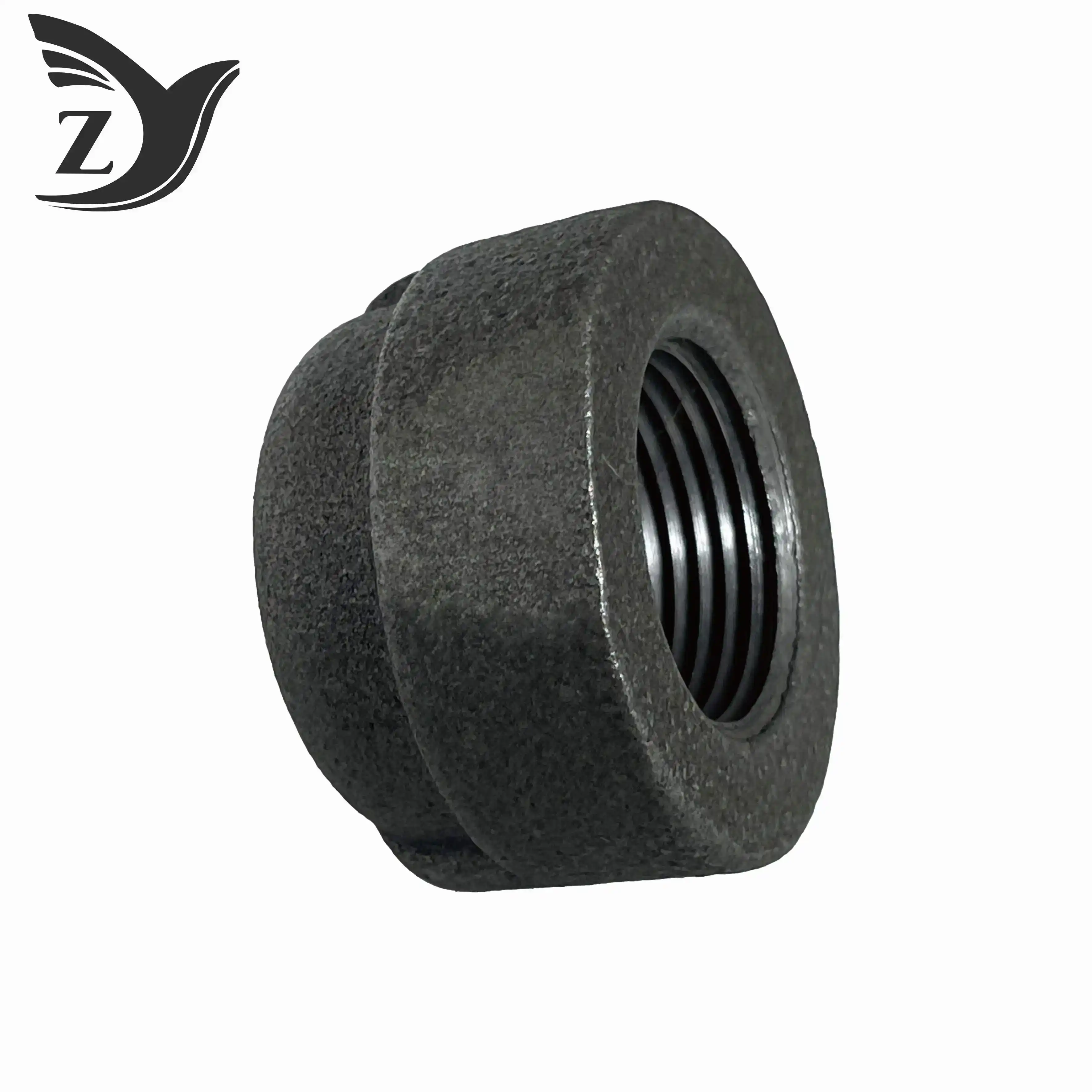
Understanding the Material Properties of Malleable Iron and Steel Plugs
Before a suit gets to the job site, the difference in performance between these two materials starts at the microstructural level.
How Heat Treatment Defines Malleable Iron
White cast iron is the starting material for malleable iron. It goes through a long melting process, which is usually done at temperatures between 900°C and 970°C. This process changes brittle iron carbides into graphite lumps of tempered carbon. This change makes the metal ductile in a way that can be measured. ASTM A197 says that standard malleable iron has a tensile strength of at least 276 MPa and an elongation of at least 5%. This means that when it is suddenly loaded, the material bends instead of breaking. This behavior is very important in threaded pipe systems, where assembly torque and changing temperatures cause stress over and over again.
Steel Plug Composition and Its Trade-offs
The tensile strength of steel plugs can be anywhere from 415 MPa to over 620 MPa, depending on the alloy they are made of (ASTM A105 or stainless steel). But regular carbon steel rusts quickly without a coating to protect it, and stainless steel costs a lot more per unit. When it comes to water and gas distribution, the extra strength of steel isn't used very often because of the higher cost, which directly cuts into market profits.
Durability Comparison: Malleable Iron Plugs vs Steel Plugs
People who work in procurement need more than just specifications for materials. They also need performance data that is based on real-world operating conditions.
According to ASTM A536 and ISO 49 standards, Class 150 malleable iron plugs can handle working pressures of up to 300 psi (20 bar) for oil, gas, and water service at room temperature. Under ASME B16.11, steel plugs can handle pressures from Class 3000 to Class 6000. This makes them the best choice for high-pressure steam or hydraulic applications. But most business and industrial water and gas distribution systems work well below 300 psi, which is the lowest pressure at which malleable iron plugs will not fail.
Here is how the two materials compare across the durability metrics most relevant to bulk buyers:
- Crack resistance: Hot-dip galvanized malleable iron plugs avoid cracks because they can handle mechanical shocks during installation and pipeline vibrations while they're in use. The annealed microstructure spreads stress out instead of focusing it at casting flaws, which is where lower-grade gray iron options often fail.
- Corrosion resistance: A hot-dip galvanized layer is applied to NPT/BSPT unflanged galvanized malleable iron plugs, which places zinc at a thickness of 45–85 µm according to ISO 1461. This provides sacrificial corrosion protection that can increase field service life beyond 20 years in non-aggressive settings.
- Thread fatigue: Precision-threaded malleable iron plugs made to ASME B1.20.1 (NPT) or ISO 7-1 (BSPT) standards keep the thread's integrity even after many times of putting it together and taking it apart. Statistics show that thread failure is one of the top three reasons why fittings are sent back in bulk distribution. This means that measurement compliance must be met.
These characteristics make galvanized malleable iron plugs the preferred specification for industrial water and gas pipeline closure projects where long service intervals and low maintenance costs define total cost of ownership.
Practical Installation and Usage Considerations
Thread Compatibility and Sealing Performance
NPT/BSPT unflanged plug designs get rid of the square-head plugs' protruding flange, which makes them easier to install in tight-clearance manifolds and panel-mounted assemblies. The angle for NPT threads is 60°, and the taper ratio is 1:16. The angle for BSPT threads is 55°, and the taper ratio is the same. When you mix thread standards, spiral leakage and thread damage happen. This is something that you should make sure hardware stores and installation contractors understand.
Thermal and Chemical Compatibility
Hot-dipped galvanized malleable iron plugs work effectively in temperatures ranging from -20°C to 120°C, which is the normal range for distributing water and gas. The zinc covering breaks down above 200°C or in acidic environments. At this point, black iron or stainless steel are better options. If you know this boundary, you can avoid making specification mistakes that lead to expensive returns.
Cost, Availability, and Procurement Insights for B2B Buyers
For wholesalers who buy container loads, it's easy to see which is more cost-effective: steel plugs or malleable iron plugs? When bought directly from the maker, malleable iron plugs are usually 30–50% cheaper per unit than carbon steel threaded plugs of the same size. The price difference gets even bigger when you compare stainless grades. When prices stay competitive downstream, that difference in costs turns straight into a wholesale margin.
Reliable procurement at scale also depends on supplier infrastructure. Consider these sourcing criteria before committing to a container order:
- Certification compliance: Suppliers with ISO 9001, CE, UL, and FM certifications show that their production methods and output quality meet foreign standards, not just the specs they say they meet.
- Thread gauge verification: Reputable manufacturers check each production batch against calibrated L1/L3 plug gages according to ASME B1.20.1. This gets rid of the thread mismatch complaints that cause returns further down the line.
- Hot-dip galvanizing capability: Controlled bath temperatures during in-house galvanizing make sure that the coating is even. Outsourced galvanizing that isn't done consistently is a major cause of early-stage rust claims.
- Packaging specification: Export-standard woven polypropylene bags or wooden boxes with moisture-barrier covering protect fittings during ocean freight, which affects the state of the shelves when they arrive.
Finding a supplier that has more than 1,000 active SKUs for elbows, tees, couplings, unions, bushings, plugs, and caps gets rid of the need for multiple sources of information and lowers the cost of logistics for each shipment. This is a big benefit for distributors who serve a wide range of downstream customers.
Making the Right Choice: Durability and Procurement Decision Support
There are three things that determine whether to use malleable iron plugs or steel pipe plugs: the working pressure, the corrosion environment, and the profit goals. For most industrial water, compressed air, and natural gas delivery tasks that don't go above 300 psi, hot-dipped galvanized malleable iron plugs provide long-lasting, safe performance at a cost that keeps wholesale profits high. When higher-grade material properties are really needed, steel plugs are still the right choice for high-pressure process pipes, steam service, or harsh chemical environments.
B2B distributors who have standardized on ISO 49–compliant malleable iron fittings from audited manufacturers report measurably lower return rates compared to sourcing from unverified intermediaries — a direct impact on the downstream customer trust that drives repeat orders.
Conclusion
In industrial piping systems, malleable iron plugs and steel plugs serve distinct purposes. Galvanized malleable iron plugs are good for water and gas uses with standard pressures because it doesn't rust, have exact thread geometry, and have a unit cost structure that supports healthy distribution profits. Steel plugs are useful in situations with a lot of pressure and very high temperatures. Matching the specification to the actual operating condition — rather than over-engineering every purchase — is the clearest path to protecting both product performance and procurement profitability.
FAQ
1. Are malleable iron pipe plugs suitable for natural gas lines?
Yes, black malleable iron plugs and hot-dipped galvanized iron plugs are commonly used in natural gas delivery pipes with pressures below 300 psi. They meet the standards for gas service in ASTM A197 and ISO 49. Before you buy, make sure that the thread standard (NPT or BSPT) fits the pipeline that is already installed.
2. What is the difference between NPT and BSPT threaded plugs?
For NPT (ASME B1.20.1), the thread angle is 60°, and for BSPT (ISO 7-1), it is 55°. Both use a 1:16 taper for self-sealing, but you can't use one type on the other. Putting an NPT plug into a BSPT fitting damages both parts and creates leak paths.
3. How long does hot-dip galvanizing last on pipe plugs?
As per ISO 1461, coatings on threaded fittings that are hot-dip galvanized must have a zinc thickness of 45–85 µm. This will protect against corrosion for 20 years or more in moderate outdoor or buried environments before it needs to be maintained.
4. Can I mix malleable iron plugs with steel pipe fittings?
Yes, as long as the pressure class and thread standard are the same. Zinc-coated iron and carbon steel can usually work together without any problems in water and gas service at normal working temperatures.
Source Malleable Iron Plugs from Zhiyuan Malleable Steel
Since 2006, Zhiyuan Malleable Steel has manufactured certified malleable iron plugs. Our NPT/BSPT unflanged galvanized malleable iron plugs meet ISO 9001, CE, UL, and FM standards, with in-house hot-dip galvanizing and precision thread gauging on every batch. Whether you need a full container of supplier-grade malleable iron plugs supplier-grade stock or OEM customization, contact us at q1236800000@gmail.com for pricing, samples, and our product catalog.
References
1. ASTM International. ASTM A197: Standard Specification for Cupola Malleable Iron.
2. ISO. ISO 49: Malleable Cast Iron Fittings Threaded to ISO 7-1. International Organization for Standardization, 2018. 3. ISO. ISO 1461: Hot Dip Galvanized Coatings on Fabricated Iron and Steel Articles — Specifications and Test Methods.
4. ASME. ASME B1.20.1: Pipe Threads, General Purpose, Inch. American Society of Mechanical Engineers, 2013 (reaffirmed 2018).
5. Valve World. "Malleable Iron Fittings in Industrial Distribution: Performance and Procurement Trends."
6. American Galvanizers Association. "Galvanizing for Corrosion Protection: A Specifier's Guide." AGA, 2021.
Online Message