
Oct 10, 2026
How Do Galvanized Square Face Couplings Prevent Pipe Corrosion?
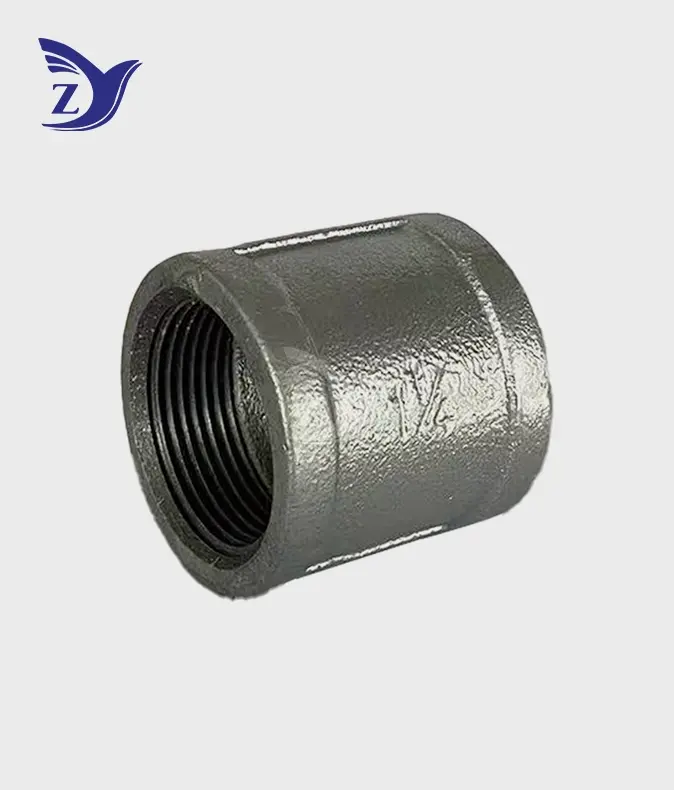
Galvanized square face couplings stop pipe corrosion by applying a hot-dipped zinc layer over malleable iron, creating a sacrificial barrier that corrodes in place of the base metal. Specifically, square face galvanized square edge coupling pipe fittings feature a reinforced flat collar that holds the zinc coating evenly across the fitting's edges, eliminating thin spots where rust typically starts. This physical design, combined with the electrochemical protection of zinc, blocks moisture, oxygen, and chemicals from ever reaching the iron core — the three primary triggers of pipeline corrosion.
Understanding Galvanized Square Face Couplings and Corrosion Issues
Always know what you're getting with a threaded pipe fitting before you buy one, and know why corrosion is such a common problem in industrial pipelines.
What Makes a Square Face Coupling Different
Square edge couplings don't have the rounded "beaded" edges that most fittings do. Instead, they have a flat, strengthened band around each socket hole. That flat collar adds about 15–20% more material mass to the point that is most likely to crack under stress. This keeps the material from breaking in a circular direction during high-torque installation. This structural detail is not just for looks; it has a direct effect on the sealing integrity and coating adhesion of NPT/BSPT square-edge galvanized malleable couplings that are used in water, gas, and steam lines.
Common Materials and Sizes in B2B Applications
The square face galvanized square edge coupling pipe fittings are made of blackheart malleable cast iron (KTH300-06 or KTH330-08), which has a minimum tensile strength of 300 MPa and enough flexibility to bend without breaking. Standard sizes range from ¼ inch to 4 inches, which is big enough for most industrial gas and water pipeline connections. Because they come with both NPT and BSPT threads, they can be used in both North American and foreign pipe systems.
The Three Main Causes of Pipe Corrosion
Corrosion in threaded iron fittings usually comes from one of three places: being wet for a long time, being exposed to chemicals or acids in soil and process fluids, or changing temperatures that make metal surfaces expand and contract. Fittings are exposed to at least two of these things at the same time in outdoor watering systems, petroleum yards, and HVAC condensate lines. If iron doesn't have a protective layer on the outside, it will start to rust on the outside within weeks in places with a lot of moisture.
How Galvanization Enhances Corrosion Resistance
The zinc coating is what makes galvanized iron pipe fittings last a long time. When purchasing managers understand the science behind it, they can defend the higher price compared to options that aren't sealed.
The Hot-Dip Galvanization Process
In hot-dip galvanization, square face galvanized square edge coupling pipe fittings that are clean and easy to shape are put into molten zinc that is about 450°C (842°F). The zinc forms a metal bond with the iron surface, creating an alloy layer that sticks to the iron much better than electroplated options. As per ASTM A153 and ISO 1461, threaded pipe fittings must have a zinc covering mass of at least 500 g/m², which means the coating must be more than 70 microns thick. At Zhiyuan Malleable Steel, galvanizing is done in an electric heating environmental protection galvanizing kiln. This makes sure that the standards are always met during large production runs.
Galvanized vs. Non-Galvanized vs. Stainless Steel
Plain black iron parts are cheaper up front, but they need to be replaced much more often when they get wet or are used outside. Stainless steel valves are very resistant to corrosion, but they are very expensive per unit, which makes them hard to justify for normal gas and water delivery networks. Hot-dipped galvanized malleable iron is a good compromise because, according to the American Galvanizers Association, it doesn't rust for 20 to 50 years in most environments, it's much cheaper than stainless steel, and it can handle up to 25 bar of pressure in industrial settings.
Why the Square Face Design Improves Coating Uniformity
Edges that are rounded or beaded change the shape of the surface, which makes the molten zinc pool unevenly during the dip process, leaving less coverage around the edges. This square edge is flat, which lets zinc cover the collar surface evenly. This keeps the fitting's most visible contact points from rusting over time. In corrosive field conditions, this is why a strong, straight pipe connection with a square edge shape lasts longer than beaded ones.
Installation Best Practices to Maximize Corrosion Protection
Even an industrial-grade corrosion-proof coupling that is properly described can fail early if it is placed without care. It is just as important to protect the zinc layer during fitting as it is to put on the finish.
Preparing Pipe Ends and Fittings
Before putting the pipe together, clean the threads with a wire brush to get rid of metal shavings, old sealant, and surface scale. Check the threads on the fitting. Precision threads that are NPT/BSPT compatible should engage easily and not fight for the first two turns. Apply PTFE tape or thread sealant paste that is rated for the working medium (such as water, gas, or steam) only to the male threads. This keeps water out of the joint without getting on the zinc surface inside the coupling.
Tightening Without Damaging the Zinc Layer
If you don't want to gouge the square face collar, use a strap wrench or a pipe wrench with a jaw guard. When the zinc is scored, the bare iron is exposed to the environment, which speeds up corrosion right where the fitting is under the most stress. Two or three turns past hand-tight is enough for a pressure-tight seal on NPT or BSPT threads on standard malleable iron couplings. Tightening too much doesn't make the seal better and could cause tiny cracks in the zinc layer.
Sealing Methods and Common Pitfalls
People still use PTFE tape to seal threaded pipe joiners in water and gas lines because it doesn't shrink or crack over time. Stay away from pipe dope products that have solvents that don't work with zinc coats. People often make the mistake of reusing old fittings without checking the thread wear first. Worn threads weaken both the seal and the zinc around it, letting water follow the thread path and start rusting from the inside out.
Choosing the Right Galvanized Square Face Couplings for Your Project
Since dozens of providers are offering similar specs, the choice is based on quality indicators that can be checked, not just price.
Key Certification and Quality Standards to Check
Suppliers of good square face galvanized square edge coupling pipe fittings will say that their products follow ISO 9001 quality management systems, that the materials are in line with ASTM A197 or ISO 49/BS EN 10242, and that the surface treatment is in line with ASTM A153 or ISO 1461. Certifications like CE, UL, and FM add to the proof that the parts meet the safety standards of the market. All of Zhiyuan Malleable Steel's products are made under ISO 9001 quality control, and some lines of products can also be certified as CE, UL, or FM.
Square Face vs. Round Face vs. Stainless Steel: A Practical Comparison
When wrench grip is important and a zinc surface needs to hold evenly across the full collar, square edge malleable iron connections are the best choice for high-torque installation situations. Round face (beaded) joints can be used for lighter loads, but they have less radial resistance. Stainless steel couplings can be used in food-grade or highly corrosive chemical environments, but they are too expensive to buy in bulk for building and maintaining infrastructure. The most cost-effective way to connect most industrial water and gas pipelines is with hot-dipped galvanized malleable iron.
Real-World Application Example
Take the example of a medium-sized farm irrigation provider in the Midwest of the United States that needs to find thousands of fittings for a seasonal installation job. They asked for NPT square-edge galvanized flexible joints with a 25 bar rating, made sure the threads would work with the steel pipes they already had, and placed an order for a whole container with the same coating thickness on all of them. They got a better deal by buying directly from a manufacturer with a 30,000-ton annual capacity instead of going through a distributor. This is the exact way that high-volume building materials sellers buy things, and it helped them keep their goal margin on the resale side.
FAQ
How long does the zinc coating last on galvanized pipe fittings?
The American Galvanizers Association says that hot-dip galvanized coatings on iron pipe fittings usually last between 20 and 50 years, depending on how they are used and the environment they are in. Fittings that are used in dry, indoor areas last longer than those that are used near the coast or in areas with a lot of chemicals. For industrial-grade security, ASTM A153 says that the layer must have a minimum mass of 500 g/m².
Can these couplings handle both water and gas systems?
Yes, NPT/BSPT square-edge steel malleable joints can be used with steam, gas, water, and oil. It's only allowed to work at a full working pressure of up to 25 bar at room temperature, and it can only work at a reduced pressure of up to 120°C for steam applications.
Are BSPT and NPT threads interchangeable?
The thread angle for BSPT is 55 degrees, while the thread angle for NPT is 60 degrees. When you mix them, the threads cross-mate, which guaranties leakage. Before you buy, you should always make sure that the thread standard fits the piping you already have.
What is the minimum order quantity for bulk procurement?
MOQ is different for each size and type. Zhiyuan Malleable Steel can take orders for 20GP or 40HQ containers and offers different prices based on the amount ordered. For a full list of prices by SKU, email q1236800000@gmail.com.
How do I verify that galvanization quality is not substandard?
The coating mass should be given in grams per square meter according to ASTM A153 or ISO 1461. Quality galvanization looks bright and uniformly silver-gray to the eye. Surfaces that are dull, flaky, or patchy show that the zinc isn't sticking well or that the covering isn't thick enough.
Get a Direct Factory Quote from Zhiyuan Malleable Steel
Since 2006, Zhiyuan Malleable Steel has been making pipe parts out of malleable iron. They can make 30,000 tons of them each year and have more than 1,000 product specs that can be ordered by the container load. Standard products from our square face galvanized square edge coupling pipe fittings manufacturer supply chain are sent out within two hours of order confirmation. These products are backed by ISO 9001, CE, UL, and FM certifications. Products that are broken are replaced, no question. To get a price, email us at q1236800000@gmail.com or go to zymalleablepipefitting.com.
Conclusion
Square face galvanized square edge coupling pipe fittings keep pipes from rusting by using metallic bonding, zinc's sacrificial anode chemistry, and a structural design that keeps the protective layer even on the fitting's weakest points. For purchasing managers who need to buy a lot of something, the right specification—moldable iron hot-dipped to ASTM A153 with precision NPT or BSPT threads—will last for decades at a fraction of the cost of stainless steel. The security cycle is finished with a proper installation and a yearly check. The biggest unknown is taken out of the equation when you buy straight from a verified manufacturer whose quality is uniform across batches.
References
- American Galvanizers Association. Hot-Dip Galvanizing for Corrosion Protection: A Specifier's Guide. 2022.
- ASTM International. ASTM A153/A153M: Standard Specification for Zinc Coating (Hot-Dip) on Iron and Steel Hardware. 2023.
- ISO. ISO 1461: Hot Dip Galvanized Coatings on Fabricated Iron and Steel Articles — Specifications and Test Methods. 2022.
- British Standards Institution. BS EN 10242: Threaded Pipe Fittings in Malleable Cast Iron. 2021.
- ASTM International. ASTM A197/A197M: Standard Specification for Cupola Malleable Iron. 2020.
- Schweitzer, Philip A. Corrosion Engineering Handbook: Corrosion of Linings and Coatings. CRC Press. 2006.
Online Message