
Aug 19, 2026
How Do Galvanized Reducing Coupling Pipe Fittings Work in Industrial Systems?
Galvanized reducing coupling pipe fittings serve as critical transition components in industrial piping systems, connecting pipes of different diameters while maintaining system integrity and pressure ratings. Round face galvanized round edge reducing couplings feature precision-threaded connections—typically NPT or BSPT—that create secure seals through metal-to-metal contact enhanced by thread sealants. The hot-dipped galvanization process coats the malleable iron body with zinc, providing robust corrosion resistance in water, gas, and steam applications. These threaded reducers function by allowing proper torque application during installation, which compresses the tapered threads to form leak-proof joints capable of withstanding pressures up to 300 PSI in typical industrial environments.
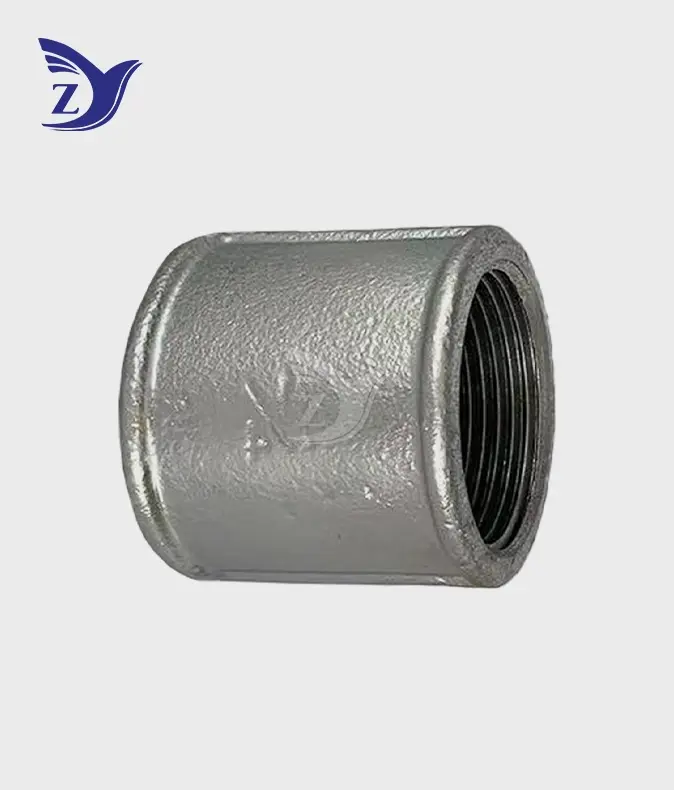
How Galvanized Reducing Couplings Function in Industrial Systems
Installation Mechanics and Best Practices
Preparing the threads is the first step in a proper operation. Clean both the male pipe threads and the female coupling threads to get rid of any dirt, moisture, or production leftovers that could weaken the seal. Use the right thread sealant, like high-density PTFE tape wrapped around the pipe end clockwise or anaerobic pipe dope made especially for surfaces that have been galvanized. These oils smooth out tiny flaws in the threads and keep them moving smoothly during assembly.
Tighten the fitting onto the first pipe by hand until you feel resistance. Then, use pipe tools to make it really tight. To get the right interference fit, tapered threads need to be engaged three to four thread turns beyond hand-tight. Too much tightening can damage the fitting, and too little tightening leaves the threads unengaged, which lets leaks happen.
Installers with a lot of experience know that the characteristic increase in resistance means that the right amount of torque has been applied without needing to know exact torque values.
Operational Principles in Flow Systems
These threaded reducers handle changes in diameter in operating pipe systems while keeping flow rates and pressure levels the same. According to continuity rules, when fluid flows from a larger pipe to a smaller diameter through a reducing coupling, the speed goes up while the static pressure goes down. Because they can control the flow, reducing couplings are useful for a wide range of tasks, from connecting pumps to discharge lines to branch line takeoffs in distribution networks.
The round edge shape makes the system more reliable by keeping the wall thickness the same around the fitting hole. This even construction keeps weak spots from appearing where pressure from inside could cause the structure to bulge or break. These fittings are made of high-strength malleable iron, which has a tensile strength of over 350 MPa. This means that they can withstand changes in pressure, water hammer, and thermal expansion cycles that are common in industrial systems.
Diverse Application Scenarios
Round face galvanized round edge reducing coupling pipe fittings are used a lot in fire protection systems to connect larger distribution mains to smaller branch lines that feed individual sprinkler heads. The galvanized coating is resistant to rust and makes sure the system works well even after years of backup service. The exact threading makes connections that don't leak and pass strict fire marshal tests. System designers like that the pressure ratings are always the same, at 300 PSI for water, oil, and gas service. This means that both wet and dry sprinkler setups can work.
These fittings are used in municipal water supply networks where distribution mains step down to service lines that go into houses. The zinc layer stops soil rust and scale buildup from mineral-rich water, so it lasts longer than steel that hasn't been treated.
For natural gas distribution, gas utilities also choose galvanized threaded reducers because they protect against corrosion when exposed to the elements outside and provide the mechanical strength needed for installations that are buried or high up. These width converters that don't rust are used in process pipes, compressed air systems, and utility distribution networks in factories. Chemical plants benefit from the zinc coating's ability to withstand many industrial atmospheres. Power plants, on the other hand, depend on the high-temperature strength of malleable iron building in steam and condensate systems.
Comparing Galvanized Round Edge Reducing Couplings With Alternative Solutions
Material Alternatives Assessment
Stainless steel reducing couplings are better at resisting rust in harsh chemical conditions and high-temperature settings where galvanized coats might wear off. But fittings made of stainless steel usually cost three to five times more than those made of galvanized malleable iron. This means that they are only cost-effective in certain corrosive situations. You can use galvanized valves for most water, gas, and general industry tasks, and they have much lower initial costs.
Brass reducing couplings are very good at resisting corrosion in systems that handle potable water, and they don't have the lead problems that come with older galvanizing methods. Although brass is easier to work with than pliable iron, it has a lower tensile strength, which means it can't be used for high pressures. These factors are balanced by procurement specialists who look at the needs of the application, the chemistry of the fluid, and the pressure requirements.
Edge Design Variations
Square edge reducing couplings have rectangular reinforcement profiles instead of round beads, which provide the same level of structural support but in a different shape. Because the square edge design gives the hoop a little more strength under internal pressure, it is sometimes better for high-pressure steam applications. Round-edged versions have smoother looks and are often chosen in open plumbing setups. They are strong enough to handle normal industrial pressure ranges of up to 300 PSI.
Banded fittings are another way to reinforce the edges. They use bands on the outside of the fitting opening to make it stronger. Banded construction can make it harder to use a wrench in tight areas, even though it works the same way as round edge designs. The round edge shape keeps the geometry cleaner, which makes it easier to use tools during installation and future upkeep.
Selection Criteria for Procurement
The main factor in choosing a round face galvanized round edge reducing coupling pipe fitting is its pressure rating. Class 150 fittings are rated for 300 PSI of water, oil, and gas service at room temperature and 150 PSI of saturated steam. Class 300 standards are needed for uses with higher pressure. Temperature also plays a role in choosing the right material. For example, galvanized coats stay strong in normal industry temperature ranges, but they may break down above 200°C when used continuously.
Size compatibility checks keep specification mistakes from being too expensive. Reducer connections are named after the two sizes of their openings. For example, a 1-inch by 3/4-inch reducer joins a 1-inch male pipe to a 3/4-inch male pipe. Making sure that both pipe sizes match the fitting specifications and that the thread standards are the same all the way through the link stops installation delays and changes that need to be made in the field.
Best Practices for Industrial Use and Maintenance
Installation Guidelines for Maximum Longevity
Preparing the pipes correctly keeps assembly issues and early breakdowns from happening. Use the right cutting tools to make straight cuts in the pipes. Then, ream out the internal burrs and file the outside edges to get rid of any sharp points that could damage the thread sealant or cause stress clusters. Before assembly starts, a thread condition check finds any broken threads that need to be fixed or the pipe needs to be replaced. This keeps connections from being weak and leaking when pressure is applied.
The choice of wrench affects both the quality of the operation and the life of the fitting. Use pipe wrenches that are the right size for the fitting, and make sure the jaw of the wrench is firmly on the wrench flats (if they're there) or on the fitting body, away from the threaded openings. Do not use too much force, as this could crack the malleable iron body or bend the threads past their proper engagement dimensions.
Using two wrenches—one to hold the coupling still while the other tightens the pipe—avoids rotational stress that could loosen connections that have already been put together.
Routine Maintenance and Inspection Protocols
Visual checks done every three to six months or every two years find early signs of coating wear, leaky joints, or rust that need to be fixed. Look for white zinc corrosion products that show active galvanization consumption, rust stains that show coating breakdown, or water buildup around threads that show seals aren't complete. Taking care of these early warning signs keeps small problems from getting worse and turning into system failures that need emergency fixes.
Before putting the system back into service after maintenance, it is tested for integrity under pressure. Hydrostatic testing at 1.5 times the working pressure for the lengths of time required by the codes shows that no leaks formed during the repair work. Documented testing keeps quality records that show care was taken and gives you a starting point for tracking how well a system is working over time.
Troubleshooting Common Issues
Connections that leak usually happen because the threads aren't engaged enough, are broken, or the sealer wasn't applied properly. Take the joint apart, check the threads for damage, and clean both the male and female parts very well. Apply new thread glue using the right method, like pipe dope on only male threads or PTFE tape wrapped in the direction of tightening. Then put the parts back together using the right tightening pressure. Leaks that won't go away could mean that the threads are damaged and need to be replaced instead of being put back together over and over again.
When the zinc layer wears away because of long-term use or harsh weather conditions, corrosion breakthrough happens. Surface rust that only shows up in a few places can be fixed by wire brushing the area to get rid of corrosion products, painting it with zinc-rich repair paint, and keeping an eye on it to see if it gets worse. Because of general covering failure and extensive rust, the fitting needs to be replaced to keep the structure from breaking down, which could lead to leaks or ruptures when the pressure is applied.
Conclusion
Round face galvanized round edge reducing coupling pipe fittings are important parts of industrial plumbing infrastructure because they make diameter changes reliably in a wide range of situations, from chemical handling to fire safety. The building of pliable iron, precise threading, and hot-dipped galvanization ensures decades of service life in harsh conditions. Engineers and procurement professionals can select and use these fittings successfully if they understand how they work, how to install them correctly, and how to keep them in good shape. Partnering with qualified manufacturers makes sure that you can get certified products that meet international standards. They can also provide the technical support and reliable supply chain that are needed for large industrial projects.
FAQ
What distinguishes round edge from square edge reducing couplings?
Round edge reducing couplings have a curved bead that strengthens the fitting opening. This makes the profiles look smooth and helps distribute impact well. For square edge designs, rectangular reinforcements give the hoop a little more strength. Both work well for standard industrial tasks, and the choice is usually made based on regional preferences or specific pressure needs.
Can NPT and BSPT threads be connected directly?
Not at all. BSPT thread angles are 55 degrees, while NPT thread angles are 60 degrees, so they can't be used together. When you try to join directly, you damage the threads and cause spiral leaks. Always use the right fittings or make sure that the thread standards are the same throughout the system of pipes.
How does galvanization protect against corrosion?
Hot-dipped galvanizing makes a zinc covering that is metallurgically attached to the metal. This coating acts as a barrier and a sacrificial anode. The zinc layer literally stops corrosive elements from getting through, but it corrodes more easily when it's broken, protecting the iron substrate below through electrochemical processes.
What pressure ratings apply to standard galvanized reducing couplings?
At room temperature, Class 150 fittings can handle 300 PSI for water, oil, and gas, and 150 PSI for saturated steam. When used in higher-pressure situations, Class 300 specifications with correspondingly higher ratings are needed.
Why do threaded joints leak sometimes even when they are installed correctly?
Some common reasons are threads that don't engage properly, thread profiles that are damaged, the wrong sealant being used, or bottoming out before enough seal compression is reached. To get good interference fits, BSPT joints need to have all of their threads engaged without bottoming out.
Partner With Zhiyuan Malleable Steel for Reliable Round Face Galvanized Round Edge Reducing Coupling Pipe Fittings
Using parts in industrial plumbing projects that work well for years of hard use is important. When Zhiyuan Malleable Steel makes a threaded reducer, they use their 26 years of experience in casting and fine making. Our Taigu factory can make 30,000 tons of more than 1,000 different types of products every year, so we can make sure we have the sizes and shapes your projects need. We use quality-controlled methods to make NPT/BSPT compatible round-edge adapters, such as 100% pneumatic pressure testing and precision thread verification. Our products are backed by ISO 9001, CE, UL, and FM certifications.
As a reliable provider of round face galvanized round edge reducing coupling pipe fittings, we offer low prices for large orders, the ability to customize products to meet specific needs, and quick delivery—standard products ship within two hours from our large inventory. Our technical team can help you choose the right fittings for your water, gas, steam, or chemical piping systems by giving you application advice. You can email our experts at q1236800000@gmail.com or look through our full product catalog at zymalleablepipefitting.com to talk about how our high-strength, corrosion-resistant, and flexible reducers can help your industrial infrastructure projects with quality parts and dependable service.
References
American Society of Mechanical Engineers. (2020). ASME B16.3: Malleable Iron Threaded Fittings, Classes 150 and 300. New York: ASME Press.
British Standards Institution. (2018). BS EN 10242: Threaded Pipe Fittings in Malleable Cast Iron. London: BSI Standards Publication.
International Organization for Standardization. (2019). ISO 5922: Malleable Cast Iron - Specification. Geneva: ISO Central Secretariat.
National Fire Protection Association. (2021). NFPA 13: Standard for the Installation of Sprinkler Systems. Quincy: NFPA Publications.
Porter, Frank C. (2016). Corrosion Resistance of Zinc and Zinc Alloys. Boca Raton: CRC Press.
Smith, William F. & Hashemi, Javad. (2017). Foundations of Materials Science and Engineering (6th ed.). New York: McGraw-Hill Education.
Online Message